Looking for a healthy, easy, and satisfying meal that actually keeps you full? These lentil quinoa wraps combine plant-based protein, fiber, and simple ingredients to create soft, flexible wraps for quick lunches, meal prep, or healthy dinners.
Made by blending lentils and quinoa into a simple batter and cooking it like a thin flatbread, this recipe gives you a naturally gluten-free vegan wrap without relying on regular wheat flour.
Quick Answer: What Are Lentil Quinoa Wraps?
Lentil quinoa wraps are vegan wraps made from blended lentils, quinoa, water, and seasonings. The batter is spread thinly in a pan and cooked like a crepe or flatbread. The result is a soft, flexible wrap that works well with vegetables, hummus, tofu, beans, sauces, and other favorite fillings.
Why Lentil Quinoa Wraps Are So Popular
These healthy vegan wraps are appealing because they use inexpensive, recognizable ingredients and require only a few basic cooking steps. Lentils contribute plant-based protein and fiber, while quinoa adds structure and a pleasantly hearty texture.
They’re also easy to customize. You can make them spicy, herby, Mediterranean-inspired, or mild enough for everyday lunches. Preparing several at once also makes them convenient for meal prep.
Why You’ll Love This Recipe
Beginner-Friendly
Blend, pour, spread, cook, and fill. The method is straightforward and easy to repeat.
Naturally Gluten-Free
The wrap base uses lentils and quinoa instead of wheat flour.
Meal-Prep Friendly
Make a batch ahead of time and refrigerate or freeze individual wraps.
Plant-Based
The basic wrap contains no meat, dairy, or eggs.
Customizable
Change the seasonings, sauces, vegetables, and protein-rich fillings.
Budget-Friendly
Lentils, quinoa, water, and pantry spices create an economical homemade wrap base.
Lentil Quinoa Wraps Recipe
Soft, flexible homemade wraps made with lentils and quinoa.
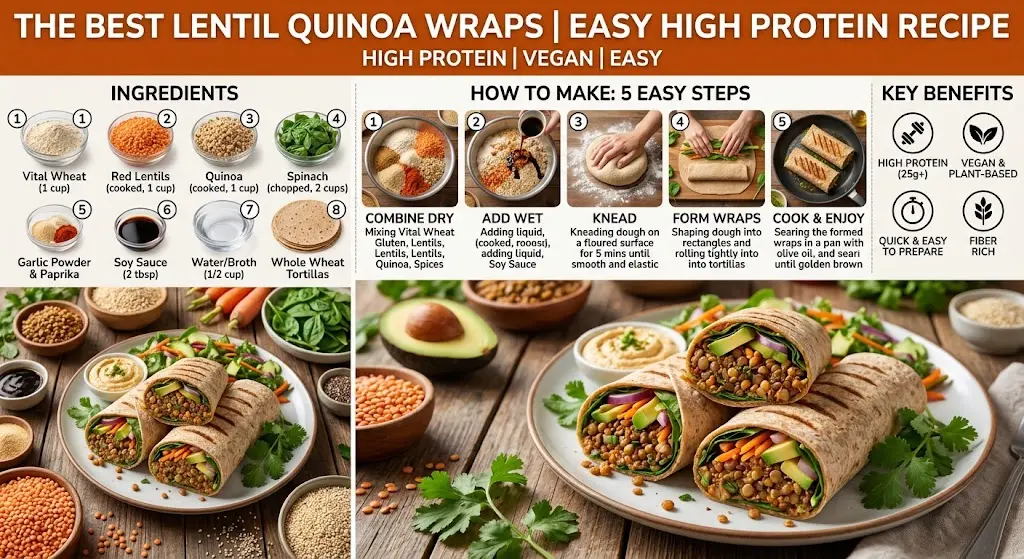
Ingredients
- Lentils — the main base and a source of plant-based protein.
- Quinoa — adds structure and a hearty texture.
- Water — creates the pourable batter.
- Salt — enhances the overall flavor.
- Cumin — adds warm, savory depth.
- Garlic — provides extra savory flavor.
- Oil, optional — useful for lightly greasing the pan.
Optional Flavor Additions
- Paprika
- Chili flakes
- Fresh cilantro
- Parsley or mint
- Dried oregano
- Garlic paste
- Fresh lemon juice
Step-by-Step Method
Rinse the lentils and quinoa thoroughly. Soak them for about 2–4 hours if desired. Soaking can help produce a smoother batter.
Add the soaked lentils and quinoa to a blender with enough water to create a smooth, pourable batter. Add salt, cumin, garlic, or your preferred seasonings.
Place a non-stick pan over medium heat. Lightly grease it if necessary.
Pour in a portion of batter and quickly spread it into a thin, even layer, similar to a crepe. Cook until the edges begin to lift naturally.
Flip carefully and cook the other side until set. Avoid overcooking, which can make the wrap dry and more likely to crack.
Allow the wrap to cool slightly, then add your favorite vegetables, hummus, tofu, beans, sauces, or other fillings.
Ingredients Breakdown: Roles & Smart Substitutes
| Ingredient | Role in the Recipe | Possible Substitute |
|---|---|---|
| Lentils | Main base and source of plant-based protein | Chickpeas or split peas, with texture differences expected |
| Quinoa | Adds structure, texture, and nutrients | Oats or cooked brown rice may work, but the wrap texture will change |
| Water | Creates the smooth, pourable batter | Vegetable broth for additional savory flavor |
| Salt, cumin & garlic | Builds the basic savory flavor | Paprika, chili flakes, oregano, parsley, or other herbs |
| Oil | Helps reduce sticking during cooking | A good non-stick pan can reduce or eliminate the need for oil |
Best Types of Lentils & Quinoa to Use
Lentils
Red Lentils
A strong choice for wraps because they can produce a smooth, soft batter when blended.
Green Lentils
Firmer and earthier, which can produce a somewhat more substantial texture.
Brown Lentils
Another option, although the finished wrap may be less smooth than one made with red lentils.
Quinoa
White Quinoa
Light and relatively mild, making it useful when you want a smoother wrap.
Tri-Color Quinoa
Works as well, but may contribute a slightly more noticeable texture.
The Secret to Soft, Flexible & Non-Breaking Wraps
1. Get the Batter Consistency Right
The batter should be smooth and pourable, roughly similar to pancake or crepe batter. A batter that is too thick can produce dense wraps, while an excessively thin batter may be difficult to spread and more prone to tearing.
2. Control the Heat
Medium heat is a useful starting point. Excessive heat can brown the outside too quickly before the wrap has properly set.
3. Keep the Wrap Thin
Spread the batter evenly into a thin layer. Thick wraps are more likely to feel dense and can be harder to fold.
4. Avoid Overcooking
Once the wrap is cooked through and releases easily, remove it from the pan. Longer cooking can reduce moisture and make the wrap less flexible.
Common Mistakes That Ruin Lentil Wraps
| Problem | Likely Cause | Quick Fix |
|---|---|---|
| Wraps break | Batter is too thick or the wrap has been overcooked | Add a little water and reduce cooking time |
| Batter is too thick | Not enough water | Add water gradually until the batter becomes pourable |
| Batter is too thin | Too much water | Add a small amount of blended lentil-quinoa mixture to rebalance it |
| Wrap sticks | Pan is not suitable or is not properly heated | Use a quality non-stick pan and lightly grease if needed |
| Wrap is dry | Overcooking or excessive heat | Use medium heat and remove the wrap as soon as it is set |
| Wrap tears when flipped | It has not set enough | Wait until the edges lift naturally before flipping |
5-Minute Flavor Boost Ideas
Sauces
- Tahini sauce
- Vegan yogurt sauce
- Spicy chili sauce
Fresh Herbs
- Cilantro
- Parsley
- Mint
Seasonings
- Paprika
- Cumin
- Chili flakes
Garlic, Lemon & Chili Hack
Add a little garlic paste to the batter, then finish your cooked wrap with fresh lemon juice and chili flakes. This simple combination creates a brighter, more savory flavor without changing the basic recipe.
Best Fillings for Lentil Quinoa Wraps
High-Protein Fillings
- Grilled tofu
- Tempeh
- Roasted chickpeas
- Mixed beans
Fresh Vegan Combos
- Avocado + vegetables + hummus
- Roasted vegetables + tahini
- Salad + vegan yogurt dressing
Quick Lunch Ideas
- Leftover roasted vegetables + sauce
- Lettuce + tomato + hummus
- Prepped vegetables + beans
Flavor Variations You Must Try
Spicy Lentil Quinoa Wraps
Add chili flakes, paprika, and a spicy sauce for a bolder version. Pair it with avocado, beans, or crunchy vegetables.
Mediterranean Style
Add garlic, oregano, olive oil, and lemon. Serve with hummus or tahini and fresh vegetables.
Mexican-Inspired
Add cumin, chili powder, and lime, then fill with beans, avocado, vegetables, and salsa.
Garlic Herb
Mix garlic, parsley, and mixed herbs into the batter for a simple, savory everyday wrap.
Wrap Options: Tortilla vs. Lettuce vs. Lentil Quinoa
| Wrap Type | Advantages | Limitations | Good For |
|---|---|---|---|
| Flour Tortilla | Soft, convenient, widely available | Many varieties contain refined wheat flour | Fast everyday meals |
| Lettuce Wrap | Fresh, crisp, light | Can tear and may not feel as substantial | Light meals and crunchy fillings |
| Lentil Quinoa Wrap | Plant-based, gluten-free, protein- and fiber-containing | Requires some preparation and cooking | Homemade meals and meal prep |
Lentil Quinoa Wraps vs. Regular Wraps
The nutritional difference between homemade lentil quinoa wraps and commercially made wraps depends heavily on the specific products and portions being compared.
| Factor | Lentil Quinoa Wraps | Typical Flour Wrap |
|---|---|---|
| Main Ingredients | Lentils and quinoa | Usually wheat flour, water, and added ingredients |
| Protein | Provides plant-based protein from lentils and quinoa | Varies considerably by product |
| Fiber | Can provide substantial fiber from whole lentils and quinoa | Varies; whole-grain versions generally provide more fiber than refined versions |
| Gluten | Naturally gluten-free ingredients | Traditional wheat tortillas contain gluten |
| Convenience | Requires homemade preparation | Usually ready to use |
Nutrition & Health Benefits
Plant-Based Protein
Lentils and quinoa contribute plant-based protein, making the wraps useful as part of a balanced vegan or vegetarian meal.
Dietary Fiber
Lentils are especially rich in dietary fiber, which can contribute to digestive health and meal satiety.
Whole-Food Ingredients
The basic recipe relies on simple ingredients rather than requiring a processed commercial wrap.
How to Make Them Weight-Loss Friendly
Focus on Portion Size
Choose a portion that fits your individual energy needs and build the meal around plenty of vegetables and an appropriate protein source.
Use Flavorful, Nutrient-Dense Fillings
Load your wrap with leafy greens, tomatoes, cucumbers, roasted vegetables, beans, tofu, or other nutrient-dense ingredients.
Watch High-Calorie Add-Ons
Tahini, avocado, oils, creamy sauces, and nuts can be nutritious but calorie-dense. Use portions that fit your overall meal plan.
Meal Prep Hack: Make a Batch Ahead
One of the biggest advantages of this recipe is that you can prepare several wraps in one cooking session. Once cooled, stack them with parchment paper between the layers and store them in a covered container.
Batch Cooking
Prepare several wraps at once so you have convenient components ready for lunches.
Easy Reheating
Warm briefly in a pan or microwave until flexible. Avoid excessive heating.
Build-to-Order Meals
Keep fillings separate and assemble each wrap when you’re ready to eat.
Meal Prep & Storage Guide
| Storage Method | How to Store | Practical Guidance |
|---|---|---|
| Refrigerator | Place cooled wraps in an airtight container with parchment between layers. | Best used within about 3–4 days for quality. |
| Freezer | Separate individual wraps with parchment and place in a freezer-safe bag or container. | For best quality, aim to use within about 1–2 months. |
| Reheating | Warm briefly in a skillet or microwave. | Heat only until flexible to help prevent drying. |
Gluten-Free, Vegan & Allergy-Friendly Guide
| Dietary Need | How This Recipe Fits | What to Check |
|---|---|---|
| Vegan | The basic wrap uses plant ingredients. | Choose vegan fillings and sauces. |
| Vegetarian | Suitable as written. | Check any prepared sauces or fillings. |
| Gluten-Free | Lentils and quinoa are naturally gluten-free. | For strict gluten avoidance, verify packaged ingredients and prevent cross-contact. |
| Dairy-Free | The basic wrap contains no dairy. | Use dairy-free fillings and sauces. |
| Egg-Free | The basic wrap contains no eggs. | Check fillings and prepared sauces. |
Frequently Asked Questions About Lentil Quinoa Wraps
Why are my wraps breaking?
The batter may be too thick, the wrap may be too thin, or it may have been overcooked. Try adjusting the batter with a little water and cook over moderate heat.
Can I freeze lentil quinoa wraps?
Yes. Place parchment paper between individual wraps and store them in a freezer-safe bag or container. For best quality, use them within about 1–2 months.
Do I need to soak the lentils?
Soaking is optional for this preparation, but it can help produce a smoother batter. Rinse the lentils thoroughly before blending.
Can I skip quinoa?
You can experiment with a lentil-only version, but quinoa contributes structure and changes the texture. The batter and cooking behavior may need adjustment.
Are lentil quinoa wraps gluten-free?
The basic ingredients are naturally gluten-free. If you need to avoid gluten strictly, use certified or verified gluten-free packaged ingredients where appropriate and prevent cross-contact.
What is the best lentil for these wraps?
Red lentils are a convenient choice because they can blend into a smooth batter and produce soft wraps.
Final Thoughts
Lentil quinoa wraps are a practical way to turn simple pantry ingredients into soft, versatile homemade wraps. The combination of lentils and quinoa provides plant-based protein and fiber, while the batter-based method keeps the ingredient list straightforward.
Use them for quick lunches, meal prep, vegan dinners, or gluten-free meals. Once you have the batter consistency and cooking temperature right, you can experiment with different herbs, spices, sauces, vegetables, beans, tofu, and other fillings.
For the best results, remember three things: keep the batter pourable, cook over moderate heat, and avoid overcooking. Those small details make a major difference in keeping the wraps soft and flexible.
Read More :