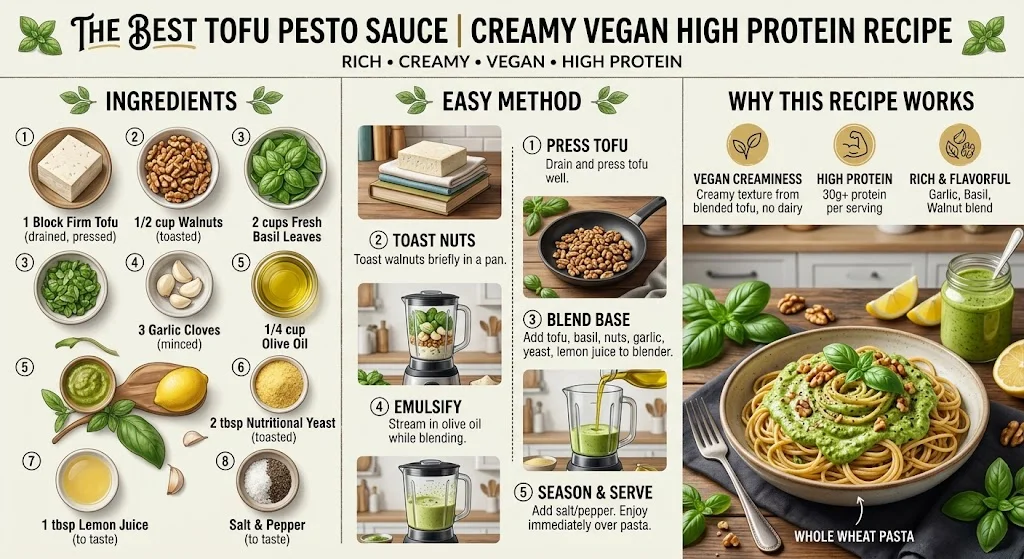
Make this creamy tofu pesto sauce in minutes with tofu, fresh basil, garlic, olive oil, and nuts or seeds. It is a versatile vegan pesto without cheese that works beautifully with pasta, sandwiches, wraps, grain bowls, pizza, and vegetables.
What Is Tofu Pesto Sauce? — Quick Answer
Tofu pesto sauce is a creamy, dairy-free pesto made by blending tofu with fresh basil, garlic, olive oil, nuts or seeds, lemon juice, and seasonings. Tofu replaces the cheese commonly used in traditional pesto, creating a smooth vegan pesto sauce with added plant-based protein.
The finished sauce is fresh, savory, creamy, and easy to customize. Use it as a tofu pasta sauce, sandwich spread, dip, pizza sauce, or grain-bowl topping.
Easy Tofu Pesto Sauce
A creamy, dairy-free pesto base that is quick to blend and easy to customize.
Ingredients
- Tofu — silken or soft tofu for the creamiest texture
- Fresh basil — the signature pesto herb
- Garlic — adds savory depth
- Olive oil — adds richness and helps loosen the sauce
- Nuts or seeds — pine nuts, walnuts, sunflower seeds, or pumpkin seeds
- Lemon juice — adds brightness and balances richness
- Salt — enhances the other flavors
- Water or plant milk — optional, for adjusting consistency
Method
- Prepare the tofu. Drain the tofu. If using firm tofu, remove excess moisture before blending.
- Add the ingredients. Place tofu, basil, garlic, olive oil, nuts or seeds, lemon juice, and salt into a blender or food processor.
- Blend. Start slowly, then increase the speed. Scrape down the sides as needed and blend until the pesto is smooth.
- Adjust the consistency. Add a small amount of water, plant milk, or olive oil if the sauce is too thick.
- Taste and balance. Add more salt, lemon juice, or garlic according to your preference.
- Serve. Toss with pasta, spread onto sandwiches, drizzle over bowls, or use as a dip.
Tofu pesto sauce is a creamy, dairy-free alternative to traditional pesto. Instead of relying on cheese for richness and body, tofu creates a smooth base while fresh basil, garlic, olive oil, and nuts or seeds provide the familiar pesto flavor.
If you’re looking for a vegan pesto sauce that is quick, budget-friendly, and versatile, this recipe is an excellent option. It can become a creamy tofu pasta sauce for busy weeknights or a flavorful spread for sandwiches and wraps.
How Tofu Pesto Differs From Traditional Pesto
Traditional pesto commonly combines basil, garlic, olive oil, nuts, and a hard cheese such as Parmesan. In this version, tofu provides the creamy body normally contributed partly by cheese.
| Feature | Traditional Pesto | Tofu Pesto |
|---|---|---|
| Creamy base | Oil, cheese, and nuts | Tofu, with oil and/or nuts or seeds |
| Dairy | Often contains Parmesan | Dairy-free when dairy-free ingredients are used |
| Protein | Primarily from cheese and nuts | Tofu contributes plant-based protein |
| Texture | Rich and sometimes slightly chunky | Especially smooth when made with silken tofu |
| Customization | Moderate | Easy to make nut-free, oil-free, or extra creamy |
Why You’ll Love This Tofu Pesto Sauce
🥬 Dairy-Free & Creamy
Tofu creates a naturally smooth texture without needing cheese. The result is a creamy vegan pesto without cheese that coats pasta beautifully.
💪 Plant-Based Protein
Tofu adds plant-based protein, making this a useful way to give a pasta dish, bowl, or sandwich additional protein.
⚡ Quick & Beginner-Friendly
Most of the preparation involves adding the ingredients to a blender or food processor and blending until smooth.
💰 Budget-Friendly
Tofu can be an economical alternative to specialty cheeses while still creating a rich and satisfying sauce.
Why Use Tofu Instead of Cheese in Pesto?
Protein Comparison vs. Parmesan
One major reason to use tofu is its contribution of plant-based protein. Instead of using cheese as the primary creamy component, tofu turns the sauce into a protein-containing pesto base.
Nutrition & Dietary Flexibility
Replacing cheese with tofu allows you to create a dairy-free pesto sauce suitable for vegan diets when all other ingredients are plant-based. The overall nutrition will depend on the tofu, oil, nuts or seeds, and serving size you choose.
Cost & Accessibility
Tofu is widely available in many grocery stores and can be an affordable ingredient. That makes this tofu pesto recipe practical for everyday cooking.
Vegan Advantage
When made with plant-based ingredients, tofu pesto provides a creamy way to enjoy pesto while avoiding dairy.
Tofu Pesto Taste & Texture Breakdown
Fresh, Nutty & Creamy Flavor
Fresh basil provides the signature herbal flavor, garlic adds savory intensity, nuts or seeds contribute nuttiness, and tofu creates the creamy foundation. Lemon juice helps brighten the finished sauce.
Smoother Than Many Traditional Pestos
Because tofu blends into a creamy base, the finished sauce can be especially smooth. Silken tofu is particularly useful when your goal is a silky sauce for pasta.
Who Will Love It?
This recipe is especially useful for people looking for a vegan pesto sauce, dairy-free pasta sauce, nut-free variation, or customizable plant-based spread.
Ingredients Breakdown: What Each Ingredient Does
Best Tofu: Silken vs. Firm vs. Extra-Firm
| Tofu Type | Texture | Best Use |
|---|---|---|
| Silken | Very soft and smooth | Ultra-creamy pesto |
| Firm | Thicker and more structured | Balanced texture |
| Extra-firm | Dense and less watery | Thicker pesto; may require more liquid |
Basil, Garlic & Olive Oil
- Fresh basil delivers the signature pesto flavor.
- Garlic gives the sauce savory depth and a sharp kick.
- Olive oil contributes richness and helps create a smooth sauce.
Role of Each Ingredient
| Ingredient | Main Role |
|---|---|
| Tofu | Creamy base and plant-based protein |
| Basil | Fresh herbal flavor |
| Garlic | Savory depth and intensity |
| Olive oil | Richness and smoothness |
| Nuts or seeds | Nutty flavor and texture |
| Lemon juice | Acidity and brightness |
| Salt | Overall flavor enhancement |
Smart Tofu Pesto Substitutes
Nut-Free
Use sunflower seeds or pumpkin seeds, or leave the nuts and seeds out for a simpler pesto.
Oil-Free
Replace some or all of the oil with water or unsweetened plant milk. Add liquid gradually so the pesto does not become too thin.
Budget-Friendly
Replace some of the basil with fresh spinach to create a milder and often more economical pesto.
Extra Creamy
Choose silken tofu and blend thoroughly for an especially smooth sauce.
How to Make Tofu Pesto Sauce: Foolproof Step-by-Step Method
1. Prep Your Ingredients
- Use fresh basil for the brightest flavor.
- Drain firm or extra-firm tofu before blending.
- Measure your ingredients before starting.
2. Blend the Pesto
Add tofu, basil, garlic, olive oil, nuts or seeds, lemon juice, and seasonings to a blender or food processor.
Start blending slowly and increase the speed. Stop occasionally to scrape down the sides so everything blends evenly.
Critical Texture Step
Do not add a large amount of liquid at once. Blend first, check the consistency, and then add water, plant milk, or oil a little at a time. This gives you much better control over the finished tofu pesto.
3. Adjust the Consistency
- Too thick? Add a small amount of water, plant milk, or olive oil.
- Too thin? Add more tofu or nuts/seeds.
- Too chunky? Continue blending.
4. Balance the Flavor
Taste before serving. Add salt if the pesto tastes flat, lemon juice if it needs brightness, or a little more garlic if you want stronger savory flavor.
Texture Control Guide: Pro-Level Tofu Pesto Tips
| Problem or Goal | What to Do |
|---|---|
| Thicker pesto | Use less liquid and/or more tofu. |
| Thinner pesto | Add water, plant milk, or olive oil gradually. |
| Extra creamy | Use silken tofu and blend until completely smooth. |
| Chunkier texture | Pulse instead of continuously blending. |
| Grainy texture | Blend longer and add a small amount of liquid if necessary. |
Balance Salt, Acid & Fat
Salt
Enhances the flavors of basil, garlic, tofu, and nuts or seeds.
Acid
Lemon juice adds freshness and prevents the sauce from tasting flat.
Fat
Olive oil contributes richness and helps create a silky mouthfeel.
Texture
Tofu controls the creamy body while liquid determines how loose the sauce becomes.
Common Mistakes That Can Ruin Tofu Pesto
Using the Wrong Tofu
Extra-firm tofu can make the pesto thick and dry if there is not enough liquid. Fix: use silken tofu or gradually add liquid while blending.
Over-Blending or Under-Blending
Under-blending can leave unwanted pieces, while excessive processing can make the sauce thinner than intended. Blend until you reach the texture you want.
Making It Too Watery
Adding too much liquid at once is difficult to reverse. Start with a small amount and add more only when necessary.
Bland Flavor
If the pesto tastes flat, check the balance of salt, lemon juice, garlic, and olive oil. Small adjustments can make a major difference.
Tofu Pesto Customization Matrix
| Goal | What to Change |
|---|---|
| More protein | Increase the tofu proportion while keeping enough liquid for blending. |
| Lower fat | Reduce the amount of oil and use tofu for creaminess. |
| Nut-free | Use sunflower or pumpkin seeds, or omit them. |
| Stronger flavor | Add more garlic, basil, or lemon juice. |
| Creamier texture | Choose silken tofu and blend thoroughly. |
Flavor Variations You Must Try
Classic Basil Pesto
Keep fresh basil as the main herb for a traditional pesto-inspired flavor.
Spinach Pesto
Replace some or all of the basil with spinach for a milder flavor and budget-friendly variation.
Kale Pesto
Use kale for a more earthy, robust flavor that pairs well with the creamy tofu base.
Avocado Pesto
Add avocado for additional creaminess and a rich, soft texture.
Spicy Pesto
Add chili flakes or fresh chili for a spicy twist that works particularly well with pasta and wraps.
Oil-Free Pesto
Skip the oil and use water or plant milk to loosen the sauce as needed.
What to Serve With Tofu Pesto Sauce
🍝 Pasta
Toss warm pasta with tofu pesto for a creamy, satisfying weeknight meal. Add a splash of pasta water if you need to loosen the sauce.
🥪 Sandwiches & Wraps
Spread pesto inside sandwiches and wraps for creamy texture and fresh basil flavor.
🥗 Grain Bowls
Drizzle it over rice, quinoa, roasted vegetables, or grain bowls for an easy flavor boost.
🍕 Pizza & Flatbreads
Use tofu pesto as an alternative to tomato sauce on pizza and flatbreads.
🥕 Vegetable Dip
Serve chilled tofu pesto alongside fresh vegetables for a quick snack or appetizer.
Storage, Shelf Life & Meal Prep Tips
🛡️ Food Safety & Storage
Because this pesto contains tofu and fresh ingredients, keep it refrigerated and avoid leaving it at room temperature for extended periods. Store it in a clean, airtight container and follow conservative food-safety practices.
For best quality, use refrigerated tofu pesto within approximately 4–5 days. If you notice an unusual odor, appearance, or texture, discard it rather than tasting it to determine whether it is safe.
How Long Does Tofu Pesto Last in the Fridge?
Store tofu pesto in an airtight container in the refrigerator and aim to use it within 4–5 days for best quality.
Can You Freeze Tofu Pesto?
Yes. Freeze tofu pesto in small portions or ice cube trays so you can thaw only what you need. Frozen pesto is best used within a few months for quality.
The texture may change slightly after freezing and thawing. Stir or blend it again if necessary, adding a small amount of liquid to restore the desired consistency.
Meal Prep Tips
- Make a batch at the beginning of the week.
- Divide it into small portions for quick meals.
- Keep refrigerated until ready to use.
- Use it for pasta, wraps, bowls, or vegetable dips.
Best Storage Containers
An airtight glass container works well for refrigerator storage. Keep the container covered to protect the pesto from odors and contamination.
Nutrition & Health Benefits of Tofu Pesto
Plant-Based Protein
Tofu contributes plant-based protein, making this sauce a useful addition to meals where you want more protein. The exact amount depends on the tofu brand, quantity, nuts or seeds, and serving size.
Calories Depend on the Ingredients
Tofu pesto can be adjusted to fit different eating patterns. The largest variables include the amount of olive oil, nuts or seeds, tofu, and serving size. Reducing oil can lower the calorie density of the finished sauce.
Vegan & Dairy-Free
When all ingredients are plant-based, this pesto is naturally suitable for a vegan diet and contains no dairy. It can also be useful for people avoiding traditional cheese-based pesto.
Lower-Fat Potential
For a lighter version, reduce or omit the oil and use water or unsweetened plant milk to adjust the consistency. Tofu still provides the creamy base.
Is Tofu Pesto Healthy?
Tofu pesto can be a nutritious pesto option, particularly when made with tofu, fresh basil, garlic, nuts or seeds, and a moderate amount of oil. Tofu contributes plant-based protein, while basil and garlic add flavor and micronutrients.
Whether it is lower in calories, fat, or saturated fat than a particular traditional pesto depends on the exact ingredients and proportions used. The advantage of this recipe is that you can control those ingredients and customize the sauce to your needs.
Healthy-Pesto Takeaway
For a balanced meal, pair tofu pesto with vegetables, whole grains or pasta, and another protein source when appropriate. Portion size still matters because ingredients such as olive oil and nuts are energy-dense.
FAQs About Tofu Pesto Sauce
Can I use firm tofu instead of silken tofu?
Yes. Firm tofu works well, but the pesto will generally be thicker. Add a small amount of water, plant milk, or oil until you reach the desired consistency.
Is tofu pesto healthy?
It can be a nutritious option because tofu provides plant-based protein and the recipe can be customized with the amount of oil, nuts, and seeds you prefer.
Can I make tofu pesto without nuts?
Absolutely. Use sunflower seeds or pumpkin seeds, or omit nuts and seeds altogether for a simpler version.
Why is my tofu pesto bitter?
Bitter flavor can result from strong garlic, certain greens, or ingredient imbalance. Try adding a little lemon juice and salt, then taste again.
Can I freeze tofu pesto?
Yes. Freeze it in small portions for convenient meal prep. The texture may change slightly after thawing, so stir or blend before serving.
How long does tofu pesto last?
Refrigerated tofu pesto is best used within approximately 4–5 days when stored properly in an airtight container.
Can I make tofu pesto oil-free?
Yes. Replace the oil with water or unsweetened plant milk, adding it gradually until the pesto reaches the consistency you want.
What tofu is best for creamy pesto?
Silken tofu is usually the easiest choice for a very smooth, creamy pesto because it blends readily.
Read More :