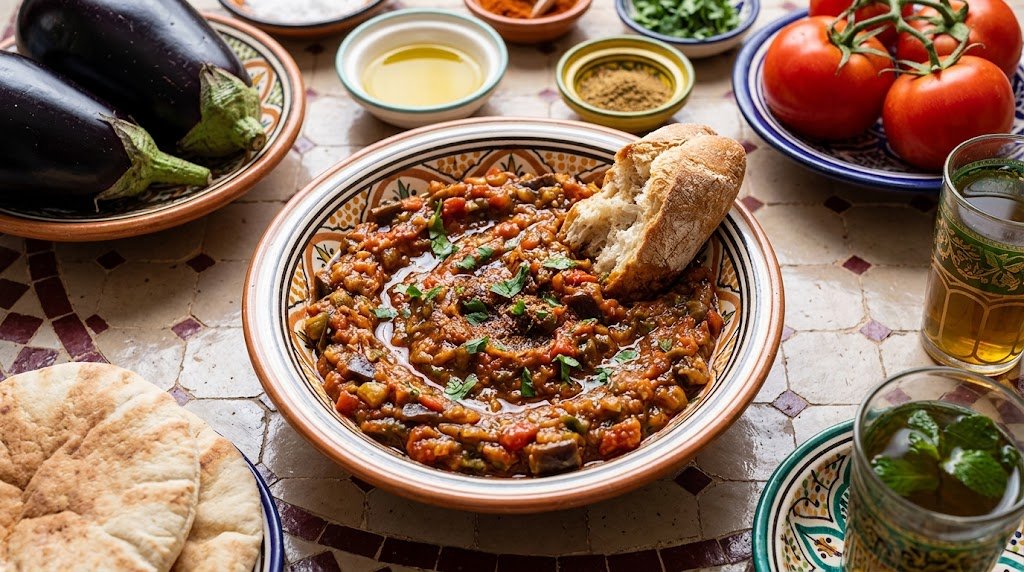
Learn how to make authentic Moroccan Zaalouk, a rich, smoky and flavorful eggplant-and-tomato dip made with garlic, olive oil, cumin and paprika. Perfect with warm bread, mezze platters, grilled meats or couscous.
Zaalouk is a traditional Moroccan cooked eggplant and tomato salad or dip. It combines eggplant, tomatoes, garlic, olive oil, cumin and paprika into a soft, richly seasoned mixture. Roasting the eggplant first gives it a deeper smoky flavor, while simmering the vegetables uncovered helps create the thick texture traditionally enjoyed with khobz (Moroccan bread).
Best served: Warm or at room temperature with Moroccan bread, mezze, grilled meats, tagines or couscous.
Diet: Naturally vegan and gluten-free when served with gluten-free bread or another gluten-free accompaniment.
Zaalouk is a traditional Moroccan eggplant and tomato dip loved for its rich flavor and simple ingredients. This classic dish from Moroccan cuisine is often served as a cooked salad, appetizer or side dish alongside warm bread.
Made with eggplant (aubergine), tomatoes, garlic, olive oil, cumin and paprika, Zaalouk transforms everyday vegetables into a deeply savory dish with a soft texture and, when roasted, a delicious smoky character.
Whether served warm, at room temperature or chilled, this easy Moroccan Zaalouk recipe is a wonderful example of how simple ingredients and careful cooking can create bold flavor.
What Is Zaalouk?
Zaalouk is a traditional Moroccan cooked salad or dip made primarily from eggplant and tomatoes. Garlic, olive oil, cumin, paprika and fresh herbs give it its characteristic savory and aromatic profile.
Unlike a fresh salad, Zaalouk is cooked and gently mashed. The eggplant becomes soft and creamy while the tomatoes reduce into a concentrated sauce. Depending on the cook, the finished dish can be slightly chunky or almost completely smooth.
The Cultural Origins of Zaalouk in Moroccan Cuisine
Zaalouk reflects the Moroccan tradition of turning fresh vegetables, olive oil and aromatic spices into flavorful dishes designed for sharing. It is commonly associated with the variety of small salads and vegetable preparations served at the beginning or alongside a meal.
Regional and family recipes naturally vary. Some cooks prefer a smoother texture, while others leave noticeable pieces of eggplant. Roasting may also be used when a stronger smoky character is desired.
Served with khobz, olives and other Moroccan salads, Zaalouk fits beautifully into a communal Moroccan meal.
Ingredients for Authentic Moroccan Zaalouk
Choosing the Best Eggplants for Zaalouk
Globe Eggplant vs. Italian Eggplant
| Eggplant Type | Characteristics | Best Use in Zaalouk |
|---|---|---|
| Globe | Large, meaty and widely available. | Excellent for roasting and slow cooking. |
| Italian | Smaller, tender and often thinner-skinned. | Great when you want a soft, smooth result. |
How to Select Fresh Eggplants
- Choose eggplants with smooth, shiny skin.
- Look for fruit that feels firm and heavy for its size.
- Avoid deeply wrinkled skin or obvious soft spots.
- A fresh-looking green stem is generally a good sign.
Do You Need to Salt Eggplant?
Salting eggplant is optional rather than essential for modern varieties. If you notice bitterness or want to draw out some moisture, lightly salt cut eggplant for 20–30 minutes, then rinse and pat dry before cooking.
The Secret to Perfect Zaalouk Texture
A good Zaalouk should be soft, thick and scoopable. The vegetables should be cooked enough to blend together without leaving the finished dish watery.
Chunky vs. Mashed Style
For a rustic version, mash the vegetables lightly and leave small pieces visible. For a smoother dip, continue mashing with a fork or spoon until the eggplant and tomatoes become almost spreadable.
Control the Moisture
Roasted vs. Boiled Eggplant for Zaalouk
| Method | Flavor | Texture | Best For |
|---|---|---|---|
| Roasting | Deep, smoky and slightly caramelized | Soft and creamy | Maximum flavor |
| Boiling | Milder and cleaner | Very soft | Simple everyday preparation |
| Stovetop cooking | Savory and concentrated | Soft and rustic | One-pan convenience |
If smoky flavor is your priority, roasting is the standout choice. Whichever method you use, cook the eggplant until it is completely tender and easy to mash.
How to Make Zaalouk: Step-by-Step
- Cook the eggplant. Roast or cook the eggplant until completely tender. Remove the skin if roasted and mash the flesh.
- Build the tomato base. Warm olive oil in a pan. Add minced garlic, followed by chopped tomatoes, paprika, cumin and optional chili flakes.
- Add the eggplant. Stir the cooked eggplant into the tomato mixture until evenly combined.
- Simmer uncovered. Cook gently for 10–15 minutes, stirring occasionally, until excess moisture has evaporated.
- Adjust the texture. Mash lightly for a rustic Zaalouk or more thoroughly for a smoother dip.
- Finish with herbs. Stir in fresh cilantro and parsley. Taste and adjust salt, pepper and optional lemon juice.
Cooking Methods Used in Traditional Moroccan Kitchens
Charcoal or Open-Flame Roasting
Cooking whole eggplant over a flame or hot coals can produce an especially pronounced smoky character. The charred skin is removed before the soft interior is incorporated into the dish.
Stovetop Preparation
Stovetop cooking is practical for everyday meals. Eggplant and tomatoes can be cooked together with olive oil, garlic and spices until soft and concentrated.
Oven Roasting
Oven roasting offers a convenient way to develop tenderness and deeper flavor without needing an open flame.
What Does Zaalouk Taste Like?
| Flavor | Where It Comes From |
|---|---|
| Smoky | Roasted or flame-cooked eggplant. |
| Garlicky | Fresh garlic cooked gently in olive oil. |
| Tangy | Tomatoes and optional lemon juice. |
| Earthy | Cumin and roasted eggplant. |
| Mildly spicy | Chili flakes and paprika, depending on the recipe. |
How Zaalouk Compares to Other Eggplant Dips
| Dish | Main Ingredients | Texture | Signature Flavor |
|---|---|---|---|
| Zaalouk | Eggplant, tomato, garlic, olive oil, cumin, paprika | Rustic to smooth | Smoky, tangy and savory |
| Baba Ganoush | Roasted eggplant, tahini, lemon, garlic | Creamy | Smoky, nutty and lemony |
| Taktouka | Tomatoes, roasted peppers, garlic, spices | Soft and rustic | Sweet, roasted and savory |
Best Ways to Serve Zaalouk
Serve Zaalouk with warm khobz and scoop the soft dip directly with pieces of bread. This is one of the most satisfying ways to enjoy its rich texture.
Add Zaalouk to a platter with olives, salads, roasted vegetables and other dips for a colorful sharing-style meal.
Its smoky, savory character works especially well alongside grilled chicken, lamb or beef.
Serve it alongside couscous or Moroccan tagines to add a rich vegetable component to the meal.
Traditional Moroccan Meal Pairings
Zaalouk fits naturally into a Moroccan meal alongside tagines, grilled meats and other vegetable salads. Its rich eggplant texture provides a satisfying contrast to saucy tagines and mild couscous.
- Chicken tagine: adds a smoky vegetable side.
- Lamb tagine: balances rich, aromatic meat.
- Grilled lamb or chicken: complements smoky flavors.
- Moroccan salads: adds a warm, hearty element.
How to Plate Zaalouk Like a Restaurant
Presentation can be simple while still looking elegant. Spoon the Zaalouk into a shallow serving dish and gently spread the surface with the back of a spoon.
- Finish with a small olive oil drizzle.
- Scatter fresh cilantro or parsley over the top.
- Add a light dusting of paprika if desired.
- Serve with warm khobz or another bread.
Health Benefits of Zaalouk
Zaalouk is naturally vegetable-forward and provides fiber and a range of nutrients from eggplant, tomatoes, herbs and spices. Olive oil contributes unsaturated fat, while the overall recipe can be a flavorful way to add more vegetables to a meal.
Eggplant & Plant Nutrients
Eggplant provides fiber and naturally occurring plant compounds, while tomatoes contribute nutrients such as vitamin C and carotenoids.
Olive Oil
Extra-virgin olive oil is a source of monounsaturated fat and is a staple of Mediterranean-style eating patterns.
Naturally Vegan
The basic recipe contains no meat, dairy or eggs, making Zaalouk naturally vegan and plant-based.
Zaalouk Variations
| Variation | How to Change It | Result |
|---|---|---|
| Spicy | Add more chili flakes or finely chopped hot pepper. | Brighter, hotter flavor. |
| Smoky | Roast the eggplant over high heat or an open flame. | Deeper smoky character. |
| Chunky | Mash gently and leave visible pieces. | Rustic texture. |
| Smooth | Mash thoroughly after simmering. | More spreadable dip. |
Pro Tips for Better Zaalouk
- Don’t rush the reduction: excess moisture is the enemy of thick Zaalouk.
- Roast for deeper flavor: especially if you enjoy a smoky dip.
- Taste near the end: adjust salt, cumin, paprika and acidity after the mixture has reduced.
- Keep some texture: a slightly rustic consistency works beautifully with bread.
- Finish with fresh herbs: cilantro and parsley add brightness to the rich cooked vegetables.
Common Mistakes When Making Zaalouk
1. Undercooking the Eggplant
Eggplant should be completely tender before it is mashed into the tomato base. Firm eggplant can produce an unpleasant texture.
2. Leaving Too Much Liquid
Tomatoes and eggplant release water. Cook the mixture uncovered and allow enough time for the liquid to reduce.
3. Weak Seasoning
Garlic, cumin, paprika, salt and fresh herbs create much of Zaalouk’s character. Taste as you cook rather than waiting until the very end.
Storage and Make-Ahead Tips
| Storage Method | Recommended Time | Best Practice |
|---|---|---|
| Refrigerator | 3–4 days | Cool promptly and store in an airtight container. |
| Freezer | Up to 2 months | Freeze in a suitable airtight freezer container. |
| Reheating | Until hot throughout | Warm gently in a pan or microwave. |
The flavor can become even more integrated after resting overnight, making Zaalouk an excellent make-ahead appetizer.
Is Zaalouk Vegan and Gluten-Free?
Yes. A traditional basic Zaalouk recipe made with vegetables, olive oil, herbs and spices is naturally vegan and gluten-free.
The important distinction is the accompaniment. Traditional khobz is generally wheat-based, so people avoiding gluten should choose gluten-free bread, rice or vegetables instead.
A flavorful Moroccan eggplant and tomato dip made with roasted or cooked eggplant, tomatoes, garlic, olive oil and warm spices.
Ingredients
- 2 medium eggplants (aubergines)
- 2 large tomatoes, finely chopped
- 3 cloves garlic, minced
- 3 tablespoons olive oil
- 1 teaspoon paprika
- 1 teaspoon cumin
- ½ teaspoon chili flakes, optional
- 2 tablespoons fresh cilantro, chopped
- 2 tablespoons fresh parsley, chopped
- Salt and black pepper, to taste
- 1 tablespoon lemon juice, optional
Instructions
- Cook the eggplant: Roast or cook until completely tender. Remove the skin if necessary and mash the flesh.
- Make the tomato base: Heat olive oil in a pan. Add garlic and cook briefly until fragrant. Add tomatoes, paprika, cumin and chili flakes.
- Add eggplant: Stir the mashed eggplant into the tomato mixture.
- Simmer: Cook uncovered for about 10–15 minutes, stirring occasionally, until thick.
- Mash to your preferred texture: Keep it rustic or make it smoother.
- Finish: Stir in cilantro and parsley. Adjust salt, pepper and optional lemon juice.
Approximate Nutrition Per Serving
Nutrition values are approximate and can vary with ingredient brands, quantities and serving sizes.
FAQs About Zaalouk
What is Moroccan Zaalouk?
Zaalouk is a traditional Moroccan cooked eggplant and tomato salad or dip made with eggplant, tomatoes, garlic, olive oil and spices such as cumin and paprika.
Is Zaalouk served hot or cold?
Zaalouk can be enjoyed warm, at room temperature or chilled. Many people prefer it slightly warm or at room temperature with bread.
How long does Zaalouk last in the refrigerator?
Properly stored cooked Zaalouk is best used within about 3–4 days. Keep it refrigerated in an airtight container.
Can you freeze Zaalouk?
Yes. Zaalouk can be frozen for longer storage, although its texture may soften slightly after thawing. Thaw it in the refrigerator before reheating.
What bread is traditionally served with Zaalouk?
Khobz, a Moroccan round bread, is a traditional accompaniment. Pita, flatbread or gluten-free bread can also work well.
What is the difference between Zaalouk and Baba Ganoush?
Zaalouk combines eggplant with tomatoes, garlic, olive oil, cumin and paprika, while Baba Ganoush commonly features roasted eggplant with tahini, lemon and garlic. Their flavor profiles and textures are therefore different.
How do I make Zaalouk less watery?
Simmer it uncovered over low to medium-low heat, stirring occasionally, until the excess liquid evaporates and the mixture becomes thick and scoopable.
Is Zaalouk vegan?
Yes. The basic recipe is naturally vegan because it contains vegetables, olive oil, herbs and spices rather than animal products.
Final Thoughts
Zaalouk is a beautiful example of how Moroccan cooking transforms simple vegetables into something deeply flavorful. Soft eggplant, concentrated tomatoes, garlic, olive oil and warm spices create a dish that is comforting, versatile and easy to share.
For the most flavorful result, focus on three things: cook the eggplant until completely tender, reduce the mixture until thick, and season gradually to taste. Roasting the eggplant is especially useful when you want a deeper smoky character.
Serve your finished Zaalouk with khobz, mezze dishes, grilled meats, couscous or Moroccan tagines for a flavorful North African-inspired meal.
If you love vegetable-forward global recipes, this authentic Moroccan eggplant and tomato dip is a simple and delicious recipe to keep in your regular rotation.
Read More :