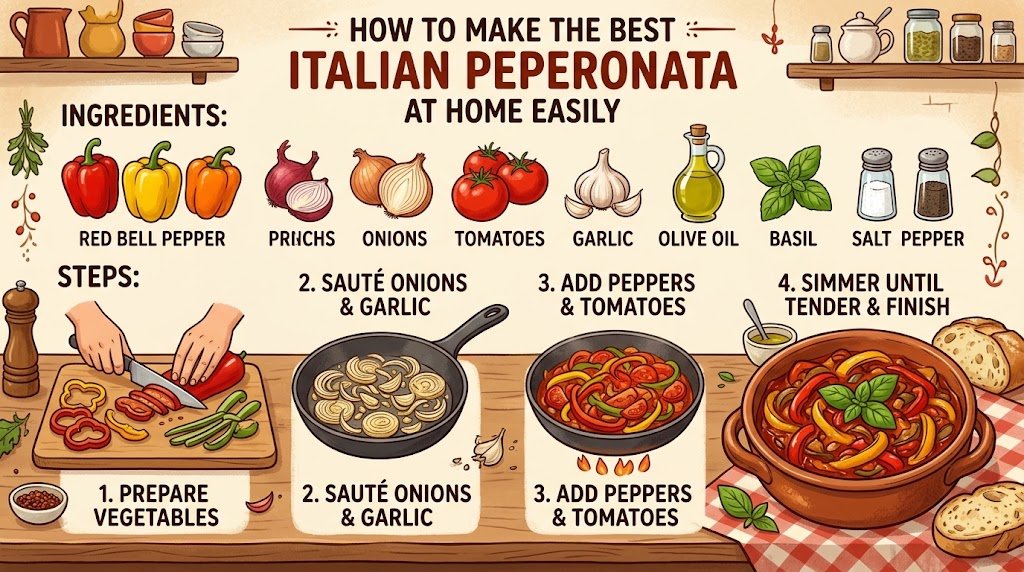
Make this colorful Italian peperonata with sweet bell peppers, tomatoes, onions, garlic, and extra virgin olive oil. This easy Mediterranean vegetable dish is delicious as a side, antipasto, pasta topping, or bruschetta.
Quick Answer: What Is Italian Peperonata?
Italian peperonata is a traditional vegetable dish made primarily with bell peppers, onions, tomatoes, garlic, and olive oil. The vegetables are cooked slowly until the peppers become tender, sweet, and deeply flavorful. It can be served warm, at room temperature, or chilled as a side dish, antipasto, pasta sauce, bruschetta topping, or sandwich filling.
Italian peperonata is a classic dish from Italian cuisine that celebrates the natural sweetness of bell peppers, tomatoes, and olive oil. This traditional Italian pepper stew is simple, colorful, and packed with Mediterranean flavor.
The secret is gentle cooking. As the peppers and onions soften, their natural sweetness develops and combines with the savory tomato base and fruity olive oil. The result is a comforting vegetable dish made from simple, everyday ingredients.
What Is Italian Peperonata?
Italian peperonata is a traditional Italian vegetable dish made mainly with bell peppers, onions, tomatoes, garlic, and olive oil. The vegetables are gently cooked until tender, allowing their flavors to merge into a rich, naturally sweet sauce.
In a classic peperonata recipe, the peppers and onions are first softened in olive oil before tomatoes and seasonings are added. The mixture then simmers slowly until the vegetables are tender and the sauce thickens.
The finished dish can be served as a side dish, antipasto, topping for bread, pasta accompaniment, or flavorful addition to grilled meats and fish.
Origin and History of Peperonata
Peperonata belongs to the broad tradition of Italian home cooking in which seasonal vegetables are transformed into satisfying dishes with a small number of ingredients. Versions are especially associated with southern and central Italian cooking, although recipes vary from household to household.
Its ingredients reflect the wider Mediterranean pantry: olive oil, tomatoes, garlic, onions, and sweet peppers. Slow cooking allows these ingredients to develop a concentrated flavor without requiring complicated techniques.
Regional and family versions may include ingredients such as vinegar, fresh herbs, capers, olives, or chili. There is no single universal version, which is part of what makes peperonata so adaptable.
💡 Traditional Cooking Tip
The defining characteristic is not a complicated ingredient list but the slow cooking of sweet peppers until tender and flavorful. Give the vegetables time rather than trying to rush the process.
Italian Peperonata vs. Ratatouille vs. Caponata
These Mediterranean vegetable dishes can look similar, but their ingredient combinations and flavor profiles are different.
| Dish | Origin | Main Ingredients | Typical Flavor & Style |
|---|---|---|---|
| Peperonata | Italy | Bell peppers, onions, tomatoes, olive oil | Sweet, soft, pepper-forward vegetable stew |
| Ratatouille | France | Eggplant, zucchini, tomatoes, peppers | Herbaceous mixed vegetable stew |
| Caponata | Sicily, Italy | Eggplant, tomatoes, olives, capers | Distinctive sweet-and-sour flavor |
Peperonata stands out because peppers are the star. The recipe focuses on their sweetness and tender texture rather than using a large variety of vegetables.
Why You Will Love This Italian Peperonata Recipe
🌿 Simple Ingredients
You only need everyday ingredients such as bell peppers, onions, tomatoes, garlic, and olive oil.
🥘 Naturally Vegetarian
This vegetable-forward recipe is naturally vegetarian and works beautifully as a plant-based side or topping.
🍅 Rich Mediterranean Flavor
Slow cooking brings out the natural sweetness of the peppers while tomatoes and olive oil create a flavorful sauce.
🍞 Extremely Versatile
Serve it with crusty bread, pasta, grilled meat, fish, sandwiches, pizza, or bruschetta.
🍅 Italian Peperonata Recipe
A simple, slow-cooked Italian pepper stew with sweet peppers, tomatoes, onions, garlic, and olive oil.
Ingredients
- 3 large bell peppers, red and yellow, sliced
- 1 large onion, thinly sliced
- 2 cloves garlic, minced
- 2 medium tomatoes or 1 cup tomato sauce
- 3 tablespoons extra virgin olive oil
- 1 tablespoon fresh basil, chopped
- Salt and black pepper, to taste
- Optional: 1 teaspoon vinegar
Instructions
Cooking Techniques That Improve Flavor
Slow Cooking
Gentle cooking gives the bell peppers and onions enough time to become soft and naturally sweet without scorching.
Developing Caramelized Flavor
Cooking the vegetables in olive oil helps develop deeper, sweeter flavors. Keep the heat moderate so the vegetables soften rather than burn.
Balance Acidity
Tomatoes provide acidity while ripe peppers contribute sweetness. Taste near the end and adjust seasoning gradually.
Finish With Freshness
Fresh basil and, if desired, a small amount of vinegar can brighten the finished peperonata.
Chef Tips for the Best Peperonata
Use Good Olive Oil
Because olive oil is an important part of the flavor, choose a good-quality extra virgin olive oil when possible.
Do Not Rush the Peppers
Keep the heat moderate and allow the peppers to soften gradually. This is one of the easiest ways to improve the final texture and flavor.
🍋 Optional Flavor Booster
A small splash of vinegar near the end can provide a bright contrast to the sweetness of the peppers. Start with a small amount and adjust to taste.
How to Adjust the Texture of Peperonata
Chunky vs. Soft Texture
For a chunkier peperonata, cut the peppers and onions into larger pieces and avoid overcooking. For a softer version, slice the vegetables more thinly and simmer them longer.
How to Adjust the Sauce
For a thicker pepper stew, cook it uncovered so excess moisture can evaporate. If the mixture becomes too thick, add a small splash of water or tomato sauce.
Regional Italian Variations of Peperonata
Sicilian-Inspired Version
Some Sicilian-style preparations may introduce ingredients such as capers, olives, or vinegar for a more pronounced Mediterranean sweet-and-tangy character.
Roman-Style Simplicity
Simpler preparations emphasize the natural flavor of slow-cooked peppers and tomatoes with olive oil and garlic.
Calabrian Heat
A little chili pepper can be added for a spicy variation inspired by the bold flavors of southern Italian cooking.
Important Regional Note
Italian peperonata has many household and regional variations, so ingredients such as vinegar, capers, olives, herbs, and chili should be treated as optional variations rather than requirements for every traditional recipe.
Creative Ways to Serve Peperonata
Antipasto Platter
Serve peperonata with olives, cheese, and crusty bread as part of a Mediterranean-inspired appetizer spread.
Bruschetta Topping
Spoon the tender peppers and tomato mixture over toasted bread for an easy, colorful bruschetta.
Pasta Sauce
Toss warm peperonata with cooked pasta and finish with olive oil for a quick vegetable-forward meal.
Sandwich Filling
Pair it with mozzarella or grilled chicken for a flavorful sandwich or panini filling.
Pizza Topping
Add the cooked peppers to pizza with cheese for a colorful Mediterranean-style topping.
What to Serve With Peperonata
🥖 Crusty Bread
Fresh crusty bread is one of the simplest pairings because it can soak up the flavorful juices from the peppers and tomatoes.
🍗 Grilled Chicken
The sweetness and acidity of peperonata make a flavorful accompaniment to simply seasoned grilled chicken.
🐟 Roasted Fish
Serve it alongside roasted fish such as cod or sea bass for a light Mediterranean-style meal.
🍝 Pasta
Toss peperonata with pasta for an easy meal built around tender vegetables and tomato flavor.
How Restaurants Plate Peperonata
Peperonata has a naturally vibrant appearance, so restaurant-style presentation does not need to be complicated.
- Rustic bowls: Serve in small ceramic bowls for a traditional homemade presentation.
- Mediterranean plating: Finish with a drizzle of extra virgin olive oil and fresh basil.
- Antipasto boards: Arrange beside olives, cheese, bread, and other small bites.
Beginner’s Guide to Cooking Bell Peppers
Choose the Right Peppers
Red, yellow, and orange bell peppers are excellent choices because they bring sweetness and vibrant color. Green peppers can also be used, but they generally have a more vegetal and less sweet flavor.
Understand Their Cooking Behavior
When cooked slowly in olive oil, bell peppers become soft and release moisture. This liquid combines with the tomatoes, onions, and garlic to create the sauce.
Mix Colors for Better Flavor
Combining different ripe pepper colors gives peperonata an attractive appearance and creates a more varied flavor profile.
Common Mistakes to Avoid When Making Peperonata
⚠️ Avoid These Common Problems
- Cooking too fast: High heat can scorch the peppers before they become tender.
- Using too much tomato: Too much tomato can overpower the sweet pepper flavor.
- Under-seasoning: Taste near the end and adjust salt, pepper, herbs, and acidity.
- Skipping the resting time: Allowing peperonata to rest briefly can help the flavors come together.
How to Store, Freeze, and Reheat Peperonata
| Storage Method | Best Practice | Typical Time |
|---|---|---|
| Refrigerator | Cool promptly and store in a covered airtight container. | About 3–4 days |
| Freezer | Use a freezer-safe container or bag and leave some room for expansion. | About 2–3 months for best quality |
| Reheating | Warm gently in a pan; add a splash of water if needed. | Until heated through |
🧊 Food-Safety Reminder
Do not leave cooked peperonata sitting at room temperature for extended periods. Refrigerate leftovers promptly in a shallow container and keep your refrigerator at 40°F (4°C) or below. When reheating leftovers, heat them thoroughly before serving.
Is Peperonata Healthy?
Peperonata can be a nutritious vegetable-based dish because its main ingredients are bell peppers, tomatoes, onions, garlic, herbs, and olive oil. Its overall nutrition depends on the amount of olive oil and other ingredients used.
Bell Peppers
Bell peppers provide vitamin C and other nutrients and contribute color, sweetness, and texture.
Tomatoes
Tomatoes provide nutrients and plant compounds including lycopene.
Olive Oil
Extra virgin olive oil contributes flavor and is a traditional component of Mediterranean-style cooking.
Vegetable-Focused
Because the recipe centers on vegetables, peperonata can be an easy way to add more plant foods to a meal.
Italian Peperonata Nutrition Facts
Nutrition varies according to portion size, pepper size, tomato quantity, and especially the amount of olive oil used. The figures below are therefore rough estimates rather than laboratory-tested nutrition facts.
| Nutrient | Approximate Amount* |
|---|---|
| Calories | Approximately 120–150 per serving |
| Fiber | Approximately 3–4 g |
| Vitamin C | Notable source, primarily from bell peppers |
*Actual values will vary based on ingredient brands, quantities, serving size, and preparation.
Cost of Making Peperonata at Home
Peperonata is naturally well suited to budget-conscious cooking because it uses relatively simple ingredients. Seasonal peppers and tomatoes can make the dish especially economical.
Peppers
Bell peppers are the main ingredient and account for much of the grocery cost.
Tomatoes
Fresh tomatoes or tomato sauce are both practical options depending on season and availability.
Olive Oil
A good extra virgin olive oil adds flavor, while only a modest amount is needed for the recipe.
Budget-Friendly Meal
Serve it with bread, pasta, grains, or other inexpensive staples to create a satisfying meal.
Frequently Asked Questions About Italian Peperonata
A classic Italian peperonata recipe uses bell peppers, onions, tomatoes, garlic, and olive oil. Fresh basil, black pepper, and a small amount of vinegar can also be added.
Yes. Allow the cooked peperonata to cool promptly, transfer it to a freezer-safe container, and freeze for best quality for roughly 2–3 months. Thaw safely and reheat thoroughly.
It can be served warm, at room temperature, or chilled. It is especially good as a side dish when warm and as an antipasto when served at room temperature.
Red and yellow bell peppers are excellent choices because they provide sweetness and vibrant color. Orange peppers are also a good option. Green peppers can be used if you enjoy their more vegetal flavor.
You can make pepper-based vegetable dishes without tomatoes, but the result will be different from the tomato-based peperonata described here. Tomatoes provide moisture and acidity that help balance the sweetness of the peppers.
Peppers and tomatoes naturally release liquid. Cook the mixture uncovered for a little longer so excess moisture can evaporate. Avoid adding extra liquid unless the pan becomes too dry.
Let the mixture cook gently for longer, taste it, and adjust the seasoning. Using naturally sweet ripe peppers can also help balance tomato acidity. Avoid adding large amounts of sugar simply to correct the flavor.
Final Tips for Perfect Italian Peperonata
The biggest secret to excellent Italian peperonata is patience. Let the bell peppers, onions, and tomatoes cook gently until they become tender and naturally sweet.
Use good-quality extra virgin olive oil, season gradually, and taste before serving. A small splash of vinegar and fresh basil can add a bright finishing touch when desired.
Serve your peperonata with crusty bread, pasta, grilled chicken, roasted fish, bruschetta, sandwiches, or pizza. Whether served warm or at room temperature, this colorful vegetable dish is an easy way to bring classic Mediterranean flavors to the table.
Read More :