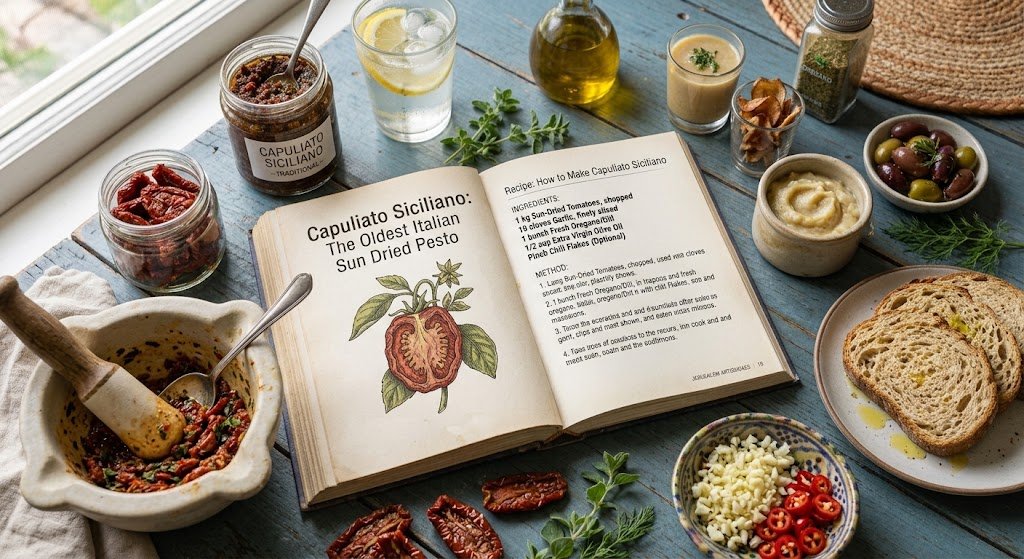
Discover how to make Capuliato, a rustic Sicilian condiment made with sun-dried tomatoes, garlic, herbs, and extra virgin olive oil. This intensely flavorful spread is perfect for pasta, bruschetta, sandwiches, pizza, and more.
Quick Answer: What Is Capuliato?
Capuliato is a traditional Sicilian condiment made primarily from finely minced or ground sun-dried tomatoes, garlic, herbs, and extra virgin olive oil. It has a concentrated tomato flavor, a slightly tangy taste, and a rustic, spreadable texture.
It is especially associated with southeastern Sicily and is commonly enjoyed with pasta, toasted bread, sandwiches, pizza, and other Mediterranean dishes.
What Is Capuliato?
Definition of Capuliato
Capuliato is a traditional Sicilian tomato condiment prepared from finely chopped or ground sun-dried tomatoes, garlic, herbs, and olive oil. The mixture is intentionally rustic rather than completely smooth, allowing the concentrated tomato flavor to remain the star.
The word is associated with the Sicilian idea of something being minced or finely chopped, which reflects the traditional preparation method. Unlike many modern pesto sauces, Capuliato does not depend on a large quantity of nuts or cheese.
Is Capuliato Really the Oldest Italian Pesto?
Capuliato is sometimes described as the “oldest Italian pesto” in food writing, largely because of its connection to older Sicilian methods of preserving and grinding tomatoes. However, this description is best treated as a culinary tradition or historical claim rather than a universally established fact.
What is clear is that Sicilian cooks developed practical ways to preserve seasonal tomatoes, including drying them and combining them with olive oil and seasonings. Capuliato represents this long tradition of turning preserved ingredients into intensely flavorful condiments.
Flavor Profile and Texture
- Intense tomato flavor from concentrated sun-dried tomatoes
- Garlic depth for savory aroma
- Herbal character from basil and oregano
- Richness from extra virgin olive oil
- Optional gentle heat from chili flakes
Proper Capuliato is generally thick, rustic, slightly chunky, and spreadable. It should not resemble a completely smooth purée.
Why Capuliato Is Different From Other Pestos
| Feature | Capuliato | Other Common Pestos |
|---|---|---|
| Main flavor | Concentrated sun-dried tomato | Often fresh herbs or tomatoes |
| Texture | Rustic and slightly chunky | Often smoother |
| Nuts | Usually not essential | Common in some traditional pestos |
| Cheese | Usually not essential | Common in Pesto Genovese |
| Best uses | Pasta, bread, sandwiches, pizza | Often pasta, bread, vegetables |
The History of Capuliato in Sicily
Origins in Southeastern Sicily
Capuliato is strongly associated with southeastern Sicily, particularly areas around Vittoria and Ragusa. The region’s warm Mediterranean climate has long supported tomato cultivation and traditional preservation practices.
The preparation reflects a broader Sicilian food philosophy: preserve seasonal ingredients at their peak and transform them into useful foods that can flavor simple meals throughout the year.
Traditional Tomato Preservation
Before modern refrigeration, drying was an important way to extend the usefulness of seasonal produce. Tomatoes could be sliced, salted, and dried until much of their moisture was removed. The resulting concentrated tomatoes could then be stored and later chopped or ground for use in flavorful preparations.
How Capuliato Became Part of Everyday Cooking
A concentrated tomato condiment is especially useful in simple Mediterranean cooking. A small amount can transform bread, pasta, vegetables, or sandwiches without requiring a complicated sauce.
Today, capuliato siciliano remains a flavorful expression of Sicilian cooking and a practical way to use preserved tomatoes.
The Cultural Importance of Capuliato
Rural Sicilian Kitchens
Preserved tomato preparations fit naturally into traditional rural kitchens, where cooks relied on ingredients that were inexpensive, seasonal, and capable of being stored. Capuliato embodies this practical approach to cooking: a few strong ingredients can provide flavor to an otherwise simple meal.
Seasonal Tomato Traditions
Tomato preservation traditionally took place when tomatoes were abundant. Drying allowed the intense flavor of summer tomatoes to remain useful beyond the harvest season.
Family Food Traditions
Like many traditional foods, preparations such as Capuliato can vary between families. The balance of garlic, herbs, chili, salt, and olive oil may differ depending on local custom and personal preference.
The Science Behind Sun-Dried Tomatoes
Why Drying Intensifies Tomato Flavor
Fresh tomatoes contain a large amount of water. As tomatoes dry, water is removed and their naturally occurring sugars, acids, and flavor compounds become more concentrated. This produces the characteristic sweet, savory, tangy intensity associated with sun-dried tomatoes.
Drying and Preservation
Drying is an ancient preservation technique because reducing available moisture can make an ingredient less favorable for microbial growth. However, once dried tomatoes are rehydrated and combined with fresh ingredients such as garlic and oil, the finished mixture becomes a perishable food and must be handled accordingly.
⚠️ Food Safety: Garlic + Oil
Do not treat a homemade garlic-and-oil mixture as shelf-stable simply because the tomatoes were originally dried. Fresh garlic stored under oil can create conditions favorable to botulism toxin formation if improperly stored.
For homemade Capuliato, keep the finished mixture refrigerated and avoid room-temperature storage. For longer storage, freezing is the safer practical option.
Texture and Acidity
Drying changes tomatoes from juicy and soft to firm and chewy. Once minced, they create the characteristic coarse, spreadable texture of Capuliato.
Ingredients for Traditional Capuliato
| Ingredient | Purpose | Helpful Tip |
|---|---|---|
| Sun-dried tomatoes | Main tomato flavor and texture | Choose flavorful, good-quality tomatoes |
| Garlic | Savory depth and aroma | Use fresh garlic in moderation |
| Basil | Fresh herbal character | Fresh or dried may be used |
| Oregano | Earthy Mediterranean flavor | A little goes a long way |
| Chili flakes | Optional heat | Adjust to taste |
| Extra virgin olive oil | Richness and binding | Add gradually rather than flooding the mixture |
Sun-Dried Tomatoes
Sun-dried tomatoes are the heart of Capuliato. Their concentrated flavor creates the deep tomato character that distinguishes this condiment.
Garlic
Garlic provides aromatic depth. Because the tomatoes already have an intense flavor, a modest amount of garlic is usually enough.
Basil and Oregano
Basil contributes freshness, while oregano adds an earthy, slightly peppery Mediterranean note.
Chili Pepper
Chili is optional. Use chili flakes for gentle heat or increase the amount if you prefer a more pronounced spicy finish.
Extra Virgin Olive Oil
Good extra virgin olive oil binds the ingredients and gives Capuliato its characteristic richness. Add it gradually so the finished mixture remains thick and spreadable.
How to Make Capuliato: Traditional Method
1. Prepare the Sun-Dried Tomatoes
- Choose good-quality sun-dried tomatoes.
- If they are very salty or dusty, rinse them briefly.
- Soak them in warm water for approximately 10–20 minutes, or until pliable.
- Drain thoroughly and pat dry.
2. Mince the Tomatoes
Traditionally, the tomatoes can be finely chopped or processed through a grinder. The objective is a coarse, rustic consistency.
3. Add Garlic and Herbs
Combine the minced tomatoes with garlic, basil, oregano, and optional chili flakes. Mix thoroughly so the seasonings are distributed throughout the tomatoes.
4. Add Olive Oil
Slowly mix in the extra virgin olive oil. Stop when the mixture becomes moist, rich, and spreadable without becoming excessively oily.
5. Taste and Adjust
Taste before adding salt because many commercial sun-dried tomatoes are already salted. Adjust chili and herbs according to preference.
6. Serve or Refrigerate
Capuliato can be served immediately or transferred to a clean container and refrigerated.
Modern Capuliato Recipe: Quick Kitchen Method
A food processor makes the preparation faster while still allowing you to preserve the characteristic rustic texture.
- Soak and thoroughly drain the tomatoes.
- Add them to a food processor with garlic and herbs.
- Pulse briefly several times.
- Add olive oil gradually.
- Stop processing as soon as the mixture is finely chopped but still textured.
How to Adjust the Spice
- Mild: omit chili.
- Medium: add a small pinch of chili flakes.
- Hot: increase chili gradually until it reaches your preferred heat.
How to Fix the Texture
- If too smooth, stir in finely chopped sun-dried tomatoes.
- If too dry, add olive oil a teaspoon at a time.
- If too oily, add more finely minced tomato.
Capuliato vs Other Italian Pestos
| Type | Main Ingredients | Flavor | Texture |
|---|---|---|---|
| Capuliato | Sun-dried tomatoes, garlic, herbs, olive oil | Deep, tangy, savory | Rustic and chunky |
| Pesto Genovese | Basil, pine nuts, cheese, garlic, olive oil | Fresh, herbal, nutty | Creamy and coarse |
| Pesto Trapanese | Fresh tomatoes, almonds, basil, garlic, olive oil | Fresh, tomato-forward, nutty | Coarse and creamy |
| Pesto Rosso | Often sun-dried tomatoes, nuts, cheese, olive oil | Rich and savory | Usually smoother |
Capuliato vs Pesto Genovese
Pesto Genovese is built around fresh basil, pine nuts, cheese, garlic, and olive oil. Capuliato instead centers on concentrated sun-dried tomatoes.
Capuliato vs Pesto Trapanese
Pesto Trapanese is another Sicilian pesto, but it typically uses fresh tomatoes, almonds, basil, garlic, and olive oil. Capuliato has a more concentrated flavor because its tomato component is dried.
Capuliato vs Pesto Rosso
Pesto Rosso is a broad category of red pesto preparations and can contain cheese, nuts, tomato paste, or other ingredients. Capuliato is more specifically associated with the rustic minced sun-dried tomato preparation of Sicily.
Best Ways to Use Capuliato
1. Pasta With Capuliato
Toss hot pasta with a spoonful of Capuliato, a little pasta water, and extra virgin olive oil. Finish with toasted breadcrumbs or cheese if desired.
2. Bruschetta
Spread Capuliato over toasted bread and finish with a drizzle of olive oil. The combination creates a simple, intensely flavored Mediterranean appetizer.
3. Sandwich Spread
Use Capuliato in sandwiches with mozzarella, grilled vegetables, roasted chicken, or Mediterranean-style fillings.
4. Pizza Topping
Use a thin layer as a pizza topping or flavor booster alongside mozzarella, olives, roasted vegetables, and herbs.
5. Salad Dressing Base
Whisk a spoonful of Capuliato with olive oil and a splash of lemon juice or vinegar to make a bold Mediterranean-style dressing.
Best Pasta Pairings for Capuliato
| Pasta | Why It Works |
|---|---|
| Spaghetti | Long strands distribute the rustic tomato mixture evenly. |
| Bucatini | The thicker shape works well with bold, concentrated sauces. |
| Linguine | The wider surface helps thick tomato pesto cling to the pasta. |
| Penne | The tubes capture bits of tomato and herbs. |
| Fusilli | The spirals trap the rustic pesto beautifully. |
| Rigatoni | Large ridges pair well with chunky tomato mixtures. |
Nutritional Benefits of Capuliato
Capuliato can fit comfortably into a Mediterranean-style eating pattern because it is based on tomatoes, herbs, garlic, and olive oil. However, its nutritional value depends on the specific ingredients and quantities used.
Sun-Dried Tomatoes and Lycopene
Tomatoes contain lycopene, a naturally occurring carotenoid. Processing and concentration can alter the amount of nutrients available per serving, so sun-dried tomatoes provide a concentrated tomato source, although portion size also matters.
Olive Oil and Healthy Fats
Extra virgin olive oil contributes predominantly monounsaturated fat and other naturally occurring plant compounds. Because Capuliato is calorie-dense, a little can provide plenty of flavor.
How to Store Capuliato Safely
⚠️ Important Storage Guidance
Homemade Capuliato containing fresh garlic and oil should be refrigerated. Do not store homemade garlic-in-oil mixtures at room temperature.
Covering the surface with olive oil does not make a homemade garlic-and-oil mixture shelf-stable.
Refrigerator Storage
Transfer prepared Capuliato to a clean, covered container and refrigerate promptly. Use clean utensils each time you serve it.
Rather than relying on an extended homemade shelf life, prepare manageable quantities and use them promptly. If you notice mold, unusual odor, bubbling, or other signs of spoilage, discard the product.
Can You Freeze Capuliato?
Yes. Freezing is a practical option for longer storage. Portion the pesto into small freezer-safe containers or silicone ice cube trays, then transfer frozen portions to an airtight freezer bag or container.
Texture After Freezing
The olive oil may separate slightly and the tomatoes may soften after thawing. Stir thoroughly to bring the mixture back together.
Common Mistakes When Making Capuliato
Using Low-Quality Tomatoes
Because tomatoes make up most of the recipe, their quality has a major effect on the final result. Choose tomatoes with good color, aroma, and flavor.
Over-Blending
Processing too aggressively can turn Capuliato into a smooth paste. Short pulses or hand chopping produce a more traditional rustic texture.
Adding Too Much Oil
Olive oil should bind the mixture rather than overwhelm it. Add it gradually until the consistency is thick and spreadable.
Using Too Much Garlic
Garlic should complement the tomato rather than dominate it. Start with a modest amount and adjust according to taste.
Chef Tips for Authentic Sicilian Flavor
Frequently Asked Questions About Capuliato
What is Capuliato?
Capuliato is a traditional Sicilian condiment made primarily from minced sun-dried tomatoes, garlic, herbs, and extra virgin olive oil. It is commonly served with pasta, bread, sandwiches, and other Mediterranean foods.
Is Capuliato the oldest Italian pesto?
It is sometimes described that way because of its association with traditional Sicilian preservation practices, but “oldest Italian pesto” is a historical characterization rather than a universally proven fact.
What does Capuliato taste like?
It is concentrated, savory, slightly tangy, tomato-forward, garlicky, and rich from olive oil. Chili can add gentle heat.
How do Italians eat Capuliato?
It can be tossed with pasta, spread on bruschetta, used in sandwiches, added to pizza, or incorporated into vegetable and salad dishes.
How long does homemade Capuliato last?
Because homemade versions may contain fresh garlic and oil, keep them refrigerated and follow conservative food-safety practices rather than treating the mixture as shelf-stable. Discard it if there are signs of spoilage.
Can Capuliato be frozen?
Yes. Freeze it in small portions for convenient longer-term storage. The texture may soften or separate slightly after thawing, but stirring usually restores the mixture.
Is Capuliato spicy?
It does not have to be. Chili is optional, so you can make Capuliato mild or add chili flakes for a more pronounced kick.
Is Capuliato the same as caponata?
No. Capuliato is a tomato-based condiment, while caponata is a Sicilian cooked vegetable dish traditionally centered on eggplant.
Traditional Capuliato Recipe
Sicilian Sun-Dried Tomato Pesto
*The soaking time for the tomatoes is included in the practical preparation window.
- 1 cup sun-dried tomatoes, softened and well drained
- 2 cloves garlic, finely minced
- 2 tablespoons extra virgin olive oil, plus additional as needed
- 1 tablespoon fresh basil, finely chopped
- ½ teaspoon dried oregano
- ¼ teaspoon chili flakes, optional
- Salt, only if needed
- Use high-quality sun-dried tomatoes for the best flavor.
- Keep the mixture rustic and slightly chunky.
- Add olive oil gradually instead of making the pesto excessively oily.
- Taste before adding salt.
- Refrigerate homemade Capuliato containing fresh garlic.
- Freeze extra portions if you need longer storage.
Nutrition is approximate and can vary substantially depending on the brand of sun-dried tomatoes, amount of olive oil, and final serving size.
Final Thoughts
Capuliato is a wonderful example of how Sicilian cooking turns a handful of preserved ingredients into something deeply flavorful and incredibly versatile. With sun-dried tomatoes, garlic, herbs, and extra virgin olive oil, you can create a rustic condiment that works across everything from pasta and bruschetta to sandwiches, pizza, and vegetables.
Its connection to Sicilian tomato-preservation traditions gives Capuliato a distinctive place in Mediterranean cooking. While historical descriptions sometimes call it one of the oldest Italian pestos, its most important quality is simpler: it delivers concentrated tomato flavor with very little effort.
Make a small batch, keep it properly refrigerated, or freeze portions for later. Once you have a jar of homemade Capuliato available, even an ordinary bowl of pasta can become a bold and satisfying Sicilian-inspired meal.
Read More :