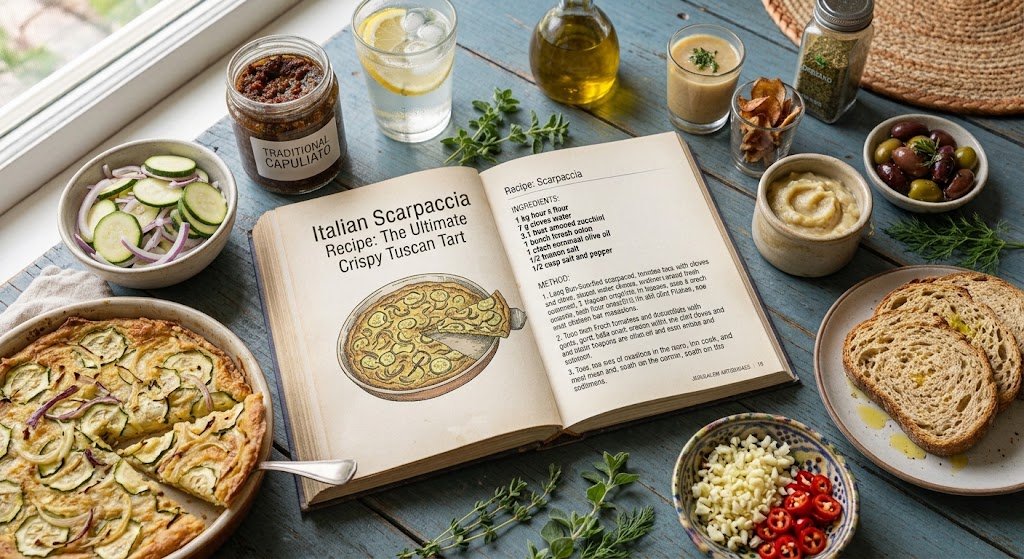
If you love simple Mediterranean food, Italian Scarpaccia is a rustic Tuscan dish worth discovering. Made with fresh zucchini, olive oil, herbs, Parmesan, and a light batter, this thin zucchini tart develops beautifully crispy edges while keeping a tender, vegetable-rich center.
Italian Scarpaccia is a thin, rustic zucchini bake associated with Viareggio, Tuscany. The savory version combines thinly sliced zucchini with a light flour or cornmeal batter, olive oil, Parmesan, and herbs. It is spread very thinly in a pan and baked hot until the edges become golden and crisp.
Italian Scarpaccia at a Glance
Texture You Should Expect
The ideal result is a thin, crispy zucchini scarpaccia with golden edges, tender zucchini, and a rich olive-oil flavor. Keeping the batter thin and removing excess moisture from the zucchini are the two most important texture controls.
What Is Italian Scarpaccia?
Italian Scarpaccia is a traditional Tuscan zucchini dish that sits somewhere between a savory tart, flatbread, and rustic vegetable bake. It is closely associated with the coastal town of Viareggio in Tuscany, where seasonal zucchini became the star of this simple preparation.
Scarpaccia is intentionally thin and flat. Unlike focaccia, it is not a yeasted bread, and unlike zucchini bread, it is not a sweet, cake-like loaf. Instead, a light batter binds a generous amount of zucchini before the mixture is baked in a wide pan.
The History & Origins of Scarpaccia
The savory form of Italian Scarpaccia is strongly associated with Viareggio on the Tuscan coast. Its rustic character reflects the practical cooking traditions of homes that relied on seasonal vegetables and inexpensive pantry staples.
Tuscan Coastal Roots
The coastal setting of Viareggio is closely connected with fresh produce, olive oil, herbs, and straightforward preparations. Scarpaccia fits naturally into that style because it transforms abundant summer zucchini into a satisfying baked dish.
Peasant Cooking Tradition
Like many rustic Italian dishes, scarpaccia makes efficient use of simple ingredients. A generous quantity of zucchini can be combined with flour or cornmeal, olive oil, herbs, and cheese to create a dish that is both economical and flavorful.
Sweet Carnival Scarpaccia
There is also a sweet Tuscan scarpaccia. This variation uses zucchini with ingredients such as sugar, flour, and sometimes citrus zest. It demonstrates how the same seasonal ingredient can appear in both savory and sweet regional traditions.
Sweet vs. Savory Scarpaccia
One of the biggest points of confusion is whether scarpaccia is a sweet or savory dish. Both traditions exist. The savory zucchini version is the style most readers expect when searching for an Italian zucchini tart, while the sweet version has its own Tuscan traditions.
| Feature | Savory Scarpaccia | Sweet Scarpaccia |
|---|---|---|
| Main flavor | Savory and herb-rich | Lightly sweet |
| Key ingredients | Zucchini, olive oil, Parmesan, herbs | Zucchini, sugar, flour, optional citrus |
| Texture | Thin with crisp edges and tender center | Generally softer and more cake-like |
| Serving occasion | Lunch, appetizer, aperitivo | Dessert or traditional festival treat |
What Makes Authentic Scarpaccia Different?
The batter should be light enough to spread into a very thin layer rather than forming a thick cake or bread.
The savory preparation does not rely on yeast or a rising period, helping it retain its characteristic flat shape.
Zucchini is the main ingredient. The batter should bind the vegetables rather than overwhelm them.
A hot oven, sufficient olive oil, and a thin layer help create the signature golden crust.
Ingredient Breakdown: Why Each Ingredient Matters
Zucchini
Zucchini provides the moisture, vegetable flavor, and tender texture that define scarpaccia. Thin slices distribute evenly through the batter and cook quickly.
Flour or Cornmeal
Flour provides structure, while fine cornmeal can contribute a more rustic texture and subtle crunch. Choose according to the texture you prefer.
Olive Oil
Olive oil adds richness and is particularly important around the edges, where it helps encourage browning and crispness.
Parmesan
Parmesan contributes savory depth and helps the surface brown. For a stronger cheese flavor, a little Pecorino Romano can also work.
Fresh Herbs
Basil, thyme, rosemary, or oregano can add aromatic Mediterranean character without making the dish heavy.
Salt
Salt seasons the zucchini and helps draw out some of its excess moisture before baking.
Ingredients & Smart Substitutions
Thinly sliced.
Or use fine cornmeal.
Freshly grated works well.
Plus extra for the pan.
Adjust slightly for batter consistency.
Basil, thyme, or rosemary.
Plus more as needed.
Freshly ground if possible.
Gluten-Free Option
Replace regular flour with a gluten-free flour blend, rice flour, or chickpea flour. Fine rice flour is especially useful when you want a delicate texture.
Vegan Option
Replace Parmesan with nutritional yeast or vegan Parmesan, or omit it and increase the herbs and seasoning.
How to Make Authentic Italian Scarpaccia
Prepare the zucchini
Wash and slice the zucchini very thinly with a sharp knife or mandoline.
Salt and drain
Toss the zucchini with salt and let it sit for 10–15 minutes. Pat or gently squeeze away released moisture.
Mix the thin batter
Combine flour or cornmeal, water, olive oil, Parmesan, herbs, and pepper. Aim for a thin, lightly coating batter.
Combine zucchini and batter
Fold the prepared zucchini into the batter until the slices are evenly coated without being buried under a thick layer.
Spread very thinly
Pour into a well-oiled wide baking pan. Use a spatula to create an even layer around ¼ inch / 5–6 mm thick.
Bake until golden
Bake at approximately 200°C / 400°F for 30–35 minutes, watching for deeply golden edges and a set center.
Rest and slice
Let the scarpaccia rest for 5–10 minutes before cutting. Serve warm or at room temperature.
⚠️ Texture-Safety Check
The most important cooking control is moisture. Wet zucchini plus a thick layer is the fastest route to soggy scarpaccia. Drain the zucchini, use a wide pan, and spread the mixture thinly before baking.
How to Remove Moisture From Zucchini
Zucchini contains a substantial amount of water, so moisture management is one of the most important parts of preparing a crisp Italian scarpaccia.
The Salting Method
Place the sliced zucchini in a bowl and sprinkle with salt. Toss gently and allow it to sit for 10–15 minutes.
Press or Pat Dry
After resting, gently press the zucchini or pat it thoroughly with paper towels. The objective is to remove excess liquid without crushing the slices.
Why It Matters
Less free moisture means the batter remains concentrated and the oven can brown the surface more effectively. This directly improves the chance of getting crispy edges and a tender center.
Texture Science: How to Get Scarpaccia Thin & Crispy
Aim for approximately ¼ inch (5–6 mm) when spread in the pan.
The batter should be thin and lightly coating, not thick like cake batter.
A wide, shallow metal pan encourages faster heat transfer and a thinner layer.
A hot oven around 200°C / 400°F helps the surface brown while the zucchini cooks.
5 Proven Tips for Crispy Edges
A wide pan gives you more surface area and makes it easier to maintain the thin layer that scarpaccia needs.
The thinner the mixture, the more easily moisture escapes and the more pronounced the crisp edges become.
Strong heat encourages browning and helps prevent the center from remaining overly wet.
Olive oil around the pan helps create a beautifully browned, slightly fried edge.
Too much zucchini in a small pan traps moisture and prevents the mixture from crisping properly.
Common Mistakes That Ruin Scarpaccia
| Problem | Why It Happens | How to Fix It |
|---|---|---|
| Thick batter | Too much flour or too little liquid. | Use a lighter batter that coats rather than surrounds the zucchini. |
| Soggy center | Excess zucchini moisture or a layer that is too thick. | Salt and drain zucchini, then spread it thinner. |
| Pale surface | Insufficient heat or baking time. | Use a properly preheated oven and bake until visibly golden. |
| Dense texture | Too much flour compared with zucchini. | Keep zucchini as the dominant ingredient. |
| Soft bottom | Small or unsuitable pan. | Use a wide, shallow metal baking pan. |
What Does Italian Scarpaccia Taste Like?
A good zucchini scarpaccia tastes fresh, savory, and distinctly Mediterranean. The zucchini provides mild sweetness, while olive oil, Parmesan, herbs, salt, and pepper add depth.
The most appealing characteristic is the texture contrast: crispy, lightly caramelized edges surrounding a tender center packed with zucchini.
Scarpaccia vs. Focaccia vs. Zucchini Bread
| Feature | Italian Scarpaccia | Focaccia | Zucchini Bread |
|---|---|---|---|
| Texture | Thin, crisp edges, tender zucchini center | Thick, airy and bread-like | Soft, moist and cake-like |
| Main ingredients | Zucchini, flour/cornmeal, olive oil, Parmesan, herbs | Flour, yeast, olive oil, salt | Zucchini, flour, eggs, oil, usually sugar |
| Leavening | No yeast | Yeast | Usually chemical leavening |
| Typical use | Appetizer, aperitivo, light lunch | Side bread or sandwich base | Breakfast, snack or dessert |
Flavor Variations to Try
Add thinly sliced potato alongside the zucchini for a heartier variation.
Add finely sliced caramelized onion for natural sweetness and deeper flavor.
Add red pepper flakes for a gentle spicy kick.
Use a combination of basil, thyme, rosemary, and oregano for a more aromatic version.
Best Occasions to Serve Scarpaccia
Aperitivo
Cut the cooled scarpaccia into small squares and serve it as a rustic Italian bite alongside drinks.
Summer Lunch
Pair it with a fresh green salad or tomato salad for a light seasonal meal.
Picnic Food
Scarpaccia travels well once cooled and can be enjoyed at room temperature.
Dinner Party Appetizer
Its rustic appearance and golden edges make it a natural addition to an Italian-inspired appetizer spread.
What to Serve With Italian Scarpaccia
Try arugula, tomato-basil, or a simple green salad.
Serve with olives, roasted peppers, mozzarella, or cured meats.
Pair with tomato soup, vegetable minestrone, or a light Italian bean soup.
Crisp whites such as Pinot Grigio or Vermentino complement the zucchini and herbs.
Wine Pairings for Scarpaccia
Pinot Grigio
Its fresh acidity and light citrus character work well with zucchini, olive oil, and herbs.
Vermentino
A Mediterranean white with bright acidity and herbal character makes a natural partner for this coastal Tuscan-style dish.
Light Red Wine
If you prefer red wine, a lighter-bodied option can complement the Parmesan and savory herbs without overwhelming the delicate zucchini.
Is Italian Scarpaccia Healthy?
Italian scarpaccia can fit into a balanced diet, particularly because zucchini is the main ingredient and the recipe uses olive oil rather than heavy sauces.
The exact nutrition depends heavily on the amount of oil, cheese, flour, and serving size. For a lighter version, reduce the Parmesan slightly, moderate the oil, and increase the zucchini.
Nutrition Note
The nutrition figures below are estimates rather than laboratory-tested values. Actual calories and macronutrients can vary according to ingredient brands, pan size, oil absorption, and portion size.
| Nutrient | Estimated Amount Per Serving |
|---|---|
| Calories | 180–220 kcal |
| Carbohydrates | 18–22 g |
| Protein | 5–7 g |
| Fat | 8–10 g |
| Fiber | 2–3 g |
Storage, Reheating & Freezing Guide
Refrigerator
Cool leftovers promptly, place them in an airtight container, and refrigerate. For best quality, use within approximately 3–4 days.
Best Reheating Method
Reheat slices in a 180°C / 350°F oven for about 5–8 minutes. Oven reheating is preferable to microwaving when you want to restore some crispness.
⚠️ Food-Safety Reminder
Refrigerate perishable leftovers promptly rather than leaving them at room temperature for extended periods. When reheating, make sure the center is heated thoroughly before serving.
Freezing
Scarpaccia can be frozen for approximately 2 months, although zucchini’s high water content may soften the texture after thawing. Wrap individual portions well and reheat in the oven.
Is Scarpaccia Better the Next Day?
The flavor can become more integrated after resting overnight because the zucchini, olive oil, Parmesan, and herbs have more time to mingle. The main trade-off is texture: the crispy edges soften in the refrigerator.
For a better texture the following day, reheat portions in a hot oven or skillet for a few minutes.
Cost Per Serving & Budget Analysis
Scarpaccia is naturally budget-friendly because it relies on zucchini and everyday pantry staples. Actual costs vary substantially by location, season, cheese brand, and olive oil.
| Ingredient Group | Typical Role | Cost Consideration |
|---|---|---|
| Zucchini | Main vegetable | Usually most economical during summer |
| Flour / cornmeal | Provides structure | Small quantity keeps cost low |
| Olive oil | Flavor and browning | Cost varies considerably by quality |
| Parmesan & herbs | Flavor | Used in relatively small quantities |
Budget-Friendly Takeaway
Scarpaccia remains an economical way to turn seasonal zucchini into a satisfying appetizer or light meal without relying on expensive ingredients.
Recipe Card: Italian Scarpaccia
Thin, crispy-edged Tuscan zucchini tart with Parmesan and herbs.
Ingredients
- 2–3 medium zucchini, thinly sliced
- ½ cup flour or fine cornmeal
- ¼ cup grated Parmesan
- 3 tablespoons olive oil, plus extra for the pan
- 1 cup water
- 1 tablespoon fresh herbs
- ½ teaspoon salt
- ¼ teaspoon black pepper
- Optional: red chili flakes or extra Parmesan
Instructions
Slice the zucchini
Wash and slice zucchini very thinly.
Remove excess moisture
Salt the slices and rest for 10–15 minutes. Pat dry thoroughly.
Make the batter
Whisk flour, water, olive oil, Parmesan, herbs, and pepper until thin and smooth.
Combine
Fold the zucchini into the batter until evenly coated.
Spread
Transfer to a generously oiled wide pan and spread into a thin 5–6 mm layer.
Bake
Bake at 200°C / 400°F for 30–35 minutes, until golden and crisp at the edges.
Rest and serve
Rest for 5–10 minutes, slice, and serve warm or at room temperature.
Recipe Notes
- Drain the zucchini well for the best texture.
- Use a wide metal baking pan whenever possible.
- Keep the mixture very thin.
- Serve warm or at room temperature.
| Nutrition | Approx. Per Serving |
|---|---|
| Calories | 180–220 kcal |
| Carbohydrates | 18–22 g |
| Protein | 5–7 g |
| Fat | 8–10 g |
| Fiber | 2–3 g |
Frequently Asked Questions About Italian Scarpaccia
What is Italian Scarpaccia?
Italian Scarpaccia is a thin Tuscan zucchini bake associated with Viareggio. The savory version combines zucchini with a light batter, olive oil, Parmesan, herbs, and seasoning before being baked until golden.
Is Scarpaccia sweet or savory?
Both versions exist. The savory zucchini version is commonly prepared with olive oil, herbs, and Parmesan, while traditional sweet versions can include sugar, flour, zucchini, and citrus.
Why is my Scarpaccia soggy?
The most likely causes are excess zucchini moisture, a thick layer, or insufficient browning. Salt and drain the zucchini, use a wide pan, spread the mixture thinly, and bake in a properly preheated oven.
Can Scarpaccia be frozen?
Yes. Freeze well-wrapped portions for approximately 2 months. Expect some softening because zucchini contains a lot of water. Oven reheating can help restore some crispness.
Can I make Scarpaccia gluten-free?
Yes. Try a gluten-free flour blend, rice flour, or chickpea flour. Keep the batter thin so the finished tart retains its characteristic texture.
How thin should Scarpaccia be?
Aim for approximately ¼ inch (5–6 mm). A thin layer is one of the most important factors in developing crisp golden edges.
Can I make vegan Italian Scarpaccia?
Yes. Replace Parmesan with nutritional yeast or vegan Parmesan, or omit the cheese and increase the herbs and seasoning.
What is the best pan for Scarpaccia?
A wide, shallow metal pan is an excellent choice because it helps the mixture spread thinly and promotes better browning.
Final Thoughts
Italian Scarpaccia is a beautiful example of simple Tuscan cooking. With fresh zucchini, olive oil, herbs, Parmesan, and a light batter, you can create a rustic dish with an irresistible combination of crispy golden edges and a tender vegetable-filled center.
The most important secrets are simple: remove excess zucchini moisture, keep the batter thin, use a wide pan, and bake hot enough to encourage browning. Serve it as a summer lunch, Italian aperitivo snack, picnic dish, or dinner-party appetizer.
If you enjoy Mediterranean vegetable recipes, this traditional Tuscan zucchini scarpaccia is an easy and flavorful way to turn seasonal zucchini into something special.
Read More :