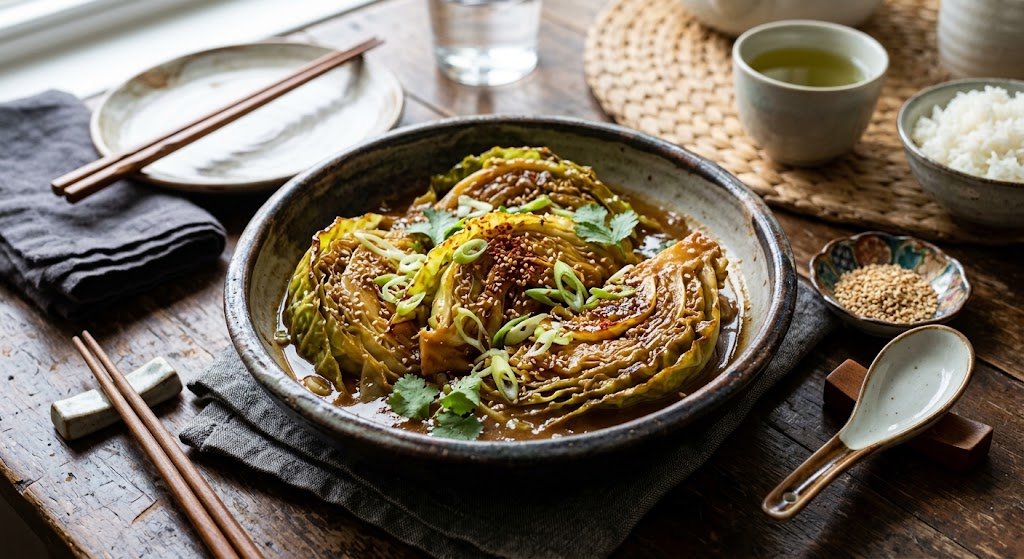
Turn humble cabbage into a deeply savory, tender, glossy side dish with miso, caramelized edges, and a simple one-pan braising method.
Quick Answer
Braised Miso Cabbage is a simple Japanese-inspired cabbage recipe made by searing thick cabbage wedges until golden, then gently braising them in a light miso sauce. The miso adds deep umami flavor, while the braising process makes the center tender without turning the cabbage completely mushy.
Cut cabbage into thick wedges, keeping the core intact. Sear them in a hot skillet, then add a mixture of white miso, broth, rice vinegar, and optional soy sauce. Cover for about 8–10 minutes, then uncover and reduce the sauce into a glossy glaze.
Why This Braised Miso Cabbage Recipe Works
Perfect Salt–Sweet Balance
Cabbage becomes naturally sweeter as it cooks, while miso contributes fermented savory depth and saltiness. A splash of rice vinegar brightens the sauce and keeps the dish from tasting heavy.
Caramelized Cabbage Edges
Searing the wedges before braising creates deeply browned surfaces. This develops additional flavor and prevents the finished cabbage from tasting like simply steamed vegetables.
One-Pan Simplicity
The entire dish can be made in one skillet: sear, braise, reduce, and serve. That makes it especially useful for quick weeknight meals.
Beginner-Friendly Technique
Keep the wedges intact, avoid overcrowding the skillet, and control the amount of liquid. These three details make the biggest difference in texture.
What Is Braised Miso Cabbage?
Braised Miso Cabbage is made by first searing thick cabbage wedges and then gently cooking them with a small amount of liquid and miso sauce. The technique combines browning with moist-heat cooking, producing tender inner layers and flavorful exterior surfaces.
Japanese-Inspired, Not Traditionally Japanese
This recipe uses Japanese-inspired ingredients such as white miso, soy sauce, sesame oil, and rice vinegar. It is best described as a modern Japanese-inspired cabbage dish rather than a traditional Japanese recipe.
What Does Braising Mean?
Braising combines two techniques: high-heat browning followed by gentle cooking with a small amount of liquid. For this recipe, the process is simple:
- Brown first to develop flavor.
- Add a small amount of liquid and cover.
- Cook gently until the cabbage becomes tender.
- Finish uncovered to reduce the liquid into a glaze.
Braising vs. Roasting
| Braising | Roasting |
|---|---|
| Uses stovetop heat plus a small amount of liquid | Uses dry oven heat |
| Produces a softer, juicier texture | Creates a drier, crispier exterior |
| Sauce can work into the cabbage layers | Glaze primarily coats the outside |
| Usually faster and easier to control | Usually requires more oven time |
Why Miso and Cabbage Work So Well
What Is Umami?
Umami is one of the five basic tastes and is associated with savory, full-bodied flavor. Miso, soy sauce, mushrooms, and aged foods are common sources of umami compounds. Adding miso gives cabbage a much deeper flavor than the vegetable would have on its own.
How Miso Enhances Cabbage’s Natural Sweetness
As cabbage cooks, its natural sweetness becomes more noticeable. The salty, fermented character of miso creates contrast, making the cabbage taste richer and more balanced.
The Maillard Reaction
The golden-brown surface created during searing is partly the result of the Maillard reaction, a series of chemical reactions that occur when foods brown under heat. This is one reason seared cabbage has much more complexity than cabbage that is only steamed.
Chef’s Tip: Sear Before Adding Liquid
If you add the braising liquid too early, the cabbage begins steaming instead of browning. Start with a hot skillet and give the cut surfaces enough time to develop a golden crust.
Ingredients Breakdown
Cabbage Choices
Green Cabbage
The best all-purpose option. It holds its shape well, browns nicely, and becomes tender without immediately falling apart.
Savoy Cabbage
Softer and more delicate, with crinkled leaves that absorb the glaze particularly well.
Napa Cabbage
Juicier and lighter, with a softer final texture. It can work well when you prefer a more delicate cabbage dish.
Red Cabbage
A workable alternative with a stronger flavor and darker cooked color. It tends to be especially appealing in roasted versions.
Choosing Your Miso
| Miso Type | Flavor | Best Use |
|---|---|---|
| White miso | Mild and slightly sweet | Best all-purpose choice |
| Yellow miso | Moderately savory | Deeper flavor without being too intense |
| Red miso | Bold and salty | Use a smaller amount for stronger flavor |
| Low-sodium miso | Lower-salt profile | Useful when managing overall sodium |
Flavor Builders
- Butter: Creates a rich miso-butter variation.
- Olive or neutral oil: Keeps the dish plant-based when paired with vegan ingredients.
- Garlic: Adds warmth and aroma.
- Rice vinegar: Provides acidity and balance.
- Soy sauce: Adds additional savory depth, but is optional.
- Mushrooms: Add another layer of earthy umami.
- Chili flakes or chili oil: Add heat.
How to Make Braised Miso Cabbage
Prep & Cut the Cabbage
Remove damaged outer leaves and cut the cabbage into thick wedges. Keep the core intact so the wedges stay together during cooking.
Sear Until Golden
Heat a large skillet over medium-high heat and add butter or oil. Place the cabbage wedges flat-side down and cook undisturbed until deeply golden. Turn and repeat as needed.
Do not overcrowd the pan. Cook in batches if necessary.
Prepare the Miso Mixture
Whisk miso paste, warm broth, rice vinegar, and optional soy sauce until smooth. Using warm liquid helps the miso dissolve evenly.
Braise Gently
Reduce the heat to medium. Add just enough liquid to lightly cover the bottom of the skillet rather than submerging the cabbage. Cover and cook for approximately 8–10 minutes.
Reduce the Glaze
Remove the lid and continue cooking for 2–4 minutes, allowing excess liquid to evaporate. The sauce should become glossy and lightly cling to the cabbage.
Cooking Time & Temperature Guide
| Stage | Heat | Approx. Time | What to Look For |
|---|---|---|---|
| Searing | Medium-high | 4–6 minutes per side | Golden-brown edges |
| Covered braising | Medium | 8–10 minutes | Tender center that still holds together |
| Glaze reduction | Medium | 2–4 minutes | Glossy, reduced sauce |
How to Know It’s Done
A knife should slide fairly easily into the thickest part of the cabbage, while the wedge should still hold its shape. Avoid cooking until the layers collapse completely.
Oven Option
For a more hands-off method, sear the cabbage first, add the miso mixture, then transfer the covered skillet to a 375°F (190°C) oven for approximately 15–20 minutes.
Texture Control: Crispy Edges or Melt-in-Your-Mouth?
Crispy-Edge Method
- Use stronger heat during searing.
- Leave the cabbage undisturbed longer.
- Use less braising liquid.
- Keep the lid off longer during reduction.
Soft, Tender Method
- Use slightly more liquid.
- Cover for 10–12 minutes.
- Use moderate rather than aggressive heat.
- Allow the center to become very tender.
How to Prevent Soggy Cabbage
Sogginess usually comes from too much liquid, overcrowding, insufficient searing, or excessive covered cooking. Remove the lid and allow the sauce to reduce if the cabbage is already tender but the pan is still watery.
Braised vs. Roasted Miso Cabbage
| Braised Miso Cabbage | Roasted Miso Cabbage |
|---|---|
| More tender and juicy | Crispier exterior |
| Sauce works into the layers | Glaze stays mainly on the surface |
| Stovetop-focused | Oven-focused |
| Fast and easy to control | Excellent for deeper oven caramelization |
10 Flavor Variations to Try
1. Miso Butter
Add extra butter for a richer, glossy finish.
2. Lemon Miso
Finish with fresh lemon juice and zest for brightness.
3. Spicy Chili Oil
Add chili oil or red pepper flakes for heat.
4. Miso Mushroom
Sauté mushrooms with the cabbage for extra earthy umami.
5. Maple Miso
Add a small amount of maple syrup for sweet-savory depth.
6. Sesame Soy
Finish with toasted sesame oil, sesame seeds, and soy sauce.
7. Vegan Coconut Miso
Use coconut oil and a small splash of coconut milk.
8. Garlic-Heavy
Increase the garlic or add roasted garlic at the end.
9. Gochujang Fusion
Combine a small amount of gochujang with miso for spicy depth.
10. Honey Miso
Add honey to the glaze for a sweet caramelized finish.
What to Serve With Braised Miso Cabbage
With Salmon
The savory miso glaze complements the richness of baked or grilled salmon.
With Crispy Tofu
A great plant-based pairing that turns the cabbage into a more substantial meal.
With Grilled Chicken
Mild grilled chicken balances the stronger savory character of the miso cabbage.
Over Rice
Serve over steamed rice with sesame seeds, chili oil, and a soft-boiled egg if desired.
With Noodles
Soba or udon makes an easy Japanese-inspired dinner alongside the cabbage.
Holiday Side
Pair with roasted turkey, glazed ham, baked tofu, or stuffed mushrooms.
Is Braised Miso Cabbage Healthy?
This dish can be a nutritious vegetable side, especially when prepared with a moderate amount of added fat and sweetener. Cabbage contributes fiber and vegetables, while miso adds fermented flavor.
| Consideration | What to Know |
|---|---|
| Calories | Approximately 120–180 calories per serving depending on the amount of oil or butter used. |
| Fiber | Cabbage contributes dietary fiber and helps make the dish filling. |
| Fermented food | Miso is fermented, although cooking can affect live microorganisms. |
| Low-carb | Cabbage is naturally relatively low in carbohydrates. |
| Vegan | Use oil instead of butter and verify that all chosen ingredients are vegan. |
| Gluten-free | Use gluten-free miso and gluten-free soy sauce/tamari when required. |
Cost Per Serving & Budget Analysis
Cabbage is generally an inexpensive vegetable, while miso is used in relatively small quantities per recipe. That makes this a flavorful side that can remain budget-friendly.
Example Estimated Cost
- Cabbage: approximately $3
- Miso used: approximately $1
- Garlic, vinegar, and oil: approximately $1
Estimated total: about $5 for four servings, or approximately $1.25 per serving. Actual prices vary considerably by location, brand, and season.
Meal Prep & Make-Ahead Strategy
Can You Prep the Wedges Ahead?
Yes. Cut cabbage wedges can be prepared up to about 2 days ahead and stored covered in the refrigerator. Keeping the core intact helps maintain their structure.
Storage
Allow cooked cabbage to cool appropriately, then store it in a clean, airtight container in the refrigerator.
Reheating
Reheat gently in a skillet over medium heat. Add a small splash of water if necessary. Skillet reheating can help the glaze reduce again and is useful for maintaining better texture than prolonged reheating.
Food Safety Note
Refrigerate cooked leftovers promptly rather than leaving them at room temperature for extended periods. For best quality, use refrigerated leftovers within 3–4 days.
Can You Freeze It?
Yes, but the cabbage will generally become softer after thawing. Freeze in a freezer-safe container, thaw in the refrigerator, and reheat uncovered to help remove excess moisture.
5 Mistakes That Can Ruin Miso Cabbage
1. Adding Miso Too Early
Excessive heat and prolonged cooking can diminish the fresh fermented character of miso. Dissolve it well and avoid aggressively boiling the sauce.
2. Overcrowding the Pan
Crowded cabbage steams rather than sears. Give the wedges room or cook them in batches.
3. Over-Braising
Once a knife slides easily into the cabbage, stop before the wedges completely collapse.
4. Burning Garlic
Garlic can burn quickly. Add it after the initial sear or reduce the heat before cooking it.
5. Oversalting
Miso and soy sauce can already contribute significant salt. Taste the finished sauce before adding more seasoning.
Quick Troubleshooting Chart
| Problem | Likely Cause | Best Fix |
|---|---|---|
| Too salty | Too much miso or soy sauce | Add a small splash of unsalted broth or water and reduce carefully. |
| Too soft | Overcooking | Reduce covered cooking time next time. |
| Bitter | Burned cabbage or garlic | Lower the heat and prevent the aromatics from scorching. |
| Bland | Insufficient browning or glaze reduction | Sear more thoroughly and reduce the sauce uncovered. |
| Watery | Too much braising liquid | Remove the lid and reduce the sauce until glossy. |
Frequently Asked Questions About Braised Miso Cabbage
What type of miso is best?
White miso is the easiest all-purpose choice because it is mild and slightly sweet. Yellow miso can provide more depth, while red miso is stronger and saltier.
Can I use red cabbage?
Yes. Red cabbage works, although its flavor is stronger and its color becomes darker during cooking. Green cabbage generally provides the most classic texture for this recipe.
Is this recipe vegan?
Yes, it can easily be made vegan. Use oil instead of butter and check that your miso and other ingredients meet your dietary requirements.
How long does braised miso cabbage last?
Properly refrigerated leftovers are best used within 3–4 days. The flavor can become deeper after resting, although the texture may soften.
Can I freeze braised cabbage?
Yes, but expect a softer texture after thawing. Freeze in an airtight freezer-safe container, thaw in the refrigerator, and reheat uncovered.
How do I keep cabbage from falling apart?
Keep the core intact when cutting the wedges, avoid over-braising, and handle the cabbage gently. Searing the wedges before adding liquid also helps them retain their structure.
Recipe Card: Braised Miso Cabbage
Caramelized cabbage wedges finished with a glossy savory miso glaze.
Ingredients
- 1 medium green cabbage, cut into thick wedges with the core intact
- 2 tablespoons white miso paste
- 1 tablespoon butter or olive oil
- 2 cloves garlic, minced
- ½ cup vegetable broth or water
- 1 teaspoon rice vinegar
- 1 teaspoon soy sauce, optional
- ½ teaspoon chili flakes, optional
- Sesame seeds or sliced green onions for garnish
Approximate Nutrition
- Calories: approximately 150 kcal
- Carbohydrates: approximately 14 g
- Fiber: approximately 4 g
- Protein: approximately 3 g
- Fat: approximately 9 g
- Sodium: varies by miso and soy sauce used
Instructions
- Prep the cabbage: Remove damaged leaves and cut the cabbage into thick wedges, keeping the core intact.
- Sear: Heat butter or oil in a large skillet over medium-high heat. Sear the wedges for about 4–6 minutes per side, or until golden.
- Mix the sauce: Whisk miso with warm broth, rice vinegar, and optional soy sauce until smooth.
- Braise: Reduce heat to medium, add the miso mixture, cover, and cook for about 8–10 minutes.
- Reduce: Remove the lid and simmer for another 2–4 minutes until the sauce becomes glossy and lightly coats the cabbage.
- Finish: Garnish with sesame seeds or sliced green onions and serve warm.
Recipe Notes
- Use butter for a richer miso butter cabbage variation.
- Use oil for a plant-based version.
- Taste before adding extra salt.
- Keep enough space between wedges for proper browning.
The Science of Umami in Simple Terms
The satisfying flavor of braised miso cabbage comes from several simple interactions. Cabbage contributes natural sweetness, while miso contributes savory depth. Searing creates browned flavors, and braising brings everything together.
🥬 Cabbage
Provides natural sweetness and a tender vegetable base.
🍲 Miso
Contributes fermented, savory umami depth.
🔥 Heat
Creates browning and deeper surface flavor.
💧 Braising
Softens the cabbage and allows the sauce to work into its layers.
Final Thoughts
Braised Miso Cabbage proves that an inexpensive vegetable can become a restaurant-worthy side with the right technique. The winning combination is simple: sear first, braise gently, and finish with a glossy miso glaze.
Whether you make a buttery version, a vegan variation, a spicy chili version, or a simple weeknight batch served over rice, the same fundamentals apply. Keep the cabbage wedges intact, control the liquid, and let the surfaces brown before braising.
The result is tender cabbage with caramelized edges, savory umami flavor, and a glossy sauce that turns an everyday vegetable into something genuinely special.
Read More :