Finding the right vegan protein powder can feel overwhelming. This guide breaks down protein quality, amino acids, digestion, safety testing, taste, value, and the best options for different goals.
Whether your goal is muscle gain, weight management, better digestion, or simply adding more plant-based protein powder to your routine, the right product can make your nutrition plan easier to follow.
Unlike whey, vegan protein supplements come from sources such as pea protein, brown rice, soy, hemp, and seeds. Each source has different strengths, so the “best” option depends on your individual needs.
⚡ Quick Answer
Vegan protein powder is a plant-based protein supplement made from ingredients such as pea, brown rice, soy, or hemp. It can be an effective way to increase protein intake for vegans, people avoiding dairy, and anyone who prefers plant-based nutrition.
For muscle gain, prioritize a product that provides a substantial protein serving, a strong essential amino acid profile, and enough leucine, while also fitting your digestion and taste preferences.
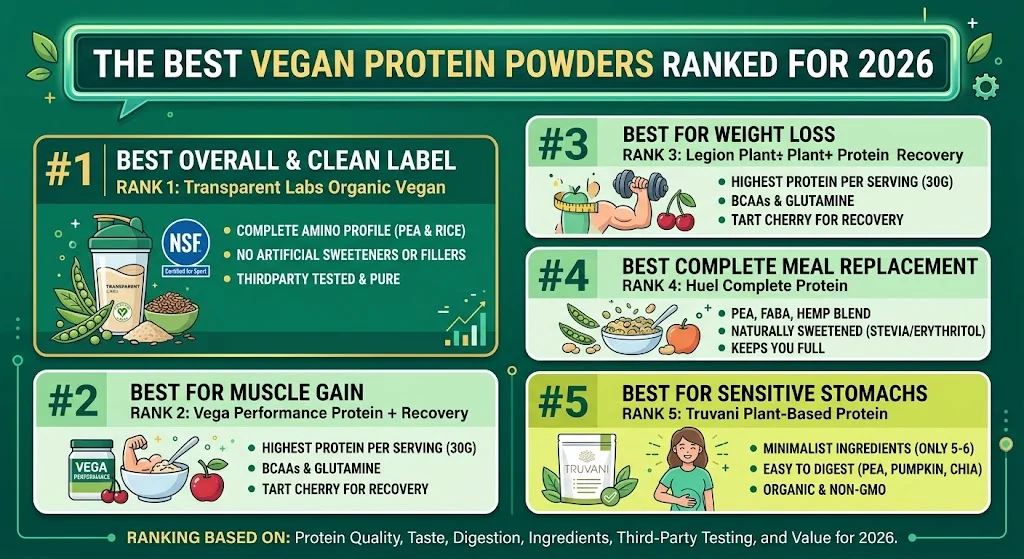
Quick Comparison: Top Vegan Protein Powders
| Product | Protein | Calories | Sweetener | Testing / Certification | Best For | Approx. Price |
|---|---|---|---|---|---|---|
| Orgain Organic Plant Protein | 21g | 150 | Organic stevia | Third-party testing | Beginners & smooth taste | ~$1.25 |
| Garden of Life Sport Plant Protein | 30g | 160 | Stevia | NSF Certified for Sport | Muscle gain & athletes | ~$1.90 |
| Vega Sport Premium Protein | 30g | 170 | Stevia | Third-party testing | Post-workout recovery | ~$2.00 |
| Naked Pea Protein | 27g | 120 | None | Third-party testing | Minimalist formulas | ~$1.50 |
| Sunwarrior Warrior Blend | 21g | 100 | Monk fruit | Third-party testing | Sensitive digestion | ~$1.80 |
💡 Why This Table Matters
Don’t judge a protein powder by tub price or marketing alone. Compare:
- Protein per serving
- Sweetener and ingredient choices
- Third-party testing or certification
- Cost per gram of protein
- Your primary goal: muscle gain, weight management, digestion, or clean ingredients
What Is Vegan Protein Powder?
Definition
Vegan protein powder is a plant-based supplement made from non-dairy sources such as pea, brown rice, soy, hemp, or seeds. It helps increase daily protein intake without using animal-derived proteins such as whey or casein.
How It’s Made
- Protein is extracted from the plant source.
- Much of the original carbohydrate and fat is removed.
- The protein is dried into a powder.
- Some formulas combine several protein sources to improve the overall amino acid profile.
Some products use a simple isolate, such as pea protein isolate, while others combine several sources into a multi-protein blend.
Vegan vs. Plant-Based: What’s the Difference?
Vegan Protein Powder
Designed to contain no animal-derived ingredients. If strict vegan status matters, check the complete ingredient list and certification information.
Plant-Based Protein
Usually refers to protein originating from plants, but the phrase alone does not necessarily guarantee that every ingredient or processing step meets a strict vegan standard.
Who Can Benefit?
Types of Vegan Protein: Ingredient Breakdown
1️⃣ Pea Protein
Source: Yellow split peas
Amino acids: Strong essential amino acid profile, although methionine is relatively limited.
Leucine: Moderate to high.
Texture: Usually smooth to moderately grainy depending on processing.
Best for: Muscle-focused diets, dairy-free athletes, and people wanting a versatile plant protein.
2️⃣ Brown Rice Protein
Source: Brown rice
Amino acids: Lower in lysine than some other protein sources.
Leucine: Moderate.
Texture: Can be slightly gritty.
Best for: Combining with pea protein and people avoiding soy.
3️⃣ Soy Protein
Source: Soybeans
Amino acids: A naturally complete protein containing all nine essential amino acids.
Leucine: Relatively high.
Texture: Often smoother than many single-source plant proteins.
Best for: Muscle building and people wanting a complete plant protein.
4️⃣ Hemp Protein
Source: Hemp seeds
Amino acids: Contains essential amino acids but generally has less protein per gram than isolates.
Texture: Thicker and more textured.
Best for: Smoothies and people who also want fiber from their protein source.
5️⃣ Pumpkin Seed Protein
Source: Pumpkin seeds
Amino acids: Provides a useful mix of amino acids but is not usually the first choice for a high-protein serving.
Texture: Can be earthy or slightly textured.
Best for: Rotating protein sources and avoiding common ingredients.
6️⃣ Multi-Source Blends
Common combinations: Pea + rice, pea + hemp, or pea + seed proteins.
Amino acids: Combining sources can improve the overall balance of essential amino acids.
Best for: Daily protein intake and people who want a broader amino acid profile.
Protein Quality Science: What Actually Matters?
A large number on the front of a tub doesn’t tell the whole story. When evaluating a vegan protein powder, consider the amount of protein, its essential amino acid profile, digestibility, and how the product fits into your total daily intake.
Complete vs. Incomplete Protein
A complete protein provides all nine essential amino acids in meaningful amounts. Soy protein is a complete plant protein. Other proteins can be combined across meals or within a formula to create a broader amino acid profile.
DIAAS vs. PDCAAS
| Measure | What It Evaluates | Key Point |
|---|---|---|
| PDCAAS | Protein quality using amino acid composition and digestibility | Older protein-quality scoring method |
| DIAAS | Digestible essential amino acids | More detailed approach to protein quality assessment |
Leucine and Muscle Protein Synthesis
Leucine is an important amino acid involved in stimulating muscle protein synthesis. Protein quality is therefore about more than simply counting grams of protein.
🏋️ Muscle-Building Takeaway
For people focused on muscle gain, choose a protein serving that provides a substantial amount of protein and a strong essential amino acid profile. Total daily protein intake and resistance training remain more important than chasing a single “perfect” protein powder.
Absorption Speed vs. Overall Protein Quality
| Protein Type | General Digestion Profile | Best Use |
|---|---|---|
| Whey isolate | Relatively rapid | Convenient post-workout protein |
| Pea protein | Moderate | Plant-based muscle support |
| Soy protein | Moderate | Complete plant protein |
| Multi-source blends | Varies by formula | Balanced everyday use |
Vegan Protein vs. Whey Protein
| Factor | Vegan Protein | Whey Protein |
|---|---|---|
| Muscle Growth | Can be highly effective when enough protein and essential amino acids are consumed | Excellent amino acid profile and naturally high leucine content |
| Digestibility | Varies by source and formula | Generally highly digestible |
| Lactose | Normally lactose-free | May contain lactose depending on the product |
| Ingredient Sources | Pea, soy, rice, hemp, seeds and other plants | Milk-derived |
| Sustainability | Generally lower environmental impact than dairy protein | Linked to dairy production |
| Cost | Ranges from budget to premium | Often competitive, depending on formula |
Is Vegan Protein Weaker?
No. Vegan protein can effectively support muscle growth when your overall diet supplies enough protein and essential amino acids and you consistently perform resistance training.
How We Evaluate Vegan Protein Powders
Top Vegan Protein Powders
Garden of Life Sport Plant-Based Protein
A high-protein, athlete-focused plant-based protein powder built around a substantial protein serving and sport-oriented certification.
- 30g protein per scoop
- NSF Certified for Sport
- Strong amino acid profile
- Designed with athletes in mind
- Higher price than basic protein powders
- Texture may feel thick to some users
Best for: Muscle gain, athletes, and post-workout recovery.
Vega Sport Premium Protein
A performance-oriented vegan protein supplement designed for people who want a high-protein option around demanding training sessions.
- 30g protein
- Includes BCAAs
- Good option for recovery-focused routines
- Established plant-protein brand
- May taste sweet to some people
- Premium pricing
Best for: High-intensity training, athletes, and recovery.
Orgain Organic Plant Protein
A balanced option for beginners who prioritize smooth shakes, organic ingredients, and everyday convenience.
- USDA Organic option
- Smooth texture
- Accessible price point
- Easy everyday use
- 21g protein per scoop
- Less protein per serving than some athletic formulas
Best for: Daily nutrition, weight management, and smoothies.
Naked Pea Protein
A minimalist pea protein isolate designed for people who want to control what goes into their shake.
- Simple ingredient profile
- No artificial sweeteners
- High protein per serving
- Useful for DIY smoothies
- Plain taste
- Can be slightly gritty in water
Best for: Clean-label shoppers, simple formulas, and customized smoothies.
Sunwarrior Warrior Blend
A multi-source protein formula aimed at people who prefer a broader plant-protein blend and a smoother everyday shake.
- Multi-source protein blend
- Good option for everyday use
- Smooth texture
- Useful for people who rotate protein sources
- Lower protein concentration than some sports formulas
- Premium price
Best for: Daily use, varied plant protein intake, and balanced nutrition.
Goal-Based Recommendations
Garden of Life Sport
Choose a high-protein formula with a strong essential amino acid profile. A serving around 25–30g protein can be convenient around resistance training.
Orgain Organic Plant Protein
A moderate-calorie protein powder can make it easier to increase protein while keeping the rest of a calorie-controlled diet flexible.
Vega Sport
A convenient choice for active people who want a higher-protein shake around training and recovery.
Garden of Life Sport
Sport certification can be particularly useful for competitive athletes who want an additional layer of quality assurance.
Naked Pea Protein
A minimalist choice for shoppers who want fewer ingredients and prefer to customize their shake with fruit, nut butter, oats, or other ingredients.
Orgain Organic Plant Protein
A convenient option if an organic plant protein powder is an important purchasing factor.
Heavy Metals & Protein Powder Safety
⚠️ Safety Matters
Plant-based ingredients can contain trace amounts of environmental contaminants such as lead, cadmium, or arsenic because plants take up substances from soil and water. This does not mean vegan protein powders are inherently unsafe; it means quality control and testing matter.
What to Look For
- Transparent ingredient sourcing
- Third-party testing
- Relevant quality certifications
- Clear labeling
- Accessible information about quality-control practices
NSF Certified for Sport
NSF Certified for Sport is particularly relevant to athletes because certification involves additional testing and verification intended to reduce the risk of prohibited substances.
Informed Sport
Informed Sport certification is another quality-assurance consideration for competitive athletes concerned about banned-substance contamination.
Organic and Non-GMO Labels
Organic and Non-GMO describe particular production or ingredient standards; neither label by itself guarantees superior protein quality. Consider them alongside protein amount, amino acid profile, ingredient transparency, and testing.
Digestive Issues & Bloating Guide
Some people experience gas or bloating after drinking vegan protein powder. The cause can depend on the protein source, added fibers, sweeteners, sugar alcohols, gums, and individual tolerance.
Why Can Plant Protein Cause Bloating?
- Added fiber
- Fermentable carbohydrates
- Large serving sizes
- Sugar alcohols or certain sweeteners
- Individual sensitivity to particular ingredients
How to Reduce Discomfort
⚠️ If Digestive Symptoms Persist
Persistent, severe, or unusual digestive symptoms should not simply be blamed on protein powder. Consider discussing ongoing symptoms with a qualified healthcare professional.
Cost Analysis: How to Find Real Value
Cost Per Serving
Divide the container price by the number of servings. For example, a $40 container with 20 servings costs $2 per serving.
Cost Per Gram of Protein
This is often more useful when comparing different formulas.
💰 Simple Formula
Cost per gram of protein = price per serving ÷ grams of protein per serving.
Example: $2 per serving ÷ 25g protein = $0.08 per gram of protein.
Isolate vs. Blend
A simple protein isolate may be economical because it contains a concentrated protein source. Multi-source blends may cost more because they combine several ingredients and can offer a broader amino acid profile.
When Is Premium Protein Worth It?
- You compete in tested sports.
- You specifically want certified products.
- You prioritize organic ingredients.
- You have particular ingredient or digestion preferences.
Taste & Mixability Matrix
| Protein Type | Smoothness | Grittiness | Smoothies | Water | Baking |
|---|---|---|---|---|---|
| Pea Protein | Medium | Slightly grainy | ★★★★★ | ★★★★☆ | ★★★★☆ |
| Brown Rice Protein | Medium | Slight grit | ★★★★★ | ★★★☆☆ | ★★★★★ |
| Soy Protein | Smooth | Low | ★★★★★ | ★★★★★ | ★★★★☆ |
| Hemp Protein | Thick | Noticeable | ★★★★★ | ★★☆☆☆ | ★★★★☆ |
| Multi-Source Blends | Usually smooth | Low to moderate | ★★★★★ | ★★★★★ | ★★★★★ |
Best Proteins for Smoothies
Fruit, nut butter, yogurt alternatives, oats, and ice can mask texture differences. Pea protein, hemp protein, and multi-source blends can all work well in smoothies.
Best Proteins With Water
If you drink your protein with only water, prioritize a product known for good mixability. Smooth soy proteins and well-processed blends can be more pleasant than coarse single-source powders.
Best Proteins for Baking
Pea protein, brown rice protein, and multi-source blends can work well in pancakes, muffins, and other baked recipes when used in appropriate amounts.
Timing & Usage Strategy
Pre-Workout vs. Post-Workout
| Timing | Practical Approach | Main Goal |
|---|---|---|
| Pre-workout | A moderate protein serving if it fits comfortably before training | Support overall daily protein intake |
| Post-workout | A convenient protein serving after training | Support recovery and daily protein goals |
| Any other time | Use when convenient | Fill gaps in your daily protein intake |
For most people, total daily protein intake matters more than obsessing over a narrow post-workout timing window.
During a Calorie Deficit
A vegan protein powder for weight loss can help increase protein while making it easier to manage meals. Choose a serving that fits your calorie target and prioritize adequate whole-food nutrition.
As a Meal Base
Turn a basic protein shake into a more substantial meal by adding ingredients such as:
Before Bed
Plant protein can be included in an evening snack or shake if it helps you meet your daily protein needs. The exact timing is less important than your overall dietary pattern.
How Many Scoops Per Day?
There is no universal number of scoops. Your needs depend on body size, activity, training, age, and the amount of protein already supplied by your food.
⚠️ Remember
Protein powder is a supplement to your diet, not a replacement for a varied diet. Use whole foods as the foundation and use protein powder for convenience.
Advanced Protein Strategy
Pea + Rice: A Popular Combination
Pea protein tends to be relatively lower in methionine, while rice protein tends to be lower in lysine. Combining complementary sources can therefore create a broader amino acid profile.
Protein + Creatine
For people focused on strength and muscle gain, protein and creatine monohydrate can serve different purposes: protein supplies amino acids, while creatine supports the body’s phosphocreatine system during high-intensity activity.
🏋️ Simple Strength Stack
- Vegan protein to help meet daily protein needs
- Creatine monohydrate according to an appropriate routine
- Carbohydrate-rich foods to support training energy
- Adequate sleep and progressive resistance training
Bulking vs. Cutting
📈 Bulking
- Protein powder
- Creatine if appropriate
- Energy-dense whole foods
- Carbohydrates such as oats and rice
📉 Cutting
- Protein powder as needed
- High-fiber whole foods
- Calorie control
- Resistance training to preserve muscle
Sustainability & Environmental Impact
Plant proteins are often chosen partly because they can have a lower environmental footprint than animal-based proteins. However, the impact varies by crop, farming system, processing, packaging, transportation, and sourcing.
Plant Protein vs. Dairy Protein
Dairy production involves livestock, feed production, land, water, and greenhouse-gas emissions. Plant-based protein production generally avoids the livestock stage and can therefore have environmental advantages.
Soy vs. Pea
Environmental performance varies by region and farming practice. Pea protein is often viewed as a lower-impact option, while the sustainability of soy depends heavily on sourcing and land-use practices.
What to Look For
- Sustainable farming practices
- Responsible sourcing
- Deforestation-conscious supply chains
- Transparent packaging and manufacturing information
- Organic or regenerative agriculture where meaningful to you
Common Vegan Protein Buyer Mistakes
❌ Choosing Only by Protein Percentage
A low price does not necessarily mean good value. Look at protein per serving and the complete ingredient list.
❌ Ignoring Amino Acid Quality
Protein grams matter, but so do essential amino acids. Muscle-focused shoppers should consider the overall amino acid profile.
❌ Ignoring Testing
If contamination risk is a major concern, look for meaningful third-party testing or certification rather than relying only on marketing claims.
❌ Overpaying for Branding
Compare cost per gram of protein, ingredients, testing, and serving size instead of judging quality by packaging alone.
❌ Buying a Formula You Dislike
The theoretically perfect protein is useless if you hate drinking it. Taste and texture are important for long-term consistency.
❌ Ignoring Personal Tolerance
A protein powder that works well for one person may cause bloating or discomfort for another. Ingredient simplicity can make troubleshooting easier.
Frequently Asked Questions About Vegan Protein Powder
Is vegan protein a complete protein?
Some vegan protein powders are complete proteins and others are not. Soy protein is naturally complete, while combinations such as pea and rice can provide a broader essential amino acid profile. Check the specific product rather than assuming every plant protein is identical.
Does vegan protein build muscle as effectively as whey?
Yes, plant-based protein can support muscle growth effectively when total protein intake is adequate and the diet supplies sufficient essential amino acids. Resistance training and consistent nutrition remain central to muscle growth.
Which vegan protein is easiest to digest?
Pea protein isolate and simple formulas are often practical choices for people who want fewer ingredients. Individual tolerance varies, so check sweeteners, added fibers, gums, and other ingredients if bloating is an issue.
Is vegan protein healthier than whey?
Neither is automatically healthier for everyone. Vegan protein is useful for people avoiding dairy and those who prefer plant-based foods, while whey offers an excellent amino acid profile. The better option depends on dietary needs, tolerance, preferences, and overall diet quality.
Can vegan protein cause bloating?
Yes. Some formulas contain fiber, fermentable carbohydrates, sugar alcohols, gums, or other ingredients that can cause digestive discomfort. Smaller servings and simpler formulas may help identify the cause.
How much vegan protein should I take daily?
Your protein requirement depends on body size, age, activity level, training, and health goals. Protein powder should fill gaps in your diet rather than automatically determine how much protein you consume.
Final Decision Framework: Choose Your Best Vegan Protein Powder
The best vegan protein powder isn’t necessarily the product with the biggest marketing budget. It is the product that fits your goals, digestion, budget, taste preferences, and quality expectations.
✔ Your Goal
- Muscle gain: prioritize a substantial protein serving and a strong essential amino acid profile.
- Weight management: choose a protein powder whose calories fit your overall diet.
- Daily nutrition: prioritize convenience, taste, and a formula you can use consistently.
✔ Your Digestion
- Consider simpler formulas if you are sensitive to additives.
- Check sweeteners, sugar alcohols, fiber, and gums.
- Start with a smaller serving if you are new to plant protein.
✔ Your Budget
- Compare cost per gram of protein.
- Check the actual number of servings.
- Don’t assume premium packaging means premium protein quality.
✔ Your Taste
- Choose smoother formulas if you drink protein with water.
- Use smoothies to hide texture differences.
- Choose appropriate proteins for baking if that is your primary use.
✔ Your Certification Needs
- Look for credible third-party testing.
- Athletes may prioritize NSF Certified for Sport or similar sport-focused certification.
- Read the label rather than relying on broad marketing claims.
✔ Your Sustainability Priorities
- Consider plant-protein sourcing.
- Look for responsible farming and supply-chain practices.
- Consider packaging and manufacturing alongside the protein source.
🌿 The Bottom Line
The right plant-based protein powder should match your fitness goal, digestion, budget, taste preferences, safety expectations, and values. Once those factors line up, choosing a vegan protein supplement becomes much simpler.
Read More :