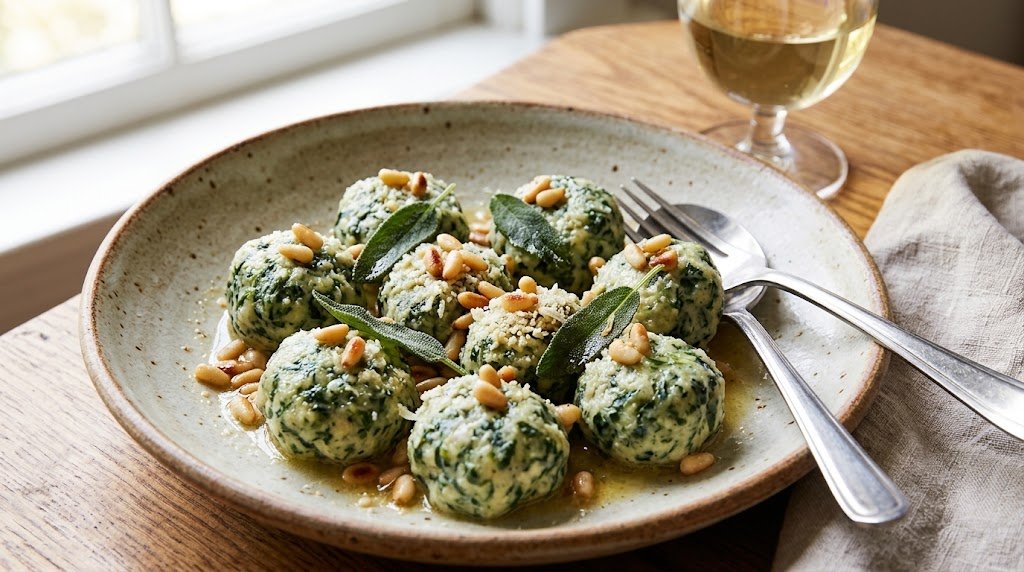
Learn the moisture-control, binder, chilling, and gentle-cooking techniques that make vegan spinach ricotta gnudi tender, flavorful, and beautifully stable.
Quick Answer: How Do You Make Vegan Gnudi That Don’t Fall Apart?
The secret is moisture control. Squeeze cooked spinach until very dry, use a firm vegan ricotta such as tofu ricotta, add flour gradually, chill the mixture for at least 30 minutes, and test one dumpling before cooking the entire batch. Cook the gnudi in gently simmering salted water rather than a rolling boil.
What Is Gnudi? And How Is It Different From Gnocchi?
Gnudi are Tuscan dumplings traditionally made from ricotta and spinach without the pasta wrapper used around ravioli filling. The Italian word “gnudi” means “naked,” referring to the idea of serving the ravioli filling without its pasta shell.
Traditional gnudi are soft, delicate, and lightly seasoned. This vegan version replaces dairy ricotta with a plant-based alternative while keeping the focus on the same light, pillowy texture.
Tuscan Origins
Tuscan gnudi are associated with rustic Italian cooking and are commonly prepared with ricotta, spinach, flour, nutmeg, and seasoning. They are generally cooked gently and served with simple sauces.
Gnudi vs. Gnocchi
| Feature | Gnudi | Gnocchi |
|---|---|---|
| Main Base | Ricotta + spinach | Potato + flour |
| Texture | Soft and pillowy | Firm and slightly chewy |
| Classic Association | Tuscany | Found throughout Italy, with many regional styles |
| Density | Light | More substantial |
| Flavor | Creamy, delicate, herb-friendly | Earthy and starchy |
Can Vegan Gnudi Taste Truly Authentic?
Vegan gnudi will not be identical to dairy-based gnudi, but they can capture the same rustic Italian character when the flavors and texture are handled carefully.
Flavor Replication Strategy
- Fresh spinach
- A small pinch of nutmeg
- Good olive oil
- Lemon zest for brightness
- Proper seasoning
- A well-drained vegan ricotta substitute
Texture Expectations
The target texture is light and pillowy, not rubbery or dense. Too much flour produces heavy dumplings, while too little binder can leave them fragile.
Keep the Italian Essence Simple
Classic-inspired sauces such as marinara, vegan sage butter, or pesto work especially well because they complement rather than overpower the delicate dumplings.
Why Traditional Gnudi Are Difficult to Veganize
Traditional gnudi rely heavily on the characteristics of dairy ricotta. When that ingredient is replaced, the recipe has to recreate enough structure and moisture balance using plant-based ingredients.
Protein & Structure
Dairy ricotta provides proteins that contribute to the structure of traditional gnudi as they cook. Vegan alternatives vary considerably, so the finished mixture needs a carefully balanced binder.
Moisture Imbalance
Both spinach and plant-based ricotta can contribute excess water. If that moisture remains in the mixture, dumplings can become fragile or dissolve during cooking.
The Structural Solution
- Squeeze spinach thoroughly.
- Use a firm vegan ricotta substitute.
- Add flour gradually.
- Chill before shaping and cooking.
- Test one dumpling before cooking the batch.
- Use a gentle simmer instead of aggressive boiling.
The Best Vegan Ricotta Options for Gnudi
| Vegan Ricotta | Texture | Flavor | Structure Potential |
|---|---|---|---|
| Tofu ricotta | Slightly firm | Mild and neutral | Strong |
| Cashew ricotta | Creamy and smooth | Rich and buttery | Medium |
| Almond ricotta | Light and soft | Mildly sweet | Moderate |
| Store-bought vegan ricotta | Varies | Varies | Brand-dependent |
| Sunflower-seed or other nut-free ricotta | Varies | Mild | Often requires careful binder adjustment |
Tofu Ricotta
Firm tofu creates a mild, protein-rich base that works particularly well when you want dependable tofu ricotta gnudi.
Cashew Ricotta
Cashews provide excellent creaminess and richness, but the mixture can become softer. A thicker cashew ricotta and careful flour adjustment are important.
Almond Ricotta
Almond-based ricotta can create a light, mild filling but may need additional structural support.
Store-Bought Vegan Ricotta
Texture varies considerably. If your vegan ricotta is watery, drain it before mixing.
Ingredient Spotlight
Fresh vs. Frozen Spinach
Fresh spinach gives excellent texture, while frozen spinach can be convenient. Either works as long as the spinach is thawed and squeezed extremely well.
Why Squeezing Spinach Is Critical
Spinach retains significant water after cooking. Removing that water is one of the most important steps for preventing vegan gnudi from falling apart.
Choosing a Flour
- All-purpose flour: reliable and easy to work with.
- Semolina: can produce a slightly firmer texture.
- Chickpea flour: useful for a gluten-free, protein-rich variation.
- Gluten-free blend: can work, but the exact amount may need adjustment.
Nutmeg & Lemon Zest
A tiny amount of nutmeg gives the dumplings a classic Italian-inspired flavor, while lemon zest adds freshness and helps balance the richness of the vegan ricotta.
Layer Your Seasoning
Season the spinach, ricotta mixture, and cooking water appropriately. Layered seasoning creates a more balanced result than relying on the final sauce alone.
Vegan Spinach Ricotta Gnudi Recipe
Soft, dairy-free Italian-inspired dumplings with a simple technique designed to minimize breakage.
For the Gnudi
- 2 cups fresh spinach, or 1 cup frozen and fully drained
- 1 cup vegan ricotta, preferably firm tofu ricotta
- 3–5 tablespoons all-purpose flour
- Chickpea flour instead for a gluten-free variation
- 2 tablespoons nutritional yeast, optional
- ¼ teaspoon nutmeg
- Zest of ½ lemon
- Salt and black pepper to taste
For Serving
- Warm marinara sauce
- Vegan sage butter
- Fresh basil
- Extra-virgin olive oil
- Freshly cracked black pepper
How to Make Vegan Gnudi From Scratch
- Prepare the spinach. Sauté fresh spinach briefly until wilted, or thaw frozen spinach completely.
- Remove excess moisture. Place spinach in a clean towel and squeeze firmly until it is as dry as possible.
- Prepare the vegan ricotta. For tofu ricotta, crumble firm tofu and blend or mash lightly with nutritional yeast, lemon zest, and seasoning. For cashew ricotta, blend soaked cashews until thick and creamy.
- Combine gently. Mix spinach, vegan ricotta, flour, nutmeg, salt, and pepper. Avoid overmixing.
- Adjust the texture. If the mixture is too sticky, add flour gradually, about 1 tablespoon at a time. If it is excessively dry, make only very small adjustments rather than adding lots of liquid.
- Chill. Cover and refrigerate for at least 30 minutes.
- Shape. Lightly flour your hands and gently roll approximately 1 tablespoon of mixture into small oval dumplings.
- Test one dumpling. Before cooking the entire batch, use the boil-test method below.
The Boil-Test Method: The Chef Trick That Saves the Whole Batch
Testing one dumpling before cooking the rest is one of the most useful techniques for preventing a batch of vegan gnudi from dissolving in the water.
- Bring salted water to a gentle simmer. Avoid a violent rolling boil.
- Drop in one gnudi. Watch how it behaves.
- If it holds together: cook the remaining dumplings.
- If it starts breaking: remove it and adjust the mixture with a small amount of additional flour.
- Chill again: refrigerate for another 10 minutes before testing again.
How to Know They Are Done
Gnudi generally rise toward the surface as they cook. Once floating, cook for approximately 2–3 additional minutes, depending on size and recipe formulation.
What Makes Gnudi Light & Pillowy?
Protein + Moisture Balance
Tofu ricotta can provide a relatively firm, protein-rich foundation. Spinach moisture and flour then need to be balanced around it.
Starch Interaction
Flour absorbs moisture and contributes structure. The goal is to use enough to hold the dumplings together without creating a heavy dough.
Why Overmixing Can Make Them Tough
With wheat flour, excessive mixing can develop gluten and produce a denser texture. Mix only until the ingredients are combined.
Why Chill Time Matters
Chilling gives the flour time to hydrate and allows the mixture to firm up, making shaping and cooking easier.
Why Your Vegan Gnudi Fall Apart & How to Fix Them
| Problem | Likely Cause | Fix |
|---|---|---|
| Dumplings dissolve | Too much moisture | Squeeze spinach harder; use thicker ricotta; add flour gradually |
| Dumplings crack | Weak structure or dry mixture | Adjust binder carefully and handle gently |
| Dumplings break in water | Water boiling too aggressively | Reduce to a gentle simmer |
| Mixture feels unstable | Skipped chilling | Chill for at least 30 minutes |
| Dumplings feel dense | Too much flour or overmixing | Use less binder and mix gently |
Boil vs. Bake vs. Pan-Sear: Which Method Is Best?
| Method | Texture | Difficulty | Best For |
|---|---|---|---|
| Boil | Soft and pillowy | Easy with proper technique | Classic gnudi-style texture |
| Bake | Slightly firmer | Moderate | People who prefer less delicate dumplings |
| Pan-sear | Crisp outside, soft inside | Moderate | Restaurant-style finishing |
Boiling
Gentle simmering is the most natural choice for the soft, delicate texture associated with gnudi.
Baking
Baking can produce a slightly firmer result and may be useful when you prefer a less delicate preparation.
Pan-Searing
After cooking, lightly searing the gnudi can create a golden exterior while preserving a tender interior.
Best Sauces for Vegan Gnudi
Pairing Vegan Gnudi Like an Italian Chef
Wine Pairings
- Pinot Grigio: crisp and clean.
- Sauvignon Blanc: bright acidity.
- Light Chianti: a good option with tomato-based sauces.
Side Dishes
- Arugula salad with lemon vinaigrette
- Roasted vegetables
- Grilled zucchini
- Warm crusty bread
Restaurant-Style Plating
Use shallow bowls and arrange approximately 5–6 dumplings neatly rather than drowning them in sauce.
Sauce-Under Plating
- Spoon sauce onto the plate first.
- Place the gnudi gently on top.
- Add small amounts of sauce around the dumplings.
- Finish with olive oil, basil, or cracked black pepper.
Gluten-Free, Nut-Free & High-Protein Modifications
| Goal | Useful Modification | Key Consideration |
|---|---|---|
| Gluten-free | Chickpea flour or suitable GF blend | Test one dumpling before cooking the batch |
| Nut-free | Tofu or sunflower-seed ricotta | Control moisture carefully |
| High-protein | Firm tofu ricotta + chickpea flour | Avoid adding excessive flour |
| Soy-free | Sunflower-seed or oat-based ricotta alternative | Expect to adjust the binder |
Chickpea Flour
Chickpea flour is naturally gluten-free and adds protein. Use it carefully because too much can make the dumplings dense.
Almond Flour
Almond flour can create a softer, richer dumpling but may not provide enough structure by itself.
Extra Tofu
A tofu-forward mixture can increase the protein contribution while providing a firm foundation.
Soy-Free Option
Sunflower-seed or oat-based ricotta alternatives can be used, but their moisture content varies. Drain, chill, and boil-test carefully.
Seasonal Vegan Gnudi Variations
Make-Ahead, Storage & Freezing Guide
Freeze Before Cooking — Best Option
- Shape the gnudi.
- Place them on a lightly floured tray in a single layer.
- Freeze until solid, approximately 1–2 hours.
- Transfer to an airtight freezer-safe container.
- Cook directly from frozen rather than thawing first.
Freeze After Cooking
Cooked gnudi can also be frozen, although the texture may soften somewhat. Cool completely, store carefully, and reheat gently.
Reheating
Warm gently in sauce over low heat. Avoid aggressive reheating because the dumplings are delicate.
Meal Prep
The mixture can be prepared ahead and refrigerated for up to approximately 24 hours before shaping, provided it has been handled and stored safely. Shape the dumplings when ready to cook or freeze.
Nutrition & Protein Guide
The nutrition of vegan gnudi varies considerably depending on the vegan ricotta, flour, oil, and sauce used.
| Estimated Nutrition | Per Serving* |
|---|---|
| Calories | Approximately 220–280 kcal |
| Protein with tofu ricotta | Approximately 10–14 g |
*These are broad estimates based on the ingredients described and can vary substantially by portion size, ricotta product, flour, and sauce. For precise nutrition, calculate using the exact brands and quantities used.
Frequently Asked Questions About Vegan Gnudi
What is vegan gnudi made of?
Vegan gnudi are typically made with spinach, vegan ricotta, flour, nutmeg, lemon zest, salt, and pepper. Tofu ricotta is particularly useful when you want a firmer structure.
How do you keep vegan gnudi from falling apart?
Squeeze spinach thoroughly, use a reasonably firm vegan ricotta, add binder gradually, chill for at least 30 minutes, test one dumpling first, and cook at a gentle simmer.
Is gnudi gluten-free?
Traditional gnudi often contain wheat flour, so they are not automatically gluten-free. A suitable gluten-free flour such as chickpea flour can be used for a gluten-free variation.
Can you freeze vegan gnudi?
Yes. Freezing the shaped gnudi before cooking is generally the preferred approach. Freeze them individually until solid, then transfer them to an airtight container and cook directly from frozen.
What sauce is best with vegan gnudi?
Light sauces work best. Marinara, vegan sage butter, pesto, and roasted garlic tomato sauce all complement the delicate dumplings.
What is the difference between gnudi and gnocchi?
Gnudi are traditionally based on ricotta and spinach, while gnocchi commonly use potato and flour. Gnudi are generally lighter and more delicate.
Final Chef’s Tips for Perfect Vegan Gnudi
1. Prioritize Moisture Control
Well-squeezed spinach is one of the most important details in the entire recipe.
2. Use Enough Binder — But Not Too Much
Add flour gradually until the mixture holds its shape. Excess flour can make gnudi heavy.
3. Chill Before Cooking
Give the mixture at least 30 minutes in the refrigerator.
4. Always Boil-Test
Testing one dumpling lets you correct the mixture before risking the whole batch.
5. Simmer, Don’t Aggressively Boil
Gentle water movement protects delicate dumplings from breaking apart.
6. Keep the Flavors Simple
Olive oil, nutmeg, lemon zest, spinach, fresh herbs, and a good sauce are enough to create a satisfying Italian-inspired dish.
Read More :