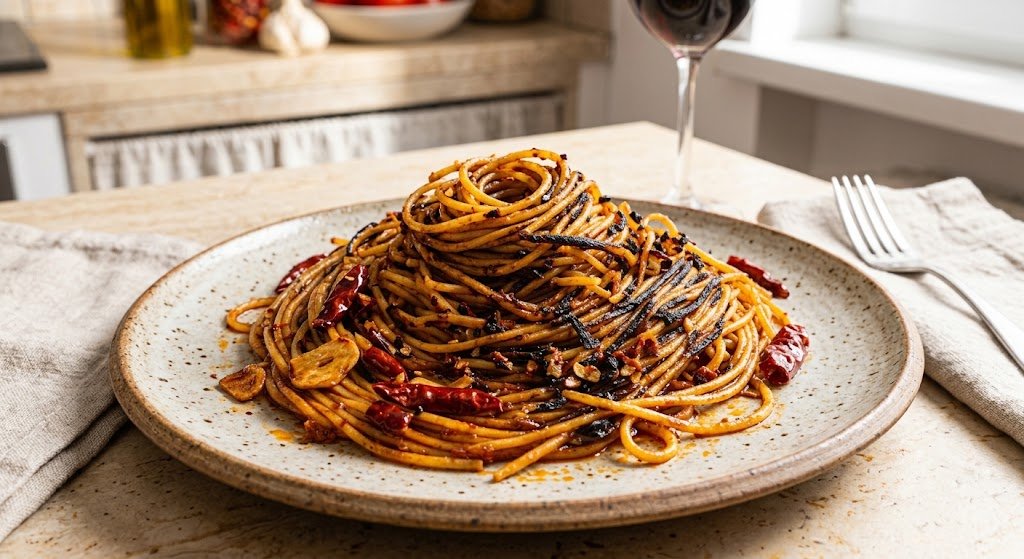
Learn the authentic Bari-style technique for making Spaghetti all’Assassina—a fiery tomato pasta cooked directly in the pan until the sauce caramelizes and the spaghetti develops its signature crispy, charred edges.
If you’ve seen Pasta All’Assassina on social media, you already know it looks different. This is not soft, saucy spaghetti. It is crispy, spicy, charred spaghetti cooked directly in a pan until the tomato sauce caramelizes around every strand.
Known as Spaghetti all’Assassina or Assassin’s Spaghetti, this bold dish comes from Bari, Italy, and breaks several familiar pasta rules in the best possible way.
There is no traditional boiling-first step. Instead, the spaghetti cooks directly with a concentrated tomato base, gradually absorbing liquid while developing those famous crispy edges and deep caramelized flavor.
Quick Answer: What Is Pasta All’Assassina?
Pasta All’Assassina is a spicy Bari pasta dish in which dry spaghetti is cooked directly in a tomato-based pan sauce instead of being boiled separately. As the liquid reduces, the spaghetti makes direct contact with the hot pan, producing crispy, caramelized, slightly charred edges while the center remains tender.
What Is Pasta All’Assassina?
Definition
Pasta All’Assassina, also called Spaghetti all’Assassina or Assassin’s Spaghetti, is a bold and spicy pasta dish associated with Bari in Puglia, Italy.
Unlike most pasta recipes, the spaghetti is not cooked separately in a large pot of water. Instead, it cooks directly in a tomato-based mixture, allowing parts of the pasta to make prolonged contact with the hot pan.
The finished pasta should have a combination of a tender center, concentrated tomato flavor, crispy edges, and controlled char.
Why It Is Not a Typical Pasta Dish
| Traditional Pasta Method | Pasta All’Assassina |
|---|---|
| Pasta is boiled separately. | Dry spaghetti cooks directly in the pan. |
| Pasta water is drained before saucing. | Hot liquid is added gradually as the pasta cooks. |
| Texture focuses on classic al dente pasta. | Texture combines tender spaghetti with crisp, caramelized areas. |
| Sauce generally coats the pasta. | Tomato sauce becomes deeply concentrated around the pasta. |
The Direct Pan-Cooking Method
The signature technique starts with olive oil, garlic, chili, and tomato. Dry spaghetti is then introduced directly into the pan, and hot liquid is added gradually as needed.
- Deep sauce absorption
- Gradual reduction
- Direct pan contact
- Controlled caramelization
- Crispy texture development
What Makes It So Crispy?
As the liquid reduces, the spaghetti comes into closer contact with the hot cooking surface. Tomato solids become concentrated and the pasta can develop deep red-brown, caramelized areas.
The Origin Story in Bari
Pasta All’Assassina is associated with the city of Bari in southern Italy and is generally considered a relatively modern regional specialty compared with many older Italian pasta traditions.
Local Trattoria Roots
Stories surrounding the dish often connect it with a Bari restaurant kitchen where spaghetti was cooked directly in tomato sauce and developed a distinctive char. Rather than being discarded, the intensely flavored pasta became the dish we now recognize as Spaghetti all’Assassina.
Cultural Significance in Apulia
The dish reflects an important characteristic of Apulian cooking: simple ingredients can become extraordinary through technique.
- Bold tomato flavor
- Extra virgin olive oil
- Garlic and chili
- Simple pantry ingredients
- Strong emphasis on texture and cooking technique
Why It Feels Like Rebellious Cooking
Italian pasta culture places enormous importance on texture and cooking technique. Pasta All’Assassina deliberately takes a different route by allowing spaghetti to develop crispy, browned, and slightly charred sections.
Why Is It Called Assassin’s Pasta?
The name “Assassin’s Pasta” reflects the dish’s aggressive personality: strong chili heat, intense tomato flavor, and a cooking method built around high heat and deliberate browning.
The Spice Level
Traditional versions can be noticeably spicy, with red chili playing an important role in the flavor profile.
The Aggressive Cooking Method
The spaghetti spends time directly against a hot cooking surface while the tomato mixture reduces. That combination gives the dish its dramatic character.
The Intentional Charring
The darker areas are part of the appeal. The objective is controlled caramelization that adds toasted, smoky depth without crossing into unpleasant bitterness.
Myth vs. Historical Certainty
Several stories circulate about the origin of the name, including explanations involving the dish’s intense heat or the way it “kills” traditional pasta rules. The exact naming story is less certain than the dish’s connection with Bari and its distinctive cooking method.
Pasta All’Assassina vs. Arrabbiata
These dishes share tomatoes, garlic, chili, and pasta, but their techniques produce very different results.
| Feature | All’Assassina | Arrabbiata |
|---|---|---|
| Cooking Method | Spaghetti cooks directly in the pan with tomato and liquid. | Pasta is traditionally boiled separately and then tossed with sauce. |
| Texture | Crispy, caramelized areas with a tender center. | Soft, sauced pasta with classic al dente texture. |
| Sauce | Concentrated and reduced in the same pan. | Prepared separately and tossed with cooked pasta. |
| Heat | Often bold and fiery. | Spicy but generally more balanced and saucy. |
Ingredients for Authentic Pasta All’Assassina
The ingredient list is short, which makes choosing good-quality basics especially important.
- Thick spaghetti
- Tomato passata or crushed tomatoes
- Tomato paste
- Garlic
- Red chili flakes
- Extra virgin olive oil
- Salt
- Hot water or light vegetable broth
Acceptable Substitutions
| Ingredient | Good Substitute | What to Expect |
|---|---|---|
| Tomato passata | Crushed tomatoes | More texture and slightly less smooth sauce |
| Chili flakes | Fresh red chili | Fresh, brighter heat |
| Thick spaghetti | Sturdy linguine | Slightly different shape but similar cooking principle |
| Water | Light vegetable broth | Extra savory depth |
What to Avoid
- Very thin angel-hair pasta
- Very sweet jarred pasta sauce
- Large amounts of cream
- Heavy cheese mixed into the cooking sauce
- Overcrowding the pan
Chili Heat Guide
| Heat Level | Chili Flakes | Result |
|---|---|---|
| Mild | ½ tsp | Gentle warmth |
| Medium | 1 tsp | Noticeable kick |
| Bold | 1½–2 tsp | Fiery, pronounced heat |
Chili strength varies considerably, so treat these amounts as a starting point rather than a fixed rule.
The Science Behind the Crispy Texture
1. Maillard Browning
The Maillard reaction is responsible for many of the savory brown flavors we associate with toasted and browned foods. It becomes increasingly important as the pasta surface dries and heats.
2. Tomato Reduction
As water evaporates from the tomato mixture, tomato solids become more concentrated. The result is a richer, darker flavor and better conditions for browning against the pan.
3. Starch Gelatinization
As the dry spaghetti absorbs hot liquid, its starches hydrate and gelatinize. This allows the pasta to become tender while releasing starch that helps the tomato mixture cling to its surface.
4. Direct Pan Contact
The characteristic crisp cannot develop effectively if the spaghetti is constantly floating in liquid. Direct contact with the hot pan is what allows browning and crust development.
5. Why Over-Stirring Reduces Crisp
Constant movement prevents the pasta from remaining in contact with the hot surface long enough to develop a crust.
Choosing the Right Pan
The pan is one of the most important pieces of equipment for this recipe.
| Pan | Advantages | Best For |
|---|---|---|
| Carbon Steel | Responsive heating and strong browning potential | Fast heat control and crisp edges |
| Cast Iron | Excellent heat retention | Strong, sustained caramelization |
Why a Wide Pan Helps
- More spaghetti can contact the cooking surface.
- Liquid reduces more efficiently.
- There is more room to spread the pasta into a single layer.
- You can create more crisp areas without overcrowding.
What About Nonstick?
A quality nonstick pan can make cleanup easier, but a heavy metal pan provides more direct, aggressive surface heat and is better suited to the traditional charred effect.
Step-by-Step Authentic Bari-Style Method
Build the Tomato Base
Heat extra virgin olive oil in a wide heavy pan. Add garlic and chili flakes and gently bloom them. Stir in tomato paste, then add passata or crushed tomatoes.
Cue: The sauce should smell aromatic and begin to thicken.
Add the Dry Spaghetti
Place the dry spaghetti directly into the pan. Do not pre-boil it. Press and arrange the strands so they have as much contact with the tomato mixture and pan as practical.
Add Hot Liquid Gradually
Add small amounts of hot water as needed. Allow each addition to reduce before adding more. The pasta should cook without becoming submerged in a large amount of liquid.
Create Controlled Caramelization
Once the liquid has reduced, allow sections of spaghetti to remain against the hot surface without constant stirring. Watch carefully as the color changes from golden to deep red-brown.
Flip, Press & Crisp
Turn sections of pasta as needed and gently press them against the pan. Continue until the spaghetti has a mixture of crisp browned edges and tender interior strands.
Rest Briefly & Serve
Turn off the heat and let the pasta rest for about 1–2 minutes. Serve immediately while the contrast between crisp and tender textures is at its best.
The Viral Crispy Trick: The “Don’t Stir” Window
One of the most useful techniques for achieving the characteristic crust is to stop stirring for a short period once the liquid has reduced.
Layer the Liquid
Rather than flooding the pan, add hot liquid in controlled additions. Each reduction concentrates the tomato flavor and creates another opportunity for browning.
Flip and Press
Once one area has browned, carefully turn sections of spaghetti and press them back against the pan. This can create several crisp areas throughout the dish.
Know When the “Burn” Has Gone Too Far
| Good Signs | Warning Signs |
|---|---|
| Deep red-brown edges | Blackened surfaces |
| Toasty, smoky aroma | Sharp acrid smell |
| Strong sizzling | Rapid scorching |
| Crispy but flavorful crust | Harsh, bitter taste |
Texture Control: Choose Your Crisp Level
Light Crisp
- Use moderate heat.
- Stir slightly more frequently.
- Keep the final crisp stage short.
Result: Mostly tender spaghetti with lightly browned edges.
Medium Char — Classic Balance
- Use medium-high heat.
- Allow short undisturbed cooking periods.
- Let the liquid reduce before browning.
- Press pasta gently against the pan.
Result: Crisp edges, tender center, and concentrated tomato flavor.
Deep Caramelization
- Use a heavy pan with good heat retention.
- Reduce the liquid thoroughly before the final crisp stage.
- Allow longer periods of direct pan contact.
Result: Darker red-brown crust and a stronger toasted flavor. Watch closely to prevent bitterness.
| Adjustment | Likely Effect |
|---|---|
| Higher heat | Faster browning and stronger char |
| Lower heat | Slower reduction and lighter crust |
| Longer pan contact | More crispness |
| More stirring | Less opportunity for crust formation |
| More liquid | More steaming and less browning |
Restaurant vs. Home Pasta All’Assassina
Restaurant kitchens may achieve more dramatic charring because professional burners and wide pans can deliver and maintain higher heat more efficiently.
How to Get Better Results at Home
- Preheat your heavy pan appropriately.
- Use a wide cooking surface.
- Avoid overcrowding.
- Use thick spaghetti.
- Add liquid gradually.
- Allow controlled periods of undisturbed pan contact.
Common Mistakes That Ruin Pasta All’Assassina
| Mistake | Why It Fails | Better Approach |
|---|---|---|
| Stirring constantly | Pasta cannot remain against the hot surface long enough to brown. | Use short, controlled periods of stillness. |
| Adding too much liquid | The pasta steams instead of developing crust. | Add hot liquid gradually. |
| Using very thin pasta | It can soften or scorch too quickly. | Choose sturdy spaghetti. |
| Using very sweet sauce | Reduction can make the finished flavor overly sweet. | Use balanced tomato products. |
| Cooking until black | Deep scorching creates bitterness. | Stop at flavorful red-brown caramelization. |
Is Pasta All’Assassina Vegan or Gluten-Free?
Is It Vegan?
The basic combination of spaghetti, tomatoes, olive oil, garlic, and chili can be completely vegan. Avoid optional dairy toppings and check packaged ingredients if using prepared products.
Is It Gluten-Free?
Traditional spaghetti contains wheat and therefore gluten. A sturdy gluten-free spaghetti can be used, although its cooking behavior and ability to withstand direct-pan cooking may differ from wheat pasta.
Can You Make It Ahead?
This dish is best immediately after cooking because the signature crisp texture gradually softens.
How to Reheat It
Use a skillet over medium heat rather than a microwave. A tiny splash of water can loosen the pasta, then allow it to sit briefly against the pan to recover some crispness.
Serving Pasta All’Assassina the Bari Way
With or Without Cheese?
Traditional presentations keep the focus on the tomato, chili, olive oil, and crispy pasta. Modern interpretations sometimes add burrata or grated cheese, but these are optional variations rather than requirements.
Wine Pairing
- Primitivo from Puglia
- Light Italian red wine
- Chianti
Choose a wine that complements the tomato and spice without overwhelming the dish.
Simple Salad Pairing
A fresh arugula salad with lemon and olive oil provides a bright contrast to the rich, spicy pasta.
Why It Can Be Served Alone
Spaghetti all’Assassina is already rich in flavor and texture. A simple salad or glass of wine is often enough to complete the meal without competing with the pasta.
Modern Variations
1. Burrata Topping
Add torn burrata immediately before serving for a cool, creamy contrast against the hot crispy spaghetti.
2. Extra Garlic
Increase the garlic if you enjoy a stronger savory profile. Slice it thinly and watch it carefully so it does not burn before the tomato is added.
3. Smoky Paprika
A small amount of smoked paprika can add another layer of smokiness, although it is not part of the traditional recipe.
4. Ultra-Spicy Version
Increase the chili gradually or add fresh red chili. Keep the heat balanced so the tomato and caramelized flavors remain noticeable.
Frequently Asked Questions
Why is Pasta All’Assassina burned?
Pasta All’Assassina is intentionally browned and charred to create crispy texture and deeper tomato flavor. The target is flavorful caramelization—not black, bitter scorching.
Can I use penne instead of spaghetti?
You can experiment, but thick spaghetti is the traditional choice and gives the characteristic long strands and crisp edges associated with the dish.
Is Pasta All’Assassina very spicy?
It can be moderately to boldly spicy. Adjust the chili to your preference, especially because the heat level of individual chili flakes varies.
Can I make Pasta All’Assassina ahead?
It is best served immediately because the crispy texture softens as it sits. Leftovers can be refrigerated and reheated in a skillet to recover some crispness.
Why is the pasta cooked without boiling?
The direct-pan method allows the spaghetti to absorb the tomato mixture while also creating direct contact with the hot pan. This produces the distinctive concentrated flavor and crispy caramelized texture.
What is the best pasta for All’Assassina?
Choose sturdy, relatively thick spaghetti. It needs enough structure to withstand gradual direct-pan cooking without becoming fragile.
Pasta All’Assassina Recipe
Authentic-inspired Bari-style crispy, spicy tomato spaghetti cooked directly in one pan.
Ingredients
- 200 g thick spaghetti
- 2–3 tbsp extra virgin olive oil
- 2 cloves garlic, thinly sliced or minced
- ½–2 tsp red chili flakes, to taste
- 1 tbsp tomato paste
- 1½ cups tomato passata or crushed tomatoes
- About 2 cups hot water, added gradually as needed
- Salt, to taste
Instructions
- Build the tomato base: Heat olive oil in a wide heavy pan. Add garlic and chili and gently bloom them. Stir in tomato paste, followed by passata or crushed tomatoes.
- Add dry spaghetti: Place the spaghetti directly into the tomato mixture. Do not boil it first.
- Add hot water gradually: Add small amounts of hot water as the pasta absorbs the liquid. Avoid flooding the pan.
- Reduce: Allow the sauce to reduce while gently moving the pasta enough to cook evenly.
- Create the crust: Once the liquid has reduced, allow sections of spaghetti to sit against the hot pan for 60–90 seconds at a time. Watch closely.
- Flip and press: Turn sections of pasta and gently press them against the pan to develop additional crisp areas.
- Finish: Stop cooking when the spaghetti is tender with flavorful red-brown crispy edges. Rest for 1–2 minutes and serve immediately.
Final Expert Tips for Perfect Assassin Pasta
Final Thoughts
Pasta All’Assassina is proof that a handful of simple ingredients can become extraordinary when the cooking technique changes. Instead of boiling spaghetti and adding sauce afterward, this distinctive Bari-style pasta lets the spaghetti cook directly with tomato, garlic, olive oil, and chili.
The result is something completely different: deep tomato flavor, fiery heat, tender spaghetti, and crispy caramelized edges.
The key is patience. Control the liquid, use a wide heavy pan, resist the urge to stir constantly, and learn to recognize the difference between delicious caramelization and bitter scorching.
Master those details and you can bring the bold character of Spaghetti all’Assassina into your own kitchen—one crispy, spicy strand at a time.
Read More :