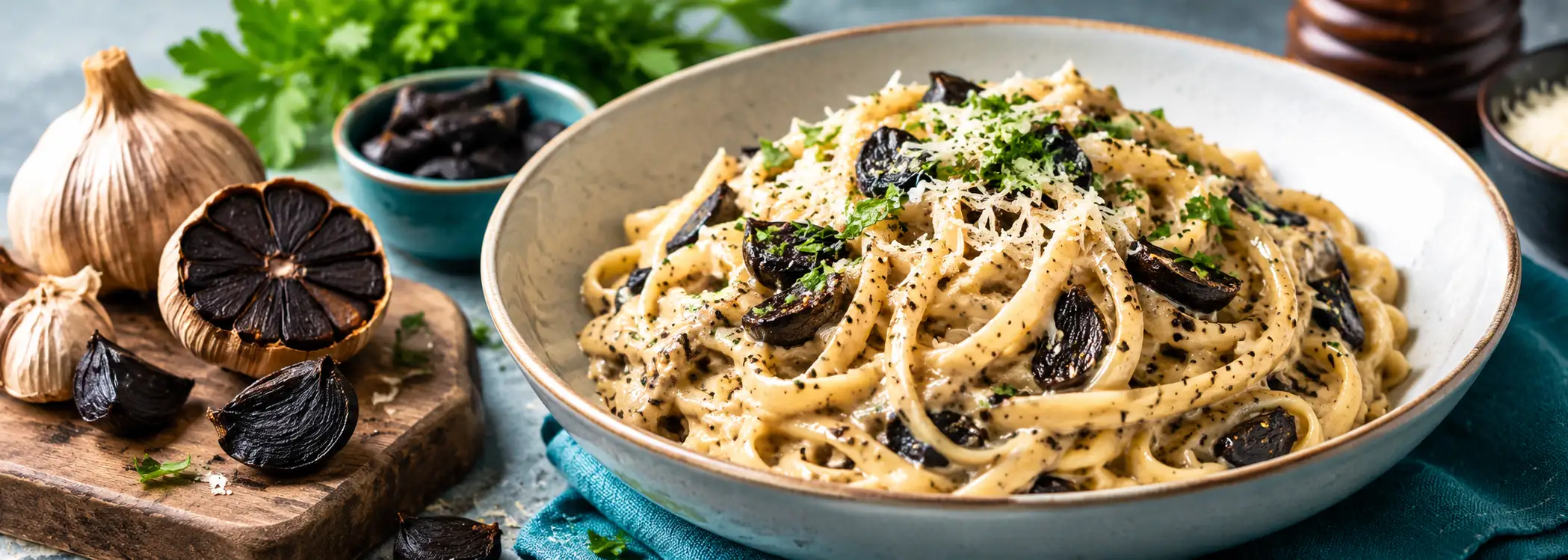
If you’re searching for how to make black garlic pasta, this recipe keeps things simple while delivering deep flavor. This black garlic pasta recipe is creamy, rich, and packed with natural umami flavor that tastes restaurant-quality but feels easy enough for a weeknight dinner. The sweet, earthy notes of black garlic cloves blend beautifully with butter, olive oil, and freshly grated Parmesan cheese.
What makes this dish special is how quickly it comes together. You can have this easy black garlic pasta ready in about 20 minutes. It works as a cozy dinner, a date-night meal, or even a simple black garlic pasta dinner when you want something impressive without extra effort. Whether you choose a creamy black garlic pasta or a lighter olive oil version, the flavor is bold yet balanced — smooth, slightly sweet, and deeply savory.
Quick Answer
Black garlic pasta is an easy, flavorful dish made by blending soft black garlic cloves with butter or olive oil, Parmesan, pasta, and reserved pasta water. For a creamy version, add a little cream, then toss the cooked pasta in the sauce over low heat. Finish with freshly grated Parmesan, black pepper, and lemon zest. The result is a silky, creamy pasta with sweet, earthy, deeply savory umami flavor that can be ready in about 20 minutes.
What Is Black Garlic?
Black garlic is regular garlic that has been slowly aged under controlled heat and humidity for several weeks. This natural process is not pickling or roasting — it’s a form of slow fermentation. During this time, the cloves turn dark, soft, and slightly sticky. The sharp bite of raw garlic disappears and transforms into a sweet, deep, almost caramel-like flavor.
How Black Garlic Is Made
Whole garlic bulbs are kept warm at low heat for 3–6 weeks. This gentle aging changes the sugars and amino acids inside the cloves, creating rich umami flavor and a dark color.
Difference from Raw Garlic
Raw garlic is sharp and spicy. Black garlic cloves are soft, sweet, and earthy with hints of balsamic and molasses.
Why It Works Beautifully in Pasta
Because it’s smooth and naturally savory, it blends easily into a black garlic sauce. When combined with butter, olive oil, or cream, it creates a balanced black garlic pasta recipe without overpowering the dish.
Where to Buy Black Garlic
You can find it in specialty grocery stores, gourmet markets, Asian markets, or online. Look for whole bulbs or peeled cloves labeled as fermented black garlic.
How to Store It
Keep black garlic in an airtight container in the fridge. It can last several months when stored properly.
The Flavor Science Behind Black Garlic Pasta
Understanding flavor is the secret to mastering how to make black garlic pasta like a pro.
What “Umami” Actually Means
Umami is known as the fifth taste, alongside sweet, salty, sour, and bitter. It describes a deep, savory richness. Black garlic cloves are naturally high in umami because of the slow fermentation process. That’s why a simple black garlic pasta recipe tastes complex without needing many ingredients.
Why Cream + Butter Amplify Black Garlic
Fat carries flavor. When you add butter, olive oil, or cream to black garlic sauce, it smooths the sweetness and spreads the umami evenly through the pasta. This is why creamy black garlic pasta feels rich but balanced.
The Role of Starch in Pasta Water
Reserved pasta water contains starch. When added slowly, it helps emulsify the sauce, creating a silky texture instead of something oily or dry.
Balancing Sweet, Salty & Acidic Elements
Black garlic is naturally sweet. Adding Parmesan cheese, salt, and a touch of lemon zest keeps the flavor balanced.
How to Avoid Bitterness
Do not cook black garlic over high heat. Gentle warmth protects its sweet, earthy flavor and prevents bitterness.
Ingredients You’ll Need (With Smart Substitutions)
To make a flavorful black garlic pasta recipe, you don’t need many ingredients. The key is choosing quality basics and balancing them correctly.
Core Ingredients
- Black garlic cloves – The star of the dish. Soft, sweet, and rich in umami flavor.
- Pasta – Spaghetti, linguine, or fettuccine work best for this black garlic pasta.
- Butter or olive oil – Adds richness and helps carry flavor.
- Parmesan or Pecorino – Freshly grated cheese brings saltiness and depth.
- Pasta water – Essential for emulsifying the sauce and creating a silky texture.
- Shallots – Mild and slightly sweet, they build a gentle flavor base.
Optional Add-Ins
- Mushrooms – Add earthiness and extra umami.
- White wine – Brightens the black garlic sauce.
- Red pepper flakes – For gentle heat.
- Lemon zest – Adds freshness and balance.
- Arugula – Peppery contrast.
- Toasted breadcrumbs – Extra texture and crunch.
Best Pasta Shapes for This Sauce
Long noodles like spaghetti and linguine allow the creamy sauce to coat evenly. Their smooth surface works well with a silky sauce. If you prefer short pasta, choose shapes with ridges so the black garlic butter pasta clings better. Surface texture matters because it helps the sauce stick instead of sliding off.
Substitutions
- Dairy-free: Use olive oil instead of butter and a plant-based cheese alternative.
- Vegan: Skip dairy and add nutritional yeast for savory depth.
- Gluten-free: Choose gluten-free pasta and reserve enough starchy cooking water.
- No-cream option: Make a lighter version using olive oil and extra pasta water instead of cream for a balanced, silky finish.
Step-by-Step: How To Make Black Garlic Pasta
Follow these clear steps to master how to make black garlic pasta with a smooth, flavorful finish.
1. Salt Pasta Water Properly
Bring a large pot of water to a boil and add enough salt so it tastes slightly salty. This builds flavor from the start.
2. Cook Pasta to Al Dente
Add your spaghetti, linguine, or fettuccine and cook until just firm. Perfect texture helps the black garlic sauce cling better.
3. Build the Flavor Base
In a pan over medium-low heat, sauté shallots in butter or olive oil. Add mashed black garlic cloves and cook gently to release their sweet, earthy aroma.
4. Deglaze (Optional)
If using white wine, pour a small splash into the pan and let it reduce slightly.
5. Add Cream or Olive Oil
For creamy black garlic pasta, stir in a splash of cream. For a lighter version, use olive oil.
6. Reserve Pasta Water
Before draining, save about 1 cup of pasta water.
7. Emulsify the Sauce
Add drained pasta directly to the pan. Slowly mix in reserved pasta water while stirring. The starch helps create a silky, balanced texture.
8. Finish with Cheese Off Heat
Turn off the heat and stir in freshly grated Parmesan or Pecorino. This prevents clumping.
9. Final Seasoning Balance
Taste and adjust with salt, black pepper, or a touch of lemon zest. Your black garlic pasta recipe is ready to serve.
The Secret to a Silky Sauce (Chef-Level Emulsification)
The difference between average and restaurant-quality black garlic pasta comes down to one thing: emulsification. This is what makes the sauce smooth, glossy, and perfectly coated on every strand of pasta.
Why Pasta Water Is Essential
Reserved pasta water contains natural starch. When mixed into your black garlic sauce, it helps bind the butter, olive oil, or cream together. This creates a silky texture instead of something oily or watery. It’s one of the most important steps in how to make black garlic pasta properly.
Ideal Heat Level
Keep the heat on low to medium-low when combining pasta and sauce. High heat can cause the sauce to separate or become greasy.
When to Add Cheese
Always add freshly grated Parmesan or Pecorino off the heat. This prevents clumping and keeps the sauce smooth.
How to Prevent Sauce from Breaking
Stir constantly while slowly adding pasta water. Avoid overheating, and never boil after adding cheese.
How Much Pasta Water to Use
Start with 2–3 tablespoons and add more gradually. The goal is a creamy, lightly coated finish — not a soup.
7 Chef Techniques That Elevate This Dish
If you truly want to master how to make black garlic pasta, these small but powerful techniques will take your dish from simple to impressive.
1. Finish Pasta in the Sauce
Always transfer your pasta directly into the pan with the black garlic sauce. Let it cook together for 1–2 minutes so the flavors blend and the sauce clings perfectly.
2. Layer Salt Gradually
Season in stages — salt the pasta water, lightly season the sauce, then adjust at the end. This keeps your black garlic pasta recipe balanced.
3. Add Acid at the End
A small touch of lemon zest or a squeeze of lemon brightens the sweet, earthy flavor of black garlic cloves.
4. Use Fresh Grated Cheese Only
Pre-shredded cheese doesn’t melt smoothly. Freshly grated Parmesan or Pecorino creates a creamy finish.
5. Don’t Overcook Black Garlic
Cook it gently. High heat can turn its sweet umami flavor bitter.
6. Use High-Quality Olive Oil
Good olive oil enhances depth and richness.
7. Reserve Extra Pasta Water
Always save more than you think you need. It’s your secret tool for perfect texture.
Add Protein or Keep It Vegetarian
One of the best things about this black garlic pasta recipe is how flexible it is. You can keep it simple and vegetarian, or turn it into a heartier meal by adding protein. The rich umami flavor of black garlic sauce pairs beautifully with many options.
Grilled Chicken
Thin slices of grilled chicken add lean protein without overpowering the sauce. Season lightly with salt and pepper so the sweet, earthy flavor of black garlic cloves still shines.
Pan-Seared Shrimp
Shrimp cooks quickly and works perfectly in creamy black garlic pasta. Sear in olive oil, then toss directly into the pasta for a balanced seafood twist.
Crispy Tofu
For a vegetarian or vegan option, crispy tofu adds texture and absorbs the savory sauce well.
Roasted Vegetables
Mushrooms, zucchini, or bell peppers add extra depth and make the dish more filling.
Spinach or Arugula
A handful of fresh greens stirred in at the end adds color and light freshness to your black garlic pasta.
What to Serve With Black Garlic Pasta
A well-balanced meal makes your black garlic pasta feel complete. Because the sauce is rich and full of umami flavor, lighter sides work best to create contrast.
Light Arugula Salad
A simple salad with arugula, olive oil, lemon juice, and shaved Parmesan adds freshness. The slight bitterness of arugula balances the sweet notes of black garlic cloves.
Garlic Bread
Crispy garlic bread is always a good idea. It soaks up extra black garlic sauce and adds a satisfying crunch.
Roasted Vegetables
Roasted asparagus, zucchini, or cherry tomatoes bring natural sweetness and texture to your black garlic pasta recipe.
White Wine Pairing Guide
A crisp white wine like Sauvignon Blanc or Pinot Grigio pairs beautifully with creamy black garlic pasta. Their acidity cuts through richness and highlights the savory depth.
Sparkling Water with Lemon
For a non-alcoholic option, sparkling water with fresh lemon keeps the meal light and refreshing.
How to Plate Black Garlic Pasta Beautifully
Presentation makes your black garlic pasta feel restaurant-quality. A few small touches can turn a simple dish into something visually impressive — perfect for sharing on social media.
Twirl Method for Height
Use tongs to gently twirl the pasta into a neat spiral before placing it in the center of the plate. This creates height and structure, making your creamy black garlic pasta look elegant instead of flat.
Garnish Placement
Finish with freshly grated Parmesan, chopped parsley, or a light sprinkle of lemon zest. Place garnishes lightly on top rather than mixing them in. This keeps the colors clean and fresh.
Texture Contrast
Add toasted breadcrumbs or cracked black pepper for visible texture. The contrast makes the silky black garlic sauce stand out.
Photography Tips
Use natural light and a neutral plate to highlight the deep color of black garlic cloves. A simple background keeps the focus on your dish — perfect for Pinterest or Instagram.
While this black garlic pasta recipe feels rich and comforting, you can still enjoy it in a balanced way. Understanding the nutrition helps you adjust it to your needs.
Estimated Calories
A standard serving of creamy black garlic pasta (with butter, Parmesan, and pasta) usually ranges between 450–650 calories, depending on portion size and added ingredients like cream or protein.
Fat Profile
Most of the fat comes from butter, olive oil, and cheese. Using high-quality olive oil provides healthier unsaturated fats, while heavy cream increases overall richness.
Sodium Awareness
Salted pasta water and Parmesan cheese can raise sodium levels. Taste before adding extra salt to keep your black garlic pasta balanced.
Antioxidant Potential of Black Garlic
Black garlic cloves contain antioxidants formed during fermentation. These compounds may support overall wellness and add nutritional value beyond flavor.
How to Make It Lighter
Use olive oil instead of butter, skip cream, reduce cheese, and increase vegetables for a lighter version of this flavorful dish.
Cost Breakdown
Understanding the cost helps you decide if this black garlic pasta recipe fits your budget. While it tastes gourmet, it can still be affordable.
Approximate Cost Per Serving
On average, one serving of black garlic pasta costs between $3 to $6, depending on ingredient quality and portion size. Pasta and shallots are inexpensive, while black garlic cloves and good Parmesan slightly increase the total.
Premium vs Budget Version
A premium version uses high-quality olive oil, fresh Pecorino, and organic black garlic. A budget-friendly version can skip cream, use olive oil only, and reduce cheese slightly. The flavor remains rich because the umami flavor of black garlic is naturally strong.
Is Black Garlic Worth the Price?
Yes, especially if you want a restaurant-style meal at home. Even a small amount transforms the dish. For those learning how to make black garlic pasta, the depth of flavor makes it a worthwhile ingredient.
If you have leftovers from your black garlic pasta, proper storage keeps the flavor and texture intact.
How Long It Lasts
Store the pasta in an airtight container in the refrigerator. It will stay fresh for 3 to 4 days. Because this black garlic pasta recipe contains dairy (if using cream or cheese), refrigeration is important.
Best Reheating Method
Reheat gently on the stovetop over low heat. Add 1–2 tablespoons of water or milk while stirring. This helps loosen the black garlic sauce and prevents it from drying out. Avoid high heat, which can make the sauce separate.
Can You Freeze It?
Freezing is not ideal for creamy black garlic pasta, as dairy-based sauces may split after thawing. If you made a lighter olive oil version, freezing is possible, but texture may change slightly.
How to Revive Thick Sauce
If the sauce becomes thick, add a splash of warm water and stir slowly. This restores the silky texture and brings back the smooth umami flavor.
Common Mistakes to Avoid
Even a simple black garlic pasta recipe can go wrong if small details are ignored. Avoid these common mistakes to keep your dish smooth, balanced, and flavorful.
Burning Black Garlic
Black garlic cloves are already fermented and soft. Cooking them over high heat can turn their sweet umami flavor bitter. Always use low to medium-low heat.
Oversalting
Remember, you’ll salt the pasta water and add Parmesan cheese, which is naturally salty. Taste before adding extra salt to your black garlic sauce.
Adding Cheese Too Early
Never add cheese while the pan is on high heat. This can cause clumping and a grainy texture. Always mix cheese in off the heat.
Skipping Pasta Water
Pasta water is essential for emulsifying the sauce. Without it, your black garlic pasta may look oily or dry.
Overcooking Pasta
Cook only until al dente. Overcooked pasta won’t hold the sauce well.
Using Pre-Grated Cheese
Pre-shredded cheese doesn’t melt smoothly. Freshly grated cheese creates a silky finish.
FAQs About Black Garlic Pasta
What does black garlic taste like?
Black garlic cloves taste sweet, soft, and deeply savory. Unlike raw garlic, they are not sharp or spicy. The flavor is often compared to balsamic, molasses, or caramel with strong umami flavor. This is why they work so well in a rich black garlic pasta recipe.
Can I substitute regular garlic?
You can use roasted garlic, but raw garlic will not taste the same. Regular garlic is sharper and more pungent. Roasting helps create sweetness, but it still won’t fully match the smooth depth of black garlic in black garlic pasta.
Is black garlic healthy?
Yes. Black garlic contains antioxidants formed during fermentation. It may support heart health and overall wellness. While it’s not a miracle food, it adds both flavor and potential nutritional benefits to your black garlic pasta.
Can I make it without cream?
Absolutely. You can make a lighter version using olive oil and reserved pasta water instead of cream. The starch helps create a silky texture, making your black garlic sauce smooth without heavy dairy.
Why is my sauce bitter?
Bitterness usually happens when black garlic cloves are cooked over high heat. Gentle cooking preserves their sweet, earthy flavor. Also, balance the sauce with salt, cheese, and a touch of lemon zest.
What pasta shape works best?
Long pasta like spaghetti or linguine works best because it allows the black garlic sauce to coat evenly. Short pasta with ridges can also hold the sauce well if you prefer a different texture.
Can I freeze black garlic pasta?
Freezing is not ideal for creamy black garlic pasta, as dairy sauces may separate. An olive oil version freezes better, but texture may slightly change after reheating.
What wine pairs best?
A crisp white wine like Sauvignon Blanc or Pinot Grigio pairs beautifully with creamy black garlic pasta. The acidity cuts through richness and highlights the deep umami flavor of the dish.
Final Pro Tips for Restaurant-Level Flavor
If you want your black garlic pasta to taste like it came from a high-end kitchen, these final touches make a real difference.
Finish with Lemon Zest
A small sprinkle of fresh lemon zest brightens the deep, sweet notes of black garlic cloves. It cuts through richness and enhances the natural umami flavor without overpowering the dish.
Add Herbs at the End
Fresh herbs like parsley or basil should be added just before serving. Heat can dull their flavor and color, so stirring them in at the end keeps your black garlic pasta recipe fresh and vibrant.
Let Pasta Rest 1–2 Minutes Before Serving
After mixing, let the pasta sit briefly. This allows the black garlic sauce to fully coat and absorb into the noodles, creating a smoother texture.
Taste Before Plating
Always taste and adjust salt, pepper, or acidity. A final check ensures your creamy black garlic pasta is perfectly balanced and ready to impress.