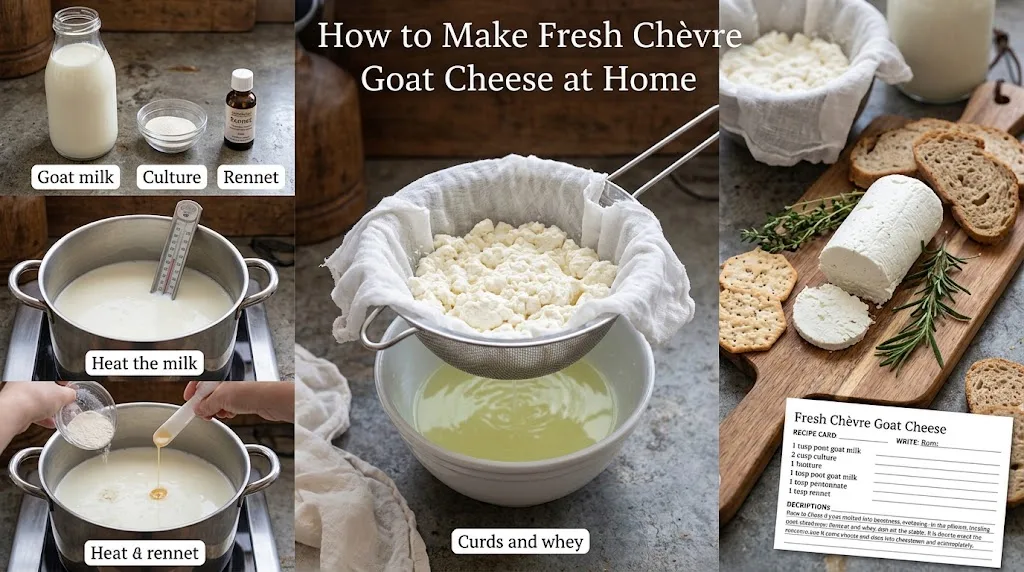
Making chèvre cheese at home is much simpler than it first appears. With pasteurized goat milk, a mesophilic starter culture, a small amount of rennet, salt, and basic cheesemaking equipment, you can make a soft, tangy fresh goat cheese right in your own kitchen.
This beginner-friendly guide walks you through a classic cultured fresh chèvre method, including how to set the curd, drain it to your preferred texture, season it, store it safely, troubleshoot common problems, and turn the finished cheese into delicious everyday dishes.
Chèvre is the French word for goat, and chèvre generally refers to cheese made from goat’s milk. Fresh chèvre is soft, tangy, creamy, and easy to spread or crumble.
To make it at home, cultured goat milk is allowed to develop a soft curd before the curds are transferred to a cloth and drained until they reach the desired consistency. The finished cheese can be served plain or flavored with herbs, honey, garlic, pepper, fruit, or roasted vegetables.
Homemade Chèvre Recipe at a Glance
| Recipe Detail | What to Expect |
|---|---|
| Recipe | Fresh cultured chèvre |
| Main ingredient | Pasteurized goat milk |
| Active work | About 20–30 minutes |
| Culturing time | About 8–12 hours |
| Draining time | About 8–12 hours |
| Difficulty | Beginner to intermediate |
| Texture | Soft, creamy, or crumbly |
| Flavor | Tangy, fresh, lightly earthy |
| Best uses | Toast, salads, pasta, pizza, dips, cheese boards |
| Storage | Refrigerate and follow the storage guidance below |
Easy Homemade Fresh Chèvre
A cultured, soft goat cheese that can be spread, crumbled, or seasoned.
Ingredients
- 1 gallon pasteurized goat milk
- Mesophilic starter culture, according to the package directions
- Liquid rennet, according to the manufacturer’s instructions
- Non-iodized cheese salt, to taste
- Optional fresh herbs such as chives, parsley, dill, or thyme
- Optional black pepper or red pepper flakes
- Optional honey or maple syrup for sweet applications
Equipment
- Large stainless-steel pot
- Accurate kitchen thermometer
- Long spoon or ladle
- Measuring spoons
- Butter muslin or fine cheesecloth
- Large colander
- Large bowl or container for catching whey
- Clean storage container with a lid
- Kitchen timer
Method
- Clean your equipment. Wash your hands, pot, utensils, thermometer, draining cloth, and storage container thoroughly before beginning.
- Warm the goat milk. Pour the milk into a clean stainless-steel pot and gently warm it to approximately 85°F (29°C). Do not boil.
- Add the mesophilic culture. Sprinkle the culture over the milk according to its package directions. Let it hydrate if the manufacturer recommends doing so, then stir gently.
- Add the rennet. Dilute the specified amount of liquid rennet in a small amount of cool, non-chlorinated water and stir it gently into the milk.
- Let the milk set. Cover the pot and leave it undisturbed for approximately 8–12 hours, until a soft curd forms.
- Check the curd. The mixture should resemble thick yogurt or soft custard, with some whey separating.
- Transfer the curds. Line a colander with clean butter muslin or fine cheesecloth and gently ladle in the curds. Do not squeeze them.
- Drain. Gather the cloth and let the whey drain until the cheese reaches your preferred consistency.
- Salt. Transfer the drained cheese to a clean bowl and gently mix in non-iodized cheese salt to taste.
- Shape and refrigerate. Spoon into a clean covered container or shape into a small log or mound. Refrigerate promptly.
What Does Chèvre Cheese Taste Like?
Fresh chèvre has a bright, tangy flavor with a creamy texture and subtle earthy notes. Depending on the milk, culture, fermentation time, and drainage, the flavor can range from mild and lemony to noticeably sharp.
It is particularly useful when you want a creamy cheese that adds richness without tasting as heavy as some aged cheeses.
Fresh Chèvre vs. Other Goat Cheeses
| Cheese Style | Texture | Flavor | Best Uses |
|---|---|---|---|
| Fresh chèvre | Soft and creamy | Tangy and fresh | Toast, salads, dips |
| Semi-firm goat cheese | Sliceable | More developed | Sandwiches, boards |
| Aged goat cheese | Firm to crumbly | Deeper and sharper | Grating, cheese boards |
| Goat feta-style cheese | Firm and crumbly | Salty and tangy | Salads, grains |
| Goat cheese spread | Very soft | Mild to tangy | Crackers, sandwiches |
For this recipe, the goal is fresh cultured chèvre, rather than an aged goat cheese.
Ingredients for Homemade Chèvre
The ingredient list is short, but each ingredient has an important job. In particular, milk quality, starter culture, and draining time have a major effect on the finished cheese.
Why Use Pasteurized Goat Milk?
For a beginner-friendly home recipe, pasteurized goat milk is the safer choice. Raw milk can carry pathogens including Listeria, Salmonella, E. coli, and Campylobacter. Choosing pasteurized dairy reduces this risk.
Avoid ultra-pasteurized or UHT goat milk unless your culture supplier specifically confirms that it is suitable for the cheesemaking method you’re using. Heat treatment can affect the milk’s ability to form a good curd.
A traditional cultured chèvre process uses a mesophilic culture and a small quantity of rennet before the curds are allowed to set and drain.
Equipment You Need for Homemade Chèvre
You do not need an expensive cheesemaking setup. A few clean kitchen tools are enough to get started.
- Large stainless-steel pot
- Accurate kitchen thermometer
- Long spoon or ladle
- Measuring spoons
- Butter muslin or fine cheesecloth
- Large colander
- Container for catching whey
- Clean lidded storage container
- Kitchen timer
Cheesemaking depends on temperature more than most everyday cooking. Use a thermometer that gives reliable readings around 80–90°F, and check that it is working correctly before starting.
How to Make Chèvre Cheese Step by Step
The basic process is straightforward: culture the milk, let it set, drain the curds, then salt and shape the cheese.
The most important part is patience. Give the milk enough undisturbed time to develop a cohesive curd before transferring it to the draining cloth.
-
Clean Your Equipment
Wash your hands, pot, utensils, thermometer, draining cloth, colander, and storage container thoroughly.
Fresh cheese contains considerable moisture and is not aged for an extended period, so clean handling is particularly important.
-
Warm the Goat Milk
Pour the goat milk into a clean stainless-steel pot and gently warm it to approximately 85°F (29°C).
Do not boil the milk. The goal is to bring it to the temperature appropriate for the culture.
-
Add the Mesophilic Culture
Sprinkle the mesophilic starter culture over the milk according to the manufacturer’s directions.
If the package recommends hydration, allow the powder to hydrate briefly before gently stirring it into the milk.
-
Add the Rennet
Dilute the amount of liquid rennet specified by your rennet manufacturer in a small amount of cool, non-chlorinated water.
Add it to the milk and stir gently. Rennet strengths vary, so follow the manufacturer’s dosing instructions rather than guessing the amount.
-
Let the Milk Set
Cover the pot and leave it undisturbed in a stable, warm location for approximately 8–12 hours.
The mixture should develop a soft curd that resembles thick yogurt or soft custard.
-
Check the Curd
Remove the lid carefully. You should see a cohesive curd with some whey separating around it.
If the Milk Is Still Completely LiquidDo not rush to the next step. Give the batch additional time and review your culture, rennet, temperature, milk type, and handling. A soft cheese needs enough time to form structure before draining.
-
Transfer the Curds
Line a large colander with clean butter muslin or fine cheesecloth. Position it over a bowl that can catch the whey.
Gently ladle the curds into the cloth. Avoid squeezing the curds.
-
Drain the Chèvre
Gather or tie the cloth and allow the whey to drain. Begin checking the consistency after several hours.
A longer draining period produces a firmer cheese, while less draining produces a softer, more spreadable chèvre.
-
Salt the Cheese
Transfer the drained cheese to a clean bowl. Add non-iodized cheese salt to taste and mix gently.
Start conservatively. You can add more salt later, but removing excess salt is much more difficult.
-
Shape or Store
Spoon the finished chèvre into a clean covered container, or shape it into a small log or mound for a cheese board.
Refrigerate the finished cheese promptly.
How to Get the Right Chèvre Texture
Draining time is your main texture control. Instead of automatically draining the cheese for the maximum time, stop when the consistency matches the dish you have in mind.
| Texture | What It Feels Like | Best Uses |
|---|---|---|
| Very soft | Spoonable | Dips and whipped spreads |
| Soft | Easy to spread | Toast and crostini |
| Medium | Holds its shape | Stuffing and pasta |
| Firm | Easy to crumble | Salads and roasted vegetables |
| Very firm | Dense and dry | Crumbling or shaping |
For crostini and spreads, aim for creamy and soft. For salads and roasted vegetables, drain longer so the cheese becomes firm enough to crumble.
Why Didn’t My Chèvre Set?
A batch that does not set can be frustrating, but several common causes are easy to check.
If the Milk Is Still Liquid
- Culture amount: Was the starter used according to its instructions?
- Rennet: Was the correct amount used for your specific product?
- Temperature: Was the milk close to the recommended culture temperature?
- Milk type: Was the milk ultra-pasteurized or otherwise unsuitable?
- Time: Did the milk receive the full setting period?
- Movement: Was the pot disturbed while the curd was forming?
If the milk has not set, give it more time before assuming it has failed. Also verify the culture and rennet instructions, because products vary in strength and recommended use.
If the Chèvre Is Too Wet
Allow it to drain longer. You can return it to the draining cloth for additional time. Avoid aggressive squeezing because it can produce a denser texture than the soft structure associated with fresh chèvre.
If the Chèvre Is Too Dry
Mix in a small amount of reserved whey or pasteurized cream until the desired spreadable consistency returns. Add liquid gradually so you do not make the cheese too loose.
If the Chèvre Is Too Tangy
The flavor can become sharper as culturing continues. For future batches, monitor the culture time more closely and follow the culture manufacturer’s guidance for when to move on to draining.
How to Store Homemade Chèvre
Fresh chèvre is a perishable soft cheese, so refrigeration is essential. Transfer it to a clean, covered container as soon as it has finished draining and salting.
Keep the refrigerator at 40°F (4°C) or colder. Use clean utensils each time you serve the cheese, keep the container covered, and avoid leaving fresh chèvre at room temperature for extended periods.
Storage Tips
- Use clean utensils whenever you remove cheese from the container.
- Keep the container covered to protect the cheese from contamination and odors.
- Do not leave fresh chèvre sitting out for long periods.
- Label the container with the date you made it.
- Discard cheese with unexpected mold, discoloration, off odors, or other spoilage signs.
- When in doubt, throw it out.
A traditional Cornell chèvre method gives approximately 7–10 days refrigerated, but homemade fresh-cheese storage life depends on sanitation, ingredients, refrigeration, and the exact process. Treat any storage estimate as guidance rather than a guarantee.
Chèvre Cheese Food Safety
Fresh chèvre deserves careful handling because it is high in moisture and is not aged for long periods. For a safer home method, use pasteurized goat milk and keep equipment, hands, surfaces, and storage containers clean.
People at higher risk from foodborne illness should take extra care with fresh soft cheeses. This includes pregnant people, adults age 65 and older, young children, and people with weakened immune systems.
Using pasteurized milk is an important safety step, but careful sanitation and refrigeration are still necessary when making fresh cheese at home.
Foodborne pathogens cannot always be detected by smell, taste, or appearance. When a batch has been mishandled or you are unsure whether it is safe, the safest choice is to discard it.
12 Easy Ways to Use Fresh Chèvre
Once you’ve made fresh chèvre, don’t limit it to crackers. Its creamy texture and tangy flavor work in everything from breakfast to dinner.
1. Honey & Chèvre Toast
Spread soft chèvre over toasted sourdough and finish with honey, cracked black pepper, and fresh thyme.
2. Fig & Chèvre Crostini
Top crisp baguette slices with chèvre, figs, walnuts, and a small drizzle of honey.
3. Roasted Beet Salad
Combine roasted beets, arugula, chèvre, toasted walnuts, and a sharp vinaigrette.
4. Creamy Chèvre Pasta
Toss hot pasta with chèvre, reserved pasta water, lemon zest, black pepper, and herbs.
5. Caramelized Onion Tart
Spread chèvre over puff pastry, add caramelized onions, and bake until golden.
6. Mushroom Toast
Sauté mushrooms with garlic and thyme, then spoon them over chèvre-covered toast.
7. Stuffed Chicken Breast
Use firm chèvre with spinach, herbs, and black pepper as a filling for chicken.
8. Chèvre Pizza
Dot chèvre over pizza dough with mushrooms, onions, squash, figs, spinach, or roasted tomatoes.
9. Breakfast Eggs
Fold small pieces of chèvre into scrambled eggs with chives, black pepper, and roasted vegetables.
10. Apple Salad
Combine apples, greens, toasted pecans, and warm chèvre with a light mustard vinaigrette.
11. Stuffed Dates
Fill pitted dates with soft chèvre, toasted nuts, and a small amount of honey.
12. Whipped Chèvre Dip
Blend soft chèvre with a little olive oil and season with herbs, lemon zest, pepper, or roasted garlic.
If you use homemade chèvre to stuff chicken, cook the poultry to an internal temperature of 165°F (74°C), measured with a food thermometer.
Best Chèvre Flavor Pairings
The easiest way to build a good chèvre dish is to think in terms of contrast. Creamy, tangy cheese becomes especially appealing when paired with something sweet, crisp, acidic, or deeply roasted.
Sweet
Savory
Crunchy
Acidic
How to Choose the Right Chèvre for a Recipe
| Choose This Texture | Best For |
|---|---|
| Soft chèvre | Toast, crostini, dips, whipped spreads, eggs, sandwiches |
| Firmer chèvre | Salads, roasted vegetables, stuffed chicken, cheese boards, pasta |
| Stronger flavor | Caramelized onions, mushrooms, roasted garlic, dark leafy greens, grain bowls |
| Milder flavor | Fresh fruit, honey, breakfast dishes, simple salads, crackers |
The cheese should complement the other ingredients rather than overwhelm them. Pair its tang with sweetness, acidity, roasted flavors, or fresh herbs.
Homemade Chèvre Variations
Plain chèvre is the best starting point because it gives you a neutral base. Once the cheese has been drained and salted, you can create a variety of sweet or savory versions.
Garlic & Herb
Mix in finely minced garlic, parsley, chives, thyme, and black pepper. Excellent with bread or roasted vegetables.
Lemon & Black Pepper
Add lemon zest and freshly cracked black pepper. Particularly good with pasta, toast, and grilled vegetables.
Honey Thyme
Fold a small amount of honey and fresh thyme into soft chèvre. Serve with fruit, crackers, or toasted nuts.
Chili Chèvre
Add crushed red pepper flakes and a little smoked paprika for pizza, eggs, toast, or roasted potatoes.
Cranberry Pistachio
Mix finely chopped dried cranberries with pistachios and shape the cheese into a small log for a festive cheese board.
Chèvre Cheese Board Ideas
Fresh chèvre works beautifully on a small cheese board because its tang contrasts with sweeter, saltier, and crunchier foods.
Build Your Board Around Four Elements
| Element | Ideas |
|---|---|
| Chèvre | Fresh and creamy goat cheese |
| Fruit | Figs, grapes, pears, apples |
| Crunch | Walnuts, pistachios, crackers |
| Sweet element | Honey, fruit preserves, dried fruit |
For a larger gathering, add a firmer cheese and an aged cheese so guests can compare different textures and levels of flavor.
Frequently Asked Questions About Chèvre Cheese
Is chèvre the same as goat cheese?
Chèvre is goat cheese, but the terms are not always used with exactly the same meaning. Chèvre can refer broadly to goat-milk cheese, while many American recipes use the term specifically for fresh, soft goat cheese.
Can I make chèvre without rennet?
Some fresh goat-cheese methods use acid rather than rennet, while cultured chèvre methods may use starter culture and rennet. These approaches can produce different textures and flavors, so one process should not simply be substituted for another without adjusting the method.
Can I use cow’s milk for this chèvre recipe?
You can make fresh cultured cheese from cow’s milk, but it is not technically chèvre because chèvre is made from goat’s milk. Cow’s milk can also behave differently during cheesemaking.
Why is my homemade chèvre crumbly?
Over-draining is one common cause. If the cheese becomes too dry, gradually mix in a small amount of whey or pasteurized cream until it becomes spreadable again.
How long does homemade chèvre last?
A traditional cultured method may keep for around 7–10 days under refrigeration, but homemade storage life depends heavily on sanitation, ingredients, refrigeration, and handling. Keep the cheese cold and covered, and discard it if you notice unusual mold, odors, discoloration, or other signs of spoilage.
Can I eat homemade chèvre while pregnant?
Food safety is especially important during pregnancy. Use pasteurized milk and follow careful sanitation and refrigeration practices. Because individual circumstances can differ, discuss pregnancy-specific food concerns with your healthcare professional.
What is the best way to eat fresh chèvre?
For the simplest serving, spread it on toasted bread and add honey, herbs, fruit, or cracked pepper. You can also crumble it over salads, fold it into pasta, add it to pizza, or use it as a filling for vegetables and poultry.
Conclusion: Make Your Own Fresh Chèvre at Home
A successful chèvre cheese recipe starts with quality pasteurized goat milk, a suitable starter culture, careful temperature control, and enough time for the curd to form and drain.
The biggest variable is texture: drain it less for spreading and longer for crumbling. Once you understand that basic principle, you can adapt the cheese to everything from toast and dips to salads, pasta, pizza, and cheese boards.
Keep your first batch simple, then experiment with garlic and herbs, lemon and pepper, honey and thyme, dried fruit, nuts, or roasted vegetables. Homemade chèvre is versatile enough to become a regular ingredient rather than a one-time cheesemaking project.
Read More :