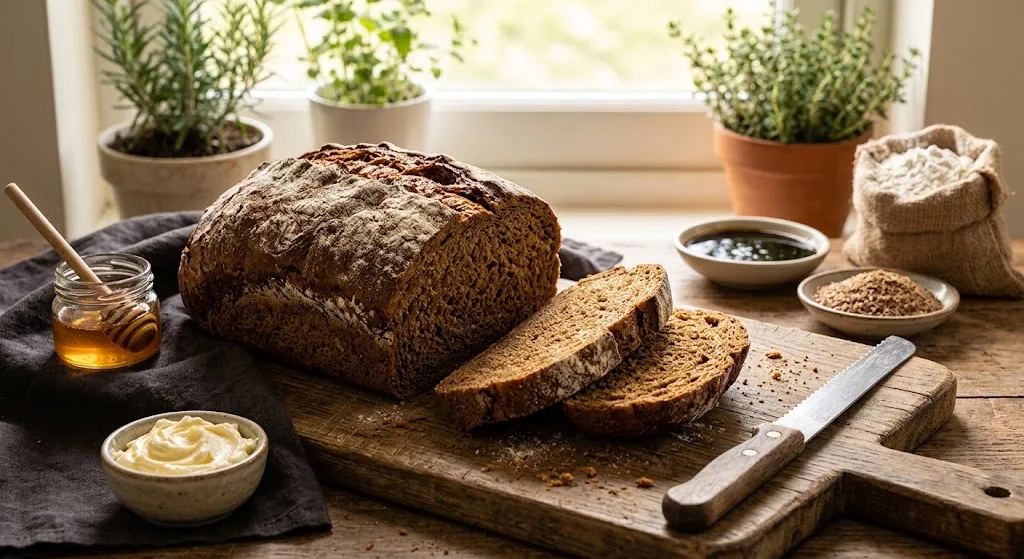
Learn how to make a soft, dark, hearty wheat-and-rye loaf with whole wheat flour, rye flour, honey, molasses, and optional raisins. Perfect for sandwiches, toast, breakfast, and cozy soups.
National Museum of the American Indian
Quick Answer
This squaw bread recipe makes a dark, soft yeast bread with whole wheat, rye, honey, molasses, and optional raisins. The key is keeping the dough moist enough for a tender crumb while giving the whole-grain flours enough time to hydrate and develop.
What Is Squaw Bread?
The bread commonly called squaw bread is a dark, slightly sweet American-style wheat-and-rye loaf. Published versions commonly combine whole wheat flour, rye flour, white flour, yeast, honey, brown sugar or molasses, and raisins.
There isn’t one standardized formula. Older recipes vary considerably in flour ratios, sweeteners, grains, raisins, milk, bran, and other ingredients. That explains why two loaves sold or described under the same name can taste surprisingly different.
Why Is This Bread So Dark?
The deep brown color comes from a combination of ingredients rather than one magic ingredient.
- Molasses gives the strongest dark color and bittersweet flavor.
- Whole wheat flour adds a naturally deeper brown tone.
- Rye flour adds earthy, malty notes.
- Brown sugar deepens the flavor and color.
- Raisins contribute sweetness and a darker fruit note.
- Longer baking develops additional crust color.
Chart House-style recipe reference
Easy Squaw Bread Recipe
One soft, dark, slightly sweet 9-by-5-inch loaf.
Ingredients
- 300 g bread flour — about 2½ cups, spooned and leveled
- 120 g whole wheat flour — about 1 cup
- 60 g rye flour — about ½ cup
- 300 g warm water — about 1¼ cups
- 60 g whole milk — ¼ cup
- 35 g honey — about 1½ tablespoons
- 30 g unsulphured molasses — about 1½ tablespoons
- 25 g neutral vegetable oil — about 2 tablespoons
- 45 g raisins — about ¼ cup
- 7 g instant yeast — 2¼ teaspoons
- 9 g fine salt — about 1½ teaspoons
Recipe at a Glance
- Yield: 1 standard loaf
- Pan: 9 × 5-inch loaf pan
- First rise: 60–90 minutes
- Stand mixer kneading: 8–10 minutes
- Hand kneading: 10–12 minutes
- Oven: 375°F
- Baking time: 35–45 minutes
- Target internal temperature: 190–200°F
Honey vs. Molasses
Use both for the most balanced flavor. Honey provides clean sweetness and helps keep the loaf pleasantly soft. Molasses contributes the darker color and deeper, slightly bittersweet flavor associated with many versions of this bread.
If you prefer a lighter flavor, replace the molasses with additional honey. The finished loaf will be noticeably lighter in color and less robust.
How to Make Squaw Bread
-
Soften the Raisins
Place the raisins and warm milk in a small bowl and let them stand for about 10 minutes.
For a smoother loaf, pulse the soaked raisins with the milk until finely chopped. For visible pieces, leave them whole.
-
Mix the Dough
Combine the bread flour, whole wheat flour, rye flour, instant yeast, and salt in a large mixing bowl.
Add the warm water, honey, molasses, oil, and raisin mixture. Stir until no dry flour remains.
The dough should look soft and somewhat sticky at this stage. Resist adding a large amount of extra flour immediately.
-
Knead Until Elastic
Knead with a stand mixer fitted with a dough hook for about 8–10 minutes, or knead by hand for roughly 10–12 minutes.
The finished dough should be:
- Soft
- Elastic
- Slightly tacky
- Able to stretch without immediately tearing
- Firm enough to hold its shape
If the dough feels dry and stiff, add water one teaspoon at a time. If it remains extremely wet after several minutes of kneading, add flour gradually.
-
Let the Dough Rise
Place the dough in a lightly oiled bowl and cover it. Let it rise in a warm, draft-free place until it has expanded substantially and looks airy.
Depending on room temperature and yeast activity, this usually takes around 60–90 minutes.
Don’t watch the clock alone: Dough temperature and room temperature can change the rise time considerably. Look for a substantially expanded, airy dough. -
Shape the Loaf
Gently press the air from the dough without aggressively flattening it. Shape it into a tight log that fits your 9-by-5-inch loaf pan.
Place the shaped dough seam-side down in a lightly greased pan.
-
Proof Again
Cover the pan and let the dough rise again. It is ready when the dough has risen noticeably above its original level and looks soft, puffy, and airy.
Avoid letting it rise so far that the dough becomes fragile and collapses when touched.
-
Bake
Heat the oven to 375°F.
Bake the loaf for approximately 35–45 minutes, checking it toward the end of the baking window.
For the most reliable doneness check, measure the center with an instant-read thermometer. Aim for approximately 190–200°F.
-
Cool Before Slicing
Remove the bread from the pan after a few minutes and place it on a wire rack. Let it cool completely before slicing.
Cutting very warm bread can compress the crumb and make the center seem gummy even when the loaf is properly baked.
What Makes This Recipe Different From Older Versions?
There is no single universally accepted squaw bread formula. Published recipes vary considerably in flour ratios, sweeteners, raisins, dairy, bran, oats, cornmeal, and other ingredients.
A Los Angeles Times recipe from the 1980s combines rye, whole wheat, all-purpose or bread flour, honey, brown sugar, raisins, milk, butter, and yeast.
View the Los Angeles Times referenceAnother published version attributed to Marilyn Martell uses water, oil, honey, brown sugar, raisins, whole wheat flour, rye flour, powdered milk, and cornmeal and produces four loaves.
View the Food.com referenceA separate recipe associated with the Chart House uses bread flour, whole wheat flour, bran, oats, molasses, brown sugar, and malted barley flour.
View the Chart House-style referenceHow to Get a Dark Restaurant-Style Loaf
If your goal is the deep brown restaurant-style bread many American diners remember, focus on flavor first rather than artificial coloring.
- Use dark unsulphured molasses for richer color.
- Keep some rye flour in the blend.
- Don’t replace all the whole wheat with white flour.
- Use enough sweetener to balance the rye without making the bread dessert-like.
- Let the loaf brown properly in the oven.
- Cool it completely before judging the crumb.
- Add raisins if you enjoy subtle fruity sweetness.
- Skip caramel coloring unless you specifically want a very dark appearance.
Honey, Molasses, or Both?
| Sweetener | Flavor | Color | Best For |
|---|---|---|---|
| Honey | Clean and floral | Medium brown | Mild bread |
| Molasses | Deep and bittersweet | Dark brown | Restaurant-style flavor |
| Honey + molasses | Balanced and rich | Dark brown | All-around flavor |
| Brown sugar | Caramel-like | Brown | Extra richness |
With Raisins or Without?
Raisins are common in published versions, but they aren’t essential to the bread’s identity.
Choose Whole Raisins If:
- You like noticeable fruit pieces.
- You’re serving the bread for breakfast.
- You enjoy sweet toast.
- You want extra texture.
Choose Finely Chopped Raisins If:
- You want a smoother crumb.
- You want raisin flavor without large pieces.
- You’re making sandwich bread.
- You want deeper color throughout the dough.
Skip Raisins If:
You prefer a more savory loaf. The bread will still have plenty of flavor from the rye, whole wheat, honey, and molasses.
How to Make It Dairy-Free
The milk is not essential to the basic bread structure. For a dairy-free version, replace the 60 g whole milk with an equal amount of water or unsweetened plant-based milk.
For a vegan loaf, also replace honey with maple syrup or another plant-based liquid sweetener.
Can You Make Squaw Bread in a Bread Machine?
Yes, but use the machine’s dough cycle if you want maximum control over the final loaf.
Bread-machine versions of this bread have appeared in older recipe collections, including a Chart House-inspired formula using bread flour, whole wheat flour, bran, oats, brown sugar, molasses, and yeast.
- Add liquids first if your machine’s manual recommends that order.
- Add flours, salt, and sweeteners next.
- Keep yeast separated from the liquid until mixing begins.
- Watch the dough during the first kneading cycle.
- Add tiny amounts of flour or water only if necessary.
- Use the dough cycle if baking in your oven.
- Follow your machine’s maximum loaf-size limits.
How to Serve Squaw Bread
The slightly sweet, earthy flavor works especially well with savory foods.
Breakfast
- Egg sandwiches
- Peanut butter and banana toast
- Butter and honey
- Cream cheese and sliced apples
Lunch & Dinner
- Turkey and cheddar sandwiches
- Grilled cheese
- Hearty bean soup
- Beef or vegetable stew
- Chili
Other Uses
- French toast
- Stuffing
- Roasted vegetables with soft cheese
- Thick-cut toast
Common Problems and How to Fix Them
Dense Loaf
A dense loaf usually points to under-proofing, weak yeast activity, too much flour, or insufficient gluten development. Check the dough’s rise rather than relying on a fixed timer.
Loaf Collapses After Rising
The dough may have been over-proofed. Next time, bake when the dough is visibly puffy but still has enough structure to hold its shape.
Dry Crumb
Too much flour is one common cause. Whole wheat and rye also absorb liquid differently from white flour, so measure flour carefully and avoid adding large amounts during kneading.
Gummy Center
The loaf may be underbaked or sliced while still hot. Use an instant-read thermometer for the center, then allow the bread to cool completely before cutting.
Bread Isn’t Dark Enough
Increase the amount of molasses rather than relying on artificial coloring. Also make sure the loaf is allowed to brown properly during baking.
Bread Tastes Too Bitter
Too much molasses can dominate the loaf. Reduce the molasses slightly and use honey for the remaining sweetness.
How to Store Homemade Squaw Bread
Once completely cool, keep the loaf tightly wrapped at room temperature for up to several days.
Avoid refrigerating ordinary homemade bread unless necessary. The refrigerator can make bread stale faster.
To Freeze the Whole Loaf
- Cool the bread completely.
- Wrap it tightly.
- Place it in a freezer-safe bag.
- Remove as much excess air as practical.
- Freeze for up to about 3 months for best quality.
To Freeze Slices
Slice the cooled loaf before freezing. Place parchment between slices if you want to remove individual pieces easily.
Is Squaw Bread the Same as Pumpernickel?
No. Both can be dark and hearty, but they aren’t automatically the same bread.
Recipes commonly called squaw bread use wheat flour, rye flour, honey or molasses, and sometimes raisins. Traditional pumpernickel has its own German baking traditions and is often much more rye-forward.
| Characteristic | Dark Wheat-and-Rye Bread | Pumpernickel |
|---|---|---|
| Main grain profile | Usually wheat-forward with moderate rye | Traditionally much more rye-forward |
| Sweetness | Often mildly sweet | Depends on the style and recipe |
| Common flavor additions | Honey, molasses, raisins | Varies according to regional tradition |
| Texture | Often soft and sandwich-friendly | Can be denser and more rye-dominant |
The biggest practical difference is flavor: this style of bread is usually softer, sweeter, and more wheat-based than a strongly rye-dominant pumpernickel.
A Note About the Name
The term used in the search phrase for this recipe is outdated and offensive when referring to Indigenous women. The Smithsonian’s National Museum of the American Indian describes the term as derogatory and notes that historical collections may contain it because they preserve period language.
The name also has a complicated history. Linguistic research indicates that related forms originated in Algonquian languages with meanings connected to “woman,” but the English term acquired derogatory uses over time.
National Museum of the American Indian | Linguistic research reference
Frequently Asked Questions
Is squaw bread sweet?
Yes, but usually only mildly sweet. Honey, molasses, brown sugar, and raisins can all contribute sweetness, while rye and whole wheat keep the flavor hearty.
What flour is best for squaw bread?
A combination of bread flour, whole wheat flour, and rye flour gives a good balance of structure and flavor. Bread flour supports the gluten network, while whole wheat and rye create the darker, earthier character.
Can I leave out the raisins?
Yes. Raisins add sweetness, moisture, and fruit flavor, but they aren’t required for a successful loaf.
Can I replace molasses with honey?
Yes. Honey will produce a lighter-colored loaf with a cleaner sweetness. If you want the characteristic deep brown flavor, keep at least some molasses.
Why is my squaw bread dense?
The most common causes are too much flour, insufficient proofing, weak yeast, or inadequate kneading. Whole-grain dough also tends to feel heavier than white bread, so proper fermentation matters.
Can I freeze homemade squaw bread?
Yes. Cool the bread completely, wrap it well, and freeze it whole or sliced. For the best texture, use it within about three months.
Why do squaw bread recipes vary so much?
There is no single standardized formula. Published recipes range from wheat-and-rye loaves with honey and raisins to darker restaurant-style versions containing molasses, bran, oats, or malted ingredients.
Conclusion
This squaw bread recipe focuses on the qualities many home bakers want from this style of loaf: a dark crust, soft crumb, earthy rye flavor, whole-wheat character, and gentle sweetness from honey and molasses.
Start with the base recipe before changing the flour blend or sweetener. Once you know how the dough should feel and how a properly proofed loaf looks, you can easily adjust the raisins, sweetness, and color to suit your family.
If you enjoy homemade sandwich bread, slice this loaf once completely cool and freeze part of it for later. It makes especially good toast, grilled cheese, breakfast sandwiches, and a hearty partner for soup.
Read More :