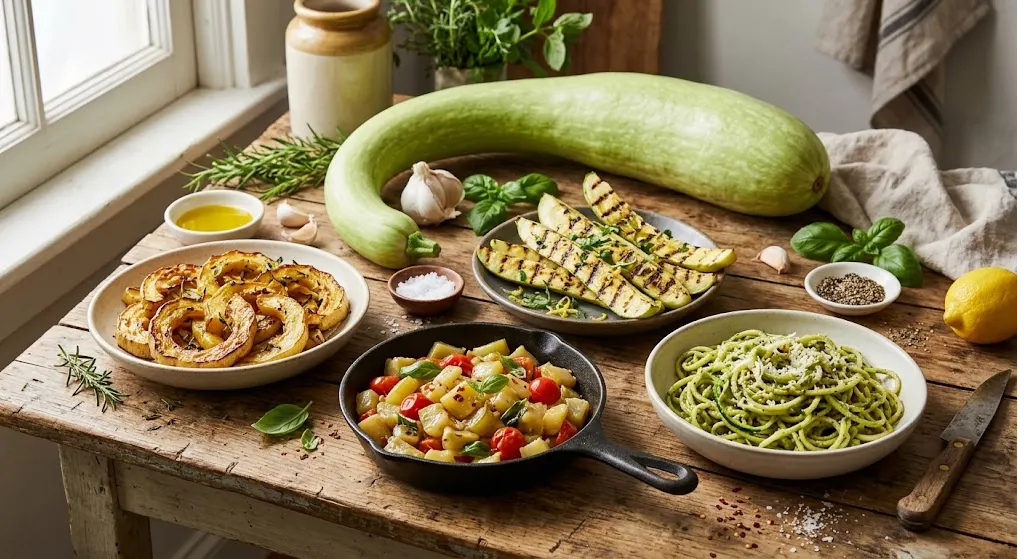
Discover delicious tromboncino squash recipes for young green squash and mature fruit, from quick garlic-butter sides and crispy fritters to soups, pasta, stuffed squash, casseroles, and hearty skillet meals.
If you have a tromboncino squash sitting on your counter, you have far more options than simply treating it like zucchini. These tromboncino squash recipes cover roasting, sautéing, grilling, air frying, soups, pasta, fritters, stuffed squash, and simple weeknight sides.
The key is knowing how mature your squash is. Young green tromboncino has tender skin and firm, mild flesh that works much like summer squash. A fully mature squash develops a harder rind and becomes more suitable for winter-squash preparations.
Quick Answer: What Can You Make With Tromboncino Squash?
Tromboncino squash can be roasted, sautéed, grilled, air-fried, stuffed, added to soups, turned into noodles, or used in casseroles and pasta dishes. Young squash is especially good for quick cooking, while mature squash works better peeled and cooked like winter squash.
How to Choose Tromboncino for Cooking
The best recipe depends on whether your squash was harvested young or allowed to mature. A slender green squash is usually tender enough for slicing, grilling, and sautéing, while a mature tan squash is firmer and better suited to roasting, soups, and purées.
Young & Tender
- Young green squash: Best for sautéing, grilling, stir-fries, and salads.
- Tender neck: Usually has fewer seeds and a firm texture.
- Bulbous end: Contains more seeds and softer interior flesh.
- Small to medium squash: Usually easier to slice and cook evenly.
Mature & Firm
- Mature squash: Better for roasting, soup, stuffing, and mash.
- Firm skin: A sign that peeling may make preparation easier.
- Very large squash: Cut it into manageable sections before preparing.
- Fresh squash: Should feel firm without soft, wet, or damaged areas.
16 Easy Tromboncino Squash Recipes
Garlic Butter Sautéed Tromboncino Squash
Sautéed tromboncino squash is one of the fastest ways to turn a fresh harvest into dinner. Thin slices brown quickly while staying firmer than many ordinary summer squash preparations.
- Main ingredients: Tromboncino, butter, garlic, salt, black pepper, and parsley.
- Preparation: Wash and dry young squash, then slice into thin rounds or half-moons.
- Cooking: Sauté in a hot skillet until browned and tender.
- Dairy-free: Use olive oil or dairy-free butter.
- Vegan: Use olive oil instead of butter.
- Finishing touch: Add lemon zest and parsley.
- Best with: Grilled meats, salmon, rice, beans, or crusty bread.
Roasted Tromboncino Squash With Parmesan and Herbs
Roasted tromboncino squash develops deeper, sweeter flavors and browned edges. It is especially useful when you want a hands-off side dish.
- Main ingredients: Tromboncino, olive oil, Parmesan, garlic, rosemary, salt, and pepper.
- Preparation: Cut into evenly sized chunks or thick half-moons.
- Roasting: Spread pieces in a single layer without crowding.
- Texture: Look for browned edges and a tender center.
- Dairy-free: Skip Parmesan or use a dairy-free alternative.
- Garnish: Parsley, basil, or lemon zest.
Grilled Tromboncino Squash
Grilling gives tromboncino a smoky exterior while preserving some of its natural firmness. The technique works particularly well with young squash because the skin remains tender.
- Main ingredients: Tromboncino, olive oil, salt, pepper, and lemon.
- Preparation: Cut young squash lengthwise into thick strips.
- Cooking: Grill until tender with visible char marks.
- Italian-style: Add basil, Parmesan, and lemon.
- Mediterranean: Add feta, tomatoes, olives, and oregano.
- Best with: Burgers, grilled chicken, fish, or grain bowls.
Air Fryer Tromboncino Squash
The air fryer is useful when you want browned squash without heating the entire kitchen. Circulating hot air encourages surface browning, especially with small pieces.
- Main ingredients: Tromboncino, olive oil, salt, pepper, and garlic powder.
- Preparation: Cut into sticks, half-moons, or bite-sized chunks.
- Cooking: Air-fry in a single layer until browned and tender.
- Crispier option: Add Parmesan and breadcrumbs.
- Spicy option: Add smoked paprika and red pepper flakes.
- Fresh finish: Lemon juice and chopped parsley.
Tromboncino Squash Soup
Tromboncino makes a naturally creamy soup without requiring large amounts of cream. Roasting the squash first can add more depth.
- Main ingredients: Tromboncino, onion, garlic, vegetable broth, olive oil, and herbs.
- Flavor base: Sauté onion and garlic before adding squash.
- Deeper flavor: Roast the squash first.
- Creamy texture: Blend with an immersion blender.
- Richer version: Add cream or coconut milk.
- Spiced version: Try cumin, coriander, smoked paprika, or curry spices.
- Topping: Toasted seeds, herbs, chili oil, or grated cheese.
Tromboncino Squash Pasta
Tromboncino and pasta make a practical combination because the squash can become either a chunky vegetable sauce or a creamy purée.
- Main ingredients: Pasta, tromboncino, garlic, olive oil, Parmesan, and lemon.
- Best shapes: Rigatoni, spaghetti, orecchiette, fusilli, or penne.
- Creamy option: Blend cooked squash with pasta water and Parmesan.
- Vegan option: Use nutritional yeast or cashew sauce.
- Protein: White beans, chickpeas, chicken, or shrimp.
- Spicy option: Add crushed red pepper flakes.
- Fresh finish: Basil, parsley, or mint.
Tromboncino Squash Fritters
Squash fritters are a smart choice when you have a large harvest. The most important step is removing excess moisture before mixing the batter.
- Main ingredients: Grated tromboncino, egg, flour, Parmesan, herbs, salt, and pepper.
- Preparation: Grate the squash and squeeze out excess moisture.
- Binder: Egg and flour hold the mixture together.
- Gluten-free: Use a suitable gluten-free flour blend.
- Flavor: Add scallions, dill, parsley, or basil.
- Serving sauce: Greek yogurt, sour cream, tzatziki, or lemon-garlic sauce.
Stuffed Tromboncino Squash
Stuffing works especially well with mature tromboncino squash because the firmer flesh holds its shape during longer cooking.
- Vegetarian filling: Rice, mushrooms, spinach, Parmesan, and herbs.
- Vegan filling: Quinoa, chickpeas, tomatoes, herbs, and toasted seeds.
- Meat filling: Ground turkey, beef, sausage, or chicken.
- Preparation: Halve the squash and remove seeds from the bulb.
- Cheese topping: Parmesan, mozzarella, feta, or goat cheese.
- Serving: Add a green salad for a complete meal.
Tromboncino Squash and Tomato Skillet
Tomatoes bring acidity and juiciness to tromboncino, creating a simple skillet dish that works particularly well during summer.
- Main ingredients: Tromboncino, ripe tomatoes, olive oil, garlic, basil, salt, and pepper.
- Cooking: Brown the squash before adding tomatoes.
- Flavor: Bright, savory, lightly sweet, and acidic.
- Spicy version: Add crushed red pepper or fresh chili.
- Herbs: Basil, oregano, thyme, or parsley.
- Vegan: The basic version is naturally vegan.
- Serving: Spoon over polenta, rice, pasta, or toasted bread.
Tromboncino Squash Noodles
Young tromboncino can be cut into long strips and used as a vegetable noodle. Its firm texture makes it useful when you want more bite than very watery zucchini noodles.
- Best squash: Young, firm green tromboncino.
- Tool: Spiralizer, julienne peeler, or sharp chef’s knife.
- Quick sauce: Garlic, olive oil, lemon, and Parmesan.
- Protein: Shrimp, chicken, tofu, or white beans.
- Vegan: Use dairy-free pesto or lemon-herb dressing.
- Cooking: Briefly sauté rather than simmering for a long time.
Tromboncino Squash Casserole
A casserole is ideal when you want to turn a large amount of squash into a family-style side. Avoid excessive liquid because squash naturally releases moisture as it cooks.
- Creamy: Combine squash with garlic, cream, Parmesan, and herbs.
- Tomato version: Layer squash with marinara and mozzarella.
- Crunchy topping: Seasoned breadcrumbs or crushed crackers.
- Vegetarian protein: White beans or cooked lentils.
- Herbs: Basil, thyme, oregano, and parsley.
- Gluten-free: Choose gluten-free breadcrumbs.
- Dairy-free: Use olive oil and dairy-free cheese.
Tromboncino Squash Stir-Fry
Young tromboncino is excellent in a quick stir-fry because it can be sliced thinly and cooked alongside other vegetables.
- Main ingredients: Tromboncino, bell pepper, onion, garlic, and ginger.
- Protein: Tofu, chicken, shrimp, or thinly sliced beef.
- Sauce: Soy sauce, sesame oil, garlic, and ginger.
- Spicy option: Chili crisp or red pepper flakes.
- Crunch: Sesame seeds or roasted peanuts.
- Gluten-free: Use certified gluten-free tamari.
- Serving: Steamed rice or noodles.
Creamy Tromboncino Squash Risotto
Tromboncino can add body and subtle sweetness to risotto without overwhelming the rice. Roasted pieces provide texture while puréed squash contributes creaminess.
- Main ingredients: Arborio rice, tromboncino, onion, stock, Parmesan, and olive oil.
- Flavor base: Cook onion and garlic gently before adding rice.
- Squash texture: Use roasted pieces and puréed squash.
- Herbs: Sage, thyme, parsley, or rosemary.
- Vegetarian: Use vegetable stock.
- Vegan: Replace butter and Parmesan with olive oil and nutritional yeast.
- Finishing touch: Add lemon zest.
Tromboncino Squash Salad
A warm or chilled tromboncino squash salad gives you another way to use young squash without turning it into a heavy side dish.
- Base: Arugula, mixed greens, spinach, or romaine.
- Squash: Roast, grill, or sauté before adding.
- Cheese: Feta, goat cheese, Parmesan, or mozzarella.
- Crunch: Pumpkin seeds, sunflower seeds, walnuts, or almonds.
- Acid: Lemon juice or a simple vinaigrette.
- Fruit: Peaches, apples, grapes, or dried cranberries.
- Protein: Chickpeas, lentils, chicken, or grilled shrimp.
Tromboncino Squash Hash
Squash hash turns leftover cooked vegetables into a substantial breakfast, brunch, or dinner. Combine browned tromboncino with potatoes, onions, peppers, and herbs.
- Main ingredients: Tromboncino, potatoes, onion, bell pepper, olive oil, and herbs.
- Breakfast: Top with fried or poached eggs.
- Vegan: Add white beans or crispy tofu.
- Meaty: Add cooked sausage or bacon.
- Spicy: Jalapeño, hot sauce, or smoked paprika.
- Herbs: Rosemary, parsley, sage, or thyme.
Roasted Mature Tromboncino With Maple and Sage
When tromboncino has fully matured, its flavor and texture can move closer to the winter-squash side of the spectrum. This makes it a good candidate for roasting with warm herbs and a lightly sweet glaze.
- Main ingredients: Mature tromboncino, olive oil, maple syrup, sage, salt, and black pepper.
- Preparation: Cut into manageable sections before peeling.
- Roasting: Cook until the flesh is completely tender and browned.
- Flavor: Sweet, earthy, nutty, and aromatic.
- Savory option: Skip maple and use garlic with rosemary.
- Holiday option: Add toasted pecans and cranberries.
- Serving: Roast poultry, pork, lentils, or a holiday grain dish.
⚠️ Safety Tip: Cutting Mature Tromboncino
A mature tromboncino can develop a very hard rind. Place it securely on a stable cutting board and use a sturdy knife. If necessary, cut it into manageable sections first, then remove the rind and seeds. Never force a knife through an unstable squash.
How to Prepare Tromboncino Squash
Preparation changes depending on the squash’s maturity. Young tromboncino generally has tender skin, while a mature fruit may have a much harder rind that is better removed before cooking.
- Young green squash: Wash, dry, trim the ends, and slice.
- Tender skin: Usually suitable for sautéing, grilling, or roasting.
- Mature squash: Cut into manageable pieces before peeling.
- Seeded bulb: Scoop out mature seeds and fibrous material.
- Long neck: Slice into rounds, half-moons, strips, or cubes.
- For fritters: Grate and squeeze out excess moisture.
- For soup: Cubes do not need to be perfectly uniform.
- For roasting: Keep pieces similar in size for even cooking.
Tromboncino Squash vs. Zucchini: Which Should You Use?
Tromboncino and zucchini can overlap in recipes, especially when the tromboncino is harvested young. Young tromboncino is commonly used as a substitute for zucchini and yellow squash.
| Feature | Young Tromboncino | Zucchini |
|---|---|---|
| Texture | Firm and dense | Tender and juicy |
| Flavor | Mild, slightly nutty | Mild and fresh |
| Skin | Usually tender | Tender |
| Seeds | Often concentrated toward the bulb | Spread through the interior |
| Grilling | Excellent | Excellent |
| Roasting | Excellent | Good |
| Sautéing | Excellent | Excellent |
| Fritters | Excellent | Excellent |
| Long cooking | Holds shape relatively well | Can soften quickly |
| Mature use | Can become winter-squash-like | Usually harvested young |
Best Flavor Pairings for Tromboncino Squash
Tromboncino has a mild flavor, so it works with both delicate herbs and stronger savory ingredients. Think of it as a flexible base rather than a vegetable that needs heavy seasoning.
- Garlic + olive oil + lemon
- Basil + tomato + Parmesan
- Sage + butter + Parmesan
- Rosemary + garlic + roasted squash
- Thyme + mushrooms + cream
- Chili + tomato + olive oil
- Feta + mint + lemon
- Pesto + pasta + toasted nuts
- Smoked paprika + cumin + yogurt
- Ginger + soy sauce + sesame
- Maple + sage + toasted pecans
- Lemon + parsley + chickpeas
Can You Eat Tromboncino Squash Skin and Seeds?
Young tromboncino skin is generally tender enough to eat, which makes preparation much like zucchini. As the fruit matures, however, the rind becomes tougher and less pleasant, so peeling becomes more practical.
- Young skin: Usually leave it on after washing.
- Mature skin: Peel if it feels tough or fibrous.
- Young seeds: May be left in when the interior is tender.
- Mature seeds: Scoop them out before cooking.
- Bulbous end: Usually contains more seeds than the long neck.
- Texture check: If the skin resists your knife, consider peeling it.
- Food safety: Wash fresh produce under running water before cutting.
- Knife safety: Stabilize large squash securely before cutting.
How to Store Tromboncino Squash
Fresh young tromboncino is best used while its skin and flesh remain firm. If you have a large garden harvest, avoid washing squash until you’re ready to prepare it unless your storage method specifically requires otherwise.
Fresh & Whole
- Whole young squash: Keep cool and use while fresh and firm.
- Large harvest: Prioritize tender squash for quick-cooking recipes.
- Mature squash: Keep intact until needed when the rind is firm and undamaged.
Cut & Cooked
- Cut squash: Refrigerate promptly in a covered container.
- Cooked squash: Refrigerate within two hours of cooking.
- Leftovers: Use clean utensils and airtight containers.
- Reheating: Heat leftovers thoroughly before serving.
⚠️ When to Discard Squash
Discard tromboncino showing significant mold, rot, or an unusual odor. Do not try to salvage visibly spoiled portions.
Frequently Asked Questions
What does tromboncino squash taste like?
Tromboncino has a mild, slightly sweet flavor with a firm, subtly nutty texture. Young squash is often compared with zucchini, although its flesh can feel less watery.
Do you have to peel tromboncino squash?
Not always. Young green tromboncino usually has tender skin, while mature squash develops a tougher rind that is better peeled.
Can you substitute tromboncino for zucchini?
Yes, especially when the tromboncino is young. It works well in sautéed dishes, fritters, grilled preparations, casseroles, and many recipes that call for summer squash.
What is the best way to cook tromboncino squash?
Roasting, sautéing, and grilling are excellent starting points. Young squash benefits from quick, high-heat cooking, while mature squash is better suited to roasting, soups, and other longer preparations.
Can you eat mature tromboncino squash?
Yes. Mature tromboncino can be prepared more like a winter squash, although the tougher rind and larger seed cavity require additional preparation.
Why is my tromboncino squash watery?
Excess moisture can come from the squash itself, overcrowding the pan, or cooking at too low a heat. Use a hot pan, avoid crowding, and cook the squash in batches when necessary to encourage browning.
Can you freeze cooked tromboncino squash?
Yes, although the texture may become softer after thawing. Cooked squash is usually best reserved for soups, sauces, casseroles, and purées after freezing, rather than preparations where crisp texture matters.
Final Thoughts on Tromboncino Squash Recipes
The best tromboncino squash recipes depend on the squash you have in front of you. Young green fruit is excellent for quick sautéing, grilling, air frying, fritters, pasta, and stir-fries, while mature squash shines in soups, roasting, stuffing, and purées.
Start with a simple garlic-and-olive-oil sauté if you’re cooking tromboncino for the first time. Once you know its texture, try roasting it with Parmesan, grilling it with lemon and herbs, or turning a mature squash into a cozy soup.
Read More :