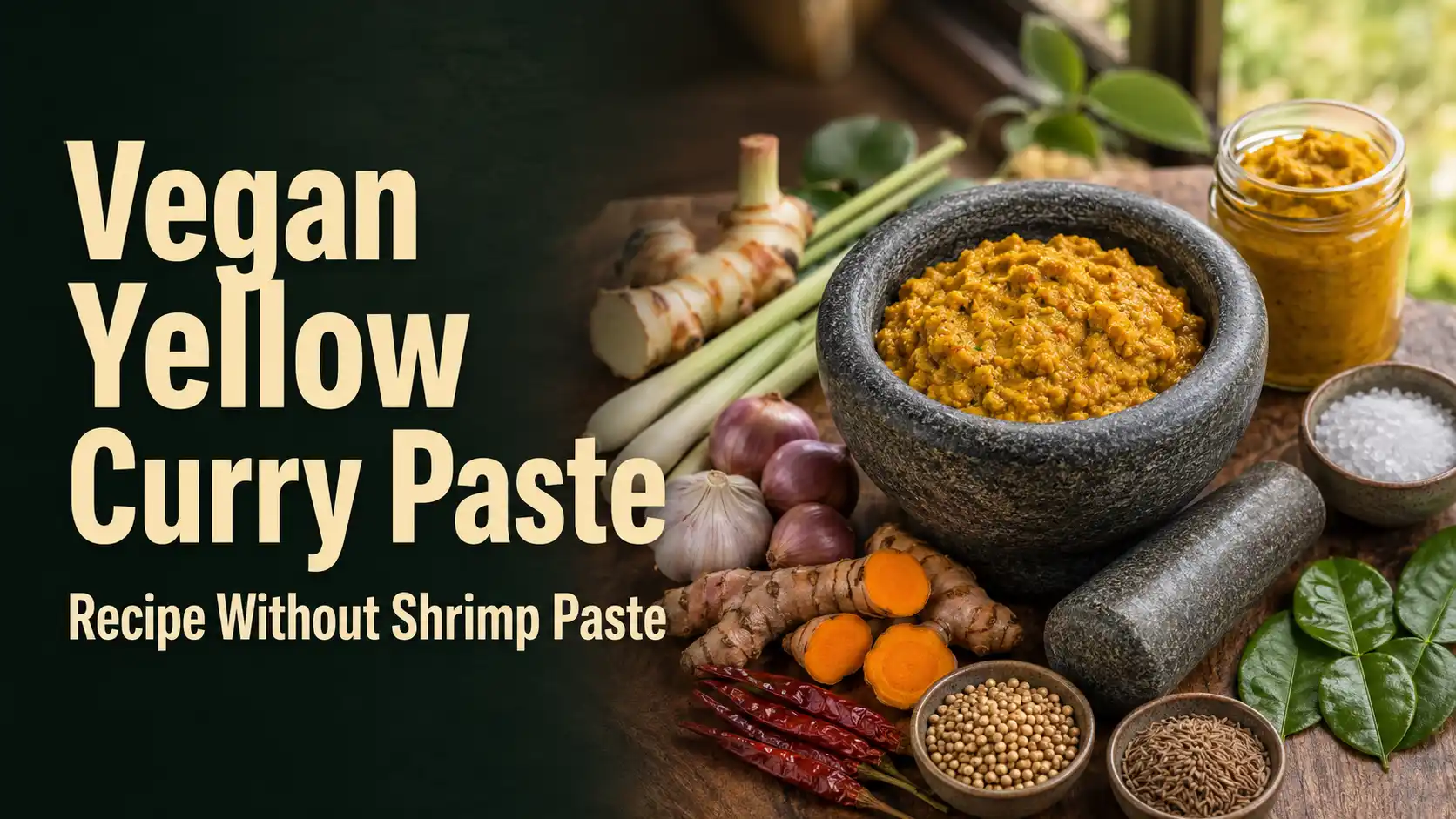
Easy Vegan Yellow Curry Paste Recipe (No Shrimp Paste)
A bright, freezer-friendly homemade curry paste with lemongrass, turmeric, toasted spices, lime, and plant-based umami.
If you love Thai yellow curry but need a version without shrimp paste or fish sauce, this Vegan Yellow Curry Paste Recipe is a practical, flavorful place to start.
This homemade paste uses lemongrass, garlic, shallots, turmeric, galangal, toasted spices, lime, and vegan umami boosters to create a warm, golden curry base. It is bold enough for coconut curries, but mild enough for soups, noodles, tofu, vegetables, and meal prep.
Many traditional Thai curry pastes use shrimp paste for salty, fermented depth. This recipe keeps the same rich direction while staying fully plant-based. It also gives you simple swaps for hard-to-find ingredients, including ginger for galangal, lime zest for makrut lime leaves, and miso or mushroom powder for vegan umami.
The result is a fresh, freezer-friendly vegan Thai yellow curry paste that tastes brighter than many store-bought options.
Quick Answer
Vegan yellow curry paste is a plant-based Thai-style curry base made without shrimp paste or fish sauce. This recipe blends lemongrass, turmeric, garlic, shallots, galangal, chilies, toasted spices, lime, and vegan umami ingredients into a thick golden paste for curries, soups, stir-fries, marinades, and noodle bowls.
Recipe at a Glance
| Detail | Best Answer |
|---|---|
| Recipe type | Vegan Thai-style yellow curry paste |
| Main keyword | Vegan Yellow Curry Paste Recipe |
| Prep time | 20 minutes |
| Cook time | 2 minutes for toasting spices |
| Total time | About 25 minutes |
| Yield | About 1 cup, or 16 tablespoons |
| Spice level | Mild to medium |
| Best use | Coconut curry, soup, noodles, tofu, vegetables |
| Freezer-friendly | Yes |
| Vegan | Yes |
| Gluten-free option | Use gluten-free tamari or salt |
What Is Vegan Yellow Curry Paste?
Vegan yellow curry paste is a plant-based version of Thai yellow curry paste. It is made from fresh aromatics, roots, herbs, chilies, and spices blended into a thick paste.
The yellow color comes mostly from turmeric. The flavor is usually earthy, warm, lightly sweet, citrusy, and gently spicy.
Traditional yellow curry paste may include shrimp paste. This vegan version removes seafood ingredients and replaces that savory depth with plant-based options like:
- White miso paste
- Mushroom powder
- Tamari or soy sauce
- Sea salt
- Toasted spices
For most home cooks, this is the easiest way to make a yellow curry paste without shrimp paste while still keeping the flavor rich and balanced.
Why Make Yellow Curry Paste Without Shrimp Paste?
Many people choose a vegan curry paste because they avoid seafood, follow a plant-based diet, have shellfish allergies, or want better control over ingredients.
Store-bought curry pastes can be convenient, but some contain shrimp paste, fish sauce, added preservatives, artificial color, or high sodium. Recipe competitors also note that many traditional or commercial curry pastes need label checks because shrimp paste is common in Thai curry bases.
Making it at home gives you control over:
- Vegan ingredients
- Salt level
- Spice level
- Freshness
- Allergen needs
- Ingredient quality
- Freezer portions
In practice, homemade curry paste also tastes fresher because the lemongrass, garlic, shallots, and lime are blended close to cooking time.
Ingredients for the Best Vegan Yellow Curry Paste Recipe
This recipe makes about 1 cup of paste, enough for 4 to 6 curry meals depending on how strong you like your curry.
Fresh Aromatics
- 2 medium shallots, chopped
- 6 garlic cloves, peeled
- 2 lemongrass stalks, tender lower part only, finely sliced
- 1-inch piece galangal, peeled and chopped
- 1-inch piece fresh turmeric, peeled and chopped
- 2 tablespoons cilantro stems or roots, chopped
- 2 makrut lime leaves, finely sliced, or zest of 1 lime
Chilies and Spices
- 3 to 5 dried red chilies, soaked and chopped
- 1 teaspoon coriander seeds
- 1 teaspoon cumin seeds
- ½ teaspoon white pepper
- 1 teaspoon mild curry powder, optional but helpful
- ½ teaspoon sea salt, plus more to taste
Vegan Umami and Balance
- 1 teaspoon white miso paste, optional but recommended
- 1 teaspoon mushroom powder, optional
- 1 teaspoon palm sugar or brown sugar
- 1 tablespoon lime juice
- 1 tablespoon tamari or soy sauce
- 1 to 3 tablespoons water, only as needed for blending
Why Use Miso or Mushroom Powder?
Shrimp paste adds salty fermented depth. Since this is a vegan recipe, white miso paste or mushroom powder can help replace that missing umami.
This does not make the paste exactly the same as a traditional seafood-based paste. It makes it plant-based, savory, and satisfying.
Easy Ingredient Swap Guide
You do not need every specialty Thai ingredient to make a good homemade paste. Use this table when shopping in the USA, UK, Canada, Australia, or Germany.
| Traditional Ingredient | Easy Substitute | Flavor Note |
|---|---|---|
| Galangal | Fresh ginger | Ginger is warmer and less citrusy |
| Fresh turmeric | Ground turmeric | Use 2 teaspoons ground turmeric |
| Makrut lime leaves | Lime zest | Use zest from 1 fresh lime |
| Cilantro roots | Cilantro stems | Stems are easier to find |
| Palm sugar | Brown sugar or coconut sugar | Adds light sweetness |
| Thai dried chilies | Guajillo, árbol, or mild dried red chilies | Adjust heat to taste |
| White miso | Mushroom powder or tamari | Adds vegan umami |
| Tamari | Soy sauce | Use tamari for gluten-free |
How to Make Vegan Yellow Curry Paste
This easy vegan yellow curry paste recipe works in a food processor, blender, or mortar and pestle.
Step 1: Soak the Dried Chilies
Place the dried chilies in a small bowl. Cover them with hot water for 10 to 15 minutes.
Drain them well before blending. For a milder paste, remove the seeds before soaking.
Step 2: Toast the Spices
Place the coriander seeds and cumin seeds in a dry skillet over medium-low heat.
Toast for 1 to 2 minutes, shaking the pan often. Stop when the spices smell warm and fragrant.
This step is small, but it makes the curry paste taste deeper. Several curry paste recipes use toasted coriander and cumin to build aroma before blending.
Step 3: Chop the Fibrous Ingredients
Finely slice the lemongrass, galangal, turmeric, and lime leaves.
This matters because lemongrass and galangal are fibrous. Smaller pieces blend into a smoother paste and reduce stringy texture.
Step 4: Blend the Paste
Add the soaked chilies, toasted spices, shallots, garlic, lemongrass, galangal, turmeric, cilantro stems, lime leaves or zest, curry powder, salt, miso, mushroom powder, sugar, lime juice, and tamari to a food processor.
Blend until thick and smooth.
Add water 1 tablespoon at a time only if the machine needs help. The goal is a thick paste, not a sauce.
Step 5: Taste and Adjust
Taste a small amount. The paste should be strong because it will be cooked with coconut milk, broth, tofu, or vegetables.
Adjust like this:
| Problem | Fix |
|---|---|
| Too spicy | Add more shallot or a little sugar |
| Too salty | Add more lemongrass, shallot, or lime juice |
| Too flat | Add lime juice, salt, or miso |
| Too bitter | Add a little sugar and more garlic |
| Too thick | Add 1 tablespoon water |
| Too thin | Add more shallot, lemongrass, or toasted spice |
Food Processor vs Mortar and Pestle
Both methods work. Choose based on your time, tools, and texture preference.
| Method | Best For | Texture | Flavor |
|---|---|---|---|
| Food processor | Busy home cooks | Smooth but slightly looser | Fresh and easy |
| High-speed blender | Larger batches | Very smooth | Strong and consistent |
| Mortar and pestle | Traditional texture | Thick and aromatic | Deepest flavor |
Is a Mortar and Pestle Better?
A mortar and pestle bruises the aromatics and releases oils slowly. This can create a deeper, more traditional texture.
However, a food processor is faster and more realistic for most home cooks. Newer Thai curry paste guides often include both methods because each works for a different kitchen setup.
For best results in a food processor, chop everything small first and avoid adding too much water.
What Does Vegan Yellow Curry Paste Taste Like?
Yellow curry paste is usually milder than red or green curry paste.
It tastes:
- Warm from turmeric and toasted spices
- Citrusy from lemongrass and lime
- Savory from garlic, shallots, miso, or tamari
- Slightly sweet from shallots and palm sugar
- Mildly spicy from dried chilies
- Earthy from turmeric and coriander
This makes it a good curry paste for beginners, families, tofu curries, vegetable curries, and creamy coconut-based meals.
Is Vegan Yellow Curry Paste Spicy?
This recipe is mild to medium.
The spice level depends on the chilies you use. Thai yellow curry paste is often gentler than red or green curry paste because turmeric and warm spices lead the flavor instead of fresh green chilies or lots of dried red chilies.
How Can I Make It Mild?
Use:
- 2 to 3 mild dried chilies
- No chili seeds
- Extra shallot
- A little more palm sugar
- More coconut milk when cooking
How Can I Make It Hotter?
Use:
- 5 to 8 dried chilies
- Some chili seeds
- Thai bird chilies
- Less sugar
- More paste per curry
Vegan Yellow Curry Paste vs Red Curry Paste vs Green Curry Paste
| Curry Paste | Main Color Source | Heat Level | Flavor | Best Uses |
|---|---|---|---|---|
| Yellow curry paste | Turmeric | Mild to medium | Warm, earthy, lightly sweet | Coconut curry, soup, tofu, potatoes |
| Red curry paste | Dried red chilies | Medium to hot | Bold, rich, spicy | Stir-fries, spicy curries, marinades |
| Green curry paste | Fresh green chilies and herbs | Medium to hot | Fresh, herbal, bright | Herb-forward curries, vegetables, noodles |
If you want a gentle, cozy curry base, choose yellow curry paste. If you want more heat, use red or green curry paste.
How Much Vegan Yellow Curry Paste Should You Use?
Start with less, then add more after simmering.
| Dish | Amount to Use |
|---|---|
| 1 can coconut milk curry | 2 to 3 tablespoons |
| Mild curry for kids | 1 to 2 tablespoons |
| Large pot of soup | 3 to 4 tablespoons |
| Stir-fry sauce | 1 to 2 tablespoons |
| Marinade for tofu | 2 tablespoons |
| Fried rice | 1 tablespoon |
| Noodle broth | 1 to 2 tablespoons |
A useful rule: use 2 to 3 tablespoons of paste per 13.5-ounce can of coconut milk.
Best Ways to Use Vegan Yellow Curry Paste
This paste is more versatile than many people expect.
Classic Vegan Yellow Curry
Cook 2 to 3 tablespoons of paste in a pan for 1 minute. Add coconut milk, tofu, potatoes, carrots, onions, and vegetables. Simmer until tender.
Coconut Curry Soup
Stir 1 to 2 tablespoons into vegetable broth and coconut milk. Add noodles, mushrooms, greens, tofu, and lime juice.
Tofu Marinade
Mix 2 tablespoons curry paste with 1 tablespoon oil, 1 tablespoon lime juice, and 1 teaspoon tamari. Coat tofu and bake or pan-fry.
Stir-Fried Noodles
Loosen 1 tablespoon paste with coconut milk or broth. Toss with noodles, vegetables, and crispy tofu.
Curry Fried Rice
Stir 1 tablespoon paste into cooked rice with peas, carrots, tofu, and scallions.
Roasted Vegetables
Mix curry paste with a little oil or coconut milk. Toss with cauliflower, sweet potatoes, carrots, or chickpeas before roasting.
Practical Tips for Better Flavor
Toast the Spices First
Toasting coriander and cumin wakes up their natural oils. This creates a warmer, richer paste.
Use Fresh Lemongrass When Possible
Fresh lemongrass gives the paste a clean citrus flavor. If using prepared lemongrass paste, check the label for fish sauce or preservatives.
Do Not Add Too Much Water
Water helps blending, but too much weakens the paste. Add it slowly.
Balance Salt, Sour, Sweet, and Heat
Thai-style curry paste tastes best when these elements work together:
- Salt from tamari, miso, or sea salt
- Sourness from lime juice
- Sweetness from shallots and palm sugar
- Heat from chilies
- Aroma from lemongrass and lime
Let the Paste Rest
If you have time, refrigerate the paste for 30 minutes before using. The flavors settle and become more rounded.
How to Store and Freeze Vegan Yellow Curry Paste
Because this paste contains fresh garlic, herbs, shallots, and roots, storage matters.
Refrigerator Storage
Place the paste in a clean airtight jar. Refrigerate and use within 3 to 4 days for the safest home-cooking approach.
Keep your refrigerator at 40°F / 4°C or below. FoodSafety.gov recommends cold storage at this temperature range, and USDA guidance for leftovers favors using refrigerated prepared foods within a few days or freezing them for longer storage.
Freezer Storage
For longer storage:
- Spoon paste into an ice cube tray
- Freeze until solid
- Transfer cubes to a freezer-safe bag
- Label with the date
- Use within 3 months for best flavor
One cube is usually about 1 tablespoon, which makes weeknight cooking easier.
Important Oil Safety Note
Do not store fresh garlic or herb mixtures covered in oil at room temperature. Oregon State University Extension advises refrigerating fresh vegetables or herbs in oil and using them within 4 days or freezing them for longer storage.
This recipe does not need an oil layer. Freezing is the better option.
Common Mistakes to Avoid
Skipping the Spice Toasting
Untoasted spices can taste flat. Toasting takes 1 to 2 minutes and adds a lot of flavor.
Using Tough Lemongrass Tops
Use only the pale, tender lower part of the lemongrass. The dry green tops are too woody for paste.
Adding Too Much Liquid
A curry paste should be thick. Too much water makes it hard to fry and weakens the flavor.
Forgetting Vegan Umami
If you remove shrimp paste and add nothing back, the paste may taste thin. Use miso, mushroom powder, tamari, or extra toasted spices.
Using Old Ground Spices
Old spices lose aroma. If your turmeric, cumin, or coriander smells dull, replace it.
Not Tasting Before Storing
Taste before refrigerating or freezing. It is easier to adjust the whole batch at once.
Expecting Store-Bought Flavor
Homemade paste tastes fresher, brighter, and less salty than many packaged versions. That is a benefit, not a mistake.
Troubleshooting Guide
Why Is My Curry Paste Bitter?
Too much turmeric, old spices, or burnt toasted spices can make the paste bitter.
Fix it with more shallot, a small amount of sugar, and extra lime juice.
Why Is My Paste Stringy?
The lemongrass or galangal was probably not sliced thinly enough.
Next time, mince fibrous ingredients before blending. For this batch, keep blending and scrape the bowl often.
Why Does It Taste Too Sharp?
Fresh garlic and lime can taste strong before cooking.
Cook the paste in a pan for 1 to 2 minutes before adding coconut milk. Heat softens the sharp edges.
Why Is My Curry Too Mild?
Add more paste, more salt, or a small spoon of miso. Curry paste should taste bold before it is diluted.
Why Is My Curry Too Spicy?
Add coconut milk, potatoes, tofu, or a little sugar. These ingredients help soften heat.
Quick Summary and Key Takeaways
- Vegan yellow curry paste is easy to make at home without shrimp paste.
- Turmeric gives the paste its golden color.
- Lemongrass, lime, garlic, shallots, and galangal create fresh Thai-style aroma.
- Miso, mushroom powder, or tamari help replace shrimp paste umami.
- Use 2 to 3 tablespoons per can of coconut milk.
- Freeze the paste in 1-tablespoon cubes for fast meals.
- Keep refrigerated paste short-term and freeze extra portions for better quality.
Vegan Yellow Curry Paste Recipe FAQs
Can yellow curry paste be vegan?
Yes. Yellow curry paste can be vegan when it is made without shrimp paste, fish sauce, or other seafood ingredients. This recipe uses plant-based aromatics, spices, herbs, and vegan umami substitutes.
What can I use instead of shrimp paste in yellow curry paste?
The best vegan substitutes are white miso paste, mushroom powder, tamari, soy sauce, or sea salt. White miso gives the closest fermented depth, while mushroom powder adds earthy umami.
Can I make this vegan yellow curry paste without galangal?
Yes. Use fresh ginger if you cannot find galangal. The flavor will be slightly warmer and less citrusy, but the paste will still taste delicious.
Can I use ground turmeric instead of fresh turmeric?
Yes. Use about 2 teaspoons ground turmeric instead of a 1-inch piece of fresh turmeric. Fresh turmeric tastes earthier, but ground turmeric is easier to find.
How much yellow curry paste should I use for one curry?
Start with 2 to 3 tablespoons of paste per 13.5-ounce can of coconut milk. Use less for a mild curry and more for a stronger flavor.
Can I freeze homemade vegan curry paste?
Yes. Freeze it in ice cube trays, then move the frozen cubes to a freezer-safe bag. Use within 3 months for best flavor.
Is this recipe gluten-free?
It can be gluten-free if you use gluten-free tamari and a gluten-free miso paste. If needed, you can skip both and use salt plus mushroom powder.
Is vegan yellow curry paste spicy?
It is usually mild to medium. Remove chili seeds and use fewer chilies for a gentle paste. Add more chilies if you prefer heat.
Can I use this paste for more than curry?
Yes. Use it in soups, stir-fries, fried rice, noodle bowls, tofu marinades, roasted vegetables, and dipping sauces.
Why does my homemade curry paste taste stronger than curry sauce?
Curry paste is supposed to taste concentrated. It becomes balanced after you cook it with coconut milk, broth, tofu, vegetables, or noodles.
Conclusion
This Vegan Yellow Curry Paste Recipe gives you a fresh, flexible, and fully plant-based way to enjoy Thai-style yellow curry at home. It removes shrimp paste and fish sauce, but still builds deep flavor with toasted spices, lemongrass, turmeric, garlic, shallots, lime, and vegan umami ingredients.
The best part is how useful it becomes once you make a batch. You can stir it into coconut curry, soup, fried rice, noodles, tofu marinades, roasted vegetables, or quick weeknight sauces.
For the best results, chop the fibrous ingredients finely, toast the spices, taste before storing, and freeze extra paste in small portions. Once you learn the balance of salt, sour, sweet, heat, and aroma, homemade vegan Thai yellow curry paste can become one of the most useful staples in your kitchen.
Read More :