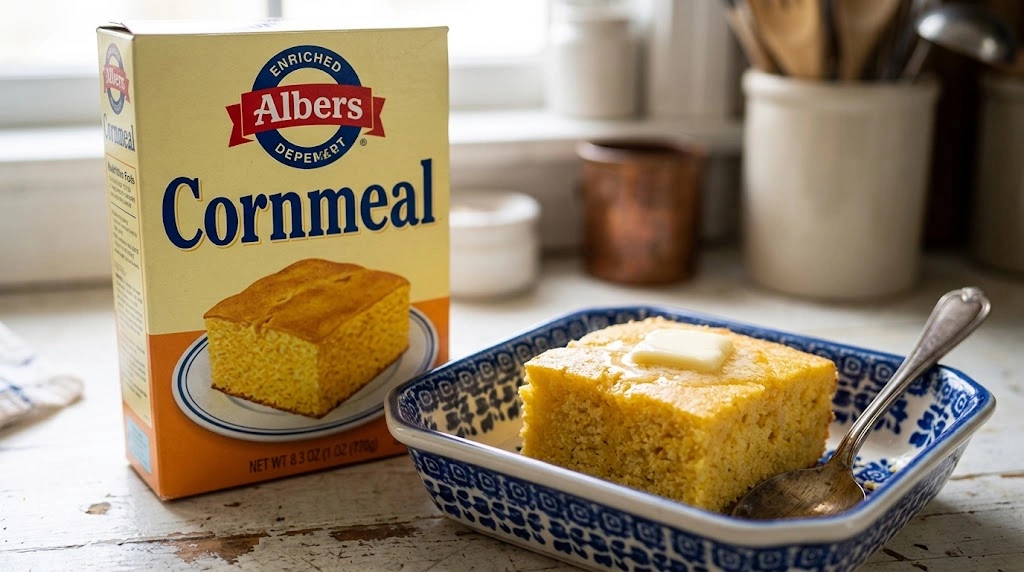
Make classic Albers-style cornbread with a tender crumb, golden top, familiar corn flavor, and simple pantry ingredients. Learn the original-style method plus skillet, muffin, buttermilk, storage, substitution, and troubleshooting tips.
If you’re looking for an Albers cornbread recipe with a tender crumb, golden top, and familiar corn flavor, start with this classic formula. It uses cornmeal, all-purpose flour, milk, egg, oil, sugar, baking powder, and salt.
The recipe is especially good with chili, soup, beans, barbecue, fried chicken, and holiday dinners. You’ll also learn how to bake it in a skillet, turn it into muffins, adjust the sweetness, avoid gritty or dry cornbread, and store leftovers.
Quick Answer: How Do You Make Albers Cornbread?
The classic Albers cornbread formula combines 1 cup cornmeal with 1 cup flour, plus milk, vegetable oil, egg, sugar, baking powder, and salt. Bake it in a greased 8-inch square pan at 400°F for about 20–25 minutes, or until the center is set.
Albers Cornbread at a Glance
| Detail | What to Expect |
|---|---|
| Flavor | Corn-forward with mild sweetness |
| Best served | Warm |
| Main allergens | Wheat, milk, egg |
Classic Albers Cornbread Recipe
Tender, lightly sweet, golden, and easy to make.
Ingredients
- 1 cup yellow cornmeal
- 1 cup all-purpose flour
- ¼ cup granulated sugar
- 1 tablespoon baking powder
- 1 teaspoon salt
- 1 cup milk
- ⅓ cup neutral vegetable oil
- 1 large egg, lightly beaten
Instructions
- Heat the oven to 400°F.
- Grease an 8-inch square baking pan thoroughly.
- Whisk together cornmeal, flour, sugar, baking powder, and salt.
- In another bowl, combine milk, oil, and beaten egg.
- Pour the wet ingredients into the dry ingredients.
- Stir gently just until combined. A few small lumps are fine.
- Transfer the batter to the prepared pan.
- Bake for 20–25 minutes.
- Check the center with a wooden pick.
- Remove when the center is set and the pick comes out clean or with a few moist crumbs.
- Let the cornbread rest briefly before slicing.
Why This Albers Cornbread Recipe Is Worth Making
The appeal of this recipe is its simple 1:1 balance of cornmeal and flour. Cornmeal brings the classic corn flavor, while flour gives the bread enough structure to stay tender instead of becoming overly coarse.
- Tender crumb from cornmeal and wheat flour
- Mild sweetness from granulated sugar
- Golden color when yellow cornmeal is used
- Quick preparation without yeast or resting
- Crispier edges when baked in a suitable skillet
- Easy muffin conversion
- Simple pantry ingredients
- Excellent with chili, beans, soups, and barbecue
- Easy to customize with cheese, jalapeños, corn, or herbs
The Classic Albers Cornbread Ingredients
The traditional formula documented from an Albers cornmeal box uses 1 cup yellow cornmeal, 1 cup all-purpose flour, ¼ cup sugar, 1 tablespoon baking powder, 1 teaspoon salt, 1 cup milk, ⅓ cup vegetable oil, and 1 large egg.
| Ingredient | Amount | Purpose |
|---|---|---|
| Yellow cornmeal | 1 cup | Provides corn flavor and characteristic texture. |
| All-purpose flour | 1 cup | Creates a softer, cohesive crumb. |
| Granulated sugar | ¼ cup | Adds sweetness and helps browning. |
| Baking powder | 1 tbsp | Provides lift. |
| Salt | 1 tsp | Balances the sweetness. |
| Milk | 1 cup | Hydrates the batter and contributes tenderness. |
| Vegetable oil | ⅓ cup | Adds moisture without making the crumb heavy. |
| Large egg | 1 | Binds the batter and adds structure. |
How to Make Albers Cornbread
The original-style method is straightforward: combine the dry ingredients, combine the wet ingredients, then bring them together with minimal mixing. The classic formula uses a 400°F oven and an 8-inch square pan.
The Most Important Mixing Tip
This helps preserve the soft, tender texture you want from this style of cornbread.
How to Tell When Albers Cornbread Is Done
Baking time is a guide. Your oven, pan material, and batter depth can change the exact timing.
Look for These Signs
- Top: Lightly golden rather than pale and wet
- Center: Set and slightly springy
- Edges: Beginning to pull away from the pan
- Wooden pick: Clean or carrying a few moist crumbs
- Surface: No wet-looking batter in the center
- Aroma: Clearly baked corn with lightly sweet grain notes
Classic Albers Recipe vs. Albers-Style Variations
Different recipes have circulated under the Albers name over the years. A documented 2004 transcription uses the familiar 1:1 cornmeal-to-flour formula, while later personal adaptations changed ingredients such as sugar.
| Version | General Character | Typical Use |
|---|---|---|
| Classic Albers-style formula | Mildly sweet and tender | Dinner and chili |
| Higher-sugar adaptation | Sweeter and softer | Breakfast |
| Buttermilk adaptation | Tangier and richer tasting | Savory meals |
| Skillet adaptation | More pronounced crust | Chili and barbecue |
| Muffin version | Individual portions | Breakfast and gatherings |
Recipe Labeling Note
An adapted recipe shouldn’t be presented as the official Albers formula. If you change the sugar, dairy, flour, or fat, describe it as an adaptation or variation.
Yellow Cornmeal vs. White Cornmeal
Both yellow and white cornmeal can produce good cornbread. The most obvious difference is finished color, although flavor and texture can vary depending on the particular cornmeal and grind.
| Cornmeal Choice | Best If You Want |
|---|---|
| Yellow cornmeal | Golden-yellow crumb and a traditional-looking appearance |
| White cornmeal | Paler crumb and a subtler appearance |
| Fine grind | Smoother bite |
| Coarse grind | More pronounced corn texture |
Why Is My Albers Cornbread Gritty?
A slightly grainy texture isn’t automatically a mistake. Cornmeal naturally contributes texture, and the grind can make a major difference.
Common Causes of Excessive Grittiness
- Coarse cornmeal: Larger particles remain noticeable.
- Personal preference: Some people prefer very smooth cornbread.
- Older cornmeal: Stale meal can lose fresh corn flavor.
- Recipe expectations: This style isn’t intended to be cake-like.
How to Make the Texture Smoother
Choose fine or medium-fine cornmeal and avoid adding extra cornmeal simply to thicken a loose batter.
How to Make Albers Cornbread in a Cast-Iron Skillet
A cast-iron skillet gives a different result from an 8-inch square baking pan. More exposed edge area can create a stronger crust.
Skillet Tips
- Use a well-seasoned cast-iron skillet.
- Grease the pan thoroughly.
- Keep the batter layer reasonably even.
- Remember that cast iron remains hot after leaving the oven.
- Start checking thinner cornbread earlier.
- Use thick, dry oven mitts when handling the skillet.
- Rest the cornbread briefly before cutting.
How to Make Albers Cornbread Muffins
The same basic batter can be portioned into muffin cups. A 400°F oven and approximately 15 minutes is a useful starting point, but muffin tin size affects the final baking time.
Muffin Method
- Grease a muffin pan or use paper liners.
- Divide the batter evenly among the cups.
- Fill each cup approximately two-thirds full.
- Bake at 400°F.
- Begin checking around 15 minutes.
- Look for lightly browned tops and set centers.
- Cool briefly before removing.
- Serve warm with butter or honey.
How Sweet Is Albers Cornbread?
The classic formula is mildly sweet, not dessert-level sweet. The ¼ cup of sugar balances the cornmeal without dominating the flavor.
| If You Prefer… | Try This |
|---|---|
| More sweetness | Serve with honey butter or use a sweeter adaptation. |
| Less sweetness | Reduce the sugar modestly. |
| A baseline for comparison | Make the classic formula first. |
Buttermilk Albers Cornbread: What Changes?
Buttermilk can be used in an adapted version, but it changes the flavor and should not be presented as the classic milk-based formula.
- Buttermilk adds mild tang and richer dairy character.
- Use it as part of an adapted recipe.
- Don’t automatically add baking soda unless the formula calls for it.
- Mix gently.
- Judge doneness by the center rather than the clock alone.
Easy Albers Cornbread Variations
| Add-In | What It Adds |
|---|---|
| Jalapeño | Gentle heat |
| Sharp cheddar | Savory richness |
| Green chile | Southwestern flavor |
| Corn kernels | Extra corn texture |
| Scallions | Fresh savory flavor |
| Chives | Light herbal note |
| Black pepper | Subtle savory bite |
| Pepper jack | Cheese plus mild heat |
| Herbs | Fresh or earthy flavor |
| Cooked bacon | Smoky savory flavor |
| Roasted peppers | Color and sweet pepper flavor |
Change one major variable at a time so you can see how each addition affects moisture, sweetness, and texture.
Why Did My Cornbread Turn Out Dry?
Overbaking is the first thing to check. Cornbread can move from tender to dry quickly once the center is fully baked.
Dry Cornbread Troubleshooting
| Problem | Likely Cause | What to Do Next Time |
|---|---|---|
| Dry edges, fine center | Pan heating strongly around the perimeter | Check the bread earlier. |
| Entire loaf is dry | Overbaking or too much dry ingredient | Check earlier and measure carefully. |
| Dry the next day | Moisture loss during storage or reheating | Wrap portions and reheat gently. |
| Unusually thick batter | Too much flour or cornmeal | Review measurements. |
Why Did My Cornbread Sink?
A sunken center usually means the structure wasn’t fully set before the bread finished baking.
- Underbaking: The center hasn’t fully set.
- Too much liquid: Excess moisture can weaken the crumb.
- Too much leavening: More baking powder isn’t automatically better.
- Opening the oven early: A sudden temperature drop can interfere with setting.
- Very deep batter: A deeper pan can require more time.
How to Double the Albers Cornbread Recipe
A doubled batch can be baked in a greased 13×9-inch pan. The increased batter should be spread into a reasonable depth rather than placed in a much smaller pan.
Double-Batch Ingredient Guide
| Ingredient | Double Batch |
|---|---|
| Yellow cornmeal | 2 cups |
| All-purpose flour | 2 cups |
| Sugar | ½ cup |
| Baking powder | 2 tablespoons |
| Salt | 2 teaspoons |
| Milk | 2 cups |
| Vegetable oil | ⅔ cup |
| Large eggs | 2 |
| Pan | 13×9-inch greased pan |
Gluten-Free and Dairy-Free Adaptations
| Adaptation | What to Use | Important Note |
|---|---|---|
| Gluten-free | 1:1 gluten-free baking flour + gluten-free cornmeal | Texture may differ from the wheat-based version. |
| Dairy-free | Unsweetened soy or oat milk | Egg remains part of the classic recipe. |
Allergy & Cross-Contact Note
The classic recipe contains wheat, milk, and egg. If preparing food for someone with an allergy or celiac disease, check ingredient labels and prevent cross-contact with shared utensils, surfaces, and ingredients.
What to Serve With Albers Cornbread
| Dish | Why It Works |
|---|---|
| Beef chili | Soaks up rich chili while adding mild sweetness. |
| Chicken chili | Balances spicy broth and savory flavors. |
| Bean soup | Works well with creamy beans and broth. |
| Vegetable soup | Adds substance without overpowering vegetables. |
| Chicken and gravy | A comforting alternative to dinner rolls. |
| Barbecue | Pairs with pulled pork, ribs, or grilled chicken. |
| Collard greens | Works well with flavorful greens. |
| Baked beans | Complements sweet and savory flavors. |
| Thanksgiving turkey | A simple holiday side. |
| Breakfast eggs | Especially good as muffins with potatoes. |
| Fried chicken | Excellent with butter or honey. |
| Fall soups | Pairs naturally with pumpkin or squash soup. |
How to Store and Reheat Cornbread
Cornbread is best soon after baking, but proper storage can help preserve its texture. Let it cool before wrapping it so trapped steam doesn’t soften the crust.
Short-Term Storage
- Cool completely or until only slightly warm before packaging.
- Store in an airtight container.
- Keep it away from excess moisture.
- Use clean utensils when handling stored portions.
Freezing
- Cut cooled cornbread into individual portions.
- Wrap pieces tightly.
- Place them in a freezer-safe container or bag.
- Label the package with the date.
- Thaw only the portions you plan to eat.
Reheating
Warm individual pieces gently in the oven or microwave. Avoid overheating, which can make the crumb dry and rubbery.
What to Do With Leftover Albers Cornbread
| Use | How to Use It |
|---|---|
| Cornbread dressing | Cube and dry the bread before combining with dressing ingredients. |
| Stuffing | Toast cubes for added texture. |
| Bread pudding | Turn stale pieces into a sweet baked dessert. |
| Crunchy crumbs | Dry and pulse into coarse crumbs. |
| Chili topping | Crumble warm pieces over chili. |
| Breakfast skillet | Toast cubes with eggs and vegetables. |
| Salad topping | Toast small cubes until crisp. |
| Soup garnish | Use toasted crumbs over thick soups. |
| Breakfast crumble | Combine toasted crumbs with fruit. |
| Stuffed vegetables | Use seasoned crumbs as part of a filling. |
Common Albers Cornbread Mistakes
Overmixing
Problem: The batter is stirred until completely smooth.
Fix: Stop once the dry ingredients are incorporated. Small lumps are fine.
Overbaking
Problem: The bread looks attractive but feels dry.
Fix: Start checking near the lower end of the baking window.
Coarse Cornmeal
Problem: The bread feels too gritty.
Fix: Choose a finer-ground cornmeal.
Too Much Flour
Problem: The bread becomes dense and dry.
Fix: Measure flour carefully rather than packing it into a cup.
Changing Several Ingredients at Once
Problem: You don’t know what caused the texture change.
Fix: Test one adaptation at a time.
Cutting Immediately
Problem: Very hot slices can crumble more easily.
Fix: Let the bread rest briefly before slicing.
Using the Wrong Pan
Problem: The outside becomes done before the center.
Fix: Keep the batter depth similar to the intended pan and adjust timing.
Ingredient Substitutions That Actually Make Sense
| Original | Practical Substitute | What Changes |
|---|---|---|
| Yellow cornmeal | White cornmeal | Mainly color and subtle flavor |
| Milk | Unsweetened oat milk | Dairy-free with slightly different flavor |
| Milk | Unsweetened soy milk | Dairy-free and relatively neutral |
| Milk | Buttermilk | Tangier flavor |
| Vegetable oil | Canola oil | Very similar result |
| All-purpose flour | 1:1 gluten-free baking flour | Texture may change |
| Sugar | Less sugar | Less sweetness and potentially less browning |
| Butter for serving | Dairy-free spread | Keeps serving dairy-free |
Substitution Caution
Honey is not a simple one-for-one replacement for granulated sugar. Honey adds liquid as well as sweetness. Replacing the egg also changes the structure, so an egg-free version is better made from a recipe specifically formulated for that purpose.
How to Get the Best Texture From Albers Cornbread
Albers Cornbread for Holidays and Family Gatherings
This recipe is useful when you need a side dish that doesn’t require complicated preparation. A 13×9-inch double batch works well for larger gatherings, while muffins are convenient for individual portions.
| Occasion | Serving Idea |
|---|---|
| Thanksgiving | Serve with turkey and gravy. |
| Christmas dinner | Pair with ham or roasted vegetables. |
| Fall gatherings | Serve with chili or squash soup. |
| Game day | Cut into small squares. |
| Potlucks | Use the larger 13×9-inch batch. |
| Brunch | Bake individual muffins. |
| Family dinner | Serve with beans and greens. |
| Barbecue | Pair with pulled pork or chicken. |
| Soup night | Add warm buttered slices. |
| Holiday breakfast | Serve muffins with eggs and fruit. |
Frequently Asked Questions About Albers Cornbread
Is this the original Albers cornbread recipe?
This recipe follows the classic Albers-style formula documented from a cornmeal-box recipe, using equal amounts of cornmeal and flour, ¼ cup sugar, milk, oil, egg, baking powder, and salt. Older Albers-associated recipes and later adaptations can differ in their proportions.
Can I use white cornmeal instead of yellow?
Yes. White cornmeal can be used when you prefer a paler cornbread. The most noticeable difference is color, although grind and the particular cornmeal can also affect texture and flavor.
Can I bake Albers cornbread in a cast-iron skillet?
Yes. A skillet can create more pronounced edges and a stronger crust. A wider skillet produces a thinner layer, so begin checking for doneness earlier.
Why is my Albers cornbread gritty?
Cornmeal grind is usually the first thing to consider. Coarse meal creates a more noticeable texture, while finer meal produces a smoother bite.
Can I make Albers cornbread with buttermilk?
Yes, but buttermilk creates an adapted version rather than the classic milk-based formula. It adds tang and changes the flavor.
Can I double the recipe?
Yes. A doubled formula can be baked in a greased 13×9-inch pan. Check the center for doneness rather than assuming the original baking time will be identical.
How do I keep cornbread from becoming dry?
Focus on accurate flour measurement, gentle mixing, and avoiding overbaking. Start checking toward the shorter end of the suggested baking window.
Can I make Albers cornbread gluten-free?
The classic recipe contains wheat flour, so it isn’t gluten-free as written. A suitable 1:1 gluten-free baking flour and gluten-free cornmeal can be used for an adaptation, although the texture may differ.
Can I turn the recipe into muffins?
Yes. Portion the batter into a muffin pan and bake at 400°F, beginning to check around 15 minutes. Exact timing depends on the size of the muffin cups.
Final Thoughts
This Albers cornbread recipe is a simple way to make tender, lightly sweet cornbread with familiar pantry ingredients. The classic formula works particularly well alongside chili, soup, beans, barbecue, and family dinners.
Start with the classic formula before experimenting. For crisper edges, use a skillet; for a smoother texture, choose finer cornmeal; for individual portions, make muffins; and for a sweeter flavor, adjust the sweetness gradually.
Once you know the classic texture, it’s much easier to judge which adaptations actually improve the cornbread for your table.
Read More :