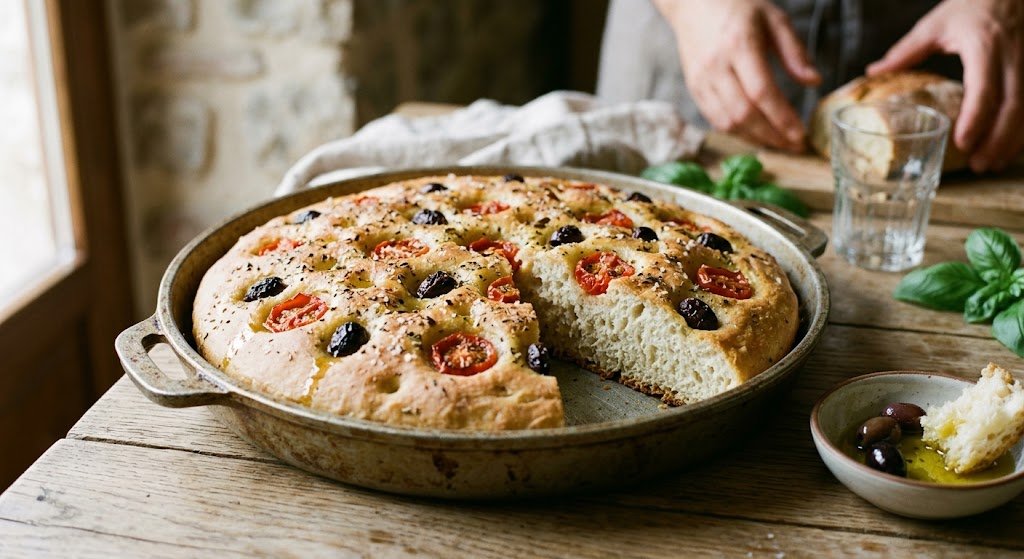
Focaccia Barese is one of the most beloved breads from Bari in Puglia, southern Italy. This traditional Italian focaccia bread is famous for its crispy golden crust, soft potato-enriched dough, cherry tomatoes, olives, oregano, and extra virgin olive oil.
Unlike many other focaccia styles, classic Focaccia Barese often combines durum wheat semolina with other flour and includes mashed potato in the dough. The result is a wonderfully tender interior beneath a deeply golden, olive-oil-rich crust.
Quick Answer: What Is Focaccia Barese?
Focaccia Barese is a traditional Bari-style focaccia from Puglia, Italy. It is characterized by a soft potato-enriched crumb, crisp olive-oil-baked bottom, cherry tomatoes, olives, oregano, and extra virgin olive oil. A typical home version is baked at about 425°F (220°C) until the top is golden and the bottom is crisp.
What Makes Focaccia Barese Unique?
🥔 Potato-Enriched Dough
One of the defining characteristics of many Bari-style focaccia recipes is the addition of mashed potato. Potato contributes moisture and starch, helping create the soft, tender crumb associated with this style.
🌾 Durum Wheat Semolina
Semolina made from durum wheat contributes a beautiful golden color and a subtly nutty character. It also gives the dough structure while complementing the soft potato-enriched interior.
🍅 Tomatoes, Olives & Oregano
The classic topping combines cherry or small tomatoes, olives, oregano, sea salt, and olive oil. During baking, the tomatoes become sweet and juicy while the olives provide a savory, briny contrast.
🫒 Generous Extra Virgin Olive Oil
Olive oil is central to the character of Focaccia Barese. It coats the pan, enriches the dough, and helps the bottom develop its signature crisp, golden texture.
The History and Origin of Focaccia Barese
Focaccia Barese is closely associated with Bari and the wider Puglia region. It is deeply connected with the region’s bakery and street-food traditions, where focaccia is commonly enjoyed warm as a snack, light meal, or casual food on the go.
Puglian baking traditions emphasize ingredients strongly associated with the region, including durum wheat, olive oil, tomatoes, and olives. The potato-enriched dough gives this focaccia a texture that distinguishes it from many other Italian focaccia styles.
Authentic Ingredients for Focaccia Barese
Semolina vs. 00 Flour: Which Is Best?
A useful approach for homemade Focaccia Barese is combining durum wheat semolina with a finely milled wheat flour. Semolina brings color, flavor, and structure, while the softer flour can contribute elasticity and a tender crumb.
| Flour | Main Contribution | Effect on Focaccia |
|---|---|---|
| Durum semolina | Flavor, color, structure | Golden appearance and slightly nutty character |
| 00 flour | Elasticity and softness | Helps create a tender, workable dough |
| Bread flour | Stronger gluten structure | Useful when a more structured crumb is desired |
Dough Hydration Explained
Hydration is the amount of water in relation to the flour by weight. Focaccia dough is generally wetter than ordinary sandwich bread, which helps create its characteristic open and tender texture.
Instead of adding large amounts of flour to a sticky dough, work with wet hands, gentle kneading, resting, and stretching. The goal is a soft dough that can be spread into a generously oiled pan.
How to Make Focaccia Barese at Home
1. Prepare the Potato
Cook a potato until completely tender. Mash it thoroughly and allow it to cool before incorporating it into the dough. The potato should be smooth rather than chunky.
2. Mix the Dough
Combine semolina, 00 or bread flour, mashed potato, yeast, water, salt, and olive oil. Mix until a cohesive, soft dough forms.
3. Knead Until Elastic
Knead until the dough becomes smoother and more elastic. Because the dough is relatively hydrated, it may feel sticky at first. Resist adding too much flour.
4. Let the Dough Rise
Place the dough in an oiled bowl, cover it, and let it rise until visibly expanded. A longer, cooler fermentation can be used when you want deeper flavor and greater flexibility in your baking schedule.
5. Oil the Baking Pan
Coat a generously sized baking pan with extra virgin olive oil. The oil is essential for developing the characteristic crisp bottom.
6. Stretch the Dough Into the Pan
Transfer the dough to the pan and gently stretch it toward the edges using oiled fingertips. Do not aggressively press all the gas out of the dough.
7. Add the Toppings
Press halved cherry tomatoes and olives into the dough. Finish with oregano, sea salt, and a generous drizzle of extra virgin olive oil.
8. Final Proof
Allow the shaped focaccia to rest again until it becomes visibly puffy. This short second rise contributes to a lighter crumb.
9. Bake Until Golden
Bake in a fully preheated 425°F (220°C) oven until the top is deeply golden and the bottom is crisp. Let it rest briefly before cutting.
Traditional Bari Bakery Techniques
🔥 High Heat
Traditional bakery-style baking relies on strong heat to quickly develop the crust while preserving a soft interior.
🫒 An Olive-Oil-Coated Pan
A well-oiled metal pan helps the bottom fry gently in the oil as the focaccia bakes, producing a distinctive crispy golden base.
⏳ Proper Fermentation
Fermentation is responsible for much of the bread’s flavor and structure. Give the dough enough time to become visibly aerated rather than relying only on the clock.
Why Potatoes Are Used in Focaccia Barese
Potato adds starch and moisture to the dough. This helps the finished bread remain soft and tender while the olive-oiled pan creates a crisp exterior.
The potato also contributes a subtle sweetness that works particularly well with the acidic sweetness of roasted tomatoes and the salty character of olives.
Expert Tips for Perfect Focaccia Barese
| Tip | Why It Matters |
|---|---|
| Use good olive oil | Olive oil is a major flavor component and helps crisp the pan-facing crust. |
| Do not over-flour | Excess flour can make the focaccia dense and dry. |
| Give the dough enough fermentation | Fermentation improves flavor, texture, and extensibility. |
| Oil the pan generously | This encourages the characteristic golden, crisp bottom. |
| Use ripe tomatoes | They provide concentrated sweetness and classic Mediterranean flavor. |
| Preheat thoroughly | A properly heated oven helps the focaccia rise and brown effectively. |
Common Mistakes When Making Focaccia Barese
| Problem | Likely Cause | Better Approach |
|---|---|---|
| Dense focaccia | Too much flour or insufficient fermentation | Keep the dough soft and allow adequate proofing. |
| Dry crumb | Too little hydration or overbaking | Keep the dough hydrated and monitor the bake. |
| Pale bottom | Insufficient oil or weak bottom heat | Use an adequately oiled metal pan and fully preheat the oven. |
| Soggy topping | Very wet tomatoes or excessive topping | Use ripe but not excessively watery tomatoes and avoid overloading. |
| Focaccia sticks to the pan | Insufficient oil | Coat the pan thoroughly before adding the dough. |
Focaccia Barese vs. Genoese Focaccia
| Feature | Focaccia Barese | Genoese Focaccia |
|---|---|---|
| Origin | Bari, Puglia | Genoa, Liguria |
| Dough | Often enriched with potato and semolina | Typically wheat-flour based |
| Classic topping | Tomatoes, olives, oregano, olive oil | Olive oil and salt |
| Signature character | Crisp bottom, soft potato-enriched crumb | Soft, olive-oil-rich, dimpled crumb |
Variations of Focaccia Barese
Traditional Tomato & Olive Version
Keep it classic with tomatoes, black olives, oregano, sea salt, and extra virgin olive oil. This is the version that best captures the recognizable Bari-style flavor profile.
Whole-Wheat Variation
Replace part of the white flour with whole-wheat flour for a more robust, nutty flavor. Keep in mind that increasing whole-wheat flour can make the crumb somewhat denser.
Modern Vegetable Toppings
Caramelized onions, roasted vegetables, fresh herbs, or small amounts of cheese can create modern variations. For the most traditional result, however, keep the topping centered on tomatoes and olives.
What to Serve With Focaccia Barese
How to Store and Reheat Focaccia Barese
Room Temperature
For short-term storage, keep focaccia tightly wrapped at room temperature and enjoy it promptly for the best texture.
Freezing
For longer storage, cut the focaccia into portions, wrap them well, and freeze in an airtight freezer-safe bag or container.
Reheating
Reheat in a 350°F (180°C) oven for about 8–10 minutes. Oven reheating is preferable to microwaving when you want to restore the crisp crust and warm, tender interior.
Frequently Asked Questions
What makes Focaccia Barese different?
It is distinguished by its potato-enriched dough, durum semolina, olive-oil-rich pan, and classic topping of tomatoes and olives.
Can you make Focaccia Barese without potatoes?
Yes, but omitting potato changes the texture. Potato contributes moisture and tenderness, so a potato-free version may have a somewhat different crumb.
What flour is best for Focaccia Barese?
Durum wheat semolina is an important traditional ingredient. It can be combined with 00 or bread flour to balance flavor, structure, and tenderness.
Is Focaccia Barese vegan?
The traditional ingredient combination is generally vegan-friendly, provided the specific recipe does not add dairy, eggs, or other animal-derived ingredients.
How long does Focaccia Barese last?
It is best enjoyed fresh. For longer storage, freezing is a better option than keeping the bread for an extended period at room temperature.
Authentic Focaccia Barese Recipe
A homemade Bari-style focaccia with a soft potato-enriched crumb, crisp olive-oil crust, juicy tomatoes, olives, oregano, and classic Puglian flavor.
Ingredients
- 250 g semolina flour
- 250 g 00 or bread flour
- 150 g cooked, mashed potato
- 7 g instant yeast
- 10 g fine sea salt
- 350–400 g lukewarm water, added gradually as needed
- 3 tablespoons extra virgin olive oil for the dough
- 250–300 g cherry tomatoes, halved
- 80–100 g black olives
- 1–2 teaspoons dried oregano
- Extra virgin olive oil for the pan and topping
- Sea salt for finishing
Instructions
- Cook and mash the potato. Let it cool until it is warm rather than hot.
- Mix the dough. Combine the semolina, flour, potato, yeast, salt, olive oil, and most of the water.
- Adjust hydration. Add the remaining water gradually until you have a soft, hydrated dough.
- Knead. Work the dough until it becomes smoother and elastic.
- First rise. Cover and let the dough rise until noticeably expanded, approximately 1–2 hours depending on room temperature.
- Oil the pan. Coat a suitable metal baking pan generously with extra virgin olive oil.
- Shape. Transfer the dough to the pan and gently stretch it toward the edges with oiled fingertips.
- Top. Press the halved tomatoes and olives into the dough. Add oregano, sea salt, and plenty of olive oil.
- Final proof. Rest the focaccia until visibly puffy, about 30–45 minutes.
- Bake. Bake at 425°F (220°C) until the top is golden and the bottom is deeply browned and crisp, approximately 25–35 minutes depending on pan size and oven.
- Rest and serve. Let the focaccia cool briefly before slicing and serving warm.
Recipe Notes
- Do not add excessive flour just because the dough feels sticky.
- Use plenty of oil in the pan for the characteristic crisp base.
- Give the dough enough time to ferment and become visibly aerated.
- For the best texture, serve the focaccia warm or the same day.
Nutrition & Balanced Eating
Focaccia Barese is primarily a bread, so it provides carbohydrates and energy. Its use of extra virgin olive oil, tomatoes, and olives also contributes fats and plant-based ingredients associated with Mediterranean-style eating.
Nutrition varies considerably according to the amount of oil, flour, potato, and toppings used, so exact calories should be calculated from the specific ingredients and serving size of your recipe.
Final Thoughts
Focaccia Barese is a wonderful example of how simple ingredients can create exceptional Italian bread. The combination of durum semolina, potato-enriched dough, extra virgin olive oil, tomatoes, olives, and oregano creates a focaccia that is crisp, tender, aromatic, and deeply satisfying.
If you want to experience the character of Bari street-food culture at home, this traditional-style recipe is an excellent place to begin. Take your time with fermentation, keep the dough comfortably hydrated, oil the pan generously, and bake until the bottom is beautifully golden.
Read More :