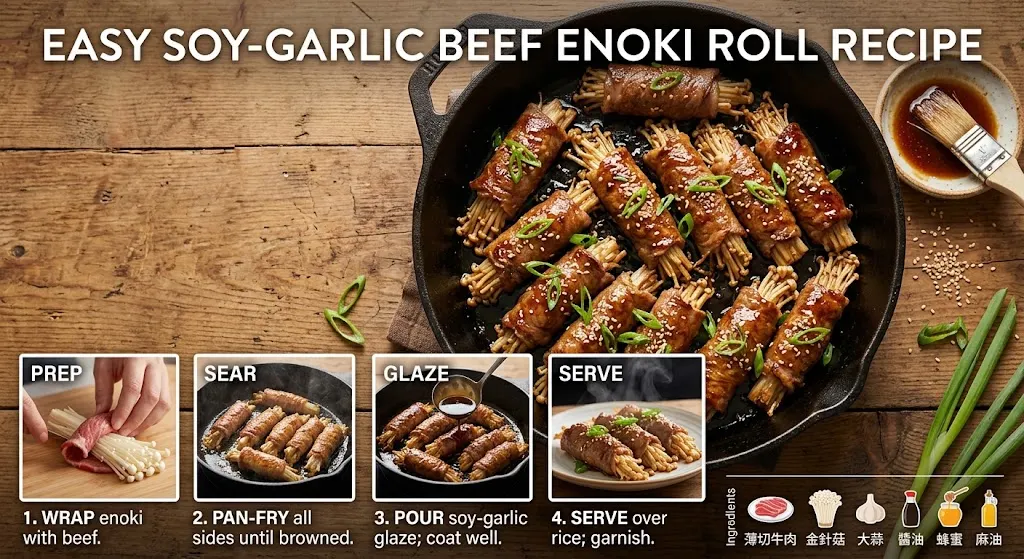
If you want a beef enoki roll recipe that cooks quickly and tastes like a restaurant-style Japanese-inspired dish, this version is a great place to start. Thin-sliced beef wraps around tender enoki mushrooms, then cooks in a savory soy-garlic glaze until browned and juicy.
This recipe is designed for a normal U.S. home kitchen. You’ll learn which beef to buy, how to make tight rolls that stay together, how to choose between a dry glaze and a saucy version, and what to serve alongside them. You’ll also find gluten-free substitutions, make-ahead tips, troubleshooting, and important enoki mushroom safety guidance.
A beef enoki roll is made by wrapping thinly sliced beef around small bundles of enoki mushrooms and cooking the rolls until the beef is safely cooked. This recipe uses a soy-garlic-ginger glaze and takes about 25 minutes from start to finish.
For the easiest results, buy shabu-shabu or hot-pot beef, keep the enoki bundles small, and cook the rolls seam-side down first.
Beef Enoki Rolls at a Glance
| Recipe Detail | What to Expect |
|---|---|
| Prep time | 15 minutes |
| Cook time | 8–10 minutes |
| Total time | About 25 minutes |
| Servings | 4 |
| Difficulty | Beginner |
| Main ingredient | Thin-sliced beef |
| Mushroom | Enoki |
| Cooking method | Stovetop skillet |
| Flavor | Savory, garlicky, lightly sweet |
| Best served with | Steamed rice and greens |
Ingredients for Beef Enoki Rolls
The ingredient list is short, but the beef and enoki preparation make a big difference. Thin beef is easier to roll, while compact mushroom bundles prevent the filling from spilling out.
The sauce balances salty soy sauce with a little sweetness, garlic, ginger, and acidity. If you don’t have mirin, an easy substitute is included below.
🥩 For the Beef Rolls
- 1 pound thinly sliced beef, preferably shabu-shabu, hot-pot, ribeye, or sirloin
- 7 ounces enoki mushrooms
- 1 tablespoon neutral cooking oil
- 2 scallions, thinly sliced
- 1 teaspoon toasted sesame seeds, optional
🥣 For the Soy-Garlic Sauce
- 3 tablespoons soy sauce
- 1 tablespoon mirin
- 2 tablespoons water
- 2 garlic cloves, finely minced
- 1 teaspoon fresh ginger, finely grated
- 1 teaspoon brown sugar, optional
- 1 teaspoon toasted sesame oil, optional
What Beef Is Best for Enoki Rolls?
The easiest beef to use is very thin shabu-shabu or hot-pot beef. These slices are flexible enough to wrap around enoki without needing a knife or complicated preparation.
Ribeye gives the richest flavor because of its marbling. Sirloin is leaner and usually less expensive. If you can’t find Asian hot-pot beef, ask your butcher for very thin slices of a tender beef cut.
| Beef | Rolling Ease | Flavor | Best Use |
|---|---|---|---|
| Shabu-shabu beef | Easiest | Mild, beefy | Beginner recipe |
| Hot-pot beef | Very easy | Savory | Quick weeknight dinner |
| Thin ribeye | Easy | Rich | Special dinner |
| Thin sirloin | Moderate | Lean, beefy | Budget-friendly option |
| Thinly sliced chuck | Moderate | Deep beef flavor | More economical option |
If You Need to Slice Beef Yourself
Place a suitable beef cut in the freezer for roughly 20–30 minutes, just until it firms up without becoming frozen solid. Slice it very thinly against the grain with a sharp knife.
The thinner the slice, the easier it will be to wrap around the mushroom bundle.
How to Prepare Enoki Mushrooms
Enoki mushrooms have long, delicate stems joined at a compact base. For rolls, you want small bundles rather than one large cluster.
Trim away the firm root end, then separate the mushrooms into manageable portions. Keep them refrigerated until you’re ready to assemble the rolls.
Enoki mushrooms should be cooked thoroughly. CDC guidance specifically recommends thorough cooking and keeping raw enoki separate from foods that won’t be cooked because of the risk of Listeria contamination.
If the package has a recall notice or other safety warning, don’t use it. Check current FDA recall information when purchasing packaged enoki mushrooms.
Preparing the Enoki
- Remove the root end. Cut away the dense bottom portion where the stems are joined.
- Separate the mushrooms. Divide the usable stems into small bundles.
- Keep bundles narrow. Aim for roughly ½–¾ inch wide.
- Pat them dry. Excess moisture makes wrapping and browning harder.
- Keep raw mushrooms separate. Use clean utensils and surfaces for ready-to-eat ingredients.
How to Roll Beef Around Enoki
The trick is to use less filling than you think you need. Oversized bundles make the beef difficult to close and can cause the rolls to unravel during cooking.
Place the enoki near one end of the beef slice, then roll forward firmly but gently. The finished seam should sit underneath the roll in the pan.
Rolling Method
Small bundles + thin beef = tighter, easier-to-brown rolls.
- Lay one beef slice flat.
- Place a small enoki bundle near one end.
- Leave a little mushroom extending beyond the beef if you like the classic appearance.
- Fold the beef over the enoki.
- Roll forward until the mushroom bundle is completely enclosed.
- Keep gentle pressure on the roll as you finish.
- Place the roll seam-side down.
- Repeat with the remaining beef and mushrooms.
Beef Enoki Roll Recipe
This is the main soy-garlic beef enoki roll recipe. It uses a skillet rather than an oven, so the beef browns quickly and the sauce can be reduced in the same pan.
The finished rolls are savory, lightly sweet, garlicky, and juicy. Serve them over steamed rice to catch the sauce.
🥩 Soy-Garlic Beef Enoki Rolls
Fast skillet beef rolls with tender enoki and a glossy savory glaze.
Ingredients
- 1 pound thin-sliced beef
- 7 ounces prepared enoki mushrooms
- 1 tablespoon neutral oil
- 3 tablespoons soy sauce
- 1 tablespoon mirin
- 2 tablespoons water
- 2 garlic cloves, minced
- 1 teaspoon grated ginger
- 1 teaspoon brown sugar, optional
- 1 teaspoon sesame oil, optional
- 2 scallions, sliced
- 1 teaspoon toasted sesame seeds, optional
Instructions
- Prepare the sauce. Stir together soy sauce, mirin, water, garlic, ginger, and brown sugar.
- Prepare the mushroom bundles. Divide the trimmed enoki into small portions that fit comfortably inside each beef slice.
- Roll the beef. Wrap one beef slice around each enoki bundle. Keep the rolls snug without squeezing the mushrooms.
- Heat the skillet. Place a large skillet over medium heat and add the oil.
- Start seam-side down. Place the beef rolls in the skillet with the seam underneath. Cook without moving them for about 1–2 minutes.
- Brown the other sides. Turn the rolls gently with tongs. Continue cooking until several surfaces are browned.
- Add the sauce. Reduce the heat slightly and pour the sauce into the skillet.
- Glaze the rolls. Turn the rolls gently as the sauce bubbles and thickens. Avoid letting a sugary sauce scorch.
- Check doneness. Because these are thin rolls, a thermometer can be difficult to position, but use one whenever practical. For whole-cut beef, 145°F with a three-minute rest is the USDA minimum safe temperature.
- Finish and serve. Add sliced scallions and sesame seeds. Spoon the remaining sauce over the rolls and serve immediately.
For whole-cut beef, USDA’s minimum safe temperature is 145°F followed by a three-minute rest. Because the rolls are thin, use a food thermometer when practical and avoid relying on color alone.
The Best Texture
The beef should be tender and browned, while the enoki should be fully cooked but still have some springy texture.
Don’t keep the rolls simmering in sauce longer than necessary. Thin beef can become tough surprisingly quickly.
Pan-Seared vs. Saucy Beef Enoki Rolls
There are two useful ways to finish beef enoki rolls. Pan-searing gives you more browned beef, while simmering produces softer rolls with more sauce.
| Method | Result | Best For |
|---|---|---|
| Pan-seared | Browned outside, light glaze | Appetizers |
| Soy-glazed | Sticky, savory coating | Rice bowls |
| Dashi-simmered | Soft and saucy | Family dinner |
| Teriyaki-glazed | Sweet and glossy | Casual dinner |
Japanese-Style Dashi Beef Enoki Rolls
For a more broth-forward version, replace most of the water in the sauce with dashi. Add a little extra ginger and sliced onion for a deeper savory profile.
This method is especially good when the rolls will be served over rice because the broth becomes part of the meal.
Dashi Version
- Use ½ cup dashi.
- Use 2 tablespoons soy sauce.
- Add 2 tablespoons mirin.
- Add 1 tablespoon cooking sake, optional.
- Add ½ sliced onion to the skillet.
- Add the beef rolls over the onions.
- Pour the seasoned dashi around the rolls.
- Cover and simmer until the beef is safely cooked.
- Finish with scallions and sesame seeds.
Teriyaki Beef Enoki Rolls
Teriyaki beef enoki rolls are sweeter and more glossy than the soy-garlic version. They’re especially good with plain steamed rice because the rice balances the stronger glaze.
The important technique is timing. Add the teriyaki sauce after the beef has begun browning, rather than cooking the sweet sauce over high heat from the beginning.
Quick Teriyaki Variation
- Brown the rolls in a lightly oiled skillet.
- Reduce the heat to medium-low.
- Add enough teriyaki sauce to coat the rolls.
- Turn the rolls several times.
- Let the sauce reduce until glossy.
- Remove from heat before the glaze begins sticking aggressively.
- Finish with scallions and sesame seeds.
Gluten-Free Teriyaki
For a gluten-free version, use a gluten-free teriyaki sauce or make your own with tamari. Always check packaged sauces and broth for wheat-containing ingredients.
Beef Enoki Rolls With Vegetables
Vegetables work best when they’re cut into thin matchsticks. Thick pieces make the rolls bulky and can prevent the beef from closing around the filling.
Choose vegetables with similar cooking times so the center isn’t crunchy while the beef is already overcooked.
🌶️ Bell Pepper
Adds crunch, color, and a mild sweetness.
🥒 Zucchini
Softens quickly and contributes a mild flavor.
🥕 Carrot
Adds sweetness and a pleasant texture.
🌱 Scallion
Adds fresh onion flavor without making the rolls bulky.
🥬 Napa Cabbage
Becomes tender and juicy inside the beef.
🍄 Shiitake
Adds a stronger, deeper mushroom flavor.
Spicy Beef Enoki Rolls
A spicy version needs only one additional ingredient to change the character of the dish. Chili crisp, chili oil, gochujang, or red pepper flakes all work.
Start with a mild amount and add more at the table.
🌶️ Easy Spicy Sauce
- 2 tablespoons soy sauce
- 1 tablespoon water
- 1 teaspoon chili crisp
- ½ teaspoon grated ginger
- ½ teaspoon sesame oil
- ½ teaspoon brown sugar, optional
Brush or spoon the sauce over the cooked rolls just before serving.
Gluten-Free and Lower-Carb Beef Enoki Rolls
The basic recipe can be adapted for a gluten-free meal by replacing regular soy sauce with gluten-free tamari and checking every packaged sauce for wheat-containing ingredients.
For a lower-carb plate, serve the rolls without rice and add vegetables instead.
Gluten-Free Options
- Use gluten-free tamari.
- Check teriyaki labels carefully.
- Use gluten-free dashi or broth when needed.
- Avoid sauces containing wheat-based thickeners.
- Use naturally gluten-free garnishes such as scallions and sesame seeds.
Lower-Carb Serving Ideas
- Steamed bok choy
- Sautéed spinach
- Cucumber salad
- Cauliflower rice
- Roasted broccoli
- Shredded cabbage
The beef and enoki themselves don’t require a flour-based coating, so there’s no need for breading.
What to Serve With Beef Enoki Rolls
The rolls have a strong savory flavor, so simple sides work best. Steamed rice is the classic easy choice because it absorbs the sauce without competing with the beef.
For a fuller dinner, add one green vegetable and one fresh or pickled side.
🍚 Best Side Dishes
- Steamed jasmine rice
- Japanese short-grain rice
- Brown rice
- Rice noodles
- Steamed broccoli
- Bok choy
- Cucumber salad
- Pickled radish
- Edamame
- Light miso-style soup
🎉 For a Party
Serve smaller beef enoki rolls on a platter with:
- Soy-ginger dipping sauce
- Spicy chili sauce
- Teriyaki glaze
- Scallions
- Toasted sesame seeds
Cook the rolls close to serving time for the best texture.
How to Make Beef Enoki Rolls Ahead
You can assemble the rolls several hours before cooking. Place the prepared rolls in a covered container and refrigerate them until you’re ready to cook.
For the best texture, cook them shortly before serving. The raw mushrooms can release moisture while they sit, which may make the beef harder to brown.
Make-Ahead Checklist
- Prepare the sauce ahead.
- Trim and portion the enoki.
- Roll the beef shortly before cooking.
- Keep assembled rolls refrigerated.
- Store raw beef separately from ready-to-eat food.
- Cook the rolls in batches if needed.
- Serve shortly after cooking.
Don’t leave raw beef or prepared rolls sitting at room temperature while you finish other dishes. Keep them refrigerated until you’re ready to cook.
Food Safety for Beef Enoki Rolls
Enoki mushrooms deserve extra attention. CDC and FDA have investigated multiple Listeria outbreaks associated with enoki mushrooms and advise thorough cooking, separation of raw enoki from foods that won’t be cooked, and careful hand and surface cleaning.
People who are pregnant, 65 or older, or immunocompromised should be especially careful with enoki mushrooms and should not eat them raw.
Follow These Precautions
- Check for recalls before using packaged enoki.
- Cook enoki thoroughly.
- Keep raw enoki away from ready-to-eat foods.
- Wash hands after handling raw mushrooms.
- Clean cutting boards, knives, and counters that touch raw ingredients.
- Keep raw beef refrigerated until preparation.
- Don’t rely only on color to judge meat safety.
- Use a food thermometer when practical.
For whole-cut beef, USDA’s minimum is 145°F followed by a three-minute rest.
USDA recommends 165°F for leftovers when reheating.
Storage and Reheating
Cooked beef enoki rolls should be refrigerated promptly in a shallow container. Perishable food should be refrigerated within two hours, or within one hour when temperatures exceed 90°F.
Most cooked leftovers should be used within 3–4 days.
🍳 Skillet Reheating
Add a splash of water or broth, cover, and warm gently.
📱 Microwave Reheating
Place the rolls in a covered microwave-safe dish with a little sauce or water. Heat until thoroughly hot.
Reheat leftovers to 165°F. Avoid repeatedly reheating the same batch. Reheat only the amount you plan to eat.
Common Beef Enoki Roll Problems
The Rolls Fall Apart
The most common reason is too much enoki. Use smaller bundles and place the finished seam underneath when the roll enters the pan.
The Beef Tears
Very cold slices can stick together, while aggressively separating frozen slices can tear them. Let frozen beef soften slightly before pulling the slices apart.
The Beef Becomes Tough
Thin beef cooks quickly. Once the rolls are browned and safely cooked, remove them from the heat rather than letting them simmer unnecessarily.
The Sauce Burns
Sweet sauces contain sugars that can caramelize quickly. Lower the heat before adding teriyaki or a heavily sweetened glaze.
The Rolls Don’t Brown
A crowded pan traps steam. Cook in batches and leave space between the rolls.
The Mushrooms Taste Watery
Excess moisture can dilute the sauce and interfere with browning. Pat the prepared enoki dry before rolling.
The Sauce Is Too Salty
Add a little water or unsalted broth. Don’t immediately add more sugar, because that can make the sauce sweet without fixing the salt level.
Beef Enoki Roll Substitutions
You don’t need every traditional ingredient to make good beef enoki rolls. The wrapping technique is forgiving as long as the beef is thin and the mushroom bundles remain compact.
🥩 Beef Substitutions
- Shabu-shabu beef: Easiest choice.
- Thin ribeye: Richest flavor.
- Thin sirloin: Leaner and practical.
- Hot-pot beef: Excellent for quick cooking.
🥣 Sauce Substitutions
- Tamari: Gluten-free alternative to soy sauce.
- Rice vinegar plus sugar: Practical mirin substitute.
- Dashi: Adds savory depth.
- Chicken or vegetable broth: Useful when dashi isn’t available.
- Teriyaki sauce: Fastest sweet-savory variation.
Mushroom Substitutions
If you can’t find enoki, the recipe changes slightly because other mushrooms don’t have the same long, thin shape.
- Thin oyster mushroom strips
- Thin shiitake slices
- Shimeji mushroom clusters
Frequently Asked Questions
What kind of beef is best for beef enoki rolls?
Thin shabu-shabu or hot-pot beef is the easiest choice. Ribeye provides more richness, while thin sirloin offers a leaner option. The important feature is thickness: the slices should be flexible enough to wrap around the enoki without tearing.
Can I use frozen hot-pot beef?
Yes. Frozen hot-pot beef can work very well because it is usually sliced extremely thin. Let the slices soften enough to separate without forcing them apart. Keep the beef cold during preparation and return it to the refrigerator if you’re not cooking immediately.
Can I make beef enoki rolls without mirin?
Yes. Replace mirin with a small amount of rice vinegar plus sugar, or simplify the sauce to soy sauce, water, garlic, and ginger. Taste the sauce before adding it to the skillet because soy sauce varies in saltiness between brands.
Are beef enoki rolls gluten-free?
They can be. Use gluten-free tamari instead of regular soy sauce and verify that packaged teriyaki, broth, dashi, and other sauces are gluten-free.
The beef, enoki, aromatics, and vegetables are naturally free of wheat, but packaged ingredients require label checking.
Can I make beef enoki rolls ahead of time?
Yes. You can prepare the sauce and assemble the rolls several hours before cooking. Keep the assembled rolls refrigerated and cook them close to serving time. This helps preserve the beef’s texture and keeps the enoki from releasing too much moisture.
How long do beef enoki rolls last in the refrigerator?
Use cooked leftovers within 3–4 days when properly refrigerated. Reheat leftovers to 165°F.
Do enoki mushrooms need to be cooked?
Yes. CDC and FDA advise thorough cooking of enoki mushrooms because of the documented risk of Listeria contamination. Raw enoki should also be kept separate from foods that won’t be cooked.
Final Tips for Better Beef Enoki Rolls
The best results come from keeping the recipe simple. Thin beef, small enoki bundles, moderate heat, and a well-balanced sauce matter more than adding lots of ingredients.
If you’re making them for the first time, start with the soy-garlic version. Once the wrapping technique feels comfortable, try teriyaki, dashi, vegetables, or chili crisp to create your own variation.
- Cook enoki thoroughly.
- Keep raw enoki away from ready-to-eat foods.
- Keep raw beef refrigerated during preparation.
- Check current recall notices for packaged mushrooms.
- Use a food thermometer when practical.
- Refrigerate leftovers promptly.
- Reheat leftovers to 165°F.
Make These Easy Beef Enoki Rolls Tonight
This beef enoki roll recipe turns thin-sliced beef and delicate enoki mushrooms into a fast skillet dinner with a savory soy-garlic glaze. The technique is simple once you use small mushroom bundles and roll the beef snugly.
Start with shabu-shabu beef if you can find it, keep the sauce balanced, and avoid overcrowding the pan. Serve the finished rolls with rice and a crisp vegetable side, then try the teriyaki or dashi variation when you’re ready for something different.
Most importantly, cook the enoki thoroughly, handle raw ingredients carefully, and check current recall notices when buying packaged mushrooms. Then serve the rolls hot with steamed rice and plenty of scallions.
Read More :