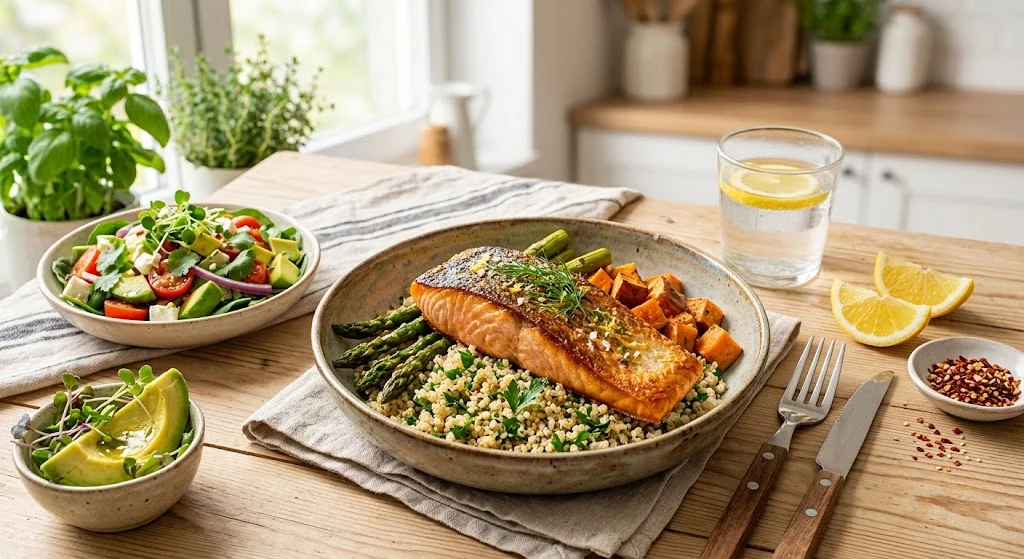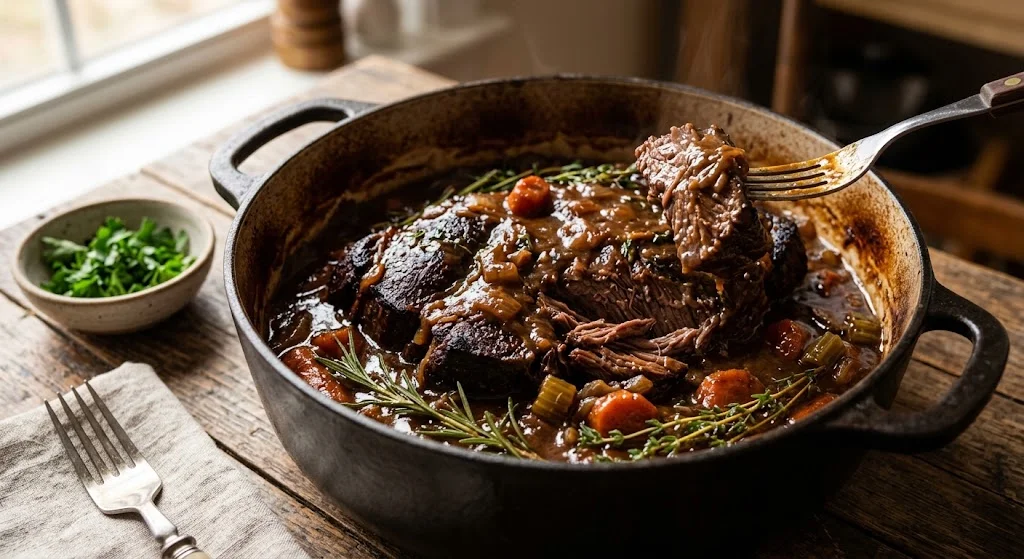
Turn a lean mock tender roast into deeply savory, spoon-soft beef with a Dutch oven, aromatic vegetables, gentle braising heat, and a rich homemade gravy.
If you have a mock tender roast and want a deeply savory dinner, this braised mock chuck recipe turns the lean cut into tender, spoon-soft beef with a rich pan gravy. The key is simple: brown the beef well, keep the braising liquid at a gentle simmer, and give the roast enough time to become tender.
This recipe uses a Dutch oven because it gives you excellent browning and steady, moist heat in one pot. You’ll also find guidance for choosing the right cut, trimming it, making gravy, using a slow cooker, storing leftovers, and avoiding the most common mistakes.
Why This Braised Mock Chuck Recipe Works
Mock tender sounds tender because of its shape, not because it is naturally tender. The cut is long and narrow and resembles beef tenderloin, but it comes from the chuck and is best suited to slow cooking.
A covered braise gives this lean cut the time and moisture it needs. Searing first builds a browned crust, while onions, garlic, tomato paste, herbs, and broth create a concentrated gravy.
What Is Mock Tender Roast?
Mock tender roast is a lean beef cut from the chuck shoulder area. It is also sold under names such as chuck tender roast and chuck mock tender roast.
The name can be confusing. Mock tender is not a substitute for beef tenderloin, and it shouldn’t be cooked like a steak. It is better suited to slow, moist cooking.
For this recipe, look for a whole chuck tender roast or mock tender roast rather than thin chuck tender steaks.
Mock Tender vs. Traditional Chuck Roast
| Feature | Mock Tender | Traditional Chuck Roast |
|---|---|---|
| Cut location | Chuck | Chuck |
| Fat level | Relatively lean | Usually more marbled |
| Shape | Long and narrow | Broad and irregular |
| Best methods | Braising or slow cooking | Braising, roasting, or slow cooking |
| Texture | Sliceable when properly cooked | Often very shreddable |
| Flavor | Beefy but leaner | Richer and more fatty |
| Best use | Lean pot-roast style meals | Classic fall-apart pot roast |
If you want a rich, shreddable pot roast, traditional chuck is generally more forgiving. If you already have mock tender, braising is the appropriate direction.
How to Choose Mock Chuck at the Grocery Store
The label may not say exactly “mock chuck.” Look for chuck tender roast, mock tender roast, or another recognized name for this cut.
Look for:
- A whole chuck tender or mock tender roast, preferably with even thickness.
- Clean red color without unusual discoloration.
- Some surface fat, although this cut is naturally lean.
- Minimal excessive silver skin if you want less trimming.
- A package clearly identifying the cut rather than simply saying “beef roast.”
If you’re unsure about the label, ask the butcher for a whole chuck tender or mock tender roast. A whole roast is easier to braise evenly than thin steaks.
Braised Mock Chuck Recipe
Tender chuck tender roast with vegetables and savory onion-and-herb gravy.
Ingredients
- 2½–3 lb mock tender or chuck tender roast
- 2 tsp kosher salt, plus more to taste
- 1 tsp freshly ground black pepper
- 2 tbsp neutral cooking oil
- 1 large yellow onion, sliced
- 3 medium carrots, cut into large pieces
- 3 stalks celery, cut into large pieces
- 5 cloves garlic, smashed
- 2 tbsp tomato paste
- 1 cup dry red wine, or additional beef broth
- 2½ cups low-sodium beef broth
- 1 tbsp Worcestershire sauce
- 4 sprigs fresh thyme
- 1 small rosemary sprig
- 1 bay leaf
- 1 tbsp unsalted butter, optional
- 1 tbsp all-purpose flour, optional
Equipment
- 5½- to 7-quart Dutch oven
- Tongs
- Wooden spoon
- Sharp knife
- Cutting board
- Instant-read food thermometer
How to Make It
Pat the roast thoroughly dry with paper towels. If you see a thick, tough membrane or obvious silver skin, trim it carefully with a sharp knife. Leave some surface fat when practical. Season all sides generously with salt and pepper.
Heat the Dutch oven over medium-high heat. Add the oil once hot. Sear the roast on each broad side until deeply browned, usually 3–5 minutes per side. Brown the ends when practical, then transfer the beef to a plate.
Reduce heat to medium. Add onion, carrots, and celery. Cook until the vegetables begin to soften and pick up the browned bits. Add garlic and tomato paste. Cook for about 1 minute, stirring constantly.
Pour in the red wine if using. Scrape the bottom of the Dutch oven with a wooden spoon to release the browned bits. Let the wine simmer for a few minutes.
Add beef broth and Worcestershire sauce. Add thyme, rosemary, and bay leaf. Return the roast to the pot. The liquid should reach roughly halfway up the beef, rather than completely covering it.
Bring the liquid to a gentle simmer. Cover tightly and transfer to a 325°F oven. Cook for approximately 2½–3 hours, checking toward the earlier end of the range.
The roast is ready when a fork enters the thickest section with very little resistance. Don’t rely on the clock alone; roast thickness and oven performance can change the cooking time.
Transfer the beef to a cutting board and tent loosely with foil. Remove the herbs and bay leaf. For thinner gravy, season the braising liquid to taste. For thicker gravy, reduce the liquid or use the optional butter-and-flour method.
Rest the beef for about 10 minutes. Slice across the grain when possible, spoon the gravy over the beef, and serve immediately.
How to Know When Mock Chuck Is Done
There are two different questions when checking beef: Is it safe? and Is it tender enough for the dish?
A food thermometer helps establish the safety temperature, while the texture test tells you when the connective tissue has softened enough for braising.
Mock tender can still be tough at that point. Continue the covered braise when necessary until the fork slides into the thickest section with little resistance.
Oven vs. Slow Cooker Mock Chuck
| Method | Best For | Main Advantage |
|---|---|---|
| Dutch oven | Overall braising | Excellent browning and steady oven heat |
| Slow cooker | Busy days | Very little active cooking |
| Stovetop braise | Smaller batches | Easy heat adjustment |
The Dutch oven is particularly useful because you can sear the beef, cook the aromatics, deglaze the pot, and braise everything in one vessel. A slow cooker is convenient when hands-off cooking is the priority.
Slow Cooker Mock Chuck
A slow cooker works well when you want to prepare dinner ahead of time. Sear the roast first if your schedule allows. Transfer it to the slow cooker, then add the vegetables, broth, Worcestershire sauce, tomato paste, and herbs.
Cook on LOW until the beef is fork-tender, allowing several hours rather than expecting a quick meal.
Remove the cooked beef and vegetables, pour the braising liquid into a saucepan, and reduce or thicken it separately. A saucepan makes it easier to concentrate the sauce.
Wine-Free Braised Mock Chuck
You don’t need wine for a flavorful braise. Replace the wine with additional low-sodium beef broth.
For extra depth, use small amounts of:
- Worcestershire sauce
- Tomato paste
- Balsamic vinegar
- Soy sauce
- Mushroom powder
- Extra caramelized onion
Use these ingredients sparingly. Their job is to deepen the beef flavor, not make the gravy taste primarily like one added ingredient.
Best Vegetables for Mock Chuck
- Carrots: become sweet and tender during the braise.
- Celery: adds savory depth to the cooking liquid.
- Yellow onions: form the aromatic base.
- Mushrooms: add earthy flavor.
- Yukon Gold potatoes: make the meal more filling.
- Parsnips: add gentle sweetness.
- Pearl onions: create a polished presentation.
- Garlic: adds depth without overpowering the beef.
- Turnips: work well for a less-sweet vegetable profile.
- Rutabaga: gives the braise a hearty, earthy character.
If you want vegetables to retain their shape, add them later rather than cooking them for the entire braising time.
How to Keep Mock Chuck Tender
- Dry the beef before searing for better browning.
- Don’t skip the initial sear if you want deeper flavor.
- Keep the liquid at a gentle simmer, not a hard boil.
- Keep the pot covered so moisture stays inside.
- Don’t rely on a fixed cooking time alone.
- Check the thickest part for tenderness before removing the roast.
- Let the meat rest before slicing.
- Slice across the grain for a more pleasant bite.
- Serve with plenty of gravy because the cut is relatively lean.
Treating mock tender like a steak. Its appearance can be misleading because the name refers to its shape rather than steak-like tenderness.
Common Problems and How to Fix Them
The Beef Is Still Tough
Give it more time. If the roast is safely cooked but still resists a fork, continue the covered braise until the connective tissue softens.
The Beef Is Dry
Check that:
- The pot stayed covered.
- There was enough braising liquid.
- The oven wasn’t running excessively hot.
- The roast wasn’t cooked far beyond the texture you wanted.
The Gravy Is Too Thin
Remove the beef and vegetables, then simmer the liquid separately until concentrated. A small flour or cornstarch slurry can also be used.
The Gravy Is Too Salty
Add unsalted beef broth or water gradually. If possible, increase the amount of unsalted vegetables or gravy base instead of adding more salt.
The Vegetables Are Mushy
Cut them larger or add them later. Potatoes and carrots don’t always need the full braising time required by the beef.
The Beef Won’t Brown
- The meat was wet.
- The pot wasn’t hot enough.
- Too much beef was crowded into the pot.
- The meat was moved too often.
Pat the roast dry, preheat the pot properly, and give the beef enough space to make direct contact with the hot surface.
Best Side Dishes for Braised Mock Chuck
The rich gravy makes this roast especially good with simple sides:
- Creamy mashed potatoes for catching the gravy.
- Buttered egg noodles for a quick starch.
- Roasted carrots for extra sweetness.
- Green beans for a fresh contrast.
- Roasted Brussels sprouts for a deeper vegetable side.
- Creamy polenta for a rustic plate.
- Crusty bread for soaking up the sauce.
- Simple green salad for a lighter contrast.
- Roasted root vegetables for a cold-weather dinner.
- Steamed peas for color and freshness.
Mashed potatoes, green beans, and the beef gravy create a straightforward family-style dinner.
Make-Ahead, Storage, and Reheating
Braised beef is an excellent make-ahead dinner because the flavors can deepen after chilling. Transfer leftovers to shallow containers and refrigerate promptly.
To Refrigerate
Store the beef with some gravy in an airtight container. Keeping the meat with the sauce helps prevent it from drying out.
To Reheat
Reheat gently in a covered saucepan or oven-safe dish with some gravy. Reheat leftovers to 165°F before serving.
To Freeze
Freeze the beef with some braising liquid in an airtight freezer container. For best texture, thaw it in the refrigerator before reheating.
Leftover Mock Chuck Ideas
- Beef sandwiches: shred the beef and spoon gravy over toasted rolls.
- Beef tacos: warm shredded beef with onions and fresh toppings.
- Beef bowls: serve over rice with vegetables and leftover gravy.
- Breakfast hash: crisp diced potatoes with shredded beef.
- Beef noodles: toss shredded beef with egg noodles and gravy.
- Shepherd’s-pie-style filling: layer beef and vegetables beneath mashed potatoes.
- Loaded baked potatoes: top potatoes with warm beef and gravy.
- Beef soup: thin leftover gravy with broth and add vegetables.
Flavor Variations
Red Wine and Rosemary
Use dry red wine with rosemary, thyme, garlic, and beef broth for a deeper sauce.
Mushroom and Thyme
Add browned mushrooms near the end of cooking and use extra thyme for an earthy version.
Garlic and Herb
Skip the wine and emphasize garlic, rosemary, thyme, and black pepper.
Tomato-Rich Braise
Increase the tomato paste slightly and add crushed tomatoes for a fuller, rustic sauce.
Onion Gravy
Use extra onions and reduce the braising liquid until glossy and concentrated.
Gluten-Free Version
Use gluten-free Worcestershire sauce and a gluten-free thickener if needed. Always check labels because formulations vary by brand.
Dairy-Free Version
The basic recipe is naturally dairy-free if you omit the optional butter. Use olive oil or another neutral fat for finishing.
Allergy Note
Check packaged ingredients such as broth, Worcestershire sauce, flour, and prepared seasonings for wheat, soy, dairy, or other allergens if you’re cooking for someone with a food allergy.
What Makes a Good Mock Chuck Braise?
The best version isn’t necessarily the one with the most ingredients. It is the one that gets the fundamentals right:
- Correct cut: use chuck tender/mock tender rather than assuming every chuck cut behaves identically.
- Strong browning: build flavor before adding liquid.
- Controlled moisture: keep the liquid around the meat rather than completely drowning it.
- Gentle cooking: avoid aggressive boiling.
- Enough time: let tenderness, not the clock alone, determine the finish.
- Balanced gravy: concentrate the braising liquid instead of relying on excessive thickener.
- Proper slicing: cut across the grain when serving slices.
That combination turns an inexpensive, lean cut into a satisfying dinner without pretending it is the same thing as a heavily marbled chuck roast.
Frequently Asked Questions
Is mock tender the same as chuck roast?
No. Mock tender, or chuck tender, is a distinct lean cut from the chuck. It has a similar appearance to tenderloin but is not naturally tender like tenderloin.
Can you braise mock tender roast?
Yes. Braising is well suited to chuck tender because moist heat and extended cooking help turn the lean, tougher cut into a tender meal.
Why is my mock tender roast tough?
If it is safely cooked but still tough, it usually needs more time in the braising environment. Check that the pot is covered and the liquid is gently simmering rather than rapidly boiling.
Can I use a slow cooker instead of a Dutch oven?
Yes. Searing first improves flavor, then the roast can finish in a slow cooker with broth, vegetables, and aromatics. Finish the gravy separately on the stovetop if you want it thicker.
Should braising liquid cover the beef?
Not usually. About halfway up the roast is a useful starting point for a covered braise, allowing the meat to cook in moist heat without completely submerging it.
What temperature should beef roast reach?
For food safety, USDA FSIS recommends 145°F for beef roasts followed by at least a 3-minute rest. For braised beef, use tenderness as the quality check after meeting the safety requirement.
How long do braised mock chuck leftovers last?
Refrigerate leftovers promptly and use them within 3–4 days. Reheat leftovers to 165°F before serving.
Final Thoughts
This braised mock chuck recipe gives a lean chuck cut the cooking method it needs: strong browning, gentle moist heat, and enough time to become tender. The result is savory beef with vegetables and a rich gravy that works especially well for a family dinner.
If you’re new to mock tender, start with the Dutch oven method, check the roast with a thermometer for safety, and use fork tenderness to decide when the braise is truly ready. Serve it with mashed potatoes or another simple starch, then save the leftovers for sandwiches, tacos, or bowls.
Cooking times can vary with roast thickness, oven performance, and the exact cut sold by your butcher. Use the stated temperature and tenderness checks rather than treating the clock as the only measure of doneness.
Recipe note: This article provides general cooking and food-safety information. Always follow current food-safety guidance and use a reliable food thermometer.
Read More :