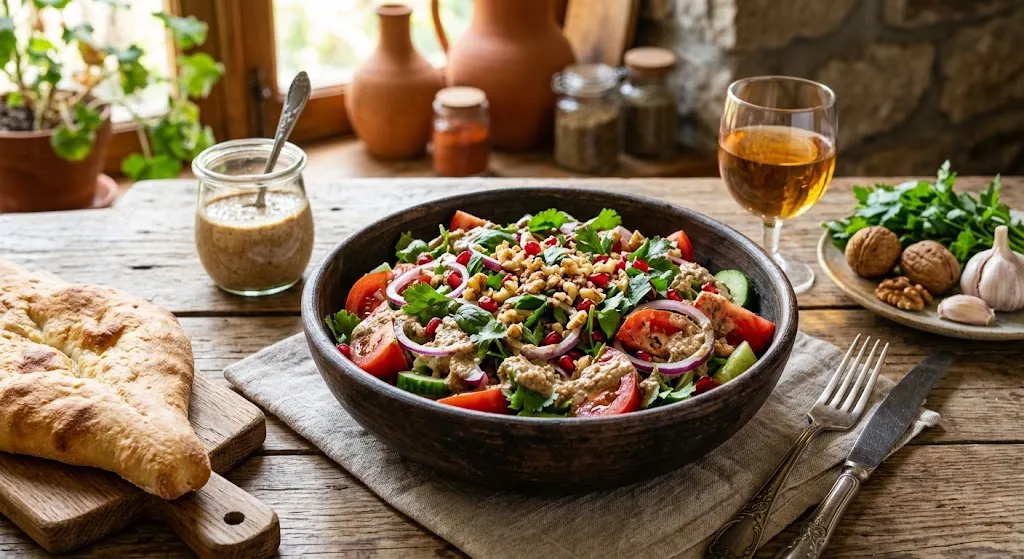
If you love fresh, vibrant salads, this Georgian Salad With Walnut Dressing is a must-try. Juicy tomatoes, crisp cucumbers, red onion, and fresh herbs are finished with a rich, garlicky Georgian walnut dressing.
Unlike a typical Mediterranean salad, this recipe gets its character from a rustic walnut garlic sauce rather than a simple vinaigrette. The result is fresh, nutty, tangy, garlicky, and distinctly Georgian.
Quick Answer: What Is Georgian Salad With Walnut Dressing?
Georgian Salad With Walnut Dressing is a traditional-style Georgian tomato cucumber salad made with ripe tomatoes, crisp cucumbers, red onion, fresh herbs, and a rich dressing made from ground walnuts, garlic, vinegar, and water. It is naturally vegan and gluten-free when gluten-free ingredients are used.
Georgian Salad With Walnut Dressing
Fresh tomatoes and cucumbers with a rustic, garlicky walnut sauce.
Salad Ingredients
- Ripe tomatoes
- Persian or English cucumbers
- Red onion
- Fresh cilantro
Walnut Dressing
- Fresh raw walnuts
- Garlic
- Red wine or pomegranate vinegar
- Salt
- Water, as needed
Why This Georgian Salad Is Different From Mediterranean Salads
At first glance, this salad may resemble a Mediterranean tomato and cucumber salad. The major difference is the dressing. Instead of relying primarily on olive oil and lemon juice, Georgian versions can feature a rich walnut-based sauce with garlic and vinegar.
| Feature | Georgian Walnut Salad | Typical Mediterranean Salad |
|---|---|---|
| Main dressing style | Ground walnut-based dressing | Often oil-based vinaigrette |
| Signature flavor | Walnut, garlic, and vinegar | Olive oil, lemon, herbs, or vinegar |
| Texture | Rustic and slightly coarse | Usually lighter and more fluid |
| Richness | Natural richness from walnuts | Often from olive oil and/or cheese |
Why Walnuts Are Essential in Georgian Cuisine
Walnuts play an important role in many Georgian dishes, appearing in sauces, spreads, stews, and other preparations. Their natural oils provide richness and body without requiring dairy.
A well-known example is Satsivi, a Georgian walnut-based sauce traditionally associated with poultry. Walnut preparations like this help explain why a rustic Georgian walnut sauce pairs so naturally with fresh vegetables.
Ingredients: What Each Ingredient Does
Tomatoes
Use ripe, juicy tomatoes. Roma, vine-ripened, or heirloom tomatoes can all work. Their natural sweetness balances the savory walnut dressing.
Cucumbers
Persian or English cucumbers are excellent choices because they provide a crisp bite and a relatively clean, refreshing flavor.
Red Onion
Thinly sliced red onion adds sharpness and mild heat, helping balance the richness of the walnuts.
Cilantro
Fresh cilantro contributes a distinctive herbal character. Parsley can be substituted if you prefer a milder flavor.
Walnuts
Fresh raw walnuts form the foundation of the Georgian walnut dressing. They create richness and the characteristic rustic texture.
Garlic & Vinegar
Garlic provides the bold savory note while red wine or pomegranate vinegar adds acidity to balance the walnut’s richness.
How to Make Authentic Georgian Walnut Dressing
The dressing is the defining component of this salad. The goal is a thick, creamy, slightly coarse walnut sauce rather than a watery vinaigrette.
-
Grind the Walnuts
Use fresh raw walnuts. Traditionally, a mortar and pestle can be used to slowly grind them into a rustic paste. If using a food processor, pulse gently rather than continuously blending.
-
Add Garlic and Salt
Add crushed garlic and a pinch of salt. Mash or pulse until the ingredients form a thick, cohesive mixture.
-
Gradually Add Vinegar
Slowly incorporate red wine vinegar or pomegranate vinegar. Add it gradually so you can control the acidity and consistency.
-
Adjust With Water
Add water a spoonful at a time until the dressing becomes creamy and pourable.
-
Check the Texture
The finished dressing should be slightly coarse but pleasant to eat. If it tastes unusually bitter, check the freshness of the walnuts and avoid overheating them during processing.
Step-by-Step: How to Make Georgian Salad With Walnut Dressing
-
Chop the Vegetables Evenly
Dice the ripe tomatoes, chop the cucumbers, and thinly slice the red onion. Consistent pieces make the salad easier to eat and distribute the dressing more evenly.
-
Lightly Salt the Tomatoes
Lightly salt the tomatoes and let them sit for a few minutes. If they release excessive liquid, drain some of it before assembling the salad.
-
Add Fresh Herbs
Combine the vegetables with finely chopped cilantro. Toss gently so the tomatoes remain intact.
-
Add the Walnut Dressing
Spoon the Georgian walnut dressing over the vegetables. Mix carefully until the pieces are lightly coated.
-
Rest for 5–10 Minutes
Let the finished salad rest briefly before serving. This gives the garlic, vinegar, walnuts, and vegetables time to mingle.
5 Secrets for Authentic Georgian Flavor
1. Don’t Over-Blend the Walnuts
A slightly rustic texture is desirable. Excessive processing can make the mixture oily and may emphasize bitterness.
2. Balance the Acidity
Taste the dressing after adding vinegar. It should brighten the walnuts without becoming aggressively sour.
3. Choose Ripe Tomatoes
Sweet, ripe tomatoes provide the fresh counterpoint needed for the rich walnut garlic dressing.
4. Give It a Short Rest
Resting for 5–10 minutes helps the flavors combine before serving.
5. Chop Herbs Finely
Finely chopped cilantro distributes its flavor more evenly throughout the salad.
Common Mistakes to Avoid
| Problem | Possible Cause | Better Approach |
|---|---|---|
| Watery salad | Very juicy tomatoes or excess vegetable liquid | Lightly salt tomatoes and drain excess liquid if needed. |
| Bitter dressing | Stale walnuts or excessive processing | Use fresh walnuts and pulse gently. |
| Overpowering garlic | Too much garlic added at once | Start with less and adjust after tasting. |
| Flat flavor | Insufficient acidity or seasoning | Taste and adjust vinegar and salt gradually. |
| Weak texture | Dressing is too thin | Add less water and keep the sauce thick enough to coat the vegetables. |
Georgian Salad Variations & Modern Twists
Naturally Vegan
The basic combination of vegetables, walnuts, garlic, herbs, and vinegar is naturally plant-based.
Paleo-Friendly Style
The whole-food ingredients can fit a paleo-style approach, depending on the specific vinegar and other ingredients selected.
Spicy Chili Version
Add finely chopped fresh chili or red pepper flakes for additional heat.
Pomegranate Seed Version
Sprinkle fresh pomegranate seeds over the salad for extra color, sweetness, and acidity.
Feta Variation
Crumbled feta can be added for a Mediterranean-inspired variation. This is a modern adaptation rather than a traditional Georgian element.
Lower-Carb Meal
The salad is vegetable-forward and can work well in a lower-carbohydrate meal plan. For strict carbohydrate targets, account for the portion of tomatoes and onions.
Is Georgian Salad Healthy?
This salad combines fresh vegetables, herbs, and walnuts in a naturally dairy-free dressing. Its exact nutritional profile depends on portion size and especially on how many walnuts are used.
Walnut Fats
Walnuts provide unsaturated fats and are a source of the plant-based omega-3 fatty acid ALA.
Vegetable-Rich
Tomatoes and cucumbers contribute water, fiber, vitamins, minerals, and freshness.
Garlic & Herbs
Garlic and fresh herbs contribute flavor and naturally occurring plant compounds while allowing the recipe to remain simple.
Calories
The original estimate of 180–250 calories per serving can vary significantly depending on the amount of walnuts and dressing used. For precise nutrition, calculate the recipe using your actual ingredients.
How to Store & Make Georgian Salad Ahead
| Component | Best Storage Method | Quality Tip |
|---|---|---|
| Chopped vegetables | Refrigerate covered | Keep dressing separate until serving. |
| Walnut dressing | Refrigerate in an airtight container | Stir before using if natural separation occurs. |
| Fully dressed salad | Best eaten fresh | Vegetables become softer and release more liquid over time. |
| Freezing | Not recommended | Walnut sauce and fresh vegetables may develop an undesirable texture after thawing. |
Can the Walnut Dressing Be Made Ahead?
Yes. The dressing can be prepared ahead and refrigerated in an airtight container. The original recipe guidance suggests using it within 3–4 days. Stir it well before serving because the natural walnut oils may separate slightly.
What to Serve With Georgian Salad
Khachapuri
The fresh vegetables and tangy walnut dressing provide a bright contrast to rich, cheese-filled Georgian bread.
Grilled Meat
Serve alongside grilled chicken, lamb, or beef for a fresh side dish with plenty of contrasting flavor.
Roasted Vegetables
Pair with roasted eggplant, zucchini, peppers, or other seasonal vegetables for a vegetarian spread.
BBQ Meals
Its fresh vegetables and bold walnut sauce make it a colorful addition to summer barbecue meals.
Mezze-Style Plate
Serve with flatbread, dips, olives, and other vegetable dishes for a generous sharing platter.
Expert Tips for Better Georgian Walnut Salad
FAQs About Georgian Salad With Walnut Dressing
Is Georgian salad vegan?
Yes. This version is naturally vegan and plant-based. The creamy texture comes from ground walnuts rather than dairy.
What does Georgian walnut dressing taste like?
It is rich, nutty, garlicky, and tangy. Vinegar adds acidity while the walnuts create a creamy, rustic texture.
Can I make Georgian salad without cilantro?
Yes. Parsley can be substituted if you prefer a milder herb. The overall flavor will be slightly different from a cilantro-forward version.
Is this salad served in Tbilisi?
Tomato-and-cucumber salads with walnut-based dressings are associated with Georgian cuisine and can be found in Georgia, including Tbilisi. Specific recipes and preparations vary between households and restaurants.
Can I make the walnut dressing in advance?
Yes. Prepare it ahead and refrigerate it in an airtight container. Stir before serving and use it within approximately 3–4 days for best quality.
Is Georgian salad similar to Greek salad?
Both can feature tomatoes and cucumbers, but the dressing and flavor profile differ. Greek salad is commonly associated with olive oil and feta, while this Georgian version centers on a walnut, garlic, and vinegar dressing.
Final Thoughts: Why This Georgian Salad Works
This Georgian Salad With Walnut Dressing brings together juicy tomatoes, crisp cucumbers, red onion, fresh herbs, and a rich walnut garlic dressing in one simple dish.
The key is the contrast: fresh vegetables provide brightness and crunch, while ground walnuts bring richness and body. Garlic and vinegar keep the dressing lively rather than heavy.
For the best result, use fresh walnuts, ripe tomatoes, crisp cucumbers, finely chopped cilantro, and a thick but pourable walnut dressing. Keep the dressing separate if preparing ahead, then combine shortly before serving.
Serve it with khachapuri, grilled meats, roasted vegetables, barbecue dishes, or a mezze-style spread for a vibrant taste of Georgian-inspired cooking.
Read More :