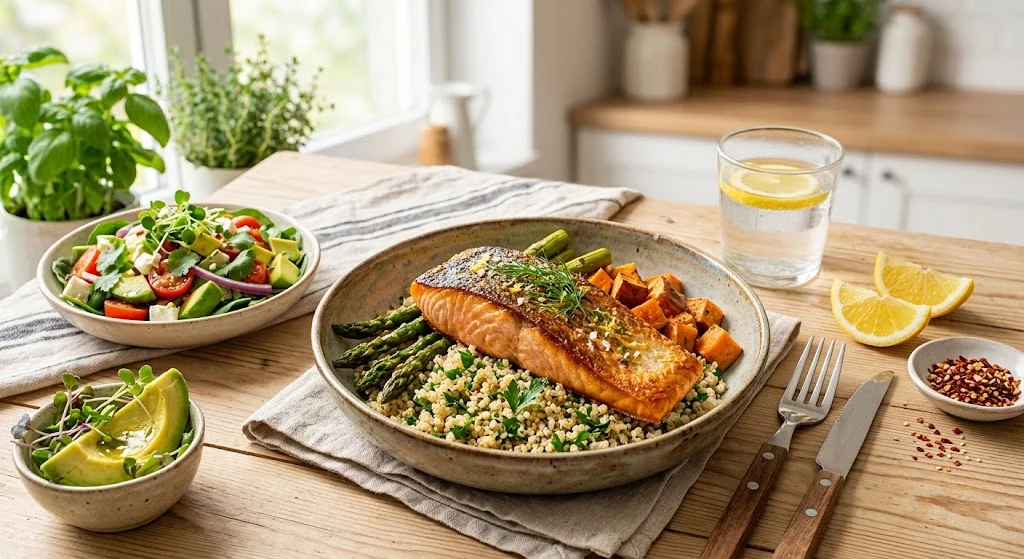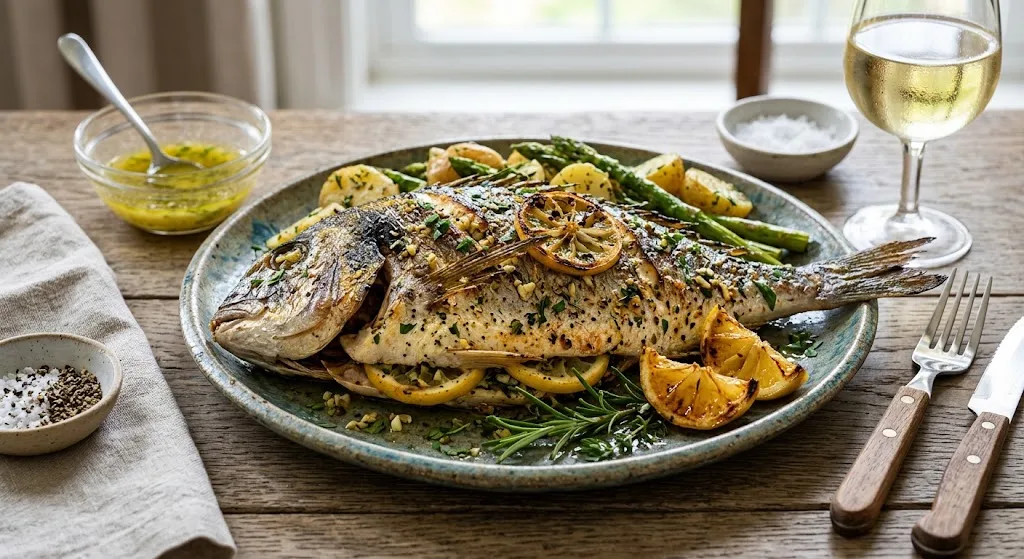
Looking for a simple gilt bream recipe that lets the delicate flavor of the fish shine? This easy oven-roasted version combines whole gilt-head bream, olive oil, lemon, garlic, parsley, thyme, salt, and pepper for a Mediterranean-style dinner with minimal preparation.
Designed for a 1½–2 pound cleaned whole fish, this recipe uses a thermometer rather than relying on a fixed cooking time. The same flavor combination also works beautifully with fillets, grilled bream, Mediterranean tomato sauces, and other cooking methods.
Quick Answer: What Is the Easiest Gilt Bream Recipe?
The easiest gilt bream recipe is whole bream roasted with olive oil, lemon, garlic, parsley, and thyme at 425°F. Cook until the thickest part reaches 145°F (63°C), then serve with fresh lemon and your favorite vegetables. FDA seafood safety guidance recommends 145°F for finfish.
Easy Baked Gilt Bream Recipe
A beginner-friendly whole-fish recipe with lemon, garlic, olive oil, and fresh herbs.
This is an excellent starting point if you’re cooking gilt-head bream for the first time. The fish roasts gently around the lemon and herbs while the skin develops light browning.
Ask the fish counter to scale and gut the fish before you bring it home. Leaving the head and tail attached is optional, but whole presentation works especially well for a family dinner.
Recipe at a Glance
| Detail | Recommendation |
|---|---|
| Yield | 2 servings |
| Prep time | 10–15 minutes |
| Cook time | About 20–30 minutes |
| Oven temperature | 425°F |
| Fish | 1½–2 lb whole gilt-head bream |
| Method | Oven roasting |
| Doneness | 145°F in the thickest flesh |
| Difficulty | Beginner-friendly |
Ingredients
- 1 whole gilt bream, about 1½–2 pounds, scaled and gutted
- 2 tablespoons extra-virgin olive oil
- 1 lemon, thinly sliced
- 2 garlic cloves, thinly sliced
- 2 tablespoons fresh parsley, chopped
- 3–4 fresh thyme sprigs
- ½ teaspoon kosher salt, plus more to taste
- ¼ teaspoon freshly ground black pepper
- 1 small lemon, cut into wedges for serving
How to Make Gilt Bream
- Heat the oven to 425°F.
- Pat the fish very dry with paper towels. Dry skin browns better.
- Make 2–3 shallow cuts through the thickest part of each side.
- Rub the outside with olive oil, salt, and black pepper.
- Place lemon slices, garlic, parsley, and thyme inside the cavity.
- Put the fish on a lightly oiled baking sheet or roasting dish.
- Roast until the thickest part of the flesh reaches 145°F (63°C).
- Start checking smaller fish around 20 minutes, then continue cooking as needed.
- Let the fish rest for a few minutes before serving.
- Remove the top fillet from the central bones and serve with lemon wedges.
Cooking time varies with fish weight and thickness. A food thermometer is more reliable than a fixed cooking time. The FDA recommends cooking finfish to 145°F (63°C).
What Should the Finished Fish Look Like?
The flesh should be opaque and separate easily with a fork. The thickest part should reach 145°F when checked with a food thermometer.
Don’t place the thermometer directly against the backbone. Check the thickest flesh instead.
Serving Suggestions
- Spoon the pan juices over the fish.
- Add fresh lemon juice just before eating.
- Serve with roasted potatoes.
- Add a simple cucumber and tomato salad.
- Pair it with grilled zucchini or asparagus.
- Serve crusty bread alongside the juices.
- Add a spoonful of herbed olive oil.
- Finish with fresh parsley or dill.
What Is Gilt-Head Bream?
Gilt-head bream is the common name for Sparus aurata, a Mediterranean fish with firm white flesh. In the FDA Seafood List, its acceptable market name is Bream, while Gilthead Bream is listed as a common name. The FDA page was updated August 12, 2026.
You may also see names such as dorada, dorade royale, or orata, depending on the country and seafood market. Don’t confuse it with every fish sold simply as “sea bream,” because several different species can use bream-related names.
What Does Gilt Bream Taste Like?
Gilt-head bream has a mild, clean seafood flavor and firm white flesh. It is flavorful enough to stand alone but mild enough for citrus, herbs, garlic, tomatoes, olives, and sauces.
Great for Roasting
Its firm texture holds together well during oven roasting.
Great for Grilling
Whole bream develops crisp skin and a lightly smoky flavor.
Works With Sauces
Lemon, tomatoes, olives, herbs, and light Asian-inspired sauces all pair well.
Flexible Cooking
It can be roasted, grilled, pan-seared, steamed, baked in parchment, or salt-crust baked.
How to Buy Gilt-Head Bream in the USA
Finding this fish can be harder than finding salmon or cod in a typical supermarket. A seafood counter or Mediterranean-focused fish market may have a better selection.
The name can also vary between retailers. If you don’t see “gilt-head bream,” ask about gilthead bream, dorada, dorade, or Sparus aurata. The FDA identifies Sparus aurata with the acceptable market name Bream.
What to Ask the Fishmonger
“I’d like a whole gilthead bream, scaled and gutted, with the head and tail left on.”
You can also ask the fishmonger to:
- Scale the fish.
- Gut and clean it.
- Remove the gills.
- Leave the head attached.
- Leave the skin intact.
- Cut it into fillets if you prefer easier serving.
How to Choose Fresh Fish
Fresh seafood should have a clean, mild smell, not a strong sour, rancid, or ammonia-like odor. FDA guidance also recommends looking for clear eyes and firm flesh when selecting whole fish.
Whole Gilt Bream vs. Fillets
Both forms work well, but they suit different cooking situations.
| Choose | Best For | Main Advantage |
|---|---|---|
| Whole fish | Family dinner | Moisture and presentation |
| Skin-on fillets | Weeknight meals | Fast cooking and crisp skin |
| Skinless fillets | Sauced dishes | Easy eating |
| Large whole fish | Entertaining | Dramatic table presentation |
| Small whole fish | Individual servings | Simple portion control |
Whole bream is especially rewarding when you want a centerpiece. Fillets are more practical when everyone wants an easy, bone-free meal.
How to Prepare Whole Gilt Bream
Whole fish may look intimidating, but most of the work should already be done by the fishmonger. Your main jobs are drying, seasoning, scoring, and cooking.
Pat the skin and cavity thoroughly dry before seasoning. Moisture on the surface makes browning harder.
Before Cooking
- Check for remaining scales.
- Check the cavity for loose pieces.
- Pat the fish dry.
- Make shallow cuts through the thickest flesh.
- Season both sides.
- Oil the skin lightly.
- Add herbs and lemon to the cavity.
- Wash your hands and utensils after handling raw fish.
Keep raw seafood separate from ready-to-eat foods. FDA guidance recommends using separate cutting boards or thoroughly cleaning surfaces after preparing raw seafood.
Pan-Fried Gilt Bream Fillets
Pan-fried gilt bream is the quickest option when you have fillets. Skin-on fillets are particularly good because a hot skillet can turn the skin crisp while the flesh stays tender.
The key is simple: dry fish, moderately hot pan, enough space, and minimal flipping.
Ingredients
- 2 gilt bream fillets, skin on
- 1 tablespoon olive oil
- Salt and black pepper
- 1 tablespoon butter, optional
- 1 garlic clove, lightly crushed
- Lemon wedges
- Fresh parsley
Method
- Pat the fillets very dry.
- Season the flesh side with salt and pepper.
- Heat olive oil in a skillet over medium-high heat.
- Place the fish skin-side down.
- Press gently for several seconds to keep the skin flat.
- Cook until the skin is browned and crisp.
- Turn the fillets carefully.
- Add butter and garlic if using.
- Spoon the melted butter over the fish.
- Cook until the thickest part reaches 145°F.
- Finish with lemon and parsley.
Lemon Garlic Gilt Bream
For a lighter dinner, skip the butter and use olive oil, lemon, garlic, and fresh herbs.
This combination works because the citrus adds brightness while garlic and herbs provide savory depth without covering the fish.
- Rub the fish with olive oil.
- Add thin garlic slices to the cavity.
- Use lemon slices rather than large chunks.
- Add parsley, thyme, or dill.
- Roast or grill until cooked through.
- Finish with fresh lemon juice.
- Add a drizzle of extra-virgin olive oil before serving.
Dairy-Free
Use olive oil instead of butter.
Gluten-Free
The basic lemon-herb recipe is naturally gluten-free.
Mediterranean Gilt Bream With Tomatoes and Olives
Tomatoes and olives turn simple bream into a fuller Mediterranean dinner. Their salty, acidic flavors work particularly well with mild white fish.
For a complete meal, cook the fish with cherry tomatoes, olives, garlic, olive oil, and herbs.
Easy Flavor Combination
- Gilt-head bream
- Cherry tomatoes
- Kalamata or other pitted olives
- Garlic
- Olive oil
- Lemon
- Parsley
- Thyme
- Black pepper
Add the tomatoes and olives around the fish during roasting rather than stuffing large amounts inside the cavity.
The tomatoes release juices as they cook, creating a light pan sauce. Serve with crusty bread, couscous, rice, or roasted potatoes.
Gilt Bream With Potatoes
A fish-and-potato dinner is one of the most useful ways to turn whole bream into a complete meal.
Best Vegetables to Add
- Thin potato slices
- Red onion
- Cherry tomatoes
- Fennel
- Bell peppers
- Zucchini
- Garlic
Season the vegetables with olive oil, salt, pepper, and herbs. Once the potatoes begin to soften, add the fish and continue roasting until the fish reaches 145°F.
Grilled Gilt-Head Bream
Grilling gives whole bream a lightly smoky flavor and crisp skin. It is especially good for summer dinners and outdoor entertaining.
A clean, well-oiled grate is important. Fish can stick when the grate is dirty or insufficiently oiled.
Grill Preparation
- Pat the fish completely dry.
- Brush the skin with olive oil.
- Score each side lightly.
- Season with salt and pepper.
- Fill the cavity with lemon and herbs.
- Preheat and clean the grill.
- Oil the grate carefully.
- Place the fish on the grill.
- Turn only when it releases easily.
- Check the thickest flesh for 145°F.
Serve grilled bream with lemon, grilled vegetables, fennel, or a fresh tomato salad.
Salt-Crust Gilt Bream
Salt-crust baking is a traditional way to cook whole fish. A thick crust surrounds the fish and creates a protected cooking environment.
The technique is especially attractive for dinner parties because the crust can be cracked open at the table.
A traditional salt-crust preparation uses coarse salt and whole fish. Some versions use egg whites and water to bind the crust. A 2026 recipe from Alexandre Bally uses a 1 kg whole gilt-head bream, coarse sea salt, egg whites, and water.
Important Salt-Crust Tips
- Use a whole fish.
- Keep the fish unscaled for a traditional salt barrier.
- Use coarse salt.
- Cover the fish completely.
- Keep the crust thick enough to seal the fish.
- Check doneness rather than relying only on time.
- Crack the crust carefully.
- Remove the salt and skin before serving.
This method is more involved than ordinary roasting, so it is better suited to weekend dinners and entertaining.
Gilt Bream En Papillote
En papillote means cooking food inside a sealed parchment packet. The fish steams in its own moisture while absorbing the aromas of herbs, citrus, and vegetables.
This method is particularly useful for fillets and delicate preparations.
Good Ingredients for the Packet
- Gilt bream fillet
- Lemon
- Thin fennel slices
- Garlic
- Parsley
- Thyme
- Olive oil
- Thin zucchini
- A small splash of white wine
Seal the parchment tightly and open it carefully after cooking. Hot steam can escape suddenly when the packet is opened.
Asian-Style Gilt Bream
Gilt bream also works with brighter Asian-inspired flavors. Ginger, lime, chili, cilantro, and soy sauce create a sharper profile than traditional Mediterranean seasoning.
Keep the sauce light so the fish remains noticeable.
Try This Combination
- Lime juice
- Fresh ginger
- Garlic
- Sliced red chili
- Cilantro
- Scallions
- A small amount of soy sauce
- Sesame oil, used sparingly
Serve with steamed rice and cucumber for a quick weeknight dinner.
How to Tell When Gilt Bream Is Done
Don’t judge whole fish by time alone. Fish thickness, starting temperature, oven performance, and fish weight all affect cooking time.
The Most Reliable Test
Insert an instant-read thermometer into the thickest part of the flesh, avoiding direct contact with the backbone.
The FDA recommends cooking finfish to 145°F (63°C). Without a thermometer, cooked fish should appear opaque and separate easily with a fork.
Signs to Look For
- 145°F internal temperature
- Opaque flesh
- Flesh separating easily
- Firm but moist texture
- No translucent center
A thermometer is especially helpful with whole fish because the thickest portion can cook more slowly than the thinner tail.
How to Remove Bones From Whole Gilt Bream
Whole bream is easier to eat once you understand where the central bones sit.
After cooking, let the fish rest briefly. Use a serving spoon and fork rather than aggressively scraping the flesh.
Simple Method
- Start at the top of the fish.
- Lift the cooked flesh away from the backbone.
- Work toward the tail.
- Transfer the upper fillet to a plate.
- Lift out the central backbone.
- Check the lower fillet for remaining pin bones.
- Serve the cleaned flesh with lemon.
Whole fish contains bones. Always check the flesh carefully before serving children.
Best Side Dishes for Gilt Bream
The mild fish gives you plenty of room to change the sides.
For Baked Bream
- Roasted potatoes
- Green beans
- Fennel
- Tomato salad
- Couscous
- Crusty bread
For Grilled Bream
- Grilled zucchini
- Charred peppers
- Fennel salad
- Greek-style salad
- Lemon potatoes
For Asian-Style Bream
- Jasmine rice
- Cucumber salad
- Steamed bok choy
- Scallions
- Quick-pickled vegetables
Simple Pairing Rule
Rich sauces need simpler sides, while lemon-herb fish can handle more strongly seasoned vegetables.
Gilt Bream Substitutions
If you cannot find Sparus aurata, another firm white fish can work. However, substitutions are not one-for-one because different fish vary in thickness, fat content, and cooking time.
| Substitute | How It Compares | Good Uses |
|---|---|---|
| Snapper | Firm | Roasting or grilling |
| Sea bass | Mild and versatile | Roasting, pan-searing |
| Branzino | Excellent for whole-fish preparations | Mediterranean recipes |
| Trout | Richer flavor and softer flesh | Roasting or grilling |
| Cod | Best suited to fillets | Oven or pan cooking |
Adjust cooking time according to the replacement fish’s thickness and use the same 145°F endpoint for finfish.
Storage and Food Safety
Seafood needs careful handling from the store to the refrigerator and finally to the table.
Keep raw fish refrigerated and avoid leaving it at room temperature while preparing other foods. FDA guidance recommends refrigerating or freezing perishable foods, including seafood, within 2 hours, or within 1 hour when the temperature is above 90°F.
Safe Handling Checklist
- Keep raw fish cold until preparation.
- Thaw frozen seafood in the refrigerator when possible.
- Keep raw seafood away from ready-to-eat food.
- Wash hands after handling raw fish.
- Clean cutting boards and utensils thoroughly.
- Never reuse raw seafood marinade unless it is boiled first.
- Cook finfish to 145°F (63°C).
- Refrigerate leftovers promptly.
- Store leftovers in shallow containers for faster cooling.
If raw seafood develops a sour, rancid, or ammonia-like odor, don’t eat it.
Common Gilt Bream Cooking Mistakes
The fish is simple to cook, but a few mistakes can ruin an otherwise good dinner.
Starting With Wet Fish
Wet skin steams instead of browning well. Pat the fish thoroughly dry before oiling.
Using a Fixed Cooking Time
A small fish and a large fish will not cook at the same speed. Use the 145°F temperature target instead.
Overloading the Cavity
A few lemon slices and herbs are enough. Packing the cavity tightly can interfere with even cooking.
Turning Fish Too Often
This is especially problematic on the grill or in a skillet. Let the surface develop color before moving it.
Serving Without Checking Bones
Whole fish contains bones. Remove the central backbone and check the flesh carefully before serving.
Overcomplicating the Seasoning
Gilt-head bream doesn’t need a heavy sauce. Lemon, olive oil, garlic, and herbs provide a reliable starting point.
Frequently Asked Questions About Gilt Bream
Is gilt-head bream the same as dorada?
Dorada is a widely used Spanish name for Sparus aurata, the fish commonly known as gilt-head bream. Other regional names include dorade royale and orata.
In the United States, the FDA Seafood List identifies Sparus aurata with Bream as the acceptable market name and Gilthead Bream as the common name.
What is the best way to cook gilt bream?
For beginners, oven roasting is one of the simplest approaches because the fish needs little preparation. Grilling is excellent for smoky flavor, while pan-searing is faster for fillets.
Whatever method you choose, use 145°F as the safe internal temperature target for finfish.
Does gilt-head bream have bones?
Yes. Whole gilt-head bream contains bones, including a central backbone and smaller bones around the fillets.
Fillets are easier to eat, but you should still check them carefully before serving.
Can I cook gilt bream with the skin on?
Yes. The skin can help protect the flesh during cooking and becomes especially appealing when roasted or pan-seared.
For crisp skin, dry the fish thoroughly before adding oil.
Can I use fillets instead of whole gilt bream?
Yes. Fillets are a convenient choice for weeknight dinners and require less preparation.
Reduce the cooking time based on thickness and check the thickest part for 145°F rather than following whole-fish timing.
What can I substitute for gilt-head bream?
Snapper, sea bass, branzino, or another firm white fish can work depending on the recipe.
The cooking time will change with the fish’s thickness, so use temperature and texture rather than a fixed clock time.
How should I store leftover baked bream?
Refrigerate cooked fish promptly in a covered container. FDA guidance recommends chilling perishable food within 2 hours, or within 1 hour when temperatures exceed 90°F.
Final Thoughts on This Gilt Bream Recipe
The best place to start with gilt bream is often the simplest preparation: roast the fish with olive oil, lemon, garlic, herbs, salt, and pepper, then let its natural flavor lead the meal.
Whole fish creates a beautiful centerpiece, while fillets make a faster weeknight option. If you’re cooking gilt-head bream for the first time, try the 425°F lemon-herb version and use a thermometer to reach 145°F.
Once you’ve mastered that method, experiment with the grilled, Mediterranean tomato, potato, salt-crust, en papillote, or Asian-style variations for a different dinner.
For seafood safety information, refer to current guidance from the U.S. Food and Drug Administration.
Read More :