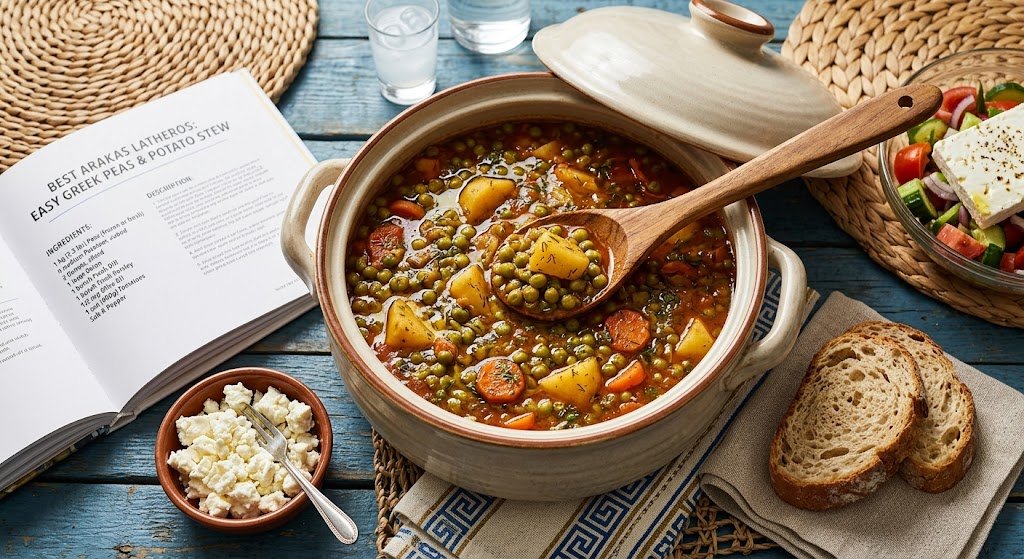
Make this comforting Arakas Latheros with sweet peas, tender potatoes, tomatoes, extra virgin olive oil, carrots, and fresh dill. This easy Greek pea stew is naturally vegan, budget-friendly, and packed with classic Mediterranean flavor.
What Is Arakas Latheros?
Arakas Latheros is a traditional Greek vegetable dish in which peas are gently cooked with potatoes, carrots, tomatoes, olive oil, and fresh dill. It belongs to the Greek lathera style of cooking, where vegetables are slowly simmered in olive oil and tomato-based sauce until tender and flavorful.
The result is a simple, satisfying Mediterranean pea stew that can be served as a vegan main course, side dish, or part of a larger Greek-inspired meal.
Arakas Latheros at a Glance
| Detail | Recipe Information |
|---|---|
| Recipe | Arakas Latheros |
| Cuisine | Greek / Mediterranean |
| Dish Type | Vegetable Stew |
| Diet | Vegan / Vegetarian |
| Prep Time | 15 minutes |
| Cook Time | 35–40 minutes |
| Total Time | 50–55 minutes |
| Servings | 4 |
| Difficulty | Easy |
What Is Arakas Latheros?
If you love simple Mediterranean meals, Arakas Latheros is a dish worth adding to your recipe collection. This traditional Greek preparation combines peas, potatoes, carrots, tomatoes, olive oil, and fresh herbs in one comforting pot.
The word Arakas refers to peas in Greek, while lathera describes a family of vegetable dishes cooked generously with olive oil. The technique turns inexpensive vegetables into a rich, aromatic meal without requiring meat or complicated ingredients.
What Does “Lathera” Mean in Greek Cooking?
In Greek cuisine, lathera refers to vegetable-centered dishes in which olive oil plays a central role. The term is connected to the Greek word associated with olive oil.
These dishes commonly combine seasonal vegetables, tomatoes, herbs, and olive oil. Other well-known examples include fasolakia, or Greek green beans in tomato sauce, and briam, a roasted mixed-vegetable dish.
Why Arakas Latheros Is Popular
Simple Ingredients
Peas, potatoes, carrots, tomatoes, onions, olive oil, and herbs create a flavorful meal without a long ingredient list.
One-Pot Comfort
The vegetables cook together in one pot, making this an easy option for relaxed family dinners and busy weeknights.
Naturally Vegan
The basic recipe uses vegetables, olive oil, herbs, and tomato sauce, making it naturally plant-based.
Why You’ll Love This Traditional Greek Pea Stew
History of Lathera Dishes in Greek Cuisine
Arakas Latheros belongs to a broader tradition of vegetable-centered Greek meals built around olive oil. The cooking style emphasizes the natural flavor of vegetables rather than relying on meat or complicated sauces.
Traditional Olive Oil Cooking in Greece
Olive oil has long been an important ingredient in Greek cooking. In lathera-style dishes, vegetables are gently cooked with olive oil and tomato, allowing them to become tender while absorbing the flavors of the sauce.
Vegetable Stews in Mediterranean Culture
Across the Mediterranean, vegetable stews have traditionally offered a practical way to turn seasonal produce into satisfying meals. Greek versions often combine tomatoes, olive oil, herbs, potatoes, beans, peas, or other vegetables.
Ingredients for Authentic Arakas Latheros
The beauty of this Greek peas and potatoes recipe is its uncomplicated ingredient list. Each component has a specific role in creating the final flavor and texture.
Peas
The star ingredient. Fresh peas work beautifully in season, while frozen peas are convenient and reliable year-round.
Potatoes
Add body and make the stew more filling. Cut them into similar-sized chunks so they cook evenly.
Carrots
Add natural sweetness, color, and texture to balance the acidity of the tomato sauce.
Onion
Forms the aromatic base of the stew and develops sweetness when gently cooked in olive oil.
Tomatoes
Create the rich, slightly tangy sauce that coats the vegetables.
Extra Virgin Olive Oil
A defining ingredient in lathera cooking that contributes richness, aroma, and a silky sauce.
Fresh Dill
Adds a bright herbal character that pairs especially well with peas and tomatoes.
Seasonings
Salt and black pepper enhance the natural flavors of the vegetables.
Water or Vegetable Broth
Provides enough moisture for the vegetables to simmer without making the final sauce unnecessarily watery.
Optional Ingredients
- Garlic for a deeper savory aroma.
- Parsley for additional freshness.
- Lemon juice for a bright finish.
- Tomato paste for a more concentrated tomato flavor.
- Zucchini or green beans for additional vegetables.
Fresh vs. Frozen Peas
| Type | Advantages | Best Use |
|---|---|---|
| Fresh peas | Bright flavor and firmer texture when in season | Seasonal cooking |
| Frozen peas | Convenient, quick-cooking, and available year-round | Everyday home cooking |
Ingredient Spotlight
Why Olive Oil Is Essential
Olive oil is more than a cooking medium in lathera dishes. It helps carry the flavors of the tomatoes, herbs, onions, and vegetables throughout the stew. For the best result, use an olive oil you enjoy the flavor of.
The Role of Dill
Fresh dill brings a clean, slightly sweet herbal note to the dish. It works especially well with the natural sweetness of peas and carrots and the acidity of tomato.
Why Tomatoes Matter
Tomatoes provide acidity, moisture, color, and natural sweetness. As the stew simmers, the tomato sauce combines with olive oil to create the characteristic rich base of Arakas Latheros.
Kitchen Tools You Need
Dutch Oven or Large Pot
Provides even heating and enough room for the vegetables to simmer.
Cutting Board
Useful for safely preparing potatoes, carrots, onions, and herbs.
Sharp Knife
Helps you cut vegetables into even pieces for consistent cooking.
Wooden Spoon
Ideal for gently stirring the stew without aggressively breaking up the vegetables.
How to Make Arakas Latheros: Step-by-Step
Prepare the Vegetables
Peel and cube the potatoes, slice the carrots, and finely chop the onion. If using fresh peas, rinse and drain them. Frozen peas can be kept ready to add directly to the pot.
Sauté the Aromatics
Heat the olive oil in a large pot or Dutch oven over medium heat. Add the onion and cook for about 3–4 minutes, until soft and fragrant.
Build the Tomato Base
Stir in the tomato sauce, optional tomato paste, salt, and black pepper. Cook briefly to bring the flavors together.
Add the Peas and Potatoes
Add the peas, potatoes, and carrots. Pour in the water or vegetable broth and gently stir everything together.
Simmer Until Tender
Reduce the heat and simmer for approximately 30–40 minutes, or until the potatoes and carrots are tender and the sauce has thickened.
Finish With Fresh Dill
Stir in the fresh dill near the end of cooking. Allow the stew to rest briefly before serving so the flavors can settle.
Use clean utensils and a clean cooking surface when preparing the vegetables. Refrigerate leftovers promptly rather than leaving the finished stew at room temperature for extended periods.
Traditional Cooking Method vs. Modern Methods
| Method | Approximate Time | Best For |
|---|---|---|
| Stovetop | 30–40 minutes | Traditional flavor and maximum control |
| Instant Pot | About 5–7 minutes pressure cooking | Faster preparation |
| Slow Cooker | 5–6 hours on low | Hands-off cooking |
Classic Greek Stovetop Method
The traditional approach uses a large pot or Dutch oven. The onion is softened in olive oil before the tomato, vegetables, and seasonings are added. Gentle simmering allows the sauce to thicken and the vegetables to become tender.
Instant Pot Adaptation
For a faster version, sauté the onion first, then add the remaining ingredients. Pressure cook for approximately 5–7 minutes, then follow the appliance’s appropriate release procedure.
Always follow your specific pressure cooker’s manufacturer’s instructions for liquid requirements, maximum fill levels, pressure release, and safe opening.
Slow Cooker Adaptation
Add the vegetables, tomato sauce, olive oil, and seasonings to the slow cooker. Cook on low for approximately 5–6 hours or high for about 3 hours, checking toward the end for vegetable tenderness.
Chef Tips for the Best Greek Pea Stew
Use Good Olive Oil
Olive oil is a major flavor component, so choose a quality extra virgin olive oil with a flavor you enjoy.
Simmer Gently
A gentle simmer helps the vegetables soften while allowing the tomato sauce and olive oil to develop a cohesive flavor.
Add Dill Near the End
Adding fresh dill toward the end helps preserve its fresh herbal character.
Control the Liquid
Start conservatively with water or broth. You can always add more, while reducing an overly watery stew takes longer.
Common Cooking Mistakes to Avoid
1. Watery Sauce
Adding too much water can dilute the tomato flavor. Start with the stated amount and add more only if needed while the vegetables cook.
2. Overcooking the Peas
Frozen peas generally cook quickly. Avoid unnecessarily prolonged cooking once the other vegetables are already tender.
3. Too Little Olive Oil
Because olive oil is central to the lathera style, using substantially less than the recipe calls for can change the dish’s characteristic texture and richness.
Flavor Variations Across Greece
Athens-Inspired
Keep the preparation simple with peas, potatoes, carrots, tomato, olive oil, and fresh dill.
Island-Inspired
Add fresh lemon juice or additional herbs for a brighter Mediterranean character.
Family Variations
Garlic, parsley, zucchini, or green beans can be incorporated according to personal preference.
Like many traditional home-cooked dishes, Arakas Latheros can vary from household to household. The essential idea remains the same: tender vegetables cooked with olive oil and tomato.
What to Serve With Arakas Latheros
Feta Cheese
The salty, tangy flavor of feta provides a delicious contrast to the sweet peas and tomato sauce.
Crusty Bread
Perfect for scooping up the flavorful olive-oil and tomato sauce.
Greek Olives
Add a savory Mediterranean accent to the meal.
Greek Salad
Fresh cucumber, tomato, olives, and feta provide a crisp contrast to the warm stew.
Grilled Fish
A mild grilled fish can turn the vegetable stew into a more substantial Mediterranean dinner.
Mediterranean Diet Benefits of This Dish
Arakas Latheros fits naturally into a Mediterranean-style eating pattern because it emphasizes vegetables, legumes, olive oil, herbs, and minimally complicated ingredients.
Olive Oil and Healthy Fats
Extra virgin olive oil provides predominantly monounsaturated fat and contributes antioxidants and flavor to the dish. The overall nutritional value of a meal depends on the full diet and portion size.
Plant-Based Ingredients
Peas provide plant protein and fiber, while potatoes, carrots, and tomatoes contribute carbohydrates, vitamins, minerals, and additional fiber.
Vegetable Variety
The combination of several vegetables makes this a flavorful way to add more plant foods to a meal without relying on meat.
Arakas Latheros Nutrition Facts
Nutrition varies according to the exact brands, ingredient quantities, serving size, and amount of olive oil used. The following values are therefore best treated as rough estimates, not laboratory analysis.
| Nutrient | Approximate Amount Per Serving | Main Sources |
|---|---|---|
| Calories | About 200–260 | Olive oil, peas, potatoes |
| Protein | About 6–8 g | Peas |
| Carbohydrates | About 30–35 g | Potatoes, peas, carrots |
| Fiber | About 7–9 g | Peas and vegetables |
| Fat | About 10–14 g | Extra virgin olive oil |
Cost Per Serving & Budget Analysis
Arakas Latheros is naturally suited to budget-conscious cooking because its core ingredients are simple staples. Potatoes, carrots, onions, peas, tomato sauce, and olive oil can form the basis of an inexpensive family meal.
Frozen peas can be especially convenient when fresh peas are unavailable or expensive. Actual cost varies considerably by location, brand, season, and where you shop.
Meal Prep and Batch Cooking Tips
Prepare Vegetables Ahead
Chop the onions and carrots ahead of time. Potatoes can also be prepared shortly before cooking and kept properly refrigerated.
Cook a Larger Batch
Because the stew reheats well, making a larger batch can provide convenient lunches or dinners throughout the week.
Reheat Gently
Warm leftovers over low to medium heat and add a small splash of water or vegetable broth if the sauce has thickened.
How to Store and Reheat Arakas Latheros
| Storage Method | Recommended Time | Best Practice |
|---|---|---|
| Refrigerator | 3–4 days | Store covered in an airtight container |
| Freezer | About 2–3 months for best quality | Use freezer-safe containers and thaw safely |
| Stovetop Reheating | Until thoroughly hot | Use low to medium heat and stir gently |
Refrigerate cooked leftovers promptly in shallow containers to encourage faster cooling. Keep the refrigerator at 40°F (4°C) or below. When reheating leftovers, heat them thoroughly and use safe food-handling practices.
Freezing
Cool the stew appropriately before transferring it to freezer-safe containers. Leave suitable headspace for expansion, label the container with the date, and thaw in the refrigerator when practical.
Best Reheating Method
The stovetop is ideal for maintaining the texture of the vegetables. Warm gently and add a little water or vegetable broth if the sauce has become too thick.
Beginner Cooking Tips for Perfect Results
Balance the Flavor
Taste before serving and adjust salt, pepper, herbs, or a small amount of lemon juice according to preference.
Thicken Naturally
If the sauce is too thin, simmer uncovered for several additional minutes rather than immediately adding a thickener.
Use the Right Pot
A heavy-bottomed Dutch oven or large pot helps distribute heat evenly during the long simmer.
Arakas Latheros Recipe
Traditional Greek Peas & Potato Stew
Ingredients
- 2 cups peas, fresh or frozen
- 2 medium potatoes, peeled and cubed
- 1 large carrot, sliced
- 1 onion, finely chopped
- 2 cups tomato sauce or crushed tomatoes
- ⅓ cup extra virgin olive oil
- 1 teaspoon salt, or to taste
- ½ teaspoon black pepper
- 1 tablespoon tomato paste, optional
- 2 tablespoons fresh dill, chopped
- 1 cup water or vegetable broth
Instructions
- Prepare: Cube the potatoes, slice the carrots, and finely chop the onion.
- Sauté: Heat olive oil in a large pot over medium heat. Cook the onion for 3–4 minutes until soft.
- Build the sauce: Add tomato sauce, optional tomato paste, salt, and black pepper.
- Add vegetables: Stir in peas, potatoes, and carrots. Add water or vegetable broth.
- Simmer: Cook gently for 30–40 minutes, until the vegetables are tender and the sauce has thickened.
- Finish: Stir in fresh dill and allow the stew to rest briefly before serving.
Serving Suggestions
- Crusty bread for soaking up the tomato sauce.
- Feta cheese for a salty, creamy contrast.
- Greek salad for freshness and crunch.
- Olives for an extra Mediterranean accent.
Frequently Asked Questions About Arakas Latheros
What is Arakas Latheros?
Arakas Latheros is a traditional Greek vegetable stew made with peas cooked in olive oil and tomato sauce, often with potatoes, carrots, and fresh dill.
Can I use frozen peas?
Yes. Frozen peas are a convenient choice and work very well in this recipe. They can generally be added directly to the pot without thawing.
Is Arakas Latheros vegan?
The basic recipe is naturally vegan because it uses vegetables, olive oil, tomato, herbs, and seasonings. If serving it with feta, the complete meal is no longer dairy-free.
What does lathera mean?
Lathera refers to Greek vegetable dishes in which olive oil plays a central role. Arakas Latheros is a classic example of this cooking style.
Can Greek pea stew be frozen?
Yes. Cool the stew appropriately, transfer it to freezer-safe containers, label it, and freeze for best quality for approximately 2–3 months. Thaw safely before reheating.
What herbs are used in Arakas Latheros?
Fresh dill is a particularly classic choice. Depending on the variation, parsley or other herbs can also be used.
How do I make the stew thicker?
Simmer the stew uncovered for a few extra minutes so excess moisture can evaporate. Avoid adding large amounts of additional liquid during cooking.
What can I serve with Arakas Latheros?
Try crusty bread, feta, Greek salad, olives, or grilled fish. For a completely vegan meal, simply skip the feta.
Read More :