Discover how to make a comforting Moqueca da Banana da Terra with ripe plantains, coconut milk, peppers, tomatoes, garlic, chili, herbs, and a bright finish of lime.
Moqueca Da Banana Da Terra is a traditional-style Brazilian plantain stew made with ripe plantains, coconut milk, peppers, tomatoes, garlic, and spices. It is a flavorful vegan moqueca inspired by the classic seafood versions associated with Brazil’s coastal cuisine.
Instead of fish, this plant-based version uses banana da terra (plantains), which contribute natural sweetness and a soft but satisfying texture.
If you’re searching for an authentic-style moqueca de banana da terra recipe, this dish combines rich coconut broth, gentle heat, savory aromatics, and bright lime. It is a comforting one-pot Brazilian vegan stew that is simple enough for a weeknight but distinctive enough for sharing.
Moqueca da Banana da Terra is a Brazilian-inspired vegan plantain stew made with ripe banana da terra, coconut milk, tomatoes, peppers, garlic, onions, chili, and herbs. Inspired by Bahian-style moqueca, this plant-based version combines naturally sweet, tender plantains with a creamy coconut broth and bright lime. For the best texture, use yellow plantains with a few black spots and simmer gently until tender but still intact. Serve with white rice, farofa, or toasted cassava flour.
Why This Brazilian Plantain Stew Is So Popular
There is a reason Moqueca Da Banana Da Terra is such an appealing comfort food. Creamy coconut milk, tender plantains, vegetables, herbs, and warm spices create a dish that feels rich and satisfying without relying on meat or seafood.
It is also naturally suited to a one-pot meal. The ingredients cook gently together, allowing the aromatics and vegetables to flavor the coconut broth while the plantains absorb some of that savory richness.
Most importantly, it provides a plant-based interpretation of moqueca. The result is a flavorful vegan dish that highlights Brazilian ingredients and techniques while remaining easy to adapt.
Creamy Coconut Broth
Full-fat coconut milk gives the stew its silky texture and balances the natural sweetness of plantains.
Tender Plantains
Yellow plantains with a few black spots provide sweetness while still holding their shape during gentle cooking.
Bright Brazilian Flavor
Peppers, aromatics, herbs, chili, lime, and optional dendê oil create a layered and vibrant flavor profile.
The Origins of Moqueca: Cultural & Regional History
Moqueca is closely associated with Brazilian coastal cuisine and has developed through Indigenous, African, and Portuguese influences. Its history reflects the interaction of cooking techniques, local ingredients, and regional traditions.
Indigenous & Afro-Brazilian Roots
Indigenous Brazilian cooking traditions contributed techniques involving local ingredients and gentle cooking, while Afro-Brazilian culinary traditions became particularly important to the development of Bahian cuisine, including the use of dendê oil and distinctive combinations of spices and aromatics.
Moqueca Baiana vs. Moqueca Capixaba
| Style | Region | Typical Characteristics |
|---|---|---|
| Moqueca Baiana | Bahia | Commonly associated with coconut milk, dendê oil, peppers, aromatics, and bolder seasoning. |
| Moqueca Capixaba | Espírito Santo | Traditionally emphasizes tomatoes, herbs, and olive oil rather than coconut milk and dendê. |
How Banana da Terra Became a Vegan Adaptation
Plantains make a natural plant-based centerpiece because they remain relatively substantial when cooked and readily absorb the surrounding flavors. Their sweetness also works particularly well with coconut, chili, lime, and savory aromatics.
What Does “Banana da Terra” Mean?
Banana da terra is a Portuguese term commonly used in Brazil for cooking bananas known in English as plantains. Unlike soft dessert bananas, plantains are generally cooked before eating and can provide a firmer texture in savory dishes.
Plantain vs. Banana: What’s the Difference?
| Characteristic | Plantain | Dessert Banana |
|---|---|---|
| Texture | Firmer, especially before full ripeness | Generally softer |
| Sweetness | Ranges from starchy to sweet | Usually sweeter when ripe |
| Typical use | Usually cooked | Often eaten raw |
| Moqueca suitability | Excellent | Not ideal |
Plantain Ripeness Levels
| Stage | Texture | Flavor | Use in Moqueca |
|---|---|---|---|
| Green | Very firm | Starchy | Possible, but less sweet and more firm |
| Yellow + a few black spots | Tender but firm | Mildly sweet | Best choice |
| Mostly black | Very soft | Very sweet | More likely to become mushy |
Can You Substitute Regular Bananas?
Regular dessert bananas are not recommended. They are generally softer and sweeter and can break down much more quickly during simmering. Plantains provide the firmer texture that makes this plantain stew recipe work.
Ingredient Breakdown: Traditional Ingredients & Substitutions
| Ingredient | Role in the Stew | Practical Substitute |
|---|---|---|
| Banana da terra | Main plant-based ingredient | Ripe plantains from Latin American or Asian markets |
| Dendê oil | Color, aroma, and characteristic flavor | Red palm oil or olive oil with paprika for color |
| Coconut milk | Creamy broth base | Full-fat canned coconut milk |
| Tomatoes | Acidity, body, and savory depth | Fresh or canned diced tomatoes |
| Bell peppers | Sweetness, aroma, and texture | Red or yellow peppers |
| Garlic & onions | Aromatic foundation | Shallots can work when needed |
| Cilantro | Fresh herbal finish | Parsley with lime |
| Chili peppers | Heat and aromatic complexity | Red chili flakes |
The Role of Dendê Oil
Dendê oil, or red palm oil, is strongly associated with Bahian-style cooking and contributes color, aroma, and a distinctive flavor. If you cannot find it, the stew can still be made with another cooking oil, although the flavor will differ.
Coconut Milk & Flavor Balance
Full-fat coconut milk creates the creamy base and provides richness that complements the natural sweetness of the plantains. It also helps mellow chili heat.
Optional Add-Ins
Hearts of palm, additional bell peppers, tofu, or chickpeas can be added when you want more texture or protein. These additions are adaptations rather than mandatory components.
Moqueca da Banana da Terra
Creamy Brazilian-inspired vegan plantain stew
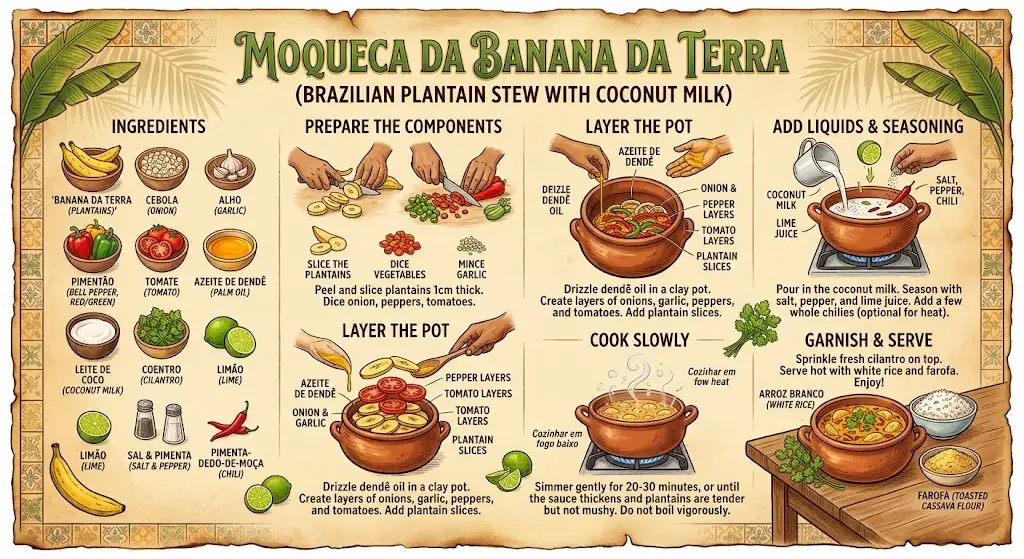
Ingredients
- Yellow ripe plantains / banana da terra
- Coconut milk
- Tomatoes
- Onion
- Garlic
- Red or yellow bell peppers
- Fresh chili or red chili flakes
- Cilantro
- Lime
- Dendê oil or another suitable cooking oil
- Salt
- Water, as needed
Method
- Sauté the aromatics: Heat the oil in a deep, heavy-bottomed pan. Add onion and garlic and cook until softened and fragrant.
- Build the vegetable base: Add the bell peppers and tomatoes. Cook until they begin to soften.
- Add the plantains: Arrange the sliced banana da terra over the vegetable mixture so the pieces remain relatively intact.
- Add the coconut broth: Pour in coconut milk and a small amount of water. Season with salt and chili.
- Simmer gently: Cover and cook over gentle heat until the plantains are tender but still hold their shape.
- Finish brightly: Add fresh lime juice and chopped cilantro shortly before serving.
Step-by-Step: How to Make Moqueca Da Banana Da Terra
The most important part of this Brazilian plantain stew is the order in which the flavors are developed. Build the aromatic foundation first, then add the vegetables, plantains, and coconut broth.
Sauté the Onion and Garlic
Start with the aromatics and cook until softened. This establishes the savory foundation of the stew.
Add Peppers and Tomatoes
Cook the vegetables until slightly tender so they begin releasing their juices and flavor.
Layer in the Plantains
Add the sliced banana da terra carefully to reduce unnecessary handling and help the pieces retain their shape.
Add Coconut Milk
Pour in the coconut milk and a little water. Season with salt and chili.
Simmer Gently
Cover and simmer until the plantains are tender while still maintaining their structure.
Finish With Lime and Cilantro
Add fresh lime juice and cilantro at the end to brighten the rich coconut broth.
Flavor Profile & Texture Science
The appeal of Moqueca Da Banana Da Terra comes from the contrast between sweet plantains, savory aromatics, creamy coconut milk, chili heat, and acidic lime.
Sweet vs. Savory Balance
Plantains contribute natural sweetness, while onion, garlic, peppers, salt, and herbs create the savory side of the dish. The result should taste balanced rather than dessert-like.
Coconut Fat Structure
The fat in coconut milk gives the broth a creamy mouthfeel and helps distribute aromatic flavors throughout the stew.
Spice Heat Calibration
Chili should complement the plantains rather than overwhelm them. Start conservatively and increase the heat gradually.
Acid Brightness From Lime
Lime juice is especially useful at the end of cooking because its acidity cuts through coconut richness and makes the finished stew taste brighter.
Creamy Yet Chunky Consistency
The ideal result is a creamy broth surrounding recognizable pieces of tender plantain. Gentle simmering is the easiest way to achieve this.
How to Adjust the Recipe
Make It Spicier
Add fresh chili or red chili flakes gradually. A small amount of smoked paprika can also add warmth, although it changes the flavor profile.
Make It Creamier
Use full-fat coconut milk and reduce the amount of added water. A gentle simmer can also concentrate the broth naturally.
Make a Lower-Fat Version
Use light coconut milk and less cooking oil. The finished stew will be less rich but can still retain the characteristic plantain, vegetable, chili, and lime combination.
Add Plant-Based Protein
Cubed tofu or cooked chickpeas can make the meal more substantial. Hearts of palm can also contribute additional texture, although they are not a direct protein replacement.
What to Serve With Brazilian Plantain Stew
White Rice
A simple serving of white rice absorbs the creamy coconut broth and makes the meal more filling.
Farofa
Toasted cassava flour adds a pleasant contrast to the soft, creamy plantains.
Brazilian Vinaigrette
A fresh tomato, onion, herb, and vinegar mixture provides acidity against the rich stew.
Toasted Cassava Flour
A little toasted cassava flour can be sprinkled over the finished stew for extra texture and to soak up some of the flavorful broth.
Grilled Vegetables
Grilled zucchini, peppers, or other simple vegetables can add freshness, color, and additional texture to the meal.
Nutrition & Health Benefits
This plant-based stew combines plantains, vegetables, coconut milk, and herbs into a satisfying meal. Its exact nutritional profile depends on the ingredients and quantities used.
| Nutrition Feature | What It Contributes |
|---|---|
| Calories | The supplied recipe estimates roughly 350–450 calories per serving, depending on oil and coconut milk amounts. |
| Fiber | Plantains contribute dietary fiber. |
| Potassium | Plantains provide potassium as part of their nutrient profile. |
| Dairy-free | The recipe contains no dairy ingredients as written. |
| Gluten-free | The stew itself is naturally gluten-free when all packaged ingredients used are gluten-free. |
| Plant-based | Plantains, coconut milk, vegetables, herbs, and optional tofu or chickpeas keep the dish vegan. |
Storage, Reheating & Meal Prep Guide
| Storage Question | Guidance |
|---|---|
| Refrigerator | Store in an airtight container for about 3–4 days. |
| Freezer | The supplied recipe suggests up to 2 months, although the plantains may soften after thawing. |
| Reheating | Reheat gently over low heat and add a small splash of water or coconut milk if needed. |
| Next-day flavor | The flavors may become more integrated after resting overnight. |
Traditional Cooking Tips for Authentic Brazilian-Inspired Flavor
Use of a Clay Pot (Panela de Barro)
Moqueca is strongly associated with the traditional panela de barro, or clay pot. A heavy-bottomed pot can be used at home if a traditional clay vessel is unavailable.
When to Add Dendê Oil
If using dendê oil, adding it after the aromatics have begun cooking can help preserve its distinctive character and vibrant color.
Toast the Aromatics
Lightly cooking onion, garlic, and other aromatics before adding the liquid helps establish a deeper savory foundation.
Simmer Rather Than Boil
A gentle simmer is especially important for this dish. Vigorous boiling can cause tender plantain pieces to break apart and make the finished stew less visually appealing.
FAQs About Moqueca Da Banana Da Terra
What is banana da terra?
Banana da terra is a Brazilian term commonly used for plantains. They are firmer than typical dessert bananas and are generally cooked before eating. In this recipe, they provide the main plant-based ingredient.
Is moqueca vegan?
Traditional moqueca can contain seafood, but this moqueca de banana da terra is a vegan adaptation made with plantains, coconut milk, vegetables, herbs, and spices.
Is moqueca spicy?
It can range from mild to moderately spicy depending on the chili used. Adjust the amount gradually to suit your preference.
Can I make it without dendê oil?
Yes. Dendê oil contributes a distinctive flavor and color, but another cooking oil can be used when it is unavailable. The final flavor will not be identical.
How ripe should plantains be?
Yellow plantains with a few black spots are the best choice for the texture described in this recipe. They are sweet enough to contribute flavor while remaining firm enough to hold together.
Can I use green plantains?
Yes, but the stew will be starchier and less sweet, and the plantains will generally remain firmer.
What does moqueca taste like?
This vegan version is creamy, savory, mildly sweet from the plantains, gently spicy, aromatic, and brightened by lime.
How long does moqueca last?
Refrigerated in an airtight container, the supplied recipe recommends about 3–4 days. Reheat gently to help preserve the plantain texture.
Final Thoughts
Moqueca Da Banana Da Terra is a flavorful way to experience the ingredients and cooking ideas associated with Brazilian moqueca in a completely plant-based format.
Creamy coconut milk, tender plantains, peppers, tomatoes, garlic, herbs, chili, and lime create a dish that is rich, bright, savory, and naturally satisfying.
The most important details are simple: choose plantains that are ripe enough to be sweet but firm enough to hold their shape, build the aromatic base before adding the liquid, and keep the stew at a gentle simmer.
Serve it with white rice, farofa, or toasted cassava flour for a comforting Brazilian-inspired meal that works beautifully for weeknight cooking, plant-based dinners, and anyone looking to discover a different side of Brazilian cuisine.
Read More :