If you love rustic Italian food, this zucchini and potato scarpaccia recipe delivers everything you want from a Tuscan vegetable bake: thin crispy edges, a tender center, golden browning, and rich olive-oil flavor. Learn the moisture-control secrets that keep scarpaccia crisp instead of soggy.
What Is Zucchini and Potato Scarpaccia? (Quick Answer)
Zucchini and potato scarpaccia is a thin, savory Tuscan vegetable flatbread made with zucchini, potatoes, flour, olive oil, and seasonings. It is associated with Viareggio in Tuscany and is traditionally much thinner than a tart or frittata. The finished dish has a golden, crisp exterior, tender center, and rustic vegetable texture.
Is Potato Traditional in Scarpaccia?
The classic Viareggio scarpaccia is generally associated with zucchini, flour, olive oil, and simple seasonings. Potatoes are best understood as a popular adaptation rather than an essential ingredient in every traditional version.
Adding thinly sliced potato changes the texture by contributing natural starch and a slightly softer, more structured center. It also makes this zucchini and potato scarpaccia easier to slice while preserving the important thin crispy edge.
Zucchini and Potato Scarpaccia Recipe
A thin, rustic Tuscan-style vegetable bake designed for crisp edges and a tender center.
Ingredients
- 500 g zucchini, sliced 2–3 mm thin
- 250 g potato, sliced very thin
- 120 g all-purpose flour
- Optional: 20 g fine cornmeal, replacing part of the flour
- 60 ml extra virgin olive oil, plus more for the pan
- 8 g salt, divided as needed
- Fresh rosemary or thyme
- Optional: 1 large egg
- Freshly ground black pepper, to taste
Flour vs. Cornmeal
| Option | Texture | Best For |
|---|---|---|
| All-purpose flour | Smooth with a softer center | Classic, simple texture |
| Fine cornmeal | More rustic with extra bite | Additional crispness |
| Flour + cornmeal | Balanced and lightly crisp | Rustic hybrid version |
Egg or Egg-Free?
An egg can provide additional binding and a slightly richer texture, but it is not necessary. For a vegan scarpaccia, simply omit the egg and judge the mixture by its consistency before spreading.
Cornmeal vs. Flour: Which Is More Authentic?
Scarpaccia exists in different versions, so there is no single ingredient list that represents every Tuscan household. Modern recipes may use flour alone, while rustic versions can incorporate cornmeal.
Flour-Only
Smoother texture and a softer, more cohesive center.
Cornmeal-Added
A slightly more rustic bite with additional textural contrast.
Hybrid
A practical balance of structure, rustic texture, and crisp edges.
The Science Behind Perfect Scarpaccia Texture
The biggest challenge in zucchini and potato scarpaccia is moisture. Zucchini contains a very high proportion of water, and heating releases that moisture. If too much water remains in the mixture, the vegetables steam instead of developing a crisp, browned surface.
Why Salting Zucchini Helps
Salting sliced zucchini before baking encourages moisture to move out of the vegetable. After a short rest, the zucchini should be squeezed or thoroughly drained before it is combined with the remaining ingredients.
What Potato Starch Does
Potato starch absorbs moisture as the mixture heats. In this adaptation, that starch can contribute to a more structured center and help the finished slices hold together.
Batter Hydration
The mixture should lightly coat the vegetables. It should look sticky and spreadable rather than pourable. If the vegetables are swimming in liquid, the final bake is much more likely to remain soft.
Why Thickness Controls Crispness
A thin layer exposes more surface area to the oven’s heat and gives moisture more opportunity to escape. A thick layer traps steam and produces a texture closer to a savory vegetable cake.
How Thin Should Scarpaccia Be?
For this style of Tuscan vegetable flatbread, aim for approximately 5–7 mm (about ¼ inch).
| Thickness | Expected Result |
|---|---|
| 5–7 mm | Thin, golden, crisp edges with a tender center |
| 8–10 mm | More substantial center and less overall crispness |
| 10–12+ mm | More likely to become soft and cake-like |
- Edges should become deep golden brown.
- The underside should feel firm and crisp.
- The center should be set rather than wet.
- The top should show scattered golden-brown spots.
- The finished slice should bend slightly without collapsing.
How to Make Zucchini and Potato Scarpaccia
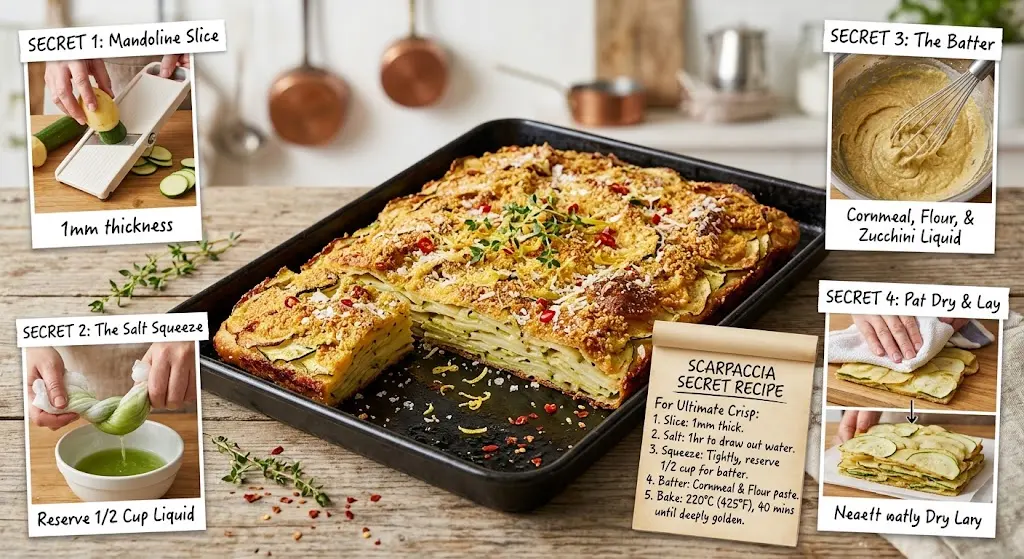
- Prep and drain the zucchini. Slice zucchini approximately 2–3 mm thin. Sprinkle with salt and let it rest for 20–30 minutes. Squeeze out as much excess moisture as practical using clean hands or a clean kitchen towel.
- Slice the potatoes very thin. Thin potato slices cook more evenly and integrate better with the zucchini. Avoid thick chunks, which can remain firm while the surrounding mixture browns.
- Mix the batter. Combine drained zucchini, potatoes, flour or flour-cornmeal blend, olive oil, herbs, pepper, and the optional egg. The vegetables should be coated rather than submerged.
- Check the consistency. The mixture should be sticky and spreadable. If it is visibly watery, add a small amount of flour. If it seems unusually dry, add a little olive oil rather than a large amount of water.
- Prepare the pan. Generously oil a 10 × 15-inch baking pan. For maximum base crispness, you can preheat the empty pan carefully before adding the mixture.
- Spread very thin. Transfer the mixture to the pan and spread evenly to approximately 5–7 mm. Avoid thick piles around the center.
- Bake at 400°F / 200°C. Bake for approximately 35–45 minutes, watching the color and texture rather than relying only on the clock.
- Look for doneness. The edges should be deep golden, the underside firm, and the center set rather than wet. If needed, continue baking until the surface and base develop the desired color.
- Finish for extra browning. For additional color, a brief broiler finish can be used. Watch continuously because the thin edges can brown quickly.
- Cool before slicing. Rest for approximately 10–15 minutes, preferably on a wire rack. This allows the structure to settle and reduces steam-softening underneath.
How to Make It Extra Crispy
1. Preheat the Pan
Heating the oiled baking surface before adding the mixture can give the bottom a faster start toward browning. Handle the hot pan carefully.
2. Use Oil in the Batter and Pan
Olive oil in the mixture contributes flavor, while generous pan oil supports browning and helps create the characteristic crisp base.
3. Finish With a Short High-Heat Blast
If the scarpaccia is nearly finished but needs more color, a modest increase in heat near the end can encourage additional browning. Watch closely.
4. Use the Broiler Carefully
A brief broiler finish can produce attractive browned spots and curled edges. Because the scarpaccia is thin, it can burn quickly.
5. Cool on a Wire Rack
Moving the finished scarpaccia to a rack allows steam to escape from underneath rather than becoming trapped between the pan and the food.
Common Mistakes That Make Scarpaccia Soggy
| Problem | Likely Cause | Better Approach |
|---|---|---|
| Soggy center | Too much zucchini moisture | Salt, rest, and thoroughly drain zucchini |
| Soft base | Steam trapped underneath | Use enough oil and cool on a wire rack |
| Dense texture | Too much flour or mixture too thick | Spread to approximately 5–7 mm |
| Undercooked potatoes | Slices are too thick | Slice potatoes very thin |
| Pale finish | Insufficient browning | Allow enough baking time and finish carefully if needed |
Variations: Vegan, Gluten-Free & Creative Twists
Vegan Scarpaccia
Skip the egg and use the vegetable, flour, olive oil, and seasoning mixture as the base. The result is a vegan zucchini scarpaccia with a more flatbread-like character.
Gluten-Free Version
Replace the all-purpose flour with a suitable gluten-free flour blend. A portion of fine rice flour or cornmeal can also be incorporated, but hydration should be adjusted according to the blend used.
Cheese Version
For a modern variation, add approximately 30–40 g grated Parmesan or Pecorino. Cheese adds savory depth and encourages additional browning.
Herb Variations
| Herb | Flavor Direction |
|---|---|
| Rosemary | Earthy and distinctly Tuscan |
| Thyme | Light and aromatic |
| Oregano | Mediterranean character |
| Basil | Fresh and summery |
Onion Addition
Very thinly sliced red or white onion adds sweetness and caramelized flavor. Keep the slices thin so they do not introduce excessive moisture or create thick spots in the scarpaccia.
Can You Make It Without Eggs or Cheese?
Yes. A simpler scarpaccia can be made without both ingredients. The main structure comes from the vegetables, flour, starch, and the moisture that remains after properly draining the zucchini.
Without Egg
More rustic and flatbread-like with a firmer bite.
Without Cheese
Lighter flavor that lets zucchini and olive oil stand out.
Flavor Boost
Use herbs, black pepper, and a finishing drizzle of good olive oil.
How to Serve Zucchini and Potato Scarpaccia
| Serving Idea | How to Serve |
|---|---|
| Antipasto | Cut into small squares with olives, roasted peppers, and marinated vegetables. |
| Side Dish | Pair with grilled vegetables, roasted chicken, or a fresh salad. |
| Brunch | Serve warm with yogurt sauce or soft cheese. |
| Dipping | Try garlic yogurt, lemon tahini, or a simple tomato relish. |
Make-Ahead & Meal Prep Strategy
Scarpaccia can be prepared ahead and reheated, although freshly baked slices will generally provide the strongest crispness.
- Double the mixture and use two pans rather than making one very thick pan.
- Cut cooled scarpaccia into individual portions for easy storage.
- Reheat in an oven or air fryer rather than the microwave when crispness matters.
- It can be served warm or at room temperature.
- Freeze individual portions with parchment between slices.
Storage, Freezing & Reheating Guide
Refrigerator Storage
Allow the scarpaccia to cool before storing. Place slices in an airtight container with parchment between layers and refrigerate for up to 3 days.
Freezing
Wrap individual slices and freeze for up to approximately 2 months for best quality. Thawed scarpaccia may be somewhat softer than freshly baked scarpaccia, but reheating can restore some of the crispness.
Oven Reheating
Reheat at approximately 400°F / 200°C for 8–10 minutes, adjusting according to slice thickness and starting temperature. A rack or perforated surface can improve airflow.
Air-Fryer Reheating
Reheat individual slices at approximately 350°F / 180°C for 4–6 minutes. Start checking early because thin edges brown quickly.
FAQs About Zucchini and Potato Scarpaccia
Why is my scarpaccia soggy?
The most common causes are excess zucchini moisture, a layer that is too thick, or insufficient browning. Salt and drain the zucchini, spread the mixture to about 5–7 mm, and bake until the edges and underside are deeply golden.
How thin should scarpaccia be?
Aim for approximately 5–7 mm (about ¼ inch). A substantially thicker layer traps more steam and produces a softer, more cake-like texture.
Can I skip the potatoes?
Yes. Zucchini-only scarpaccia is a traditional style associated with Viareggio. If you omit potatoes, pay particular attention to zucchini moisture and the final batter consistency.
Can I freeze scarpaccia?
Yes. Wrap individual slices well and freeze for up to approximately two months for best quality. Reheat in a hot oven or air fryer to restore some crispness.
Is scarpaccia supposed to be crispy?
This thin style should have golden, crisp edges and a firm base, while the center remains tender rather than wet.
Can I make scarpaccia ahead?
Yes. Prepare it a day ahead, refrigerate it properly, and reheat it in the oven or air fryer before serving.
Can I air fry scarpaccia?
An air fryer works especially well for reheating individual slices. Try approximately 350°F / 180°C for 4–6 minutes, checking early for browning.
Chef-Level Tips for Perfect Tuscan Scarpaccia
Choose Small to Medium Zucchini
Smaller, firm zucchini are often easier to work with because they tend to have a firmer texture and fewer large seeds. Very large zucchini can require more aggressive moisture management.
Slice Zucchini 2–3 mm Thin
Thin slices cook quickly and integrate into the batter without creating large wet pockets. Slice potatoes at least as thin, or thinner when practical.
Get the Salt Timing Right
Salt the sliced zucchini and let it rest for 20–30 minutes. Drain and squeeze before mixing it with flour and the other ingredients.
Use Good Extra Virgin Olive Oil
Olive oil is a major flavor component in this rustic dish. A good extra virgin olive oil contributes both flavor and richness to the finished scarpaccia.
Let It Rest Before Cutting
Give the baked scarpaccia approximately 10–15 minutes to cool slightly before slicing. This helps the structure settle and makes cleaner portions easier to achieve.
Final Secret to Crispy Zucchini and Potato Scarpaccia
The key to excellent zucchini and potato scarpaccia is not complicated: control the moisture, keep the layer thin, use enough olive oil, and bake until deeply golden.
Start with properly drained zucchini, very thin potatoes, and a batter that merely coats the vegetables. Spread it to approximately 5–7 mm and let the oven do the rest. With those fundamentals in place, you’ll get the rustic contrast that makes this Tuscan vegetable flatbread so appealing — crisp around the edges, tender in the center, and full of simple Italian flavor.
Read More :