Easy Weeknight Dinner
A hands-off oven-baked pasta with juicy roasted cherry tomatoes, tangy feta, garlic, olive oil, and fresh basil—plus practical tips, variations, storage guidance, and answers to common questions.
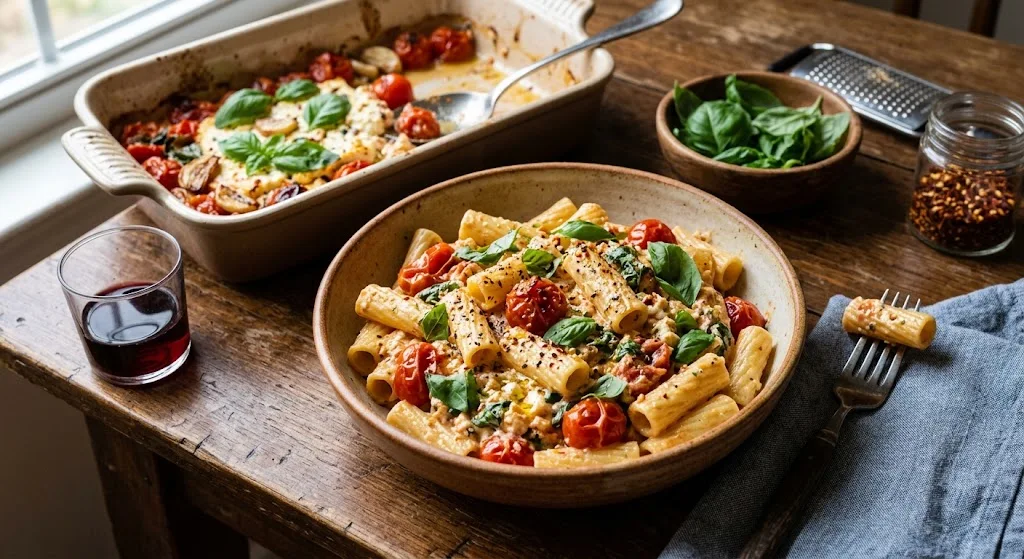
This baked feta pasta recipe combines juicy roasted cherry tomatoes, a block of tangy feta cheese, garlic, olive oil, and fresh basil to create a rich, flavorful pasta sauce with very little hands-on work. Simply roast the tomatoes and feta, cook your favorite pasta, then stir everything together for an easy weeknight dinner.
The secret to delicious feta pasta with cherry tomatoes is letting the tomatoes soften and release their juices before mixing them with the feta. A splash of reserved pasta water helps bring the sauce together, coating every piece of pasta without making the dish heavy.
Whether you’re looking for the famous viral baked feta pasta, a comforting vegetarian dinner, or a customizable one-pan pasta sauce, this recipe is easy to adapt to your taste.
Quick Answer: What Is Baked Feta Pasta?
Baked feta pasta is a simple oven-baked pasta dish made by roasting feta cheese and cherry tomatoes with olive oil and seasonings. Once the tomatoes burst and the feta softens, everything is stirred into a creamy, tangy sauce and tossed with cooked pasta, garlic, and fresh basil.
For this version, bake the tomatoes and feta at 400°F (200°C) for approximately 30–35 minutes, cook 12 ounces of pasta until al dente, and combine everything with a little reserved pasta water.
TL;DR: Baked Feta Pasta at a Glance
Main ingredients: Cherry tomatoes, block feta, pasta, olive oil, garlic, and fresh basil
Best pasta shapes: Penne, rigatoni, fusilli, rotini, or farfalle
Dietary notes: Vegetarian when made with vegetarian-friendly feta; easily adapted to gluten-free pasta
Why You’ll Love This Baked Feta Pasta Recipe
- Simple ingredients, big flavor: Cherry tomatoes become sweeter as they roast, while feta adds a salty, tangy flavor that balances the tomatoes.
- Mostly hands-off cooking: The oven does most of the work. You can boil the pasta and prepare the remaining ingredients while the tomatoes roast.
- A creamy sauce without heavy cream: Softened feta, tomato juices, olive oil, and starchy pasta water combine to make a rich-tasting sauce without requiring heavy cream.
- Easy to customize: Add baby spinach, mushrooms, olives, red pepper flakes, or cooked chicken to make the dish your own.
- Ideal for busy evenings: With around 10 minutes of preparation, this recipe is a practical option for weeknight dinners, casual gatherings, and meatless meals.
Ingredients for Baked Feta Pasta
The ingredients are straightforward, but choosing the right feta and preparing the tomatoes properly can make a noticeable difference.
Main Ingredients
| Ingredient | Amount | Purpose |
|---|---|---|
| Cherry tomatoes | 4 cups | Provide sweetness, moisture, and the base of the sauce |
| Block feta cheese | 8 ounces | Adds creamy texture, saltiness, and tang |
| Short pasta | 12 ounces | Carries the sauce and makes the dish filling |
| Extra-virgin olive oil | ⅓ cup | Helps roast the tomatoes and brings the sauce together |
| Garlic | 3 cloves, minced or finely chopped | Adds savory flavor |
| Dried oregano | ½ teaspoon | Adds an earthy, Mediterranean-inspired note |
| Red pepper flakes | ¼ teaspoon, optional | Provide gentle heat |
| Fine salt | To taste | Seasons the pasta water and balances the dish |
| Black pepper | To taste | Adds warmth and depth |
| Fresh basil | ¼ cup, chopped, plus more for garnish | Provides a fresh, aromatic finish |
| Reserved pasta water | ½–1 cup, as needed | Helps loosen and emulsify the sauce |
Which Feta Cheese Is Best?
For the most reliable results, choose an 8-ounce block of feta packed in brine, if available.
Feta made from sheep’s milk or a sheep-and-goat milk blend often has a distinctive tangy flavor. Cow’s milk feta also works, although its texture and flavor can differ by brand.
| Type of feta | What to expect | Recommendation |
|---|---|---|
| Block feta in brine | Tangy flavor and a substantial piece that softens during roasting | Best starting choice |
| Vacuum-packed block feta | Convenient and usually easy to handle | Excellent alternative |
| Pre-crumbled feta | Often drier and may contain anti-caking agents | Use if necessary, but expect a different texture |
| Reduced-fat feta | May soften differently and can produce a less rich sauce | Check the package and adjust expectations |
Can you use crumbled feta? Yes. Arrange the crumbles in a mound in the center of the tomatoes and roast as directed, checking for tenderness as you go. The finished sauce may be less cohesive than one made with a block.
Which Tomatoes Should You Use?
Cherry tomatoes are ideal because they roast quickly, release plenty of juice, and develop a concentrated sweet-and-tangy flavor.
Grape tomatoes are a good substitute. Larger tomatoes can also work, but cut them into bite-sized pieces and expect the texture and moisture level to vary.
If your tomatoes are particularly small, they may burst sooner. If they’re large or firm, they may need additional roasting time. Judge doneness by their appearance rather than relying on the clock alone.
Which Pasta Shape Works Best?
Short pasta shapes are especially practical because their ridges, curves, and openings catch the sauce.
- Penne: Holds sauce inside the tubes.
- Rigatoni: Offers a substantial bite and deep ridges.
- Fusilli or rotini: Twists capture tomato pieces and feta sauce.
- Farfalle: Provides a firm, satisfying texture.
- Orecchiette: Creates little cups that hold bits of tomato and cheese.
Spaghetti and linguine can work too. If using long pasta, toss thoroughly so the sauce coats the strands evenly.
How to Make Baked Feta Pasta
Follow these steps for a flavorful tomato-and-feta sauce with pasta that stays pleasantly firm rather than mushy.
Step 1: Preheat the Oven and Prepare the Baking Dish
Preheat your oven to 400°F (200°C).
Choose a baking dish large enough to hold the tomatoes in a reasonably even layer with the feta in the center. Add the cherry tomatoes and drizzle them with the olive oil.
Sprinkle over the oregano, black pepper, and optional red pepper flakes. Toss the tomatoes so they’re coated with oil and seasonings.
Place the block of feta in the center of the dish, surrounded by the tomatoes. Spoon a little of the seasoned oil over the cheese.
Step 2: Roast the Tomatoes and Feta
Place the baking dish in the oven and roast for 30–35 minutes, checking toward the end of the cooking time.
The tomatoes should look wrinkled and softened, with many of them split open and releasing their juices. The feta should be hot and softened, with some golden color possible around the edges.
If the tomatoes are still firm or the feta hasn’t softened sufficiently, continue roasting for a few minutes.
Step 3: Cook the Pasta
While the tomatoes and feta roast, bring a large pot of water to a boil.
Salt the water, add the pasta, and cook according to the package directions until al dente—tender but still slightly firm in the center.
Before draining, reserve at least 1 cup of pasta water. Drain the pasta without rinsing it.
That starchy water is useful for adjusting the sauce’s consistency. Start with a small amount rather than adding the entire cup at once.
Step 4: Add the Garlic and Mash the Sauce
Remove the baking dish from the oven. Add the minced garlic and stir it into the hot tomatoes and oil.
Adding the garlic after roasting helps preserve its flavor and reduces the risk of burning it during the full cooking time.
Use the back of a sturdy spoon or a fork to crush the tomatoes and break up the feta. Stir until the tomato juices, softened cheese, and olive oil form a chunky sauce.
Some small feta pieces are perfectly normal. The goal is a cohesive, spoonable sauce, not necessarily a completely smooth puree.
Step 5: Combine the Pasta and Sauce
Add the drained pasta to the baking dish and toss thoroughly.
Pour in a few tablespoons of reserved pasta water and mix again. Add more, a little at a time, until the sauce clings to the pasta without looking oily or watery.
Stir in most of the chopped fresh basil, reserving a little for serving.
Taste before adding salt. Feta is naturally salty, and the seasoning from the pasta water may already be enough.
Step 6: Garnish and Serve
Finish with the remaining fresh basil and a few turns of black pepper.
Serve the creamy baked feta pasta while warm, when the sauce is easiest to toss and distribute evenly.
For extra texture, add a few halved fresh cherry tomatoes or a light sprinkle of lemon zest just before serving.
The Secret to Creamy Baked Feta Pasta
The sauce’s texture depends on more than the cheese alone. The most important factors are the tomatoes’ moisture, the olive oil, the feta, and the starchy water from the pasta.
Use Pasta Water Gradually
Pasta water contains starch released during cooking. When added gradually and tossed with the sauce, it helps the oil and tomato juices combine more evenly.
Start with 2–3 tablespoons, toss, and add more if needed.
Adding too much water at once can make the sauce thin. If that happens, toss the pasta over low heat for a short time to help excess moisture evaporate.
Let the Tomatoes Burst
The tomatoes supply much of the sauce’s liquid. If they’re removed from the oven while still firm, the mixture may taste less developed and be harder to combine.
Look for collapsed tomatoes and visible juices in the bottom of the baking dish.
Understand Feta’s Texture
Feta is not designed to melt into a perfectly smooth, stretchy sauce. Depending on the brand, it may remain slightly grainy or retain tiny curds.
That doesn’t mean the recipe has failed. A creamy, slightly textured feta sauce is normal.
Don’t Add Heavy Cream Automatically
This recipe doesn’t require heavy cream. Before adding another dairy ingredient, mash the feta thoroughly and adjust the sauce with pasta water.
If you prefer a richer variation, you can add a small splash of cream, but it will change the original flavor and texture.
Troubleshooting: Common Baked Feta Pasta Problems
| Problem | Likely reason | How to fix it |
|---|---|---|
| Sauce is too thick | Not enough tomato juice or pasta water | Add reserved pasta water a tablespoon or two at a time |
| Sauce looks oily | Oil hasn’t combined well with the other ingredients | Toss vigorously with a small splash of pasta water |
| Feta stays crumbly | The cheese may naturally retain curds, or it hasn’t softened enough | Mash it thoroughly and mix with hot tomato juices |
| Pasta tastes bland | Pasta water wasn’t sufficiently seasoned, or the finished sauce needs balancing | Taste and add black pepper, basil, or a small amount of salt |
| Sauce tastes too salty | The feta and pasta water may contribute more salt than expected | Add unsalted cooked pasta or more unsalted tomatoes; avoid adding more cheese |
| Tomatoes are still firm | They need more roasting time | Return the dish to the oven until softened and bursting |
| Garlic tastes bitter | It may have browned or burned | Add fresh garlic after roasting next time |
| Pasta is mushy | It was overcooked before mixing with the sauce | Cook to al dente and drain promptly |
Easy Baked Feta Pasta Variations
One reason this recipe is so adaptable is that the roasted tomato-and-feta mixture works with many additional ingredients. For the best texture, add ingredients at the stage when they can cook properly without watering down the sauce.
Baked Feta Pasta with Spinach
Add a few handfuls of baby spinach to the hot sauce after removing the baking dish from the oven. Stir until the leaves wilt, then add the pasta.
Spinach contributes color and a mild, earthy flavor. Avoid adding a large quantity of wet spinach without draining it, as excess moisture can thin the sauce.
Baked Feta Pasta with Mushrooms
Slice mushrooms and roast them with the tomatoes, making sure the baking dish isn’t overcrowded. Mushrooms release moisture as they cook, so allow enough space for evaporation.
This variation adds a savory, earthy flavor and makes the dish feel heartier.
Spicy Baked Feta Pasta
Increase the red pepper flakes or add a small amount of finely chopped fresh chili before roasting.
Start conservatively and adjust at the end. The feta’s saltiness and the tomatoes’ sweetness help balance the heat.
Lemon and Herb Feta Pasta
Add a little fresh lemon zest and chopped parsley or oregano just before serving.
The citrus brightens the sauce and offsets the richness of the olive oil and cheese. Add lemon juice sparingly so the dish doesn’t become overly acidic.
Baked Feta Pasta with Olives
Stir in sliced Kalamata olives after roasting. Their briny flavor complements the feta and tomatoes, but they also add salt, so taste before seasoning further.
Baked Feta Pasta with Chicken
For a more protein-rich meal, serve the pasta with cooked chicken breast or thigh meat. Season the chicken separately and cook it thoroughly before combining it with the finished pasta.
You can also serve grilled chicken alongside the pasta, which keeps the sauce’s texture consistent and makes it easier to control the portion of each ingredient.
Gluten-Free Baked Feta Pasta
Use your preferred gluten-free pasta and follow the package’s cooking instructions closely. Some gluten-free pasta becomes soft more quickly than wheat pasta.
Reserve the cooking water before draining, but add it gradually because the starch content and sauce-thickening behavior can differ among pasta types.
Vegan Baked Feta Pasta
Choose a plant-based feta-style cheese that is specifically suitable for baking. Plant-based alternatives differ considerably in how they soften, melt, and blend with tomato juices.
The recipe’s flavor and texture will depend on the product used, so follow its package guidance and adjust the sauce as needed.
Baked Feta Pasta Without Olive Oil
You can reduce the olive oil, but the sauce may be less rich and the tomatoes may be more prone to sticking or drying.
Try using a smaller amount of oil and monitor the tomatoes while roasting. If the dish becomes too dry, add a little reserved pasta water when mixing.
What to Serve with Baked Feta Pasta
This tomato-and-feta pasta has a bold, tangy flavor, so simple sides usually work best.
| Side dish | Why it pairs well |
|---|---|
| Garlic bread | Provides a crisp, buttery contrast and helps scoop up extra sauce |
| Green salad | Adds freshness and crunch |
| Roasted broccoli | Offers a savory vegetable side with lightly browned edges |
| Roasted zucchini | Complements the Mediterranean-inspired flavors |
| Grilled chicken | Adds protein without changing the sauce |
| Steamed green beans | Keep the meal balanced with a simple vegetable |
| Cucumber salad | Provides a cool, refreshing contrast |
For a simple dinner, serve a bowl of baked feta pasta with a green salad. For a larger gathering, add garlic bread and roasted vegetables.
Tips for the Best Results
- Choose a baking dish with enough room. Crowded tomatoes can release moisture without roasting as effectively.
- Use block feta when possible. It is a reliable starting point for the classic preparation.
- Cook the pasta just until al dente. It will absorb some sauce as you toss and serve it.
- Reserve pasta water before draining. This is much easier than trying to recreate it after the water is gone.
- Add garlic at the right time. Stirring it into the hot roasted mixture avoids exposing it to the full roasting period.
- Wait to adjust salt until the end. Feta, olives, and salted pasta water can contribute plenty.
- Add fresh herbs near serving time. Basil tastes fresher and more aromatic when it isn’t cooked for an extended period.
- Serve soon after mixing. The sauce thickens as it cools, so you may need a splash of water when reheating leftovers.
How to Store and Reheat Baked Feta Pasta
Refrigerating Leftovers
Allow the pasta to stop steaming heavily, then transfer it to a shallow, airtight container and refrigerate promptly.
Reheating on the Stovetop
Place the leftovers in a skillet over low to medium-low heat. Add a small splash of water and stir gently until heated through.
The extra moisture helps loosen the sauce as the feta and pasta warm up. Avoid high heat, which can make the mixture dry out before the center is hot.
Reheating in the Microwave
Place a portion in a microwave-safe bowl and add a teaspoon or two of water. Cover loosely and heat in short intervals, stirring between intervals until evenly hot.
For food safety, check that leftovers reach 165°F.
Can You Freeze Baked Feta Pasta?
You can freeze it, but the texture may change. Cooked pasta can soften, and the feta sauce may become less cohesive after thawing.
If freezing, cool the pasta promptly, divide it into airtight freezer-safe portions, and label them with the date. USDA guidance says frozen leftovers can generally be stored for 3–4 months for best quality. Thaw in the refrigerator and reheat thoroughly, adding water to loosen the sauce.
For the best texture, refrigerating and eating the pasta within a few days is usually preferable to freezing it.
Is Baked Feta Pasta Vegetarian?
It can be vegetarian, but check the feta’s ingredients. Some cheeses are made with animal-derived rennet, while others use microbial or vegetarian rennet.
If you follow a vegetarian diet, look for feta clearly labeled vegetarian or check with the manufacturer.
The recipe is not automatically vegan because traditional feta is made from dairy. Use a suitable plant-based feta-style cheese for a vegan adaptation.
Is Baked Feta Pasta Healthy?
Whether this dish fits your eating goals depends on your portion size, the ingredients you choose, and what you serve alongside it.
The recipe includes tomatoes, which contribute nutrients and color; pasta, which supplies carbohydrates; and feta and olive oil, which contribute fat. Feta also provides protein and calcium, although its sodium content can be substantial.
To adapt the dish to your preferences:
- Add spinach, mushrooms, zucchini, or broccoli for more vegetables.
- Serve with a simple salad.
- Use a measured amount of olive oil rather than pouring freely.
- Add cooked chicken, beans, or another suitable protein if desired.
- Choose whole-wheat or gluten-free pasta according to your needs.
Nutrition information will vary by feta brand, pasta type, amount of olive oil, and serving size. For an accurate calorie and nutrient estimate, calculate the ingredients actually used and divide the totals by the number of portions served rather than relying on a generic figure.
Frequently Asked Questions About Baked Feta Pasta
Can I use crumbled feta instead of a block?
Yes. Crumbled feta can be used, although it may produce a less cohesive sauce. Arrange it in the center of the tomatoes and check its texture during roasting. Mash it into the tomato juices after baking.
Why isn’t my baked feta pasta creamy?
Feta doesn’t always melt into a completely smooth sauce. Mash the softened cheese and tomatoes together, then add reserved pasta water gradually while tossing. This helps the sauce coat the pasta more evenly.
Can I make baked feta pasta without cherry tomatoes?
Yes. Grape tomatoes are a close substitute. Larger tomatoes can also be used if cut into smaller pieces, but they may release moisture differently and change the sauce’s consistency.
Can I use canned tomatoes?
You can experiment with canned tomatoes, but the result will differ from the classic roasted cherry tomato version. Canned tomatoes often contain more liquid, and their texture and sweetness vary. Drain excess liquid if needed and monitor the sauce as it cooks.
Should I cover the baking dish?
Usually, no. Leaving the dish uncovered allows moisture to evaporate and helps the tomatoes roast. Covering it traps steam and can make the mixture more watery.
Can I make baked feta pasta ahead of time?
You can roast the tomato-and-feta mixture ahead and refrigerate it promptly, then cook the pasta closer to serving time. Reheat the sauce gently, add freshly cooked pasta, and loosen it with pasta water or a little water if needed.
For the best texture, avoid fully mixing the pasta with the sauce too far in advance because the pasta will continue absorbing moisture.
Can I add garlic before roasting?
You can, but finely minced garlic may brown or burn during a long roast. Adding it after roasting lets the residual heat release its flavor without exposing it to the entire cooking time.
Can I make baked feta pasta spicy?
Absolutely. Increase the red pepper flakes or add fresh chili. Start with a small amount and taste the finished sauce before adding more.
What protein can I add to baked feta pasta?
Cooked chicken, chickpeas, or white beans can work well. Add fully cooked chicken when tossing the pasta, or stir drained and rinsed chickpeas or beans into the warm sauce so they heat through.
How long does baked feta pasta last in the fridge?
Store it in an airtight container and use it within 3–4 days, following USDA guidance for most cooked leftovers. Refrigerate promptly and reheat to 165°F.
Can I freeze baked feta pasta?
Yes, although the pasta may soften and the feta sauce may change texture after thawing. Freeze in airtight portions, thaw safely, and add a little water when reheating to help restore a creamy consistency.
Is baked feta pasta the same as Finnish feta pasta?
The modern baked feta pasta trend is associated with uunifetapasta, a Finnish baked feta-and-tomato pasta dish popularized by food creator Jenni Häyrinen. Recipes vary, but the central idea is similar: roast feta with tomatoes, then mix the softened cheese and tomato juices with pasta.
What is the best way to keep baked feta pasta from drying out?
Reserve pasta water and add it gradually while mixing. If the pasta sits before serving, the sauce may thicken as the noodles absorb liquid. A small splash of water during reheating usually helps.
Final Thoughts
This easy baked feta pasta recipe with cherry tomatoes turns a handful of everyday ingredients into a tangy, savory dinner with minimal hands-on effort. Roasted tomatoes provide the sauce’s sweetness, feta adds its distinctive salty flavor, and starchy pasta water helps bring everything together.
For the best result, choose a block of feta, roast the tomatoes until they burst, cook the pasta al dente, and adjust the sauce gradually with reserved pasta water. Finish with fresh basil and serve while warm.
Once you have the basic method down, make it your own with spinach, mushrooms, olives, extra chili, or a protein of your choice. It’s a flexible recipe that works for a simple weeknight meal or a relaxed dinner with friends.
Read More :