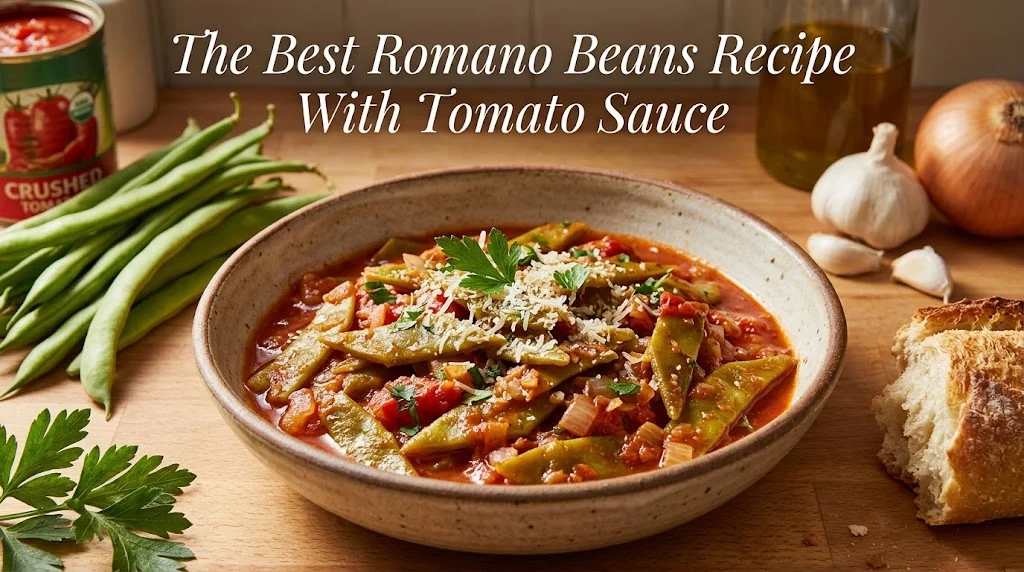
This Romano beans recipe with tomato sauce turns fresh flat Italian green beans into a tender, flavorful dish with garlic, tomatoes, olive oil, and fresh herbs. Slow-braised until perfectly tender, these Romano green beans make an easy Mediterranean side dish for weeknight dinners, summer meals, or a rustic Italian-style table.
To make Romano beans in tomato sauce, trim fresh Romano beans and cut very long pods into manageable pieces. Gently bloom minced garlic in olive oil, add crushed or fresh tomatoes, then add the beans. Cover and simmer gently for about 25–30 minutes, removing the lid near the end so the sauce can reduce.
The beans are ready when a fork slides into them easily while they still hold their shape. The entire process takes about 40 minutes and produces tender, flavorful braised Romano beans without requiring complicated ingredients.
Romano Beans in Garlic Tomato Sauce
A simple Italian-inspired preparation built around tender flat beans, tomatoes, garlic, and extra virgin olive oil.
Ingredients
- Fresh Romano beans, trimmed and cut into 2–3-inch pieces
- Crushed or fresh tomatoes
- Extra virgin olive oil
- Fresh garlic, minced
- Salt and black pepper, to taste
- Fresh basil or parsley, chopped
- Optional: red pepper flakes or coriander
Method
- Trim and cut the Romano beans.
- Bloom garlic gently in olive oil.
- Add tomatoes and lightly season.
- Stir in the beans and partially cover.
- Simmer gently for 25–30 minutes.
- Uncover near the end to reduce the sauce.
- Finish with fresh herbs and a drizzle of olive oil.
What Are Romano Beans? And Why Are They Perfect for This Dish?
Romano beans, often called flat Italian green beans, are wide, flat pods that are thicker and meatier than standard green beans. Depending on the market, you may also see them labeled Italian flat beans or Romano pole beans.
The main difference between Romano vs. regular green beans is their shape and texture. Regular green beans are slender and tend to cook relatively quickly, while Romano beans are broader and have a substantial bite that works especially well with gentle braising.
Their structure makes them excellent for a Romano beans recipe with tomato sauce. They have enough substance to withstand a longer simmer while absorbing the flavors of garlic, tomatoes, olive oil, and herbs.
| Feature | Romano Beans | Regular Green Beans |
|---|---|---|
| Shape | Wide and flat | Thin and round |
| Texture | Meaty and tender when braised | More delicate and crisp |
| Cooking | Well suited to slow simmering | Usually cooks faster |
| Flavor | Mild, earthy, slightly sweet | Fresh, grassy, vegetal |
Why This Romano Beans Recipe Works
A great Romano beans recipe with tomato sauce depends more on technique than on a long ingredient list. The combination of gentle heat, moisture, aromatic garlic, and gradual sauce reduction gives the beans their characteristic tender texture and concentrated flavor.
Four Techniques That Make the Difference
- Gentle braising: Low heat gives thicker Romano beans enough time to soften evenly.
- Garlic blooming: Gently cooking garlic in olive oil creates a fragrant flavor base.
- Moisture control: Keeping the pan partially covered helps the beans cook without drying out.
- Final reduction: Removing the lid near the end concentrates the tomato sauce and helps it cling to the beans.
Tomatoes contribute acidity and moisture to the dish, while the long, gentle cooking process is what primarily drives the beans toward tenderness. The final uncovered simmer concentrates the sauce rather than leaving the finished dish watery.
Ingredients & Smart Substitutions
- Fresh Romano beans: Choose firm, bright green pods without obvious blemishes or signs of drying.
- Tomatoes: Fresh tomatoes create a lighter summer flavor; canned crushed or whole tomatoes provide a richer, consistent sauce.
- Garlic: Essential for the aromatic base of the dish.
- Extra virgin olive oil: Use a good-quality oil because its flavor remains noticeable in this simple recipe.
- Basil or parsley: Basil adds sweetness while parsley gives the finished dish freshness.
- Red pepper flakes or coriander: Optional additions for heat or a Mediterranean/Middle Eastern variation.
Can I Use Regular Green Beans?
Yes. Regular green beans are a practical substitute when Romano beans aren’t available. Because they are thinner, begin checking them 5–10 minutes earlier than Romano beans to prevent overcooking.
Can I Use Frozen Romano Beans?
Yes. Thaw them first and pat away excess moisture. Frozen beans may release more water into the pan, so the final uncovered reduction may need a few extra minutes.
Can I Use Canned Beans?
Canned beans are not the preferred choice because they are already cooked and can become too soft during a long braise. If you use them, add them much later in the process and concentrate on reducing the tomato sauce.
Step-by-Step Foolproof Method
Prep the Romano Beans Properly
Rinse the fresh Romano beans under cool running water. Trim the stem ends with a knife or snap them off by hand. If the pods are particularly long, cut them into pieces about 2–3 inches long.
Blanching is generally unnecessary for this slow-braised preparation. If the beans are especially thick or mature, a quick 2–3 minute blanch can shorten the later cooking time.
Build the Garlic Tomato Base
Heat extra virgin olive oil in a wide pan over medium-low heat. Add minced garlic and gently cook for about 30–45 seconds, just until fragrant.
Avoid browning the garlic heavily. Add crushed or fresh tomatoes, stir well, and season lightly with salt and pepper.
Slow Simmer for Perfect Tenderness
Add the prepared Romano green beans to the tomato sauce and stir until coated. Cover the pan partially and maintain a gentle simmer.
Keep the lid mostly on during the first 15–20 minutes to retain moisture and help the beans soften. Continue cooking for approximately 25–30 minutes total, depending on the thickness and maturity of the beans.
During the final 5–10 minutes, remove the lid so excess moisture can evaporate and the sauce can thicken.
Finish and Adjust the Flavor
Test a bean with a fork. It should be easy to pierce while still holding its shape. If the sauce is watery, continue cooking uncovered for a few additional minutes.
Turn off the heat and stir in chopped basil or parsley. Finish with a small drizzle of fresh olive oil and let the dish rest for about 5 minutes before serving.
How to Get Perfect Romano Bean Texture Every Time
| What You Want | What to Do |
|---|---|
| Tender beans | Maintain a gentle low to medium-low simmer. |
| Beans that hold their shape | Stop cooking once a fork pierces them easily but they don’t collapse. |
| Thick tomato sauce | Remove the lid during the final 5–10 minutes. |
| Avoid mushiness | Check early and avoid extending the cooking time unnecessarily. |
| Avoid tough beans | Use gentle heat and allow enough time for the thicker pods to soften. |
Common Mistakes to Avoid
Cooking at Too High a Heat
A rapid boil can make the cooking process uneven. Keep the sauce at a gentle simmer instead.
Adding Too Much Water
Excess liquid dilutes the tomato flavor and makes the final reduction take longer. Add only enough additional liquid when truly needed.
Over-Salting Early
Tomato sauce becomes more concentrated as it reduces. Season lightly at first and make the final adjustment near the end.
Keeping the Lid On the Entire Time
Trapped steam can leave the sauce too thin. Uncover the pan toward the end so excess moisture can evaporate.
Using a Pan That Is Too Small
A wide pan gives the beans room to cook evenly and provides more surface area for the sauce to reduce.
Overcooking the Beans
Once the beans are tender and hold their shape, stop cooking. Extended cooking can turn their texture soft and fragile.
Flavor Variations: Italian, Mediterranean & Middle Eastern
Classic Southern Italian
Use crushed tomatoes, extra virgin olive oil, garlic, and plenty of fresh basil. Finish with parsley and another small drizzle of olive oil.
Spicy Cherry Tomato
Replace crushed tomatoes with halved cherry tomatoes and add red pepper flakes for gentle heat and a chunkier sauce.
Grilled Then Stewed
Lightly grill the flat beans before adding them to the tomato sauce. The light char contributes a smoky, rustic character.
Middle Eastern Inspired
Add a small amount of coriander and allspice, then finish with fresh herbs. Serve over rice for a satisfying variation.
Lemon & Basil
Add finely grated lemon zest and extra basil just before serving for a brighter, fresher summer-style finish.
Romano Beans vs. Other Flat Beans
| Bean | Shape & Texture | Cooking Consideration | Best Use Here |
|---|---|---|---|
| Romano beans | Wide, flat, meaty | Excellent for slow simmering | Ideal |
| Regular green beans | Thin, round, delicate | Cook faster | Good substitute |
| Runner beans | Long, broad, firmer | May require additional preparation | Possible substitute |
Romano beans are particularly well suited to this preparation because their substantial texture can withstand a longer simmer while absorbing the flavors of the garlic tomato sauce.
What to Serve With Romano Beans
🥖 Crusty Bread
Serve with warm Italian-style bread for soaking up the flavorful tomato sauce.
🍚 Basmati Rice
Spoon the beans and sauce over rice for a simple plant-based meal.
🍗 Grilled Chicken or Lamb
The rich tomato-braised beans provide a flavorful vegetable component alongside grilled proteins.
🫒 Mezze Platter
Add the beans to a spread with hummus, olives, herbs, and other Mediterranean favorites.
🐟 Italian-Style Dinner
Pair with roasted potatoes, grilled fish, or pasta for a comforting home-style meal.
Nutrition & Dietary Benefits
This recipe uses a short list of whole-food ingredients, including Romano beans, tomatoes, garlic, herbs, and olive oil. The finished dish can fit comfortably into a variety of eating patterns.
- Fiber: Romano beans contribute dietary fiber and help make the dish satisfying.
- Plant-based: The basic preparation contains no meat, eggs, or dairy.
- Gluten-free: The ingredients in the basic recipe are naturally gluten-free.
- Mediterranean-inspired: Olive oil, vegetables, garlic, tomatoes, and fresh herbs form the foundation.
Nutrition varies with serving size, tomato brand, and especially the amount of olive oil used, so calorie estimates should be calculated from the exact ingredients used.
Make-Ahead, Storage & Freezing Guide
| Storage Method | Recommended Approach |
|---|---|
| Refrigerator | Store cooked beans in an airtight container for up to 4 days. |
| Freezer | Freeze in freezer-safe containers for up to about 2 months for best quality. |
| Stovetop reheating | Warm gently over low heat; add a small splash of water if needed. |
| Meal prep | Pair portions with rice or another protein for convenient lunches or dinners. |
Freezing is possible, although the beans may become somewhat softer after thawing. For the best texture, cool the dish, freeze it in airtight freezer-safe portions, thaw it safely in the refrigerator, and reheat gently.
FAQs About Romano Beans Recipe With Tomato Sauce
Do I need to blanch Romano beans first?
Usually, no. For this slow-braised preparation, the beans can cook directly in the tomato sauce. If your Romano beans are unusually thick or mature, a brief 2–3 minute blanch can help shorten the cooking time.
How long should I simmer Romano beans?
Start with approximately 25–30 minutes over low heat. Cooking time varies according to the size and maturity of the beans. Use the fork test to determine when they’re ready.
Can I use canned tomatoes?
Yes. Canned crushed or whole tomatoes work very well and provide a consistent base for the garlic tomato sauce.
Can I substitute regular green beans?
Yes. Regular green beans are thinner and cook faster, so begin checking them approximately 5–10 minutes earlier.
Are Romano beans healthy?
Romano beans provide fiber and other nutrients while fitting naturally into vegetable-forward meals. The overall nutritional profile of this dish also depends on the amount of olive oil and other ingredients used.
Can I freeze Romano beans in tomato sauce?
Yes. Freeze cooled portions in airtight, freezer-safe containers for about 2 months for best quality. Expect the beans to be somewhat softer after thawing and reheating.
Pro Chef Tips for Maximum Flavor
- Use high-quality olive oil: Because the ingredient list is simple, the flavor of the olive oil is noticeable in the finished dish.
- Don’t rush the simmer: Gentle cooking gives the thicker Romano beans enough time to soften while absorbing the tomato sauce.
- Let the beans rest: Allow the finished dish to sit for approximately 5–10 minutes off the heat so the sauce can settle around the beans.
- Finish with raw olive oil: A small drizzle immediately before serving adds aroma, richness, and a glossy finish.
- Use a wide pan: More surface area makes it easier to control evaporation and reduce the sauce without overcooking the beans.
Final Thoughts
This Romano beans recipe with tomato sauce shows how a handful of simple ingredients can become a deeply satisfying vegetable dish. Fresh Romano green beans, tomatoes, garlic, olive oil, and herbs create a combination that’s rustic enough for a weeknight dinner yet special enough for a shared table.
The secret is simple: gentle simmering, careful garlic blooming, controlled moisture, and final sauce reduction. Follow those techniques and the beans should become tender without losing their characteristic shape.
Serve them with crusty bread, rice, grilled chicken, lamb, fish, or as part of a Mediterranean-style spread. Once you master the basic method, this versatile braised Romano beans recipe can become a dependable way to turn fresh flat beans into a flavorful meal.
Read More :