Need a potato starch substitute right now? From cornstarch and arrowroot to tapioca starch and rice flour, these practical swaps help you thicken sauces, create crispy coatings, and improve gluten-free baking without guesswork.
Quick Answer: What Can I Use Instead of Potato Starch?
The best potato starch substitute depends on what you are cooking. Cornstarch is an easy choice for sauces and gravies, rice flour is useful for crispy frying, tapioca starch works well in gluten-free baking, and arrowroot powder is excellent when you want a smooth, glossy sauce.
Not every substitute is a true 1:1 replacement, so the correct ratio depends on the ingredient and the job it needs to perform.
Quick Conversion Chart: Potato Starch Replacement Guide
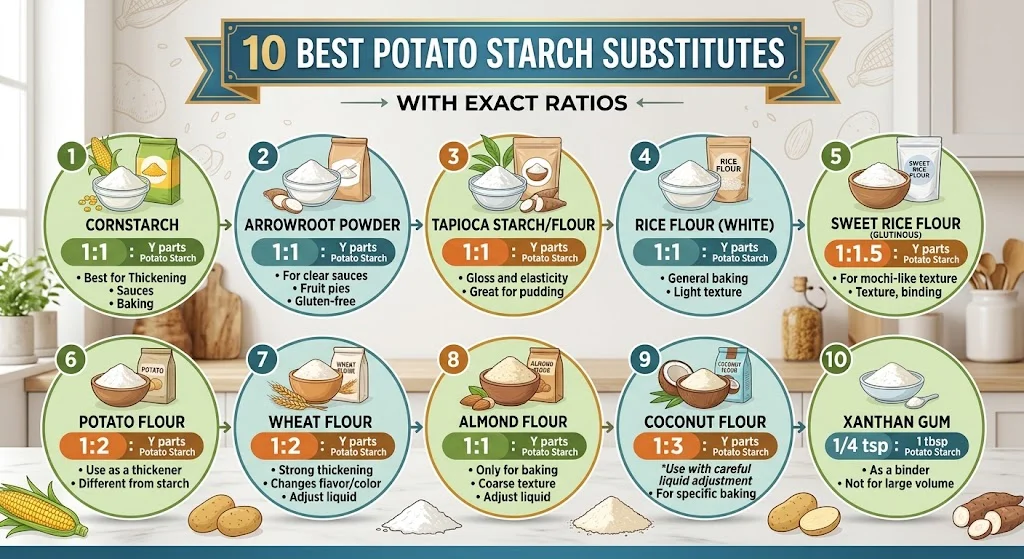
When you’re in a hurry, this potato starch substitute ratio chart makes the decision easier. Some alternatives can be used close to 1:1, while concentrated thickeners such as xanthan gum require dramatically smaller amounts.
| Substitute | Starting Ratio | Best For | Texture | Gluten-Free | Low-Carb |
|---|---|---|---|---|---|
| Cornstarch | 1:1 | Sauces, gravies, soups | Smooth, slightly glossy | Yes | No |
| Tapioca Starch | Start around 2:1 | Baking, pie fillings | Chewy, glossy | Yes | No |
| Arrowroot Powder | 1:1 | Clear sauces, stir-fries | Glossy, smooth | Yes | No |
| Rice Flour | Adjust to recipe | Frying, crispy coatings | Light, crisp | Yes | No |
| Potato Flour | Use cautiously | Bread, baking | Dense, earthy | Yes | No |
| Xanthan Gum | About ¼ tsp per tbsp | Low-carb sauces | Thick, stable | Yes | Yes |
| Guar Gum | About ¼ tsp per tbsp | Cold sauces, dressings | Very thick | Yes | Yes |
| Coconut Flour | Recipe-specific | Low-carb baking | Dense, highly absorbent | Yes | Yes |
A 1:1 substitution works best with similar starches, such as cornstarch or arrowroot in many sauces. Xanthan gum, guar gum, psyllium, and coconut flour are much more concentrated or absorbent, so they should not automatically be substituted by volume.
For most sauce thickeners, make a slurry by mixing the starch with a small amount of cold liquid before adding it to the hot dish. This helps prevent lumps.
What Is Potato Starch and Why Does It Work So Well?
Potato starch is a fine white powder extracted primarily from the starch component of potatoes. Unlike potato flour, it has a relatively neutral flavor and is valued for its ability to thicken liquids and contribute crispness to fried foods.
How Potato Starch Thickens
When potato starch is heated with water or another liquid, its starch granules absorb moisture and swell. This process, known as gelatinization, creates a thicker texture.
Potato starch is particularly useful when a recipe needs quick thickening and a relatively smooth finish.
Why It Makes Food Crispy
Potato starch can create a light coating that becomes crisp when exposed to frying heat. This makes it useful for dishes such as fried chicken, seafood, and other crisp-coated foods.
Why It Creates a Glossy Finish
Potato starch can produce a smooth, glossy appearance in sauces. That makes it particularly useful for stir-fries, glazes, and other dishes where appearance matters.
Cornstarch is a versatile sauce thickener, tapioca starch adds chewiness and stretch, arrowroot can create a particularly glossy finish, and rice flour is useful when crispness is the priority.
10 Best Potato Starch Substitutes
The right substitute for potato starch depends on your recipe, desired texture, and dietary requirements. Here are the most useful alternatives.
1. Cornstarch
Cornstarch is one of the easiest potato starch replacements for everyday cooking. In many sauces, gravies, and soups, you can start with the same volume.
Best uses: Sauces, gravies, soups, stir-fries.
Avoid when: The recipe specifically depends on potato starch’s frying or baking characteristics.
Mix cornstarch with cold liquid before adding it to hot food to create a smooth slurry.
2. Tapioca Starch
Tapioca starch comes from cassava and is especially useful in gluten-free baking. It can provide elasticity, softness, and a slightly chewy texture.
Best uses: Gluten-free bread, pie fillings, baked goods.
Avoid when: You need a dry, delicate crispy coating without chewiness.
3. Arrowroot Powder
Arrowroot powder is a useful potato starch substitute when you want a smooth, shiny sauce. It works particularly well in stir-fries and clear sauces.
Best uses: Stir-fry sauces, gravies, glazes, clear soups.
Pro tip: Add it toward the end of cooking and avoid prolonged vigorous boiling.
4. Rice Flour
Rice flour is particularly useful when the goal is a light, crisp fried coating. It is less suitable as a direct thickener for sauces.
Best uses: Fried chicken, seafood, tempura-style coatings.
Pro tip: Combine with another starch when you want to fine-tune crispness and structure.
5. Potato Flour
Potato flour is not the same ingredient as potato starch. It is made from whole potatoes and has a stronger potato character and greater water absorption.
Best uses: Bread and selected baked goods.
Avoid when: You need a neutral, clear sauce thickener.
6. Coconut Flour
Coconut flour is extremely absorbent and should not be treated as a direct starch replacement. It is better suited to recipes designed around coconut flour.
Best uses: Low-carb baked goods.
Avoid when: Thickening sauces or trying to duplicate potato starch’s texture.
7. Xanthan Gum
Xanthan gum is dramatically more concentrated than potato starch. Only a small amount may be needed to thicken a sauce or provide structure.
Too much xanthan gum can create a slimy or gummy texture. Add a tiny amount, whisk thoroughly, and allow the mixture time to hydrate before adding more.
8. Guar Gum
Guar gum is another powerful thickener. It can be especially useful in cold applications such as dressings and sauces.
Pro tip: Use a very small amount and distribute it evenly to prevent lumps.
9. Psyllium Husk
Psyllium husk is a fiber rather than a conventional starch. It absorbs water and can provide structure in gluten-free bread.
Avoid when: You need a clear sauce or a crisp frying coating.
10. Almond Flour
Almond flour is not a direct starch substitute, but it can replace some of the bulk provided by starch in certain low-carb baked recipes.
Avoid when: You need to thicken a clear sauce or gravy.
Best Potato Starch Substitute Based on Cooking Method
Best for Frying: Rice Flour or Cornstarch
For a light, crunchy coating, rice flour is a useful choice. Cornstarch is another popular option and can produce a crisp exterior.
Avoid: Xanthan gum and coconut flour for conventional crispy coatings.
Best for Baking: Tapioca Starch
Tapioca starch can add softness, elasticity, and chew to gluten-free baked goods. Potato flour may also work in recipes specifically designed to accommodate its higher water absorption.
Low-carb option: Xanthan gum or psyllium may provide structure, but they are not direct starch replacements.
Best for Sauces & Gravies: Cornstarch or Arrowroot
Cornstarch is a practical everyday thickener, while arrowroot is useful when a glossy finish is important.
Best for Soups & Stews: Cornstarch
Cornstarch works well for many soups and stews. Add it near the end and avoid prolonged boiling after thickening.
Best for Tempura & Asian Recipes
Rice flour can create crisp coatings, while tapioca starch can contribute chew and shine. Arrowroot can work as a sauce thickener when added toward the end of cooking.
Best for Pie Fillings & Custards
Tapioca starch can create a glossy pie filling, while cornstarch is commonly used in custards and creamy fillings.
Potato Starch Substitutes for Specific Recipes
For Fried Chicken
Choose rice flour for a light, crisp coating or cornstarch for a crunchy exterior. Pat the chicken dry before coating to reduce surface moisture.
For Stir-Fry Sauce
Arrowroot powder is useful when you want a glossy finish, while cornstarch is a straightforward everyday alternative.
For Gluten-Free Bread
Tapioca starch can provide elasticity and softness. Depending on the formula, psyllium husk or xanthan gum may also be used for structure.
For Gravy
Cornstarch is a practical choice for smooth gravy. Arrowroot can be used when you want a shinier finish.
For Custard
Cornstarch is a dependable option for many custards. Tapioca can work but may create a somewhat different, more elastic texture.
For Korean or Chinese Recipes
For crispy coatings, consider rice flour or tapioca starch. For sauces, arrowroot or cornstarch can provide the desired thickening effect.
Diet-Based Potato Starch Alternatives
Keto-Friendly Alternatives
Traditional potato starch, cornstarch, and tapioca starch are starches and are generally not appropriate for strict keto diets. Xanthan gum and guar gum can provide thickening with much less carbohydrate.
Paleo Alternatives
Arrowroot powder and tapioca starch are commonly used grain-free alternatives in paleo-style cooking. Always check the specific requirements of the dietary framework you follow.
Whole30 Options
Ingredient rules can change, so check the current Whole30 guidance for your specific situation. Arrowroot is commonly used as a cooking thickener in Whole30-style recipes.
Low-Carb Thickeners
For low-carb sauces, xanthan gum or guar gum can provide significant thickening with very small quantities. For baking, almond flour is a separate flour-based ingredient rather than a direct potato starch replacement.
“Gluten-free,” “keto,” “paleo,” and “low-carb” are not interchangeable terms. Always check the complete ingredient label and the requirements of the diet you are following.
Potato Starch vs. Potato Flour: What’s the Difference?
Potato starch and potato flour are not interchangeable ingredients. Using one in place of the other can significantly change the texture, flavor, and liquid requirements of a recipe.
Texture Difference
Potato starch is fine, light, and silky. Potato flour is made from whole potatoes and is heavier and more absorbent. In baked goods, potato flour can add body; in a clear sauce, it can make the result heavier and less refined.
Flavor Difference
Potato starch has a relatively neutral flavor, while potato flour has a more noticeable potato character.
Liquid Absorption
Potato flour absorbs more moisture than potato starch. Therefore, a direct 1:1 swap may not produce the same consistency.
Are They Interchangeable?
- Bread and baked goods: Sometimes, depending on the formula.
- Clear sauces: Usually not a good substitute.
- Frying: Not an equivalent replacement for potato starch.
| Feature | Potato Starch | Potato Flour |
|---|---|---|
| Texture | Light and silky | Heavier and denser |
| Flavor | Relatively neutral | Mild potato flavor |
| Liquid Absorption | Moderate | High |
| Best Uses | Sauces, frying, baking | Bread and baking |
| Gluten-Free | Yes | Yes |
Understanding Starch Behavior in Cooking
Gelatinization and Heat
Different starches thicken at different temperatures and respond differently to prolonged heating. Potato starch is known for relatively quick thickening, while cornstarch generally requires adequate heat to gelatinize.
Glossy vs. Opaque Finish
- Potato starch and arrowroot: Can produce a clear, glossy finish.
- Cornstarch: Usually creates a smooth but somewhat less transparent finish.
- Flour-based ingredients: Generally create more opaque sauces.
Why Some Substitutes Turn Cloudy
The appearance of a sauce depends on the thickener, concentration, cooking time, and other ingredients. If transparency is important, choose a starch known for producing a clear finish and avoid prolonged cooking after thickening.
Freeze-Thaw Stability
Some starch-thickened foods can separate after freezing and thawing. The exact result depends on the recipe, starch concentration, and reheating method. Xanthan gum can improve stability in some applications because it behaves differently from traditional starches.
Why Some Substitutes Break Down When Overheated
Extended high heat can weaken the thickening structure of some starches. Arrowroot, for example, generally performs best when added toward the end rather than subjected to prolonged boiling.
Shelf Life & Storage Differences
Proper storage matters because powdered ingredients can absorb moisture and develop lumps, especially in humid kitchens.
Ingredients That Absorb Moisture Easily
- Coconut flour
- Potato flour
- Psyllium husk
Keep these ingredients tightly sealed and away from humidity.
Ingredients That May Clump
- Cornstarch
- Arrowroot powder
- Tapioca starch
Store powders in airtight containers in a cool, dry pantry and keep water away from the package.
| Substitute | Moisture Sensitivity | Clumping Risk | Storage Tip |
|---|---|---|---|
| Cornstarch | Moderate | Moderate | Keep tightly sealed |
| Tapioca Starch | Moderate | Low to moderate | Store dry |
| Arrowroot Powder | Moderate | Moderate | Use an airtight container |
| Coconut Flour | High | Moderate | Protect from humidity |
| Xanthan Gum | Low to moderate | Low | Keep sealed and dry |
| Guar Gum | Moderate | Moderate | Keep tightly sealed |
Common Mistakes When Replacing Potato Starch
1. Using the Wrong Ratio
Not every ingredient follows a 1:1 rule. Cornstarch can often be used 1:1 in sauces, while gums and highly absorbent flours require much smaller or recipe-specific amounts.
2. Adding Dry Starch Directly to Hot Liquid
Dry starch can form stubborn lumps when added directly to hot liquid. Make a cold slurry first whenever appropriate.
3. Over-Thickening
Strong thickeners such as xanthan gum and guar gum can quickly make a sauce too thick. Add them gradually.
4. Using Wheat Flour in a Gluten-Free Recipe
Wheat flour is not an appropriate gluten-free replacement. If gluten avoidance is essential, use a certified gluten-free ingredient appropriate for the recipe.
5. Ignoring Liquid Adjustments
Coconut flour and potato flour absorb substantially more liquid than a pure starch. Treat them as different ingredients rather than assuming a direct volume swap.
Potato Starch Substitute Troubleshooting Guide
Why did my sauce turn gluey?
You may have used too much thickener, particularly xanthan gum or guar gum. Start with a smaller quantity and increase gradually.
Why wasn’t my coating crispy?
Excess moisture, an unsuitable flour, or an overly thick coating can reduce crispness. For frying, rice flour or cornstarch is generally more suitable than gums or coconut flour.
Why did my sauce become cloudy?
Some thickeners naturally produce an opaque finish. If clarity matters, arrowroot powder can be a useful choice.
Why did my sauce separate after freezing?
Some starch-thickened sauces can release water during freezing and thawing. Recipe composition and reheating technique both matter. A stabilizer such as xanthan gum may improve stability in certain recipes.
Why does my sauce taste or feel gritty?
The thickener may not have been dispersed properly, or too much flour-based ingredient may have been used. Make a slurry where appropriate and give fiber-based ingredients enough time to hydrate.
When Should You Not Substitute Potato Starch?
Some recipes are carefully formulated around the specific behavior of potato starch. Replacing it can change the final texture significantly.
Delicate Custards
Use a thickener designed for the custard formula rather than assuming every starch will behave identically.
Certain Gluten-Free Breads
Gluten-free bread formulas often depend on a carefully balanced combination of starches, flours, and binders. Replacing one ingredient may require adjusting several others.
Clear Sauces
If transparency and shine are essential, flour-based alternatives are usually poor choices. Arrowroot can be a better option.
Freeze-Thaw Sensitive Recipes
If the finished food must be frozen and reheated, test the substitute before making a large batch because different thickeners can behave differently after thawing.
FAQs About Potato Starch Substitutes
Can I use cornstarch instead of potato starch?
Yes. Cornstarch is one of the easiest potato starch substitutes for sauces, gravies, and soups. A 1:1 starting ratio often works, although the final texture and appearance can differ slightly.
Is tapioca starch the same as potato starch?
No. Tapioca starch comes from cassava, while potato starch comes from potatoes. Tapioca tends to provide more chew and elasticity, making it particularly useful in gluten-free baking.
Which substitute makes food the crispiest?
Rice flour and cornstarch are useful choices for crispy fried coatings. Rice flour is especially useful when you want a light, delicate crunch.
What is the healthiest potato starch substitute?
There is no single healthiest option for every person. The right choice depends on the recipe and your nutritional needs. For low-carb cooking, xanthan gum can provide thickening with very little carbohydrate, while arrowroot or tapioca may be useful in grain-free cooking.
Can I freeze sauces thickened with substitutes?
Some can be frozen successfully, but traditional starch-thickened sauces may separate after thawing. If freeze-thaw stability is important, test the completed recipe before preparing a large batch.
How much cornstarch equals 1 tablespoon of potato starch?
In many sauce and gravy applications, start with 1 tablespoon of cornstarch for 1 tablespoon of potato starch. Adjust based on the thickness you need.
Why did my sauce turn cloudy?
The thickener may naturally produce an opaque finish, or it may have been overcooked. For a clearer, glossier result, arrowroot powder is often a useful alternative.
Final Decision: Which Potato Starch Substitute Should You Use?
The best potato starch replacement depends on what your recipe needs most: crispness, thickening power, gloss, structure, or low carbohydrate content.
| Situation | Substitute to Consider | Why |
|---|---|---|
| Easy everyday swap | Cornstarch | Often works as a simple 1:1 starting point in sauces and gravies. |
| Crispy coating | Rice flour | Creates a light, crisp fried coating. |
| Gluten-free baking | Tapioca starch | Adds elasticity and chew. |
| Low-carb thickening | Xanthan gum | Very powerful, so only a small amount is needed. |
| Glossy gravy or sauce | Arrowroot powder | Can create a smooth, shiny finish. |
| Asian-style crispy dishes | Rice flour or tapioca | Useful for crisp coatings and texture. |
The key is to match the substitute to the job. A starch that works beautifully in gravy may perform poorly in frying, while a powerful gum can thicken a low-carb sauce but cannot reproduce the crisp texture of potato starch.
Read More :