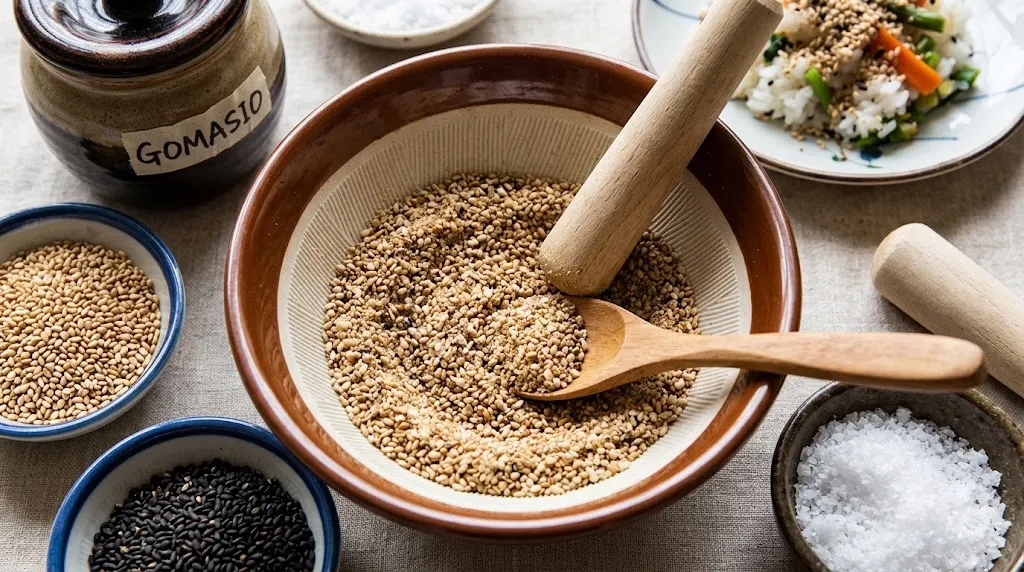
This easy gomasio recipe shows you how to make a fragrant, nutty Japanese sesame seasoning using just toasted sesame seeds and sea salt. With the classic 15:1 sesame-to-salt ratio, homemade gomasio is light, crunchy, versatile, and especially delicious on rice, vegetables, noodles, eggs, tofu, and grain bowls.
Quick Answer: What Is Gomasio?
Gomasio (gomashio) is a traditional Japanese seasoning made from toasted sesame seeds and salt. A classic preparation uses approximately 15 parts sesame seeds to 1 part salt. The sesame is gently toasted, lightly crushed, and combined with salt to create a coarse, aromatic seasoning.
Easy Homemade Gomasio Recipe
Nutty, lightly salty Japanese sesame seasoning made with two simple ingredients.
Ingredients
- 15 parts white sesame seeds
- 1 part fine sea salt
Equipment
- Dry skillet or frying pan
- Mortar and pestle or suribachi
- Measuring scale or spoons
- Clean airtight storage jar
How to Make Gomasio
What Is Gomasio?
Gomasio, also spelled gomashio, is a traditional Japanese sesame seasoning made from toasted sesame seeds and a small amount of salt. It is commonly sprinkled over rice, vegetables, grains, and other everyday foods.
The Japanese words behind the name are “goma,” meaning sesame, and “shio,” meaning salt. Both gomasio and gomashio refer to essentially the same type of sesame-and-salt condiment.
Unlike a seasoning made primarily from salt, gomasio is dominated by sesame. Toasting and lightly crushing the seeds gives the mixture its characteristic nutty aroma, texture, and savory depth.
Why Gomasio Is More Than Just Sesame Salt
At first glance, gomasio looks like a simple combination of sesame and salt. Its appeal comes from the way the ingredients work together: toasted sesame contributes aroma and texture, while salt provides seasoning.
Gomasio is also associated with macrobiotic cooking, where sesame-based seasonings have traditionally been used alongside grains, vegetables, and other plant foods.
The Traditional 15:1 Sesame-to-Salt Ratio Explained
The classic preparation described in many gomasio recipes uses approximately 15 parts sesame seeds to 1 part salt. This produces a seasoning that tastes distinctly of toasted sesame rather than simply tasting salty.
| Ratio | Flavor Profile | Best For |
|---|---|---|
| 10:1 | Saltier and more pronounced | Foods that need stronger seasoning |
| 15:1 | Balanced and traditionally sesame-forward | Everyday gomasio |
| 20:1 | Milder and more sesame-forward | Those wanting less salt per sprinkle |
In a 15:1 blend, approximately 1/16 of the mixture by weight is salt. That makes the blend substantially less salt-dense than using salt by itself, although the actual sodium contribution depends on the amount consumed.
Ingredients Breakdown: Quality Impacts Flavor
White vs. Black Sesame Seeds
White sesame seeds have a mild, nutty flavor and are commonly used for classic gomasio. Black sesame seeds have a deeper, earthier flavor and produce a darker seasoning.
Fine vs. Coarse Sea Salt
Fine sea salt distributes easily throughout the mixture. Coarse salt can also work, but it should be crushed sufficiently so the seasoning distributes evenly.
What About Iodized Salt?
Iodized salt can be used if that is what you have. Some cooks prefer non-iodized sea salt because they find its flavor better suited to the delicate toasted sesame aroma.
Organic vs. Conventional Sesame
Either can work. Because sesame is the dominant ingredient, choose fresh, good-quality seeds with a clean aroma and no stale or rancid smell.
Quick 5-Minute Home Method
1. Dry Roast Sesame
Place white sesame seeds in a dry skillet over medium-low heat. Stir or shake the pan frequently for approximately 3–5 minutes, watching closely because sesame can burn quickly.
2. Add Salt
Remove the seeds from the heat and let them cool slightly. Add the measured sea salt according to your chosen sesame-to-salt ratio.
3. Lightly Grind
Use a mortar and pestle or suribachi. Crush the seeds gently rather than turning them into a fine powder. A mixture of crushed and partially whole seeds creates the characteristic coarse texture.
4. Store Correctly
Cool the finished gomasio completely before placing it in an airtight container. Keep it away from heat, sunlight, and moisture.
Traditional Japanese Suribachi Method
For a more traditional preparation, use a suribachi, a Japanese mortar with ridged interior surfaces designed to help grind ingredients.
Slow Roasting
Toast the sesame gently over low to medium-low heat. The goal is a fragrant, lightly toasted seed rather than a dark or heavily roasted one.
Grinding Motion
Use a circular, pressing motion in the suribachi. This gradually breaks the seeds and releases their aroma without requiring aggressive processing.
Texture Control
Stop grinding when the mixture looks slightly sandy and some sesame seeds remain recognizable.
Aroma
Gentle grinding helps preserve the fresh toasted aroma and gives you much better control over the final texture than extended high-speed processing.
The Science of Toasting Sesame Seeds
Toasting changes the aroma and flavor of sesame through heat-driven reactions. As the seeds warm, their natural oils become more aromatic and the characteristic roasted, nutty notes become more pronounced.
| What to Watch | What It Means |
|---|---|
| Light golden color | The seeds are developing toasted flavor. |
| Nutty aroma | A useful visual and sensory cue that the seeds are nearly ready. |
| Light popping | Sesame is heating and should be watched closely. |
| Dark brown or black spots | Potential burning; remove from heat immediately. |
A practical target is medium-low heat. Exact pan temperatures vary considerably, so visual and aroma cues are more useful than relying on a precise surface-temperature number.
Grinding & Texture Control
Coarse vs. Fine Grind
A classic gomasio texture is coarse and sandy. Some sesame seeds remain whole while others are lightly crushed. This gives the seasoning both aroma and texture.
Why Over-Grinding Can Be a Problem
Extended grinding can release more sesame oil and make the mixture increasingly oily or paste-like. Stop once the desired coarse texture is reached.
Mortar vs. Blender
| Method | Advantages | Watch Out For |
|---|---|---|
| Suribachi | Excellent control over texture and traditional preparation | Takes a little longer |
| Mortar & pestle | Easy to control and produces a coarse grind | Requires manual effort |
| Spice grinder | Fast and convenient | Easy to over-grind; use short pulses |
Common Mistakes That Ruin Gomasio
🔥 Burning the Seeds
High heat can turn sesame bitter. Use moderate heat and keep the seeds moving.
⚙️ Grinding Into Paste
Over-processing releases too much oil. Stop when the seeds are lightly crushed.
🧂 Using Too Much Salt
Too much salt changes the character of the seasoning. Measure carefully, especially when following a 15:1 ratio.
💧 Storing It Warm
Warm sesame can create condensation inside a sealed container. Cool completely before storing.
Is Gomasio Healthy?
Gomasio can be a useful way to add toasted sesame flavor while using considerably less salt than straight salt by weight. However, it should be viewed as a seasoning rather than a health supplement.
| Feature | What Gomasio Provides |
|---|---|
| Sesame seeds | Fat, protein, fiber, minerals, and plant compounds |
| Salt | Sodium and seasoning |
| Texture | Crunch and roasted sesame character |
| Flavor | Nutty, toasted depth with moderate saltiness |
Sesame Seed Minerals
Sesame seeds contain minerals including calcium, magnesium, iron, and zinc. The nutritional contribution depends on portion size and the rest of the diet.
Sodium Considerations
Because traditional gomasio contains much more sesame than salt, a sprinkle generally contains less salt than the same amount of straight salt. It is still important to account for the sodium it contributes.
Why Gomasio Can Replace Some Straight Salt
Gomasio changes more than saltiness. Toasted sesame contributes nutty aroma, crunch, and roasted flavor, so it can make a dish taste more developed without relying entirely on plain salt.
Flavor Density
Sesame adds another layer of flavor, while salt provides seasoning. This makes gomasio particularly useful as a finishing condiment.
Portion Awareness
Because the sesame seeds are visible and textured, gomasio is naturally different from a fine salt shaker. Still, the amount you sprinkle determines how much sodium you consume.
15 Creative Ways to Use Gomasio
Sprinkle over warm rice.
Try broccoli, carrots, or green beans.
Add nutty roasted flavor.
Use as a textured finishing seasoning.
Excellent on scrambled or boiled eggs.
Sprinkle over greens and vegetables.
Try soba, ramen, or rice noodles.
Pairs well with delicate seafood.
Creates a savory sesame topping.
Use as a finishing garnish.
Add a savory contrast where appropriate.
Combine with oil and other seasonings.
Finish baked or pan-seared tofu.
Great with grains and vegetables.
Toss warm nuts with a small pinch.
Gomasio Flavor Pairing Chart
| Category | Good Pairings | Why It Works |
|---|---|---|
| Vegetables | Broccoli, spinach, zucchini, sweet potatoes, asparagus | Sesame adds roasted depth to mild vegetables. |
| Grains | White rice, brown rice, quinoa, barley, soba | One of the easiest ways to use gomasio. |
| Proteins | Fish, chicken, tofu, tempeh, eggs | The nutty seasoning complements savory proteins. |
| Oils | Olive, sesame, avocado oil | Creates a simple finishing drizzle or dressing. |
| Acids | Lemon and yuzu | Bright acidity balances the rich sesame flavor. |
Popular Gomasio Variations
Black Sesame Gomasio
Use black sesame seeds for a darker color and stronger, earthier flavor.
Nori Gomasio
Add finely crumbled nori for a seaweed-forward variation. This moves the seasoning closer to the broader world of Japanese rice toppings.
Herb-Infused Gomasio
Dried herbs such as thyme or parsley can create a savory variation for roasted vegetables and salads.
Citrus Gomasio
A small amount of dried citrus zest adds brightness and pairs especially well with fish and steamed vegetables.
Spicy Gomasio
Add a pinch of chili flakes for a hotter finishing seasoning.
Gomasio vs. Furikake
| Feature | Gomasio | Furikake |
|---|---|---|
| Main ingredients | Sesame seeds + salt | Often sesame, seaweed, and additional seasonings |
| Flavor | Simple, nutty, toasted | Usually more layered and savory |
| Texture | Coarse sesame texture | Varies depending on ingredients |
| Typical use | Everyday seasoning and finishing | Rice and other Japanese dishes |
Gomasio vs. Regular Salt
| Feature | Gomasio | Regular Salt |
|---|---|---|
| Main component | Mostly sesame seeds with a small amount of salt | Primarily sodium chloride |
| Flavor | Nutty, toasted, moderately salty | Primarily salty |
| Texture | Coarse and slightly crunchy | Usually fine or crystalline |
| Nutrients | Sesame contributes nutrients such as fat, protein, fiber, and minerals | Provides sodium; nutritional profile varies by salt type |
Store-Bought vs. Homemade Gomasio
Homemade
- Freshly toasted aroma
- Complete control over the salt ratio
- Texture can be customized
- Easy to make in small batches
Store-Bought
- Convenient and ready to use
- Useful when you do not have time to toast sesame
- Ingredient labels can vary by brand
- Check the sodium content and ingredient list
How to Store Gomasio Properly
Airtight Container
Store cooled gomasio in a clean, dry, airtight glass jar. Limiting exposure to air helps preserve the toasted sesame aroma.
Pantry vs. Refrigerator
A cool, dry pantry is suitable for short-term storage. If your kitchen is particularly warm or humid, refrigeration can help maintain freshness.
Avoid Moisture
Keep moisture out of the container. Always use a dry spoon and never seal the mixture while it is still warm.
| Storage Method | Practical Guideline | Best Practice |
|---|---|---|
| Cool pantry | Use within a few weeks for best aroma | Keep tightly sealed and away from heat |
| Refrigerator | Can help extend freshness | Protect carefully from moisture and condensation |
Can You Freeze Gomasio?
Yes. Freezing is possible, although it is usually unnecessary for a small homemade batch. The main consideration is protecting the mixture from moisture and condensation.
Best Freezing Method
- Place completely cooled gomasio in an airtight freezer-safe container.
- Remove as much excess air as practical.
- Seal tightly before freezing.
- Allow the container to warm toward room temperature before opening it, reducing the chance of condensation entering the seasoning.
Batch Making & Meal Prep Strategy
How Much to Make
A small batch is usually the best approach because freshly toasted sesame has the strongest aroma. For example, you can make a batch using 150 g sesame seeds and 10 g salt for a simple 15:1 by-weight ratio.
Weekly Prep
If you use gomasio frequently, making a smaller weekly or biweekly batch keeps the toasted flavor fresh.
Gift Jar Idea
Homemade gomasio makes a simple edible gift. Fill a small clean jar and add serving suggestions such as rice, vegetables, tofu, eggs, and noodles.
Labeling
Write the preparation date on the jar. This makes it easier to track freshness, especially when making multiple batches.
Troubleshooting Guide
Why Is My Gomasio Bitter?
Over-roasted sesame is the most likely cause. Use medium-low heat, stir frequently, and remove the seeds as soon as they become lightly golden and fragrant. Severely burned sesame is best discarded rather than trying to correct the flavor.
Why Does It Taste Too Salty?
Too much salt changes the balance of the mixture. Add more toasted sesame gradually until the seasoning returns to the desired sesame-forward flavor.
Why Is My Gomasio Not Aromatic?
The sesame may be under-toasted, stale, or ground too aggressively. Fresh sesame and gentle roasting usually produce the strongest aroma.
How Do I Fix Over-Salted Gomasio?
Toast additional sesame seeds separately, cool them completely, then mix them gradually into the salty batch. Continue until the flavor becomes balanced again.
Frequently Asked Questions About Gomasio
What is gomasio made of?
Gomasio is made primarily from toasted sesame seeds and salt. A classic preparation uses a high sesame-to-salt ratio, often around 15:1, followed by gentle crushing.
What is the sesame-to-salt ratio?
A commonly used traditional ratio is 15 parts sesame seeds to 1 part salt. Some preparations use 10:1 or 20:1 depending on the desired saltiness.
Is gomasio healthy?
Gomasio can help you use less salt than you would when seasoning directly with salt, while sesame contributes nutrients such as fats, protein, fiber, and minerals. It still contains sodium, so portion size matters.
Does gomasio need refrigeration?
Not necessarily for short-term storage if it is kept completely dry in an airtight container in a cool pantry. Refrigeration can be useful in warm or humid environments.
Can I use pre-toasted sesame?
Yes. Pre-toasted sesame can be convenient, although freshly toasted seeds generally provide a stronger aroma. Watch carefully if reheating them because already-toasted sesame can burn quickly.
Is gomasio the same as furikake?
No. Gomasio is a simple sesame-and-salt seasoning. Furikake is a broader category of Japanese seasoning that can include sesame, seaweed, dried fish, sugar, and other ingredients.
How long does homemade gomasio last?
For best flavor, make relatively small batches and use them within a few weeks. Storage life depends on freshness of the sesame, moisture exposure, temperature, and storage conditions. Discard it if the sesame develops an off or rancid smell.
Can I use black sesame seeds?
Yes. Black sesame gomasio has a darker appearance and a more pronounced earthy flavor. You can use the same 15:1 ratio.
Final Thoughts
At its simplest, gomasio combines toasted sesame seeds with salt to create a seasoning that is nutty, aromatic, lightly crunchy, and remarkably versatile.
The classic 15:1 sesame-to-salt ratio keeps sesame at the center of the flavor, while gentle roasting and coarse grinding create the texture that makes homemade gomasio so satisfying.
Use it on rice, vegetables, noodles, tofu, eggs, potatoes, salads, fish, and grain bowls. Make a small batch, keep it dry and airtight, and adjust the sesame-to-salt ratio to suit your cooking.
Once you have a jar of homemade Japanese sesame salt ready to go, even a simple bowl of rice can become much more flavorful.
Read More :