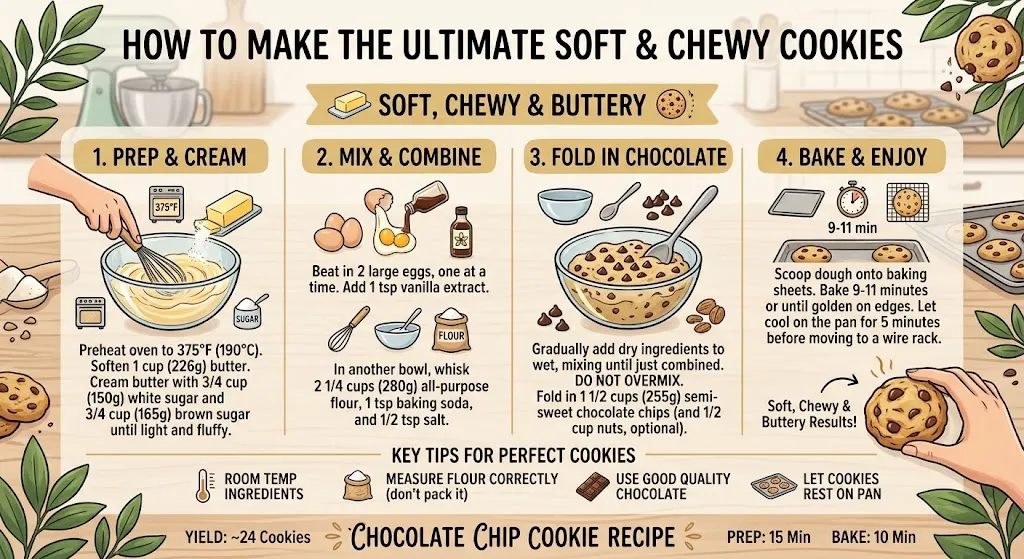
Make classic chocolate chip cookies with golden edges, soft chewy centers, plenty of melted chocolate, and practical tips for controlling spread, texture, storage, and baking results.
If you want a reliable chocolate chip cookie recipe with golden edges, soft centers, and plenty of melted chocolate, this version gives you a clear starting point. It uses everyday ingredients and focuses on the details that most affect cookie texture.
The recipe is built around softened butter, brown sugar, granulated sugar, all-purpose flour, eggs, vanilla, and semisweet chocolate chips. You’ll also learn how to control spreading, choose chocolate, chill the dough, freeze portions, troubleshoot common problems, and adapt the cookies for different diets and occasions.
Quick Answer
For soft, chewy chocolate chip cookies, use room-temperature butter, a mix of brown and granulated sugar, accurately measured flour, and plenty of chocolate. Bake at 350°F for about 10–12 minutes, removing the cookies when the edges are set but the centers still look slightly soft.
Chocolate Chip Cookie Recipe at a Glance
| Detail | This Recipe |
|---|---|
| Yield | About 24 cookies |
| Prep time | 20 minutes |
| Chill time | 30 minutes |
| Bake time | 10–12 minutes |
| Total time | About 1 hour |
| Oven temperature | 350°F |
| Texture | Chewy centers, lightly crisp edges |
| Difficulty | Beginner |
| Best chocolate | Semisweet chips or chopped chocolate |
| Storage | Airtight container for several days |
Why This Chocolate Chip Cookie Recipe Works
A great cookie isn’t about adding more ingredients. It comes from getting the balance of fat, sugar, flour, eggs, and leavening right.
Brown sugar brings moisture and a deeper caramel note, while granulated sugar encourages spreading and crisp edges. Chilling the dough gives the butter time to firm up, which helps control excessive spreading.
The result is a cookie that’s chewy without being doughy, crisp around the edges, and soft enough in the center to stay enjoyable after cooling.
What Each Ingredient Does
- Unsalted butter: Provides richness, tenderness, and the main buttery flavor.
- Light brown sugar: Adds moisture, chew, and caramel-like flavor.
- Granulated sugar: Helps create crisp edges and balanced sweetness.
- Egg: Adds moisture, structure, and richness.
- Vanilla extract: Rounds out the butter and chocolate flavors.
- All-purpose flour: Provides the structure that holds the cookie together.
- Baking soda: Helps the cookies spread and brown.
- Fine salt: Keeps the sweetness from tasting flat.
- Semisweet chocolate chips: Add familiar chocolate flavor without making the cookie overly sweet.
Classic Soft & Chewy Chocolate Chip Cookies
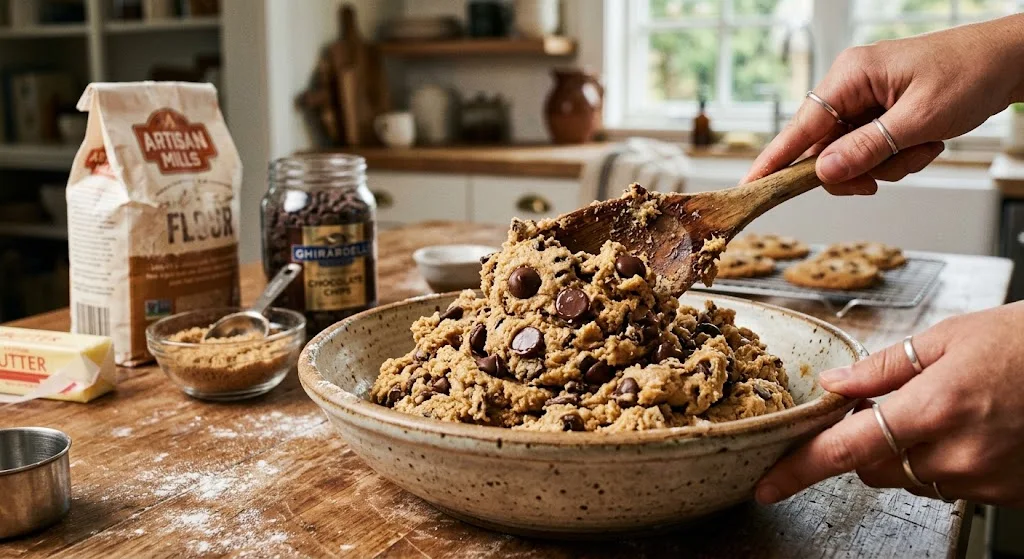
Golden edges, soft centers, and generous pockets of semisweet chocolate.
Ingredients
- 1 cup (226 g) unsalted butter, softened
- 1 cup (213 g) packed light brown sugar
- 1/2 cup (100 g) granulated sugar
- 2 large eggs, room temperature
- 2 teaspoons vanilla extract
- 2 3/4 cups (330 g) all-purpose flour
- 1 teaspoon baking soda
- 3/4 teaspoon fine salt
- 2 cups (340 g) semisweet chocolate chips
- Flaky salt, optional, for finishing
Equipment
- Large mixing bowl
- Hand mixer or stand mixer
- Measuring cups and spoons
- Kitchen scale, optional but recommended
- Cookie scoop
- Two baking sheets
- Parchment paper
- Wire cooling rack
Instructions
Prepare the Oven and Baking Sheets
Heat the oven to 350°F. Line two baking sheets with parchment paper. Don’t place fresh dough on a hot baking sheet because the extra heat can increase spreading.
Cream the Butter and Sugars
Add the softened butter, brown sugar, and granulated sugar to a large bowl. Beat for about 2–3 minutes, until creamy and lighter in texture. Scrape down the bowl once during mixing.
Add the Eggs and Vanilla
Beat in the eggs one at a time. Add the vanilla and mix just until incorporated. Avoid beating the mixture for a long time after adding the eggs.
Mix the Dry Ingredients
In a separate bowl, whisk together the flour, baking soda, and salt. This distributes the baking soda and salt before they enter the dough.
Combine the Dough
Add the dry mixture to the butter mixture in two or three additions. Mix on low speed, or stir by hand, until no obvious streaks of dry flour remain. Don’t keep mixing after the flour disappears.
Add the Chocolate
Fold in the chocolate chips. Reserve a small handful if you want extra chocolate pieces pressed onto the tops before baking.
Chill the Dough
Cover the bowl and refrigerate the dough for 30 minutes. This makes the dough easier to portion and helps limit excessive spreading.
Portion the Cookies
Scoop approximately 2 tablespoons of dough per cookie. Place the dough balls about 2 inches apart on the prepared baking sheets. For a bakery-style appearance, make the dough balls slightly taller rather than pressing them flat.
Bake
Bake for approximately 10–12 minutes, rotating the pan halfway through if your oven browns unevenly. The edges should look set and lightly golden while the centers still look somewhat soft.
Cool
Leave the cookies on the baking sheet for 5 minutes. Transfer them to a wire rack and cool further. They continue setting from residual heat after removal.
How to Get Soft, Chewy Centers
Soft centers depend more on baking time and ingredient balance than on one secret ingredient.
The biggest mistake is leaving the cookies in the oven until the middle looks completely done. By then, the finished cookies may become firm after cooling.
- Use brown sugar as a major part of the sweetener.
- Measure flour accurately.
- Keep the dough chilled before baking.
- Don’t flatten the dough too much.
- Bake until the edges are set.
- Remove the cookies while the centers still look slightly soft.
- Let them finish setting on the baking sheet.
- Store them in an airtight container after they cool.
How to Get Crisp Edges
If you prefer a cookie with more crunch around the outside, make a few small adjustments rather than changing the entire recipe.
- Bake the cookies toward the upper end of the suggested time.
- Let the edges become more golden.
- Use slightly smaller dough portions.
- Flatten the dough balls a little before baking.
- Cool the cookies completely before judging their crispness.
- Store crisp cookies separately from very soft cookies.
- Avoid adding unnecessary liquid ingredients.
Should You Chill Chocolate Chip Cookie Dough?
Chilling is useful when you want more control over cookie spread.
Cold dough takes longer to melt in the oven, giving the cookie structure more time to develop before the butter fully spreads.
You don’t need to chill every chocolate chip cookie dough. Some recipes are specifically formulated for baking immediately. The important point is to follow the formula you’re using rather than adding or removing chilling time randomly.
Use No Chill When
- You need cookies quickly.
- The dough already feels firm.
- Your recipe was designed for immediate baking.
Chill When
- The dough feels soft or greasy.
- Your cookies spread too much.
- You want easier portioning.
- You prefer a thicker cookie.
- Your kitchen is particularly warm.
How to Choose Chocolate Chips
Chocolate choice can change the entire personality of a cookie. Semisweet chocolate chips are the easiest starting point because their sweetness balances the brown-sugar dough.
| Chocolate | Result |
|---|---|
| Semisweet chips | Balanced, classic flavor |
| Bittersweet chocolate | Deeper, less sweet flavor |
| Milk chocolate | Sweeter and creamier |
| Dark chocolate | Stronger cocoa contrast |
| Chocolate chunks | Larger melted pockets |
| Chocolate wafers | Wide, thin pools of melted chocolate |
| Mini chips | More even chocolate throughout each bite |
How to Measure Flour Correctly
Flour is one of the easiest ingredients to accidentally over-measure. Scooping directly into a packed bag of flour can give you substantially more flour than intended, producing thicker, drier cookies.
Best Method
If you don’t have a scale:
- Stir the flour briefly to loosen it.
- Spoon it into a dry measuring cup.
- Let the flour mound slightly.
- Sweep a straight edge across the top.
- Don’t press the flour down.
Why Are My Chocolate Chip Cookies Flat?
Flat cookies usually come from a combination of dough temperature, butter condition, flour quantity, and baking conditions.
Don’t immediately add a large amount of flour. That can fix spreading while creating a dry cookie.
If Your Cookies Spread Too Much
- Chill the remaining dough.
- Check that the flour was measured correctly.
- Make sure the butter wasn’t melted.
- Bake on a cool baking sheet.
- Test one cookie before baking the rest.
If Your Cookies Barely Spread
- Check whether you accidentally added too much flour.
- Make sure the butter wasn’t unusually cold.
- Avoid making extremely tall dough balls.
- Confirm your baking soda measurement.
Why Are My Chocolate Chip Cookies Dry?
Dry cookies usually need a closer look at flour quantity and baking time. A cookie can look perfectly done in the oven and still become much firmer while cooling.
Common Causes
- Too much flour
- Overbaking
- Very small dough portions
- Too little fat
- Incorrect ingredient scaling
- An oven running hotter than its display indicates
Why Are My Chocolate Chip Cookies Not Spreading?
A cookie that stays almost spherical usually has too much structure relative to its fat and sugar.
- Excess flour
- Very cold dough
- Dough portions that are too tall
- An unusually cool oven
- Incorrect ingredient scaling
- Too little butter
Before changing the formula, bake one portion at the recipe’s recommended temperature. If it still doesn’t spread, check the flour measurement and oven temperature.
Small-Batch Chocolate Chip Cookies
Sometimes you don’t need two dozen cookies. A small batch makes sense when you’re baking for one or two people, testing a new flavor, or avoiding leftover dessert.
Instead of randomly dividing every ingredient, use a tested small-batch formula whenever possible. Eggs are especially difficult to divide accurately without weighing them.
For very small quantities, a dedicated single-cookie recipe is usually more reliable than guessing at half or quarter measurements.
Brown Butter Chocolate Chip Cookies
Brown butter gives chocolate chip cookies a toasted, nutty flavor.
To make brown butter, melt unsalted butter in a light-colored saucepan over medium heat. As it cooks, the milk solids sink and begin turning golden brown.
Swirl the pan often and watch closely. Once the butter smells nutty and the solids are golden, remove it from the heat.
Flavor Pairings
- Dark chocolate
- Semisweet chocolate
- Flaky salt
- Pecans
- Walnuts
- Espresso powder
Gluten-Free, Dairy-Free, and Eggless Options
Dietary substitutions require more care than simply removing an ingredient.
Gluten-Free
Use a tested gluten-free baking blend intended for one-to-one replacement. Different blends contain different combinations of starches, flours, and binders, so results can vary.
For someone with celiac disease or a serious wheat allergy, also consider cross-contact from shared flour, mixers, scoops, and work surfaces.
Dairy-Free
Use a dairy-free baking stick designed for cookies rather than a watery spread. Check the chocolate label carefully because some chocolate products contain milk ingredients.
Eggless
Eggs provide moisture and structure, so an eggless version needs a suitable replacement. A commercial egg replacer designed for baking is generally easier to work with than an improvised substitution.
How to Freeze Chocolate Chip Cookie Dough
Freezing dough is one of the easiest ways to keep homemade cookies available without baking a full batch.
Freeze Portioned Dough
- Scoop the dough into individual portions.
- Place the portions on a parchment-lined tray.
- Freeze until firm.
- Transfer them to an airtight freezer container or freezer bag.
- Label the container with the date.
- Bake portions as needed.
How to Store Chocolate Chip Cookies
Let cookies cool completely before storing them.
Place them in an airtight container at room temperature.
- Keep soft cookies tightly sealed.
- Keep crisp cookies away from moisture.
- Place parchment between layers if the cookies are fragile.
- Don’t mix strongly flavored foods with the cookies.
- Freeze extras if you won’t eat them soon.
Holiday and Party Chocolate Chip Cookies
Chocolate chip cookies are easy to adapt for Christmas cookie trays, birthday parties, school events, bake sales, and casual gatherings.
For parties, consistent sizing matters more than making every cookie oversized.
Easy Ways to Dress Them Up
- Press extra chocolate onto the tops before baking.
- Add a light sprinkle of flaky salt.
- Mix semisweet and dark chocolate.
- Use mini cookies for dessert trays.
- Add chopped pecans when appropriate.
- Pair cookies with vanilla ice cream.
- Package cooled cookies individually for gifts.
- Freeze dough ahead of a busy holiday weekend.
Chocolate Chip Cookie Troubleshooting Guide
| Problem | Likely Cause | Best First Fix |
|---|---|---|
| Cookies spread too much | Warm butter or dough | Chill the dough |
| Cookies stay too thick | Too much flour or very cold dough | Check flour measurement |
| Cookies are dry | Too much flour or overbaking | Reduce baking time |
| Edges burn | Excessive heat or overbaking | Check oven temperature and timing |
| Centers are raw | Cookies are too large or underbaked | Add baking time gradually |
| Cookies barely spread | Cold dough or excess flour | Check flour and dough temperature |
| Cookies are greasy | Butter was too warm | Chill the dough |
| Cookies vary in size | Uneven portions | Use a cookie scoop |
| Chocolate sinks | Dough is too warm or soft | Chill before baking |
| Cookies become hard next day | Overbaking or moisture loss | Bake slightly less and seal airtight |
Food Safety and Allergy Notes
For this baked cookie recipe:
- Don’t eat raw dough containing uncooked flour or eggs.
- Wash hands, utensils, and work surfaces after handling raw egg.
- Keep eggs refrigerated until needed.
- Check packaged chocolate and baking ingredients for allergen information.
- Prevent cross-contact if baking for someone with a serious food allergy.
- Use dedicated or thoroughly cleaned equipment for allergy-sensitive baking.
Serving Ideas and Flavor Variations
The basic cookie is flexible enough to support small changes without losing its identity.
For a Deeper Chocolate Flavor
Use bittersweet or dark chocolate instead of all semisweet chips.
For a Salty-Sweet Cookie
Add a small pinch of flaky salt to the tops immediately before baking.
For a Nutty Cookie
Fold in chopped pecans or walnuts, provided they’re appropriate for the people you’re serving.
For an Oatmeal Version
Replace part of the flour with rolled oats using a properly tested oatmeal-cookie formula rather than making a large substitution in this recipe.
For a Holiday Version
Add seasonal sprinkles or combine semisweet chocolate with white chocolate.
For a Bakery-Style Appearance
Make the dough portions taller and press a few extra chocolate pieces onto the surface before baking.
Frequently Asked Questions
What makes chocolate chip cookies soft and chewy?
The combination of brown sugar, adequate fat, accurate flour measurement, and careful baking helps create a chewy cookie. The most important final step is avoiding overbaking.
Should I use salted or unsalted butter?
Unsalted butter gives you more control over the salt level. If salted butter is all you have, reduce the added salt slightly.
Can I use melted butter instead of softened butter?
Not without changing the expected texture. Melted butter makes dough looser and can increase spreading. Use a recipe specifically formulated for melted butter if that’s what you prefer.
Why do my chocolate chip cookies taste cakey?
Cakey cookies can result from a higher proportion of flour or egg, excessive mixing, or a formula designed for more lift. For a chewier cookie, focus on the recipe’s flour amount and avoid unnecessary extra egg.
Can I use chocolate chunks instead of chocolate chips?
Yes. Chocolate chunks melt into larger pockets and give cookies a more irregular, bakery-style appearance. A mixture of chunks and chips provides both large melted pockets and even distribution.
How long do chocolate chip cookies stay fresh?
For the best texture, store cooled cookies in an airtight container at room temperature. For longer storage, freezing is generally preferable to leaving cookies exposed to air.
Can I freeze baked chocolate chip cookies?
Yes. Cool them completely, wrap or seal them well, and freeze them in an airtight container. Thaw at room temperature before serving.
Why are my chocolate chip cookies flat?
Warm butter, warm dough, excess spreading, inaccurate flour measurement, or baking conditions can contribute. Chill the remaining dough and bake one test cookie before changing the entire recipe.
Quick Success Checklist
- Use softened, not melted, butter.
- Weigh the flour when possible.
- Cream butter and sugars for about 2–3 minutes.
- Don’t overmix after adding flour.
- Chill the dough for 30 minutes.
- Use a cool parchment-lined baking sheet.
- Leave about 2 inches between cookies.
- Bake at 350°F for approximately 10–12 minutes.
- Remove cookies while centers still look soft.
- Cool for 5 minutes on the baking sheet.
- Store completely cooled cookies in an airtight container.
- Use a test cookie when troubleshooting a new batch.
Conclusion
A great chocolate chip cookie recipe doesn’t need complicated ingredients. The biggest gains come from accurate flour measurement, properly softened butter, controlled dough temperature, enough chocolate, and careful baking.
Start with the base recipe, then adjust one variable at a time if you want a different texture. If your first batch spreads too much or stays too thick, bake one test cookie before changing the whole batch. That simple step can save an entire tray of cookies and help you understand your oven and ingredients.
Read More :