Discover why freezing tofu changes its texture, how to freeze and thaw it correctly, and how to turn it into chewy, flavorful, crispy tofu that absorbs marinades beautifully.
If your tofu often turns out bland, soft, or boring, you’re not alone. Many home cooks struggle to achieve that perfect chewy or crispy tofu texture.
The good news is that there’s a simple technique that can dramatically change how tofu cooks: freezing tofu. Freezing changes the tofu’s internal structure, giving thawed tofu a more porous, sponge-like texture that can absorb sauces and marinades especially well.
Whether you want to learn how to freeze tofu, understand why freeze tofu, or find the best way to freeze tofu for better texture, this guide walks you through the process from freezing and thawing to pressing, seasoning, and cooking.
Yes, you can freeze tofu. Freezing and thawing tofu changes its internal structure because water forms ice crystals during freezing. Once thawed and pressed, the tofu becomes more porous and sponge-like, which can make it chewier and better at absorbing marinades.
Freezing Tofu at a Glance
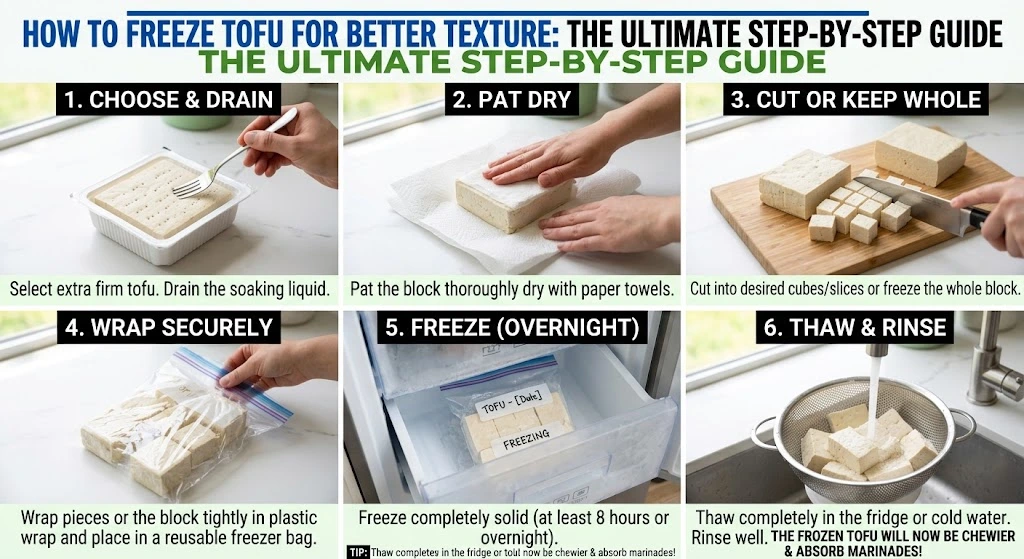
The Best Way to Freeze Tofu
A simple freeze → thaw → press → cook method.
What You Need
- 1 package firm or extra-firm tofu
- Freezer-safe airtight container or freezer bag
- Paper towels or a clean kitchen towel
- Optional: knife for cutting tofu before freezing
Basic Process
- Drain the tofu.
- Cut it into portions if desired.
- Seal it in a freezer-safe container or bag.
- Freeze completely, ideally overnight.
- Thaw in the refrigerator.
- Press gently to remove excess moisture.
- Marinate and cook.
What Is Freezing Tofu and Why Does It Work?
Freezing tofu simply means freezing tofu before cooking and then thawing it when you are ready to use it. It is a small preparation step, but it can significantly change the texture.
Fresh tofu has a relatively smooth, moist structure. When tofu freezes, the water inside it forms ice crystals. Those crystals disrupt parts of the tofu’s internal structure. After thawing, small spaces remain, making the tofu more porous.
That porous texture can make thawed tofu particularly useful in recipes where you want strong marinade absorption, a firmer bite, and better browning.
The Science: What Happens When You Freeze Tofu?
1. Water Expands
Tofu contains a significant amount of water. When that water freezes, it expands and places pressure on the tofu’s structure.
2. Ice Crystals Form
As the tofu freezes, ice crystals develop throughout its moisture-rich structure and disrupt its original smooth texture.
3. A Porous Texture Remains
When the tofu thaws, the melted water leaves behind a more open, sponge-like structure.
The important change is not that freezing magically adds flavor. Instead, freezing changes tofu’s structure, which can make it easier for sauces and marinades to penetrate after thawing.
Fresh vs Frozen Tofu: What Really Changes?
| Feature | Fresh Tofu | Frozen + Thawed Tofu |
|---|---|---|
| Texture | Soft, smooth, moist | More porous, chewy, sponge-like |
| Flavor absorption | More surface-focused | Can absorb marinades more readily |
| Cooking | Can be delicate depending on type | Works well for firm, browned preparations |
| Best uses | Soups, delicate dishes, smooth preparations | Stir-fries, baking, grilling, frying, meal prep |
Benefits of Freezing Tofu
Chewier Texture
Frozen and thawed tofu develops a more porous structure and a firmer, chewier bite.
Better Marinade Absorption
The open structure gives sauces and marinades more places to penetrate, especially after pressing.
Excellent for Crisping
Properly pressed frozen tofu can brown beautifully when baked, pan-fried, or air-fried.
When Should You Freeze Tofu?
Best Times to Freeze Tofu
- When you want a chewier, more structured texture.
- For stir-fries, baking, grilling, or pan-frying.
- When you want tofu to absorb a bold marinade.
- For convenient tofu meal prep.
- When you want a more substantial plant-based protein.
When You May Want to Skip Freezing
- When you want tofu to remain smooth and delicate.
- For recipes where soft tofu is the desired texture.
- When working with silken tofu.
- For creamy preparations where a porous texture is undesirable.
Best Types of Tofu for Freezing
| Tofu Type | Freezing Result | Best Uses |
|---|---|---|
| Firm tofu | Chewier and more structured | Stir-fries, baking, pan-frying |
| Extra-firm tofu | Very substantial and porous | Grilling, baking, frying, meal prep |
| Soft tofu | Can become fragile or crumbly | Generally better used fresh |
| Silken tofu | Can lose its smooth, delicate consistency | Generally better used fresh |
Extra-firm tofu is generally the easiest option when your goal is a substantial, chewy texture that holds together during cooking.
Step-by-Step: How to Freeze Tofu Properly
Drain the Tofu
Remove the tofu from its package and drain the liquid. You do not need to completely dry it before freezing because additional moisture can be removed after thawing.
Decide Whether to Cut It
You can freeze the tofu as a whole block or cut it into cubes or slices. Cutting it first makes portioning and meal prep more convenient.
Package It Well
Place the tofu in an airtight, freezer-safe container or freezer bag. Remove as much excess air as practical before sealing.
Freeze Completely
Freeze the tofu until solid. Overnight or about 8–12 hours is convenient, while a longer freeze is also fine.
Limit exposure to air and use freezer-safe packaging to help protect tofu from freezer burn and quality loss.
How to Thaw Frozen Tofu: 3 Easy Methods
🥇 Refrigerator Method
Place the frozen tofu in the refrigerator and allow it to thaw slowly, typically 6–8 hours or overnight.
This is the most convenient method when planning ahead.
⚡ Microwave Method
Use the defrost setting in short intervals, turning or checking the tofu as needed.
This is useful when you need tofu quickly, but the texture may be somewhat less even.
💧 Water Method
Place tofu in a sealed bag and use water to speed thawing. Change the water as needed and handle the tofu promptly afterward.
Once thawed, gently press the tofu to remove excess moisture. This helps create better browning and gives marinades more room to penetrate the porous tofu.
Should You Freeze Tofu Before or After Cooking?
| Approach | Result | Best Use |
|---|---|---|
| Freeze before cooking | Creates the characteristic porous, chewy texture | Best when texture transformation is the goal |
| Freeze after cooking | Convenient for leftovers, but texture may change | Meal prep and leftover storage |
If your goal is the classic chewy frozen tofu texture, freeze the tofu before cooking, then thaw, press, season, and cook.
Can You Freeze Tofu Twice?
You can technically refreeze tofu if it has been handled safely, but repeated freezing and thawing can change the texture further and may make it less appealing.
First Freeze
Produces the desired porous, chewy texture.
Second Freeze
Can create a firmer or more crumbly texture depending on how the tofu was handled.
Best Practice
Freeze only what you expect to use so you can avoid repeated freeze-thaw cycles.
How Long Can You Freeze Tofu?
Frozen tofu can remain usable for an extended period when continuously kept frozen, but quality is best when it is well packaged and used within a reasonable timeframe.
| Storage Factor | Best Practice |
|---|---|
| Packaging | Use airtight freezer-safe packaging. |
| Air exposure | Remove excess air before sealing. |
| Labeling | Write the freezing date on the package. |
| Quality | Use sooner rather than later for best flavor and texture. |
Freezing Tofu vs Pressing Tofu: What’s the Difference?
| Method | Main Purpose | Texture | Best For |
|---|---|---|---|
| Pressing | Removes excess moisture | Firm but relatively smooth | Pan-frying and everyday tofu dishes |
| Freezing | Changes internal structure | Porous and chewy | Bold marinades and hearty dishes |
| Freeze + Press | Changes structure and removes moisture | Chewy with better browning potential | Crispy tofu and meal prep |
For a particularly flavorful, browned result, try freezing → thawing → pressing → marinating → cooking.
Does Freezing Tofu Make It Taste Better?
Freezing does not add flavor to tofu by itself. What it changes is the tofu’s ability to hold and absorb seasoning.
Fresh Tofu
Mild and neutral, with a relatively smooth and moist texture.
Frozen + Thawed
More porous and sponge-like, giving marinades more opportunities to penetrate.
Cooked
Proper browning and seasoning create the final flavor and texture.
Can Freezing Fix Bad Tofu Texture?
Freezing can improve tofu that feels too soft or watery by changing its internal structure. However, it cannot compensate for every cooking problem.
| If Your Tofu Is… | Can Freezing Help? | What Else Matters? |
|---|---|---|
| Too soft | Yes, often | Use firm or extra-firm tofu and press after thawing. |
| Too watery | Yes, partly | Press thoroughly after thawing. |
| Bland | Indirectly | Use a flavorful marinade and proper seasoning. |
| Overcooked and dry | No | Reduce cooking time and control heat. |
Freezing Tofu for Meal Prep
Frozen tofu meal prep can make future meals easier because you can portion tofu before freezing and thaw only what you need.
1. Portion It
Cut tofu into cubes, slabs, or strips before freezing.
2. Package It
Divide portions into airtight freezer bags or containers.
3. Use as Needed
Thaw one portion, press it, marinate it, and cook it.
Cut tofu before freezing so you can move directly from thawing to pressing, seasoning, and cooking without another major prep step.
Common Mistakes That Ruin Frozen Tofu
How Chefs and Home Cooks Use Frozen Tofu
Frozen tofu is particularly useful when the goal is a more substantial texture. Once thawed and pressed, it can be marinated and cooked using high-heat methods that develop browning.
- Marinate deeply for bold flavor.
- Grill or roast for a firm, chewy bite.
- Stir-fry with vegetables and sauces.
- Pan-fry until golden and crisp.
A useful sequence is freeze → thaw → press → marinate → high-heat cook. This combines the structural change from freezing with moisture removal and flavorful browning.
How to Get Crispy Frozen Tofu Without Deep Frying
Thaw and Press
Remove excess water after thawing. A drier surface will brown more effectively.
Cut Evenly
Cut the tofu into evenly sized cubes or slices so the pieces cook at a similar rate.
Season Lightly
Toss with a small amount of oil and your preferred seasonings.
Choose Your Cooking Method
Bake or air-fry until browned and crisp on the outside.
| Method | Starting Temperature | Approximate Time | Texture Goal |
|---|---|---|---|
| Oven | 400°F / 200°C | 25–30 minutes | Golden and crispy |
| Air fryer | 375°F / 190°C | 12–15 minutes | Fast and crisp |
Cooking times vary with tofu thickness, equipment, and batch size, so use the listed times as starting points and cook until the texture you want is reached.
Best Recipes to Make with Frozen Tofu
Stir-Fried Tofu
Combine crispy tofu with vegetables and a savory sauce.
Grilled Tofu Skewers
Marinate thawed tofu and grill it until lightly charred.
Crispy Tofu Bowls
Serve golden tofu with grains, vegetables, and a flavorful sauce.
Tofu Curry
Use chewy tofu in a rich curry where its porous texture can hold sauce.
Vegan Chicken-Style Tofu
Season and cook frozen-thawed tofu for a hearty, chewy plant-based centerpiece.
Spicy Tofu
Pair crisp tofu with chili sauce, garlic, ginger, and vegetables.
Frozen Tofu vs Other Meat Alternatives
| Feature | Frozen Tofu | Prepared Plant-Based Meat |
|---|---|---|
| Flavor control | Highly customizable with marinades and sauces | Usually comes pre-seasoned |
| Texture control | Can be changed through freezing and cooking | Mostly determined by the product |
| Processing | Simple soy-based food | Varies by product |
| Cooking flexibility | High | Depends on the product |
Is Frozen Tofu Healthy?
Freezing itself does not turn tofu into a less nutritious food. The main change is its physical structure and texture. Tofu can provide plant-based protein and other nutrients, although its exact nutrition depends on the tofu variety and serving size.
Protein
Tofu can be a useful source of plant-based protein.
Fat Profile
Tofu is generally low in saturated fat compared with many animal-based protein foods.
Minerals
Depending on how it is made, tofu can provide nutrients such as iron and calcium.
Freezing primarily changes the tofu’s water structure and texture. However, the nutrition of a finished tofu dish also depends on what you add during cooking, including oils, sauces, and other ingredients.
Pro Tips for Perfect Frozen Tofu Every Time
For a chewy interior and crisp exterior, try: extra-firm tofu + freeze + thaw + press + marinate + high-heat cooking.
Keep tofu refrigerated or frozen according to the package instructions. After thawing, keep it refrigerated and cook it promptly rather than leaving it at room temperature for extended periods.
If thawing with water, keep the tofu sealed and use safe food-handling practices. For the most predictable results, refrigerator thawing is the simplest method.
FAQs About Freezing Tofu
Can you freeze tofu in the original package?
You can freeze unopened tofu in its original packaging if the packaging is suitable for freezing. For opened tofu, transfer it to an airtight freezer-safe container or bag and remove as much excess air as possible.
Why does frozen tofu become spongy?
Tofu contains water. During freezing, that water forms ice crystals that disrupt the tofu’s original structure. After thawing, the resulting spaces create a more porous, sponge-like texture.
Does freezing tofu remove water?
Freezing itself does not simply remove all the water. Instead, it changes the tofu’s structure. After thawing, the tofu becomes easier to press, allowing you to remove excess moisture before cooking.
Can you cook tofu directly from frozen?
You can use frozen tofu in some cooking situations, but for the classic chewy texture and more even cooking, it is generally better to thaw, press, season, and then cook.
What is the best tofu for freezing?
Extra-firm tofu is usually the easiest choice when you want a firm, chewy texture that holds together during grilling, baking, pan-frying, or stir-frying.
How long should tofu freeze?
Freeze tofu until completely solid. An overnight freeze of roughly 8–12 hours is convenient, and freezing it for longer is also possible when properly packaged.
Can you freeze tofu twice?
It is possible, but repeated freeze-thaw cycles can further alter the texture. For the best quality, freeze tofu once and portion it before freezing when possible.
Should you press tofu before or after freezing?
The most useful approach is to press after thawing. This removes the excess moisture created during the freeze-thaw process and prepares the tofu for better browning and marinade absorption.
Final Thoughts
Freezing tofu is one of the easiest ways to transform its texture without adding complicated ingredients or special equipment. The freeze-and-thaw process creates a more porous structure, giving tofu a chewier, sponge-like bite and making it especially useful for bold marinades and high-heat cooking.
If you want the best results, start with extra-firm tofu, freeze it completely, thaw it, press out excess moisture, then marinate and cook it until golden. This simple sequence can turn ordinary tofu into a much more satisfying ingredient for stir-fries, bowls, grilled dishes, crispy tofu recipes, and meal prep.
Read More :