If you love Spanish tapas, this Padrón peppers recipe is one of the easiest and most exciting dishes you can make at home. Small green peppers are quickly pan-fried in olive oil until beautifully blistered, then finished with flaky sea salt. Most are mild and slightly sweet, but an occasional pepper can deliver a surprising burst of heat.
Quick Answer: How Do You Cook Padrón Peppers?
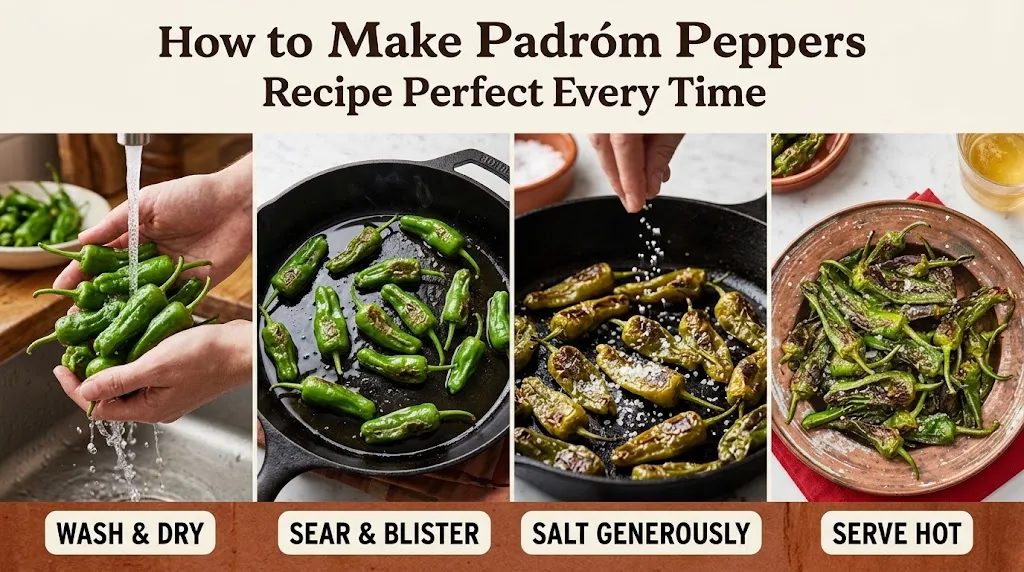
Heat a large skillet over high heat, add a generous splash of olive oil, and place completely dry Padrón peppers in a single layer. Cook for about 4–6 minutes, turning occasionally rather than constantly stirring, until the skins are deeply blistered and lightly charred. Remove from the heat and immediately finish with flaky sea salt. Serve hot as a classic Spanish tapas appetizer or side.
This authentic Padrón peppers dish comes from Spain and is especially associated with Galician cuisine. It takes only about 5–10 minutes, uses just a few ingredients, and delivers bold flavor with very little effort.
Authentic Blistered Padrón Peppers
Ingredients
- 250–300g fresh Padrón peppers
- 1–2 tablespoons Spanish olive oil
- ½ teaspoon flaky sea salt, or to taste
Method
- Rinse and dry the peppers completely.
- Heat a large skillet over high heat.
- Add olive oil.
- Cook peppers in a single layer.
- Blister for 4–6 minutes, turning occasionally.
- Remove from heat and season immediately.
- Serve hot.
What Are Padrón Peppers?
Padrón peppers are small green peppers associated with the town of Padrón in northwestern Spain. They belong to the Capsicum annuum species, the same broader plant species that includes bell peppers and many other familiar peppers.
Traditionally harvested while young and green, Padrón peppers have a fresh flavor and are commonly cooked simply in olive oil and finished with sea salt.
They are strongly associated with Galician cuisine and Spanish tapas culture. Their quick preparation and unpredictable heat have also helped make them popular outside Spain.
Why Are They So Popular?
The peppers cook in just a few minutes.
Traditional preparation requires only peppers, olive oil, and salt.
High heat creates beautifully blistered skins.
Most are mild, but an occasional pepper can be noticeably hot.
Are Padrón Peppers Spicy?
One of the most entertaining features of Padrón peppers is their unpredictable heat. Most peppers are mild and slightly sweet, while some can develop considerably more heat. This is often described as the famous “Russian roulette” effect.
Pepper heat is measured using the Scoville scale, but individual Padrón peppers can vary, so a single fixed heat rating does not accurately predict every pepper in a batch.
Smaller peppers are often considered milder, although size alone cannot guarantee a particular heat level. The unpredictable bite is part of the traditional appeal.
Ingredients for Authentic Padrón Peppers
An authentic-style Padrón peppers recipe is intentionally simple.
The Classic Three-Ingredient Formula
The star ingredient.
Adds richness and helps create blistered skin.
Adds seasoning and a pleasant textural finish.
No complicated sauce is necessary.
Why Simplicity Is Authentic
The traditional appeal of this dish comes from highlighting the pepper itself. Good olive oil and flaky salt enhance the natural flavor without covering it with heavy sauces or strong seasonings.
What Not to Add
Garlic, soy sauce, chili sauces, and heavy spice blends can make delicious variations, but they move the dish away from its classic minimalist presentation.
For the best blistering, keep the peppers dry and add the flaky sea salt after cooking. Salting immediately before cooking can draw moisture toward the surface and make high-heat blistering less effective.
The Science Behind Perfectly Blistered Padrón Peppers
Great blistered Padrón peppers depend less on complicated seasoning and more on controlling moisture, heat, pan contact, and cooking time.
1. Surface Moisture Must Evaporate
Water on the outside of the peppers turns into steam when it hits a hot pan. That steam can interfere with direct browning. Drying the peppers thoroughly helps the skins make better contact with the hot cooking surface.
2. High Heat Creates Better Browning
A properly preheated skillet helps the peppers blister quickly rather than slowly steaming. Olive oil also helps transfer heat efficiently across the pepper surface.
3. The Maillard Reaction
Browning is driven by several heat-related processes, including the Maillard reaction. This creates complex roasted flavors as food browns at high temperatures.
4. Avoid Overcrowding
A crowded pan traps moisture. Instead of blistering, the peppers begin to steam. Use a large skillet or cook in batches.
5. Don’t Constantly Stir
Letting the peppers sit against the hot pan for short periods encourages blister formation. Turn them occasionally so multiple sides develop color.
How to Cook Padrón Peppers Perfectly
Rinse the fresh Padrón peppers, then dry them extremely well with a clean kitchen towel. Remove any damaged or very soft peppers.
Heat a large cast iron or stainless steel skillet over high heat for a few minutes. The pan should be properly hot before the peppers go in.
Add enough olive oil to lightly coat the cooking surface. Swirl the pan carefully.
Place the dry peppers into the hot skillet without overcrowding. If necessary, cook in batches.
Cook for about 4–6 minutes, turning occasionally rather than constantly stirring. Look for dark blistered spots and slight softening.
Take the peppers off the heat when they are tender, lightly charred, and blistered but not collapsing into mush.
Immediately sprinkle with flaky sea salt and serve hot.
Cast Iron vs. Stainless Steel
| Pan | Best Feature | What to Expect |
|---|---|---|
| Cast Iron | Excellent heat retention | Can produce deep, restaurant-style char. |
| Stainless Steel | Excellent high-heat performance | Good blistering with careful heat control. |
Why Your Padrón Peppers Are Not Blistering
| Problem | Likely Cause | Fix |
|---|---|---|
| Soft peppers | Pan is overcrowded | Cook in a single layer or work in batches. |
| Soggy skin | Peppers were wet | Dry them thoroughly before cooking. |
| No browning | Oil or pan was not hot enough | Preheat the skillet properly before adding peppers. |
| Little char | Heat is too low | Use strong, steady heat. |
| Weak blistering | Constant stirring | Let peppers sit briefly against the hot pan before turning. |
| Soft exterior | Salt added too early | Finish with flaky salt after cooking. |
Common Mistakes That Ruin This Recipe
Overcooking
Cooked too long, Padrón peppers become wrinkled and overly soft. Remove them once they are blistered and tender.
Using Strongly Flavored Oils
Garlic oil, chili oil, and other flavored oils can be delicious, but they can overpower the minimalist character of classic Spanish Padrón peppers.
Adding Garlic Too Early
Garlic can burn quickly over high heat. If you want garlic, add it after the peppers have cooked or use a very brief warm-pan infusion.
Cooking at Too Low a Temperature
The peppers need strong heat to develop the characteristic blistered exterior. A slow cook tends to soften rather than blister them.
Easy Padrón Pepper Variations
Air Fryer Padrón Peppers
- Preheat the air fryer to 400°F (200°C).
- Toss peppers with a small amount of olive oil.
- Air fry for about 6–8 minutes, shaking halfway.
- Finish with flaky sea salt.
Air frying is convenient and uses less oil, although it generally will not reproduce exactly the same pan contact and deep blistering as a skillet.
Grilled Padrón Peppers
- Preheat the grill to high.
- Toss peppers lightly with olive oil.
- Grill in a basket or on suitable skewers for about 4–6 minutes.
- Turn occasionally until blistered.
- Finish with sea salt.
Oven-Roasted Padrón Peppers
- Preheat the oven to 425°F (220°C).
- Arrange peppers in a single layer on a baking sheet.
- Roast for about 10–15 minutes.
- Remove when blistered and finish with sea salt.
Modern Garlic Version
For a modern variation, cook the peppers using the classic high-heat method. After removing them, add finely minced garlic to the warm pan for a few seconds, then toss the peppers back through briefly before seasoning.
Padrón Peppers vs. Shishito Peppers
Padrón peppers and shishito peppers are both small peppers that are commonly blistered and served as appetizers. They are similar, but not identical.
| Feature | Padrón Peppers | Shishito Peppers |
|---|---|---|
| Origin / Association | Spain, especially Galicia | Japan |
| Taste | Mild, fresh, earthy; can become smoky when blistered | Mild, grassy, and slightly sweet |
| Heat | Individual peppers can vary considerably | Usually mild, with occasional hotter peppers |
| Texture | Firm skin with a tender cooked interior | Generally thinner and more delicate |
| Availability | Specialty markets and farmers markets | Common in many grocery stores |
How to Pick Fresh Padrón Peppers
Look for bright green peppers with smooth, healthy-looking skin.
Fresh peppers should feel firm and crisp rather than soft or wrinkled.
Look for stems that appear green and fresh rather than dry or brown.
Smaller peppers are often considered milder, although size does not guarantee heat level.
Where to Buy Padrón Peppers
Farmers Markets
Farmers markets can be an excellent place to find seasonal fresh Padrón peppers, particularly during the growing season.
Specialty Grocery Stores
Check Spanish, Mediterranean, European, or specialty produce sections. Availability varies by region and season.
Online Produce Suppliers
Specialty produce suppliers may offer Padrón peppers when they are in season. Because they are perishable, check shipping conditions and harvest timing when ordering.
Nutrition & Health Value of Padrón Peppers
Padrón peppers are naturally low in calories and provide plant nutrients including fiber and vitamin C. The overall nutrition of this dish depends heavily on how much olive oil is used.
The peppers themselves are relatively light.
They contribute dietary fiber to the meal.
Fresh peppers contribute vitamin C.
Peppers contain naturally occurring antioxidant compounds.
Exact calorie and nutrient values vary with pepper size, serving size, and especially the amount of olive oil used. Treat recipe-card nutrition numbers as estimates rather than laboratory values.
Are Padrón Peppers Keto-Friendly?
Padrón peppers can fit comfortably into a low-carbohydrate or keto-style meal because the peppers themselves are relatively low in carbohydrates. Keep an eye on the overall ingredients and portion sizes if you are following a medically prescribed diet.
Are Padrón Peppers Vegan?
Yes. The classic preparation of peppers, olive oil, and sea salt is naturally vegan and vegetarian.
What to Serve With Padrón Peppers
Blistered Padrón peppers are excellent on their own, but they also work beautifully as part of a larger Spanish-inspired meal.
Tapas Platter
- Marinated olives
- Manchego cheese
- Crusty bread
- Garlic shrimp
- Roasted almonds
Spanish Dinner Pairings
- Spanish tortilla
- Paella
- Grilled seafood
- Roasted chicken
Protein Pairings
- Grilled chicken
- Seared steak
- Baked fish
- Grilled tofu
Best Wine Pairings for Padrón Peppers
| Pairing | Why It Works |
|---|---|
| Albariño | Crisp acidity and citrus notes provide a refreshing contrast. |
| Light Red Wine | Soft tannins complement the smoky blistered peppers without overwhelming them. |
| Dry Sherry | Nutty, savory notes work naturally with Spanish tapas flavors. |
How to Store Leftover Padrón Peppers
Padrón peppers are best eaten immediately because their blistered texture softens after refrigeration. If you have leftovers, cool them promptly and store them in an airtight container in the refrigerator.
Recommended Storage Window
Use cooked leftovers within approximately 2–3 days for best quality, provided they have been refrigerated promptly and kept at 40°F / 4°C or below.
How to Reheat Without Losing Texture
Reheat the peppers quickly in a hot skillet for 2–3 minutes. This can restore some of the exterior char and warmth.
Microwaving tends to generate steam and can make the peppers noticeably softer. For the best texture, use a hot skillet and serve immediately.
Can You Freeze Padrón Peppers?
Freezing cooked Padrón peppers is generally not recommended if you care about their original blistered texture. Freezing and thawing can make the peppers soft. If necessary, raw peppers can be frozen, but fresh peppers produce the best final texture.
Frequently Asked Questions About Padrón Peppers
Can you eat Padrón peppers raw?
Yes. Raw Padrón peppers are edible and have a fresh, grassy flavor, but cooking creates the signature blistered skin and smoky flavor associated with Spanish tapas.
How spicy are Padrón peppers?
Most are mild, but individual peppers can vary significantly in heat. The commonly repeated “1 in 10–20” figure should be treated as a rough culinary description rather than a guaranteed ratio.
Why are my Padrón peppers soggy?
The most common causes are wet peppers, overcrowding, insufficient heat, or excessive stirring. Dry the peppers thoroughly, preheat the pan, cook in a single layer, and let them sit briefly against the hot skillet.
Can I substitute shishito peppers?
Yes. Shishito peppers are one of the easiest substitutes because they can be blistered using the same basic technique. The flavor and traditional origin are different, however.
What oil works best?
A good-quality olive oil is the natural choice for this Spanish-style preparation. Its flavor complements the peppers without requiring a complicated sauce.
How long do cooked Padrón peppers last?
Refrigerated leftovers are best used within approximately 2–3 days. For the best flavor and texture, eat them immediately after cooking.
How do I get the deepest blistering?
Use a properly preheated skillet, dry the peppers thoroughly, avoid overcrowding, use enough heat, and resist constantly stirring. Letting the peppers contact the hot pan is essential.
Pro Tips from Spanish Tapas Bars
Padrón peppers are at their best immediately after cooking.
A handful per person works well as part of a tapas spread.
A shallow bowl or simple plate lets the blistered skins take center stage.
Finish with flaky sea salt immediately after cooking.
Authentic Padrón Peppers — Spanish Blistered Tapas
Ingredients
- 250–300g fresh Padrón peppers
- 1–2 tablespoons olive oil
- ½ teaspoon flaky sea salt, or to taste
Instructions
- Rinse the Padrón peppers, then dry them completely with a clean towel.
- Heat a large cast iron or stainless steel skillet over high heat.
- Add the olive oil and swirl to coat the pan.
- Place the peppers in a single layer without overcrowding.
- Cook for 4–6 minutes, turning occasionally, until the skins become blistered and lightly charred.
- Remove from the heat and immediately sprinkle with flaky sea salt.
- Serve hot as a classic Spanish tapas appetizer or side dish.
Approximate Nutrition Per Serving
| Calories | About 120* |
| Carbohydrates | About 7g* |
| Fiber | About 2g* |
| Fat | About 10g* |
| Protein | About 1g* |
| Diet | Vegan, vegetarian |
*Nutrition values are approximate and can vary significantly according to pepper size, serving size, and the amount of olive oil actually consumed.
Read More :