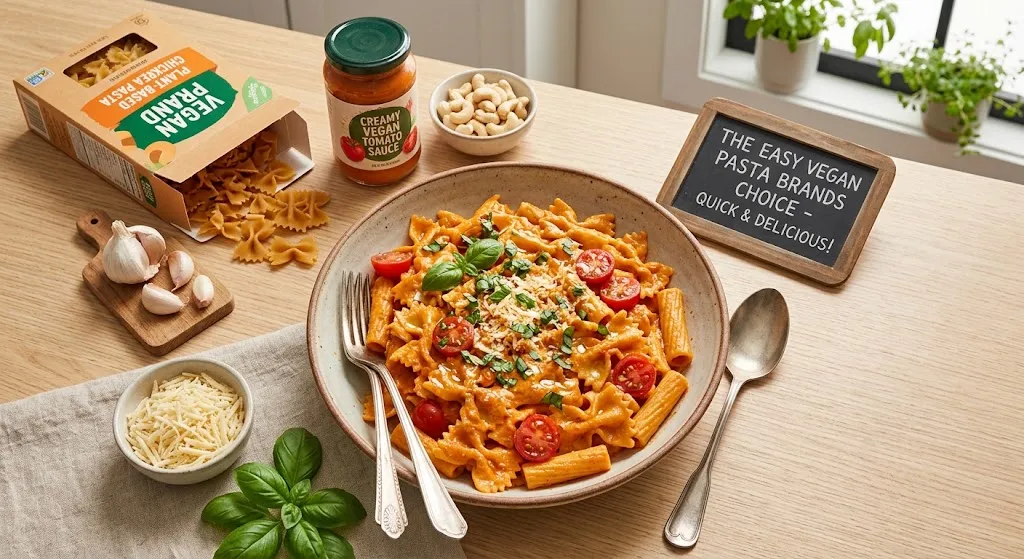
Wondering is pasta vegan? Most dry pasta is—but not every pasta product is. This guide breaks down the best vegan pasta brands, from classic durum wheat favorites to high-protein chickpea and lentil pasta, gluten-free choices, organic options, and low-carb alternatives.
The best vegan pasta brands depend on your goal. For classic everyday pasta, Barilla and Colavita are strong choices. For protein, Banza and Tolerant stand out. For gluten-free pasta, Jovial is a popular option. For very low-carb eating, konjac-based pasta is a specialty alternative.
Top 5 Best Vegan Pasta Brands at a Glance
Barilla
A dependable choice for classic pasta texture, broad availability, and affordable everyday meals. Many standard dry varieties use simple wheat-based ingredients.
Banza
Chickpea-based pasta that provides substantially more protein than traditional wheat pasta and is naturally gluten-free.
Jovial
Brown-rice pasta known for gluten-free options and a texture designed to work well in traditional pasta dishes.
Colavita
A simple semolina option for shoppers who want familiar pasta without paying a premium for specialty ingredients.
Explore Cuisine
Offers legume-based choices for shoppers looking for plant-based protein and gluten-free alternatives.
Vegan Pasta Brands Compared
| Brand | Protein | Gluten-Free | Organic Options | Best For |
|---|---|---|---|---|
| Barilla | Moderate | Some lines | Limited | Overall value |
| Banza | High | Yes | Not the main focus | High protein |
| Jovial | Moderate | Yes | Yes | Gluten-free |
| Colavita | Moderate | Generally no | Limited | Budget |
| Explore Cuisine | High | Yes | Some lines | Protein variety |
The word vegan does not automatically mean high-protein, low-calorie, gluten-free, or healthier. Choose the pasta according to your actual nutrition needs rather than the front-of-package marketing alone.
Is Pasta Vegan? The Truth Most People Don’t Know
Most dry pasta is vegan, but you should never assume every pasta product is. Traditional dried pasta is commonly made from durum wheat semolina and water, while many fresh pasta varieties contain eggs.
Why Most Dry Pasta Is Vegan
A basic dried pasta formula often contains only semolina and water. Because these ingredients contain no animal products, traditional dry pasta is generally a straightforward vegan-friendly pasta choice.
Why Fresh Pasta Is Different
Fresh pasta is frequently made with eggs to create a softer, richer dough. Fresh refrigerated pasta, egg noodles, stuffed pasta, and specialty varieties therefore require extra label checking.
Semolina vs. Enriched Flour
Durum Wheat Semolina
A traditional pasta ingredient that is generally plant-based when combined with water.
Enriched Wheat Flour
Contains added nutrients. Fortification does not automatically make pasta non-vegan, but the complete ingredient list should still be checked.
Spaghetti, penne, shells, ravioli, noodles, and other shapes can have different formulations. The safest approach is to check the actual ingredient list for the specific product.
What Makes Pasta Non-Vegan?
Eggs
Eggs, egg yolks, and egg whites are common in fresh pasta and egg noodles.
Dairy
Milk powder, whey, cheese, or dairy flavoring can appear in specialty pasta products.
Vitamin D3
Some strict vegans also check vitamin sources because D3 can have animal-derived origins in certain fortified foods.
Specialty Flavors
Plain spinach, tomato, or herb pasta may be vegan, but cheese or creamy flavorings require careful ingredient checking.
For strict vegan eating, check the ingredient list rather than relying solely on the word “plant-based” or on assumptions about the pasta type.
The 6 Main Types of Vegan Pasta
1. Traditional Durum Wheat Pasta
Made primarily from durum wheat semolina and water. It offers the classic al dente texture most people associate with pasta.
Best for: Traditional taste and texture.2. Whole Wheat Pasta
Made with the whole grain and typically provides more fiber than refined pasta.
Best for: Higher-fiber meals.3. Chickpea Pasta
Made from chickpea flour and naturally gluten-free. It is one of the most popular options for increasing protein and fiber.
Best for: Higher protein and satiety.4. Lentil Pasta
Lentil-based pasta offers plant protein and fiber with a somewhat earthy flavor.
Best for: Protein-focused plant-based diets.5. Brown Rice & Gluten-Free Pasta
Brown rice, corn, quinoa, and other gluten-free blends provide alternatives for people who need to avoid gluten.
Best for: Gluten-free diets.6. Low-Carb Specialty Pasta
Konjac, hearts of palm, and lupin-based products can dramatically reduce carbohydrate intake compared with traditional pasta, although their textures differ considerably.
Best for: Low-carb eating patterns.Fresh vs. Dry Pasta: Important Vegan Differences
| Feature | Fresh Pasta | Dry Pasta |
|---|---|---|
| Texture | Soft, tender, delicate | Firm and springy |
| Eggs | Often included | Often absent in traditional wheat varieties |
| Storage | Usually refrigerated | Long pantry shelf life |
| Vegan checking | Especially important | Still check the ingredient list |
Restaurant pasta deserves the same caution. Fresh pasta made in-house may contain eggs even when the finished dish appears completely plant-based. Ask before ordering if you need the meal to be strictly vegan.
15 Best Vegan Pasta Brands Ranked
These selections cover different needs, including classic wheat pasta, high-protein legume pasta, gluten-free options, organic choices, and specialty low-carb products. Product formulas can change, so always verify the current label before purchasing.
Barilla
Base: Durum wheat semolina
Protein: About 7g per serving in the cited comparison
Best for: Everyday meals, traditional texture, value
Banza
Base: Chickpeas
Protein: About 13g per serving in the cited comparison
Best for: Protein-focused diets and gluten-free meals
Jovial
Base: Brown rice
Best for: Gluten-free and organic shoppers
Explore Cuisine
Base: Legume-based flours
Best for: Plant-based protein variety
Colavita
Base: Semolina
Best for: Affordable everyday pasta
De Cecco
Base: Durum wheat semolina
Best for: Firm, classic pasta texture
Whole Foods 365
Base: Wheat/semolina varieties
Best for: Organic-focused shoppers
Tolerant
Base: Red lentils
Best for: High-protein gluten-free eating
Ancient Harvest
Base: Quinoa and corn blends
Best for: Alternative grain pasta
Thrive Market Brand
Best for: Online shoppers and bulk purchasing
Lotus Foods
Best for: Rice-based and alternative-grain options
Banza Rice Alternative
Base: Chickpea/rice blend
Best for: Balancing texture and protein
Seggiano Organic Pasta
Base: Organic durum wheat
Best for: Premium pasta lovers
Lensi
Base: Red lentil flour
Best for: Gluten-free protein
Miracle Noodle
Base: Konjac/shirataki
Best for: Very low-carb eating patterns
Nutrition facts, certifications, ingredients, and product availability can vary by specific shape, product line, country, and formulation. Treat the figures in this article as general comparisons, not guarantees for every package sold under a brand name.
Vegan Pasta Nutrition Comparison
The table below provides an easy way to compare the broad nutritional profiles of several pasta types. Values are approximate and can change between product varieties.
| Brand / Type | Calories* | Protein* | Fiber* | Carbs* | Gluten-Free | Organic Options | Price |
|---|---|---|---|---|---|---|---|
| Barilla Semolina | ~200 | ~7g | ~3g | ~42g | Some lines | Limited | $ |
| Banza Chickpea | ~190 | ~13g | ~5g | ~35g | Yes | Varies | $$ |
| Jovial Brown Rice | ~210 | ~4g | ~2g | ~45g | Yes | Yes | $$$ |
| Explore Cuisine Lentil | ~180 | ~12g | ~6g | ~30g | Yes | Some lines | $$ |
| Colavita Semolina | ~200 | ~7g | ~3g | ~42g | No | Limited | $ |
| Tolerant Red Lentil | ~190 | ~21g | ~8g | ~34g | Yes | Varies | $$$ |
| Ancient Harvest Quinoa Blend | ~200 | ~6g | ~3g | ~42g | Yes | Some lines | $$ |
| Konjac Pasta | Very low | Low | Varies | Very low | Usually | Varies | $$ |
*Approximate comparison values from the supplied draft; always use the current package nutrition label for exact numbers.
Legume-based pasta generally offers more protein and fiber than traditional refined wheat pasta. Konjac products are a different category altogether: they are extremely low in digestible carbohydrate and calories but do not reproduce the same texture or nutritional profile as conventional pasta.
Best Vegan Pasta Brands by Category
🏆 Best Overall — Barilla
Best for shoppers who prioritize familiar flavor, classic texture, affordability, and availability.
💪 Best High Protein — Banza or Tolerant
Strong choices when increasing plant protein is the main goal.
🌾 Best Gluten-Free — Jovial
A useful option for shoppers seeking gluten-free pasta with a traditional pasta experience.
💰 Best Budget — Colavita
A straightforward choice when price and everyday usability matter most.
🌱 Best Organic Focus — Jovial / Organic Lines
Look for certified organic products and verify the certification on the current package.
🥢 Best Low-Carb — Konjac Pasta
Best for people prioritizing very low carbohydrate intake over traditional pasta texture.
How to Choose Vegan Pasta for Your Diet Goals
For Weight Management
Compare calories, serving sizes, protein, and fiber. Legume-based pasta may provide more protein and fiber, while konjac products can be dramatically lower in calories.
For Muscle Gain
Look for chickpea or lentil pasta with higher protein per serving and pair it with other protein-rich ingredients.
For Blood Sugar Awareness
Compare total carbohydrate and fiber rather than assuming “vegan” means low glycemic impact. Legume-based pasta may be a useful option for some people.
For Whole-Food Eating
Look for short ingredient lists and pasta made primarily from whole grains or legumes.
For Soy-Free Needs
Many wheat and legume pastas can be soy-free, but formulas vary. Check the ingredient list and allergen statement on each package.
For Allergies
Look for appropriate certifications and allergen statements. Ingredient lists should always take priority over assumptions about a brand or pasta category.
Taste & Texture Guide: Which Vegan Pasta Is Best?
| Pasta Type | Texture | Flavor | Best Pairings |
|---|---|---|---|
| Durum wheat | Firm, classic al dente | Neutral | Tomato, pesto, oil-based sauces |
| Chickpea | Dense, hearty | Mildly nutty | Creamy and rich sauces |
| Lentil | Firm to tender | Slightly earthy | Tomato, vegetable, hearty sauces |
| Brown rice | Light and tender | Mild | Lighter sauces and pasta salads |
| Konjac | Gel-like and chewy | Very mild | Low-carb stir-fry and saucy dishes |
Best Pasta for Creamy Sauces
Chickpea and lentil pasta can work particularly well with substantial creamy sauces, while ridged wheat shapes can capture sauce beautifully.
Best Pasta for Tomato Sauces
Classic durum wheat pasta is difficult to beat for traditional tomato-based dishes because its neutral flavor and firm texture complement the sauce.
Best Pasta for Pasta Salads
Firm whole-wheat, brown-rice, or well-cooked legume pasta can work nicely in cold pasta salads.
How to Read Pasta Labels Like a Pro
🔎 Ingredients to Check
- Egg
- Egg yolk or egg whites
- Milk powder
- Whey
- Cheese or dairy flavoring
- Potentially animal-derived vitamin sources
✓ Certifications That Can Help
- Certified Vegan
- Non-GMO verification
- Organic certification
- Gluten-free certification
A statement such as “made in a facility that also handles egg” does not necessarily mean egg is an ingredient. However, this information can be extremely important for someone with an egg allergy. Vegan suitability and allergen safety are separate questions.
Sustainability & Ethical Sourcing
Ingredient quality is only one consideration. Shoppers may also care about farming practices, packaging, sourcing transparency, and certification.
Sustainable Wheat
Practices such as crop rotation, soil-health programs, and responsible agricultural management can influence the environmental footprint of wheat production.
Packaging
Recyclable packaging and reduced use of unnecessary plastic can help reduce packaging waste.
Supply Transparency
Brands that clearly explain sourcing, certifications, and ingredient origins make it easier for shoppers to make informed decisions.
Simple Ingredients
A short ingredient list can make vegan label checking easier, especially when the product consists primarily of wheat, legumes, rice, or other recognizable plant ingredients.
Where to Buy Vegan Pasta Brands
| Retailer | What to Look For |
|---|---|
| Amazon | Specialty, high-protein, gluten-free, and bulk options |
| Whole Foods | Organic, specialty, gluten-free, and plant-based brands |
| Walmart | Mainstream brands and budget-friendly pasta |
| Costco | Bulk packages and family-sized value |
| Local Supermarkets | Traditional semolina pasta and store-brand alternatives |
How to Save Money on Vegan Pasta
Buy in Bulk
Dry pasta stores well, so larger packages or multipacks can reduce the per-serving cost.
Try Store Brands
Supermarket private-label semolina pasta may offer a very similar ingredient profile at a lower price.
Compare Unit Prices
A premium-looking package is not necessarily better value. Compare the cost per ounce or per 100g.
Watch for Sales
Stock up on shelf-stable favorites during promotions when the price per serving drops.
Common Mistakes When Buying Vegan Pasta
Assuming All Pasta Is Vegan
Fresh, stuffed, flavored, and specialty pasta can contain eggs or dairy.
Ignoring Protein
If protein is your priority, traditional wheat pasta may not offer as much as chickpea or lentil pasta.
Overpaying for Marketing
Words such as “natural” or “healthy” do not tell you everything about the nutrition profile.
Forgetting Sodium
Flavored or specialty products can differ in sodium content, so check the nutrition facts panel when sodium intake matters to you.
Common Myths About Vegan Pasta
“Vegan Pasta Always Tastes Worse.”
Not necessarily. Many traditional durum wheat pastas are already vegan and have the same familiar texture people expect from classic pasta. Legume-based varieties simply have different flavor and texture.
“Vegan Pasta Is Automatically Healthier.”
Vegan describes what ingredients are excluded, not whether a food is low-calorie, high-fiber, high-protein, or nutritionally superior. Compare the full nutrition label.
“Gluten-Free Pasta Is Healthier for Everyone.”
Gluten-free pasta is essential for people who need to avoid gluten, but avoiding gluten does not automatically make a pasta nutritionally better for someone who tolerates wheat.
“High-Protein Pasta Is Low-Carb.”
High-protein chickpea and lentil pasta still contain carbohydrates. If very low carbohydrate intake is the goal, look specifically at total carbohydrates and consider specialty options such as konjac.
FAQs About Vegan Pasta Brands
Is most pasta vegan?
Yes. Most traditional dry pasta is made from durum wheat semolina and water and is therefore naturally vegan. Fresh and specialty pasta needs closer inspection.
Is Barilla pasta vegan?
Many classic dry Barilla products use simple wheat-based ingredients and are vegan-friendly, but individual products can differ. Always check the package ingredient list before buying.
Do all pasta brands contain egg?
No. Eggs are common in many fresh pasta products, but most traditional packaged dry pasta does not require eggs.
What pasta is not vegan?
Pasta containing eggs, milk, whey, cheese, or other animal-derived ingredients is not vegan. Fresh and filled varieties deserve particular attention.
Is chickpea pasta healthier?
Chickpea pasta can provide more protein and fiber than conventional refined wheat pasta, making it useful for certain nutrition goals. “Healthier” depends on your individual needs.
Is gluten-free pasta vegan?
Many gluten-free pastas are vegan, but gluten-free does not guarantee egg-free or dairy-free. Check the ingredients and allergen information.
Which vegan pasta has the most protein?
Red lentil and chickpea pastas are among the higher-protein choices. Exact protein amounts vary by brand and product, so compare the nutrition labels.
Are organic pasta brands better?
Organic certification primarily addresses agricultural production standards. It does not automatically mean a pasta has more protein, fewer calories, or superior nutrition.
Which Vegan Pasta Brand Is Best for You?
| Your Priority | Best Direction | Why |
|---|---|---|
| Budget | Barilla or Colavita | Classic semolina pasta with everyday affordability |
| High Protein | Banza or Tolerant | Legume-based pasta provides substantially more protein |
| Gluten-Free | Jovial or other certified GF options | Designed for gluten-free eating |
| Organic | Jovial or certified organic lines | Focus on certified organic ingredients |
| Classic Taste | Durum wheat pasta | Closest to traditional pasta texture |
| Very Low Carb | Konjac pasta | Extremely low in digestible carbohydrates |
Final Recommendation: The Best Vegan Pasta Is the One That Fits Your Goals
There is no single perfect vegan pasta brand for everyone. If you want familiar flavor, classic texture, and affordability, start with a simple durum wheat semolina pasta.
If protein is your priority, choose a chickpea or lentil pasta. If you need gluten-free pasta, look for a product with appropriate gluten-free labeling and verify that it is also egg-free. For very low-carb eating, specialty konjac-based pasta can serve a completely different purpose.
Most importantly, don’t let the front of the package make the decision for you. Check the ingredient list, nutrition facts, allergen information, and relevant certifications. Once you know what to look for, finding truly vegan-friendly pasta becomes much easier.
Read More :