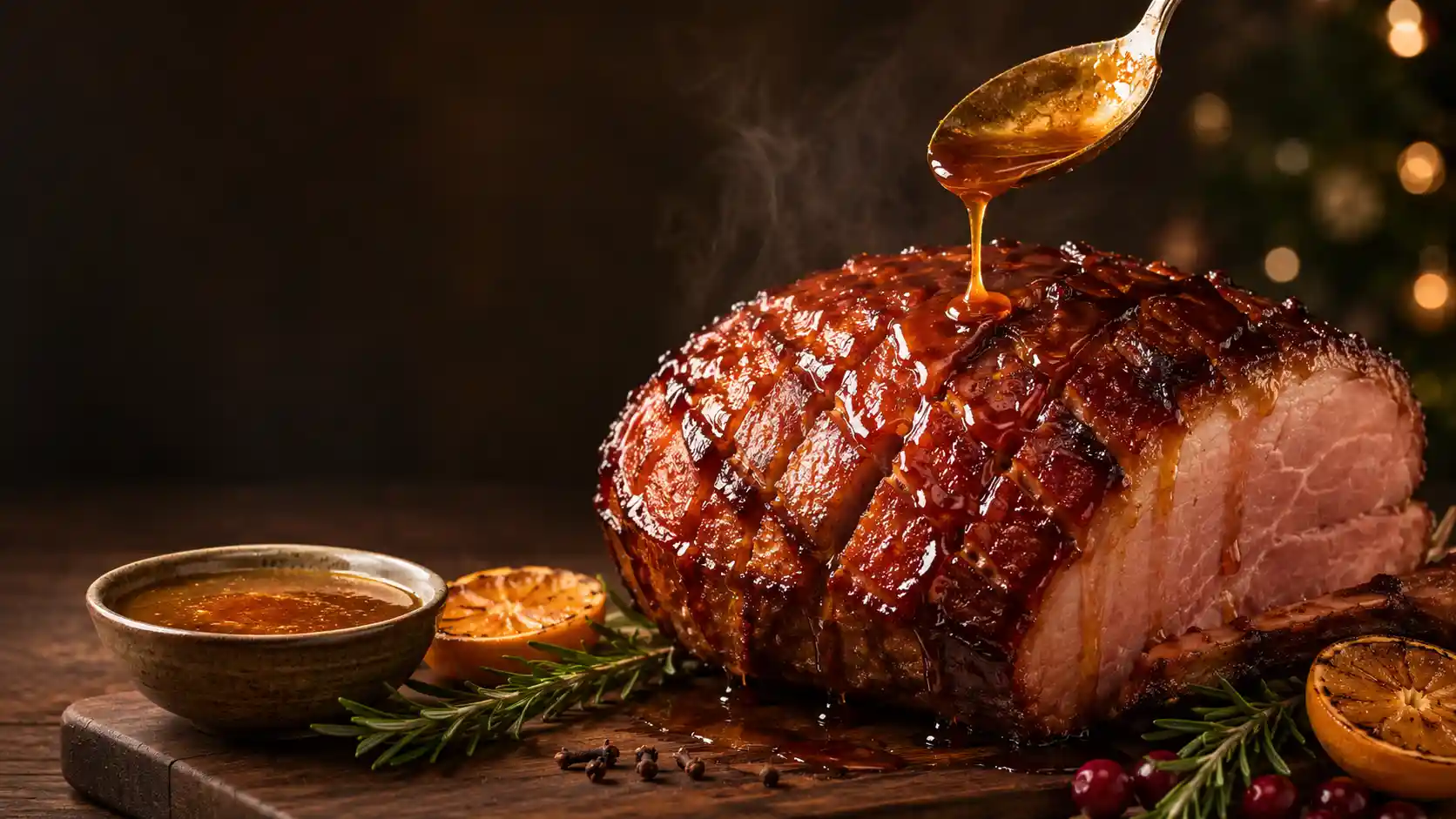
Turn a fully cooked smoked ham into a glossy centerpiece with gentle smoker heat and a sweet-tangy brown sugar glaze. This easy method builds smoky depth while keeping the ham juicy and beautifully caramelized.
From my recipe testing days, I learned how smokiness changes a pre-cooked spiral sliced ham into something amazing. With gentle heat, a smoker or oven, and a brown sugar glaze, the flavor deepens and enhances the natural pork sweetness.
I have served this at Easter, Thanksgiving, and holiday gatherings, and it makes a beautiful centerpiece for the table. The glaze caramelizes into a sticky, tangy coating that gives the ham an impressive finish without requiring a complicated cooking process.
Starting with a previously smoked, fully cooked ham keeps the process manageable. Add cherry preserves, honey, Dijon mustard, Worcestershire sauce, and other complementary flavors, then warm the ham and build the glaze during the final stage.
Quick Answer: How Do You Smoke a Pre-Cooked Ham?
Warm a fully cooked smoked ham in a 225°F smoker until it reaches about 110°F internally. Prepare a thick brown sugar-based glaze, brush it over the ham, and continue heating until the ham reaches your chosen safe serving temperature. Rest briefly, brush with more glaze, and slice before serving.
Smoked Ham With Brown Sugar Glaze
Juicy smoked ham finished with a glossy, sweet-and-tangy glaze.
Recipe at a Glance
| Detail | Information |
|---|---|
| Best Ham | Fully cooked, previously smoked, bone-in ham |
| Ideal Size | About 7–8 pounds |
| Smoker Temperature | 225°F |
| Glaze Timing | When ham reaches approximately 110°F |
| Glaze Finish | Brush again after smoking and before serving |
Ingredients
- Cherry preserves
- Brown sugar
- Honey
- Dijon mustard
- Worcestershire sauce
- Apple cider vinegar
- Pineapple juice, optional
- Crystal hot sauce, optional
- Garlic
- Onion
- Rosemary or sage
- Paprika
- Black pepper
- Cinnamon and clove, used lightly
- BBQ rub, as desired
Flavor-Balancing Tip
Sweet ingredients provide the caramelized exterior, while mustard, Worcestershire sauce, vinegar, and spices keep the glaze from tasting one-dimensional.
What Type of Ham Works Best?
For this recipe, the goal is to use a previously smoked, fully cooked ham. The additional smoking step warms the meat and builds another layer of smoky flavor while the glaze creates a glossy exterior.
A bone-in half ham weighing around 7–8 pounds works well on a smoker. A spiral-sliced ham is also convenient because the slices make serving easy, although the cut and starting condition of the ham are important.
| Ham Type | What to Expect |
|---|---|
| Previously smoked bone-in ham | Deep smoky flavor and a substantial centerpiece |
| Spiral-sliced ham | Easy serving and excellent glaze coverage |
| Fully cooked ham | Needs reheating rather than cooking from raw |
Smoked Ham Glaze Ingredients
The glaze combines sweet, savory, tangy, and warm flavors. Cherry preserves, brown sugar, and honey create the sweet base, while Dijon and Worcestershire provide savory depth and acidity.
| Category | Ingredients | Purpose |
|---|---|---|
| Sweet Base | Cherry preserves, brown sugar, honey, sweet jam | Creates sweetness and a glossy caramelized finish |
| Seasoning | BBQ seasoning, black pepper, paprika | Adds savory and smoky depth |
| Tangy Liquids | Dijon mustard, Worcestershire sauce, apple cider vinegar | Balances the sweetness |
| Optional Additions | Pineapple juice, hot sauce | Adds brightness, acidity, or gentle heat |
| Aromatics & Spices | Garlic, onion, rosemary, sage, cinnamon, clove | Adds warm and savory flavor layers |
About Bourbon or Other Alcohol
Bourbon can be used in some ham glazes for additional flavor. However, alcohol does not automatically disappear simply because a glaze is heated. If the finished dish needs to be alcohol-free, use a non-alcoholic alternative rather than relying on cooking alone.
How to Make Smoked Ham With Brown Sugar Glaze
1. Prep the Smoker
Preheat the smoker to 225°F. If your smoker has a smoke setting designed for stronger smoke production, you can use it according to the manufacturer’s instructions.
A water pan can be used if desired, although it is not essential on every smoker. The important part is maintaining steady heat and avoiding an excessively hot cooking chamber.
2. Season the Ham
Lightly season the ham on all sides with your preferred BBQ rub. Pay attention to the outer edges and exposed surfaces of spiral-cut slices.
3. Smoke the Ham
Place the ham cut-side down on the smoker. Insert a leave-in thermometer into the thickest part of the meat without touching the bone.
Continue warming until the internal temperature reaches approximately 110°F.
4. Prepare the Smoked Ham Glaze
Add the glaze ingredients to a medium saucepan. Bring the mixture to a gentle simmer and cook for about 10 minutes, stirring as needed, until it thickens enough to coat a spoon.
5. Glaze the Ham
Carefully brush a thick coating of glaze over the warm ham. A long-handled basting brush can make this easier when working around a hot smoker.
Return the glazed ham to the smoker and close the lid promptly to maintain the cooking temperature.
6. Continue Heating
Continue smoking and glazing as needed while monitoring the internal temperature. The original method targets approximately 140°F for the finished ham.
Food-Safety Check
Because ham products can have different labeling and reheating instructions, follow the package directions for your specific ham. Use a reliable food thermometer and verify the appropriate final temperature for the product you purchased rather than relying only on cooking time.
7. Rest the Ham
Transfer the ham to a cutting board. Brush it with another layer of glaze and allow it to rest for about 20 minutes before slicing.
8. Slice and Serve
Slice the ham into approximately ¼-inch slices and serve with the remaining glaze. Leftover smoked ham is excellent in sandwiches, soups, omelets, pasta, and breakfast hash.
How Long Does It Take to Smoke a Pre-Cooked Ham?
A 7–8 pound fully cooked ham can take roughly 2½ to 3 hours at 225°F, but time varies considerably with the ham’s starting temperature, shape, size, smoker, weather, and cooking conditions.
Temperature is therefore more useful than the clock. Begin checking the internal temperature as the ham approaches the glazing stage and continue monitoring until it reaches the appropriate temperature for your specific ham.
BBQ Tip
Treat the estimated cooking time as a planning guide, not a guarantee. A thermometer gives you much better information than assuming every 7–8 pound ham will take exactly the same amount of time.
Tools for Smoked Ham Glaze
Accurate temperature tracking makes this recipe easier because a pre-cooked ham is being reheated rather than cooked from raw.
- Instant-read thermometer: For quick temperature checks.
- Leave-in thermometer: Useful for monitoring the ham without repeatedly opening the smoker.
- Wireless thermometer: Convenient for remote temperature tracking.
- Silicone basting brush: Helps spread the glaze evenly.
- Long-handled brush: Useful when applying glaze around a hot smoker.
- Medium saucepan: For reducing and thickening the glaze.
Thermometer Tip
Brands such as ThermoWorks, ThermoPro, and MEATER offer different thermometer styles. Whichever model you use, place the probe correctly and check its accuracy periodically.
Nutrition Information
The following figures are for the glaze and can vary depending on the exact ingredients and quantities used.
| Nutrient | Amount |
|---|---|
| Serving Size | 2 tablespoons |
| Calories | 90 |
| Sugar | 22 g |
| Sodium | 122 mg |
| Fat | 0 g |
| Saturated Fat | 0 g |
| Unsaturated Fat | 0 g |
| Trans Fat | 0 g |
| Carbohydrates | 23 g |
| Fiber | 0 g |
| Protein | 0 g |
| Cholesterol | 0 g |
What to Serve With Smoked Ham
- Buttery biscuits
- Mashed potatoes
- Sweet potatoes
- Green beans
- Roasted vegetables
- Cornbread
- Holiday stuffing
- Cranberry sauce
- Fresh dinner rolls
Leftover Idea
Turn leftover smoked ham into a hearty sandwich with mustard and the remaining sweet-tangy glaze. It also works well in breakfast hash, omelets, soups, and pasta.
FAQs About Smoked Ham Glaze
What Type of Ham Should I Use?
For this method, use a fully cooked, previously smoked ham. A bone-in ham works particularly well, while spiral-sliced ham makes serving and glazing convenient.
Is It Necessary to Glaze a Smoked Ham?
No. A glaze is optional, but it adds a sweet, glossy finish and provides contrast to the smoky and savory flavor of the ham.
When Should I Apply the Glaze?
Apply the glaze during the final stage after the ham has warmed to about 110°F. This gives the glaze time to set while reducing its exposure to prolonged high heat.
How Do I Prevent the Glaze From Burning?
Keep the smoker around 225°F, apply the sugary glaze toward the end of the process, and monitor the ham closely as the glaze becomes glossy and caramelized.
How Do I Get the Glaze to Stick?
Use a thick glaze and brush it over a warm ham surface. Multiple thin or moderate applications can build a better coating than flooding the ham with one large amount.
How Much Glaze Do I Need?
For a 7–8 pound ham, approximately 1 to 1½ cups of glaze can provide enough for multiple coatings, depending on how heavily you apply it.
What Are Common Smoked Ham Glaze Ingredients?
Popular ingredients include brown sugar, honey, cherry preserves, mustard, pineapple juice, apple cider vinegar, and warm spices such as cinnamon or clove.
Can I Prepare the Glaze in Advance?
Yes. The glaze can be prepared ahead and refrigerated. Warm it gently before brushing so it spreads easily.
How Long Does a Smoked Ham With Glaze Take?
A 7–8 pound ham may take around 2½ to 3 hours at 225°F, but actual timing varies. Use internal temperature rather than the clock as your primary guide.
What Can I Make With Leftover Smoked Ham?
Leftovers are useful in smoked ham sandwiches, soups, omelets, pasta, breakfast hash, casseroles, and other recipes where smoky ham adds savory flavor.
Quick Summary: Key Takeaways
- Start with a fully cooked, previously smoked ham.
- Use a smoker temperature around 225°F.
- Build the glaze with sweet, tangy, and savory ingredients.
- Apply the glaze during the final stage to help prevent burning.
- Use a reliable thermometer instead of depending only on cooking time.
- Rest the ham before slicing for easier serving.
- Save leftovers for sandwiches, soups, pasta, omelets, or breakfast hash.
Final Thoughts
This Smoked Ham Glaze is all about balance—sweet, savory, tangy, and gently smoky without overwhelming the ham. A combination of preserves, sugar, honey, spices, mustard, and tangy liquids creates a glaze that sticks well and develops a beautiful glossy finish.
Starting with a fully cooked smoked ham keeps the process straightforward. The smoker adds another layer of flavor while gentle heat warms the meat. Applying the glaze toward the end helps create a sticky exterior without exposing the sugary ingredients to unnecessary prolonged heat.
Whether you are preparing Easter dinner, Thanksgiving, Christmas, or another special gathering, this smoked ham method gives you a flavorful centerpiece and plenty of possibilities for leftovers.
Read More :