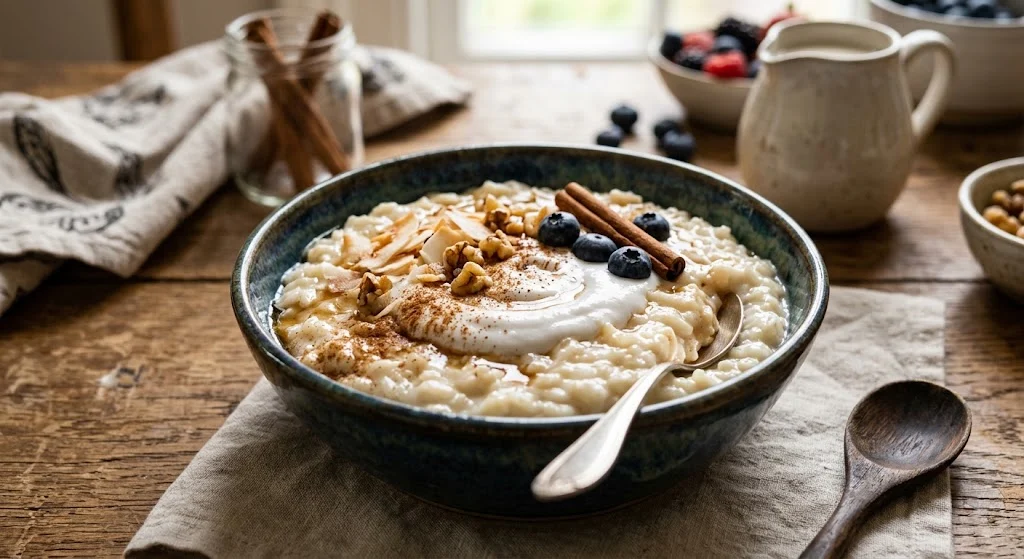
Have leftover rice sitting in your fridge? Turn it into a warm, creamy vegan rice pudding in just 15 minutes. This easy leftover rice pudding (vegan) uses cooked rice, your favorite plant milk, and simple pantry ingredients for a comforting, naturally dairy-free dessert.
Quick Answer
Yes, you can make excellent vegan rice pudding with leftover rice. Cooked rice already contains starch, so it thickens quickly when gently simmered with plant milk. Use 1½ cups plant milk per 1 cup cooked rice for a creamy, spoonable texture, then sweeten and flavor with vanilla, cinnamon, and a pinch of salt.
Easy Leftover Rice Pudding (Vegan)
Ingredients
- 1 cup cooked leftover rice
- 1½ cups plant milk, such as oat, soy, almond, or coconut
- 2–3 tablespoons maple syrup or sugar, to taste
- 1 teaspoon vanilla extract
- ½ teaspoon cinnamon
- Pinch of salt
Optional Toppings
- Chopped pistachios or other nuts
- Toasted coconut flakes
- Fresh berries
- Maple syrup
- Orange or lemon zest
- Ground cardamom
Instructions
- Add the cooked rice and plant milk to a saucepan over medium heat. Stir in the sweetener, vanilla, cinnamon, and salt.
- Once small bubbles appear, reduce the heat to low and gently simmer. Stir every 1–2 minutes to prevent sticking.
- Continue cooking until the liquid reduces and the pudding becomes thick, glossy, and creamy.
- Remove from the heat when it is slightly thinner than your desired final texture. It will continue thickening as it rests.
- Let it rest for 5–10 minutes, then serve warm or refrigerate for a chilled dessert.
Got Leftover Rice? Here’s the Fastest Vegan Dessert You Can Make
If you have leftover rice in your fridge, you are already halfway to a warm bowl of creamy vegan rice pudding. Instead of throwing cooked rice away, gently simmer it with plant milk and a few simple flavorings for a quick dairy-free dessert.
This vegan rice pudding with cooked rice needs no eggs, cream, or complicated techniques. You can enjoy it warm and cozy or chill it for later. With less liquid, it becomes a thick dessert; with more plant milk, it works as a softer vegan breakfast pudding.
Can You Make Rice Pudding With Leftover Rice?
Yes. Leftover cooked rice works especially well for quick rice pudding because the rice has already been cooked and its starch has already developed. Gentle reheating with plant milk allows some of that starch to contribute to a creamy texture.
Why Cooked Rice Works
Cooking rice causes its starch granules to absorb water and soften. When cooked rice is gently heated again with liquid, some of that starch disperses into the mixture, helping create the characteristic thickness of rice pudding.
Best Rice Types to Use
| Rice Type | Texture | Best Use |
|---|---|---|
| Short-grain | Soft and creamy | Extra-creamy pudding |
| Jasmine | Soft with a floral aroma | Everyday pudding |
| Basmati | Lighter and less sticky | Looser-textured pudding |
| Brown rice | Chewier | Heartier pudding |
Why This Vegan Rice Pudding Turns Ultra Creamy Without Dairy
You do not need heavy cream to make satisfying dairy-free rice pudding. The texture comes primarily from the combination of rice starch, liquid, gentle heat, and the characteristics of your chosen plant milk.
Starch + Gentle Simmer
A gentle simmer allows the rice to soften and release starch gradually. Avoid a vigorous boil, which can cause excessive evaporation, sticking, or broken-down grains.
Plant Milk Makes a Difference
| Plant Milk | Texture | Flavor | Best For |
|---|---|---|---|
| Coconut milk | Very rich | Coconut-forward | Indulgent dessert |
| Oat milk | Smooth and creamy | Mildly sweet | Balanced pudding |
| Soy milk | Medium-rich | Relatively neutral | Classic texture |
| Almond milk | Lighter | Subtle nutty flavor | Lighter pudding |
Spoon-Coating Texture Test
Dip a spoon into the pudding and lift it out. When the mixture coats the back of the spoon and slowly slides off, it is close to ready.
Resting Stage
Let the finished pudding rest for 5–10 minutes. As it cools, the starch continues absorbing liquid and the pudding naturally becomes thicker.
Ingredients Breakdown: What Each Ingredient Does
Cooked Rice
Provides the body, starch, and chewy-soft texture. Short-grain rice produces the creamiest result, while basmati creates a lighter pudding.
Plant Milk
Provides the liquid needed to loosen the rice and create the pudding base. Oat and coconut milk generally produce a richer mouthfeel than lighter almond milk.
Sweetener
Maple syrup, white sugar, brown sugar, or date paste can all work. Adjust the amount according to the sweetness of your plant milk and your preference.
Vanilla, Cinnamon & Salt
Vanilla rounds out the flavor, cinnamon adds warmth, and a small pinch of salt balances sweetness.
The Perfect Rice-to-Liquid Ratio
Thick Dessert
1 cup rice + 1–1¼ cups milkDense, rich, and ideal for a spoon-standing dessert.
Creamy & Spoonable
1 cup rice + 1½ cups milkBalanced and creamy. This is the recommended starting point.
Breakfast Style
1 cup rice + 1¾–2 cups milkLooser and softer for a lighter breakfast pudding.
15-Minute Stovetop Method
- Combine: Add cooked rice and plant milk to a saucepan. Add sweetener, vanilla, cinnamon, and salt.
- Heat: Warm over medium heat until small bubbles begin to appear.
- Simmer: Reduce to low and stir every 1–2 minutes.
- Watch for thickening: The liquid should reduce and the mixture should become glossy and creamy.
- Stop slightly early: Remove from the heat while it is a little looser than your desired final texture.
- Rest: Let it sit for 5–10 minutes before serving.
Creaminess Control Guide
Extra Thick
Start with 1–1¼ cups plant milk per cup of rice and simmer a little longer. Allow it to rest fully.
Silky Smooth
Mash some of the cooked rice with the back of a spoon, or blend a small portion and stir it back into the pudding.
Loose Breakfast Version
Add extra plant milk during cooking or during reheating for a softer, spoonable consistency.
More Filling
For a more substantial bowl, add chia seeds, nut butter, or vegan protein powder according to the product’s directions.
How to Fix Common Vegan Rice Pudding Problems
Too Thin
Simmer uncovered for another 2–3 minutes, stirring frequently.
Too Thick
Stir in 1–2 tablespoons warm plant milk at a time.
Bland
Add a small pinch of salt, extra vanilla, cinnamon, or a little maple syrup.
Grainy
Use lower heat and stir more regularly. Avoid a vigorous boil.
Mushy
Use firmer leftover rice and avoid aggressive stirring during cooking.
Burned Bottom
Lower the heat and stir every 1–2 minutes. A heavy-bottomed saucepan can help.
Flavor Boosters That Upgrade Leftover Rice Pudding
Golden Milk Turmeric
Add ¼ teaspoon turmeric, cinnamon, a tiny pinch of black pepper, and maple syrup for a golden-spiced variation.
Chocolate
Stir in 1–2 tablespoons cocoa powder or melted dark chocolate during the simmer.
Toasted Coconut
Use coconut milk and finish with toasted coconut flakes for a tropical variation.
Citrus Zest
Orange or lemon zest adds freshness and helps balance the sweetness.
Cardamom & Pistachio
Add a pinch of ground cardamom and chopped pistachios for an aromatic finish.
Vegan Caramel
Finish with a small drizzle of vegan caramel sauce for a richer dessert-style bowl.
Smart Substitutions & Diet Variations
| Variation | What to Use | Result |
|---|---|---|
| Nut-free | Oat milk or soy milk | Creamy without almond milk |
| Refined-sugar-free | Dates or maple syrup | Naturally sweet flavor |
| Oil-free | Oat or soy milk | Lighter texture |
| Higher-protein | Soy milk, nut butter, or vegan protein powder | More substantial pudding |
| Gluten-free | Rice + gluten-free-certified ingredients as needed | Gluten-free dessert |
Make-Ahead & Meal Prep Guide
Batch Cooking
Double or triple the recipe when you want several portions. Use a larger saucepan and keep the heat gentle so the bottom does not scorch.
Portioning
Allow the pudding to cool slightly, then divide it into individual airtight containers. This makes it convenient for desserts, snacks, or breakfast.
Texture After Refrigeration
Refrigerated pudding becomes thicker because the rice continues absorbing liquid. This is normal and easy to correct.
Rehydrating
Add 1–3 tablespoons warm plant milk while reheating and stir gently until the pudding returns to a creamy consistency.
Storage, Freezing & Reheating Guide
| Storage Method | Guideline | Best Practice |
|---|---|---|
| Refrigerator | About 3–4 days | Keep covered in an airtight container |
| Freezer | Up to about 2 months for best quality | Freeze in suitable containers with expansion room |
| Stovetop reheating | Low heat | Add plant milk and stir gently |
| Microwave reheating | Short intervals | Stir between intervals |
Freezing can slightly change the texture of rice pudding. After thawing, add a splash of plant milk and gently reheat to help restore creaminess.
Is Vegan Rice Pudding Healthier Than Traditional Rice Pudding?
There is no single answer because the nutritional profile depends on the plant milk, sweetener, toppings, portion size, and ingredients used in the recipe.
Plant Milk & Fat
Unsweetened almond milk can produce a lighter pudding, while coconut milk is richer and generally higher in fat. Soy and oat milk fall somewhere between depending on the specific product.
Sweetener Control
Homemade pudding lets you control how much sweetener goes into each serving. Maple syrup, sugar, or dates can be used according to your preference.
Portion Matters
Rice pudding is still a carbohydrate-rich dessert, so serving size and toppings matter when considering the overall nutritional profile of your meal.
5 Delicious Ways to Serve Vegan Rice Pudding
1. Warm Dessert Bowl
Serve warm with cinnamon, chopped nuts, or a little maple syrup.
2. Chilled Pudding Cups
Refrigerate in small jars and top with berries or toasted coconut.
3. Breakfast Parfait
Layer pudding with fruit, granola, and nut butter.
4. Rice Pudding Smoothie
Blend chilled pudding with extra plant milk and banana.
5. Baked Rice Pudding
Transfer to a baking dish and bake until the top becomes lightly golden.
FAQs About Leftover Rice Pudding
Can you use leftover white rice?
Yes. Plain leftover white rice works very well. Short-grain rice creates the creamiest texture, while jasmine and basmati produce slightly different results.
What is the best plant milk for rice pudding?
Oat milk and coconut milk are good choices when you want a rich, creamy texture. Almond milk is lighter, while soy milk offers a balanced option.
Why isn’t my rice pudding creamy?
It may need more gentle simmering or a little more plant milk. Avoid high heat and allow the finished pudding to rest because it thickens as it cools.
Can you freeze vegan rice pudding?
Yes. It can be frozen for quality purposes for around 2 months, although the texture may change. Reheat gently with a splash of plant milk.
How do you thicken rice pudding without eggs?
Simmer the pudding longer to reduce liquid, or mash some of the cooked rice to release additional starch. Chia seeds can also thicken the mixture, although they change its texture.
Can I use brown rice?
Yes. Brown rice works, although it produces a chewier texture and may need additional simmering to become tender.
Is rice pudding gluten-free?
Rice itself is naturally gluten-free. For strict gluten-free needs, check the labels of your plant milk, flavorings, protein powders, sauces, and other packaged ingredients.
Can you make vegan rice pudding in the microwave?
Yes. Combine cooked rice and plant milk in a microwave-safe bowl and heat in short intervals, stirring between each interval until hot and creamy.
Final Thought
Turning leftover rice into creamy vegan rice pudding is one of the easiest ways to transform an everyday ingredient into a comforting dessert. With cooked rice, your favorite plant milk, a sweetener, and a few simple spices, you can have a warm dairy-free dessert in about 15 minutes.
The best part is the flexibility. Choose coconut milk for richness, oat milk for a creamy everyday version, almond milk for a lighter pudding, or soy milk for a balanced option. Adjust the rice-to-liquid ratio, experiment with flavors, and serve it warm or chilled.
This leftover rice pudding (vegan) is simple, customizable, and practical — turning cooked rice that might otherwise go to waste into something genuinely comforting and delicious.
Read More :