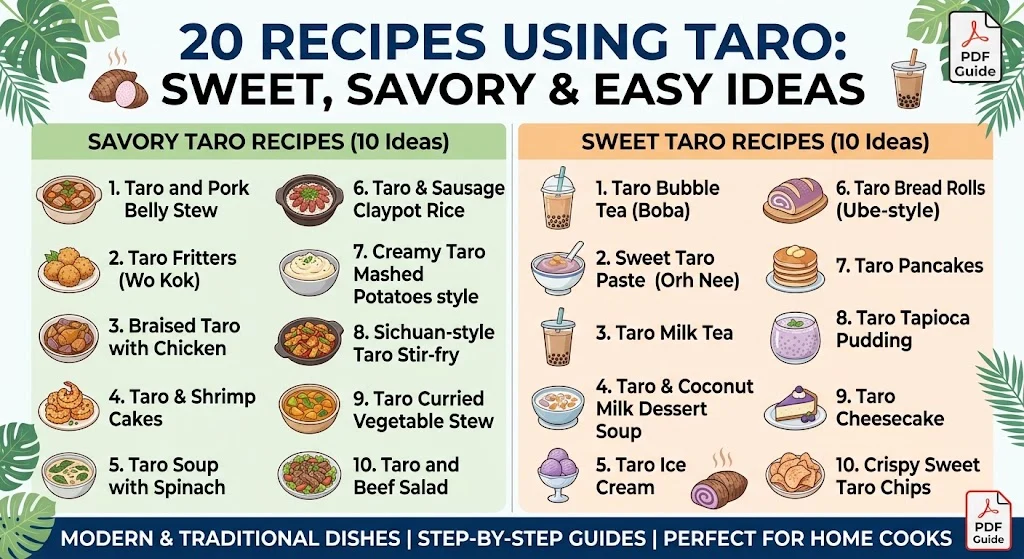
Taro is one of those ingredients that can completely change character depending on how you cook it. Steamed, it becomes soft and buttery; simmered, it absorbs savory sauces; fried, it develops crisp edges around a creamy center; and mashed or puréed, it becomes a naturally thick base for desserts, buns, and pastries.
If you’re searching for recipes using taro, this guide goes beyond a simple list of ideas. You’ll learn how to choose and prepare taro safely, which type works best for different dishes, and how to turn it into fries, rice, curries, Japanese simmered dishes, desserts, taro paste, and more.
Quick Answer: What Are the Best Recipes Using Taro?
Some of the best recipes using taro include crispy taro fries, baked taro chips, Japanese simmered taro, taro curry, taro rice, taro cake, taro dumplings, taro buns, taro paste, coconut taro desserts, smoothies, and Filipino taro-leaf dishes. Always cook taro thoroughly before eating it because improperly prepared taro can cause mouth and throat irritation.
What Is Taro?
Taro is a starchy tropical root crop scientifically known as Colocasia esculenta. Its underground corm is the part most commonly eaten, although the leaves and petioles are also used in traditional cuisines when properly prepared.
Its flavor is relatively mild: think potato-like starchiness with a subtle nuttiness and buttery quality. Its texture can range from firm and creamy to sticky and almost silky depending on the variety and cooking method.
Taro is particularly good at absorbing sauces, which explains why it appears in everything from Japanese simmered dishes to Chinese braises and coconut-based Filipino preparations.
What Is Taro Called at Asian Grocery Stores?
| Name | Where You May Encounter It | Typical Use |
|---|---|---|
| Taro | General Asian markets | Fries, steaming, desserts |
| Kalo | Hawaiian cuisine | Poi and traditional dishes |
| Satoimo | Japan | Simmered dishes and soups |
| Eddoe | Caribbean and Asian markets | Boiling and stews |
| Dasheen | Caribbean and some U.S. markets | Root and leaf dishes |
| Arbi / Arvi | South Asian markets | Curries, fries and stir-fries |
| Gabi | Filipino markets | Soups, stews and desserts |
| Malanga | Caribbean and Latin American markets | Boiled and savory dishes |
These names can overlap between related root crops, so check the label or ask the produce vendor when you’re unsure.
How to Prepare Taro Safely
This is the most important thing to understand before trying new taro recipes.
⚠️ Important Taro Safety Rule
Do not eat raw taro. Taro contains naturally occurring calcium oxalate raphides associated with its acridity. All parts of the plant should be properly cooked before eating.
Raw or inadequately prepared taro can cause itching or irritation in the mouth and throat.
Step 1: Wash the Root
Rinse the whole taro under cold running water and scrub away visible dirt. Do not use soap or detergent on produce.
Step 2: Peel Carefully
Taro has a rough, hairy and sometimes slippery skin. For large roots, trim both ends, secure the root on a cutting board, and remove the thick skin with a sturdy knife or vegetable peeler.
If your hands are sensitive, wear kitchen gloves while peeling and cutting raw taro.
Step 3: Cut Evenly
Uniform pieces cook at the same rate. For many recipes, 1-inch cubes are a useful starting point.
Step 4: Cook Completely
Depending on the recipe, taro can be boiled, steamed, baked, fried or simmered. The finished flesh should be fully tender rather than crunchy or raw in the center.
Why Does Raw Taro Make Your Mouth Itch?
Raw or inadequately cooked taro can cause mouth and throat irritation because of needle-like calcium oxalate crystals. Proper cooking is essential.
Never treat raw taro like a raw potato for snacking or tasting.
Large Taro vs. Small Taro: Which Should You Buy?
Not every taro root behaves exactly the same way. Choosing the right type can make a noticeable difference in the finished dish.
| Type | Texture | Best Uses |
|---|---|---|
| Large taro | Dense, starchy, creamy | Fries, taro rice, cake, roasting and braising |
| Small taro / satoimo | Creamier and stickier | Japanese simmered dishes and soups |
| Taro leaves | Leafy and tender when properly cooked | Laing and other cooked dishes |
How to Choose and Store Fresh Taro
Choose roots that feel firm and heavy for their size.
Look For
- Firm texture
- Heavy weight for its size
- Intact skin
- Minimal surface damage
Avoid
- Soft or mushy spots
- Deep cuts
- Visible mold
- Strong decay
- Sprouting or severe deterioration
Keep whole taro dry, well ventilated and away from excessive moisture. Once peeled or cut, refrigerate it promptly and use it soon.
25 Best Recipes Using Taro
Crispy Baked Taro Fries
Taro fries are an excellent starting point if you’ve never cooked taro before. The oven creates browned edges while the inside remains dense and creamy.
Ingredients
- 1½ lb large taro, peeled
- 1½ tbsp olive oil or avocado oil
- ¾ tsp kosher salt
- ½ tsp garlic powder
- ½ tsp smoked paprika
- ¼ tsp black pepper
- Optional chili flakes
Method
- Heat the oven to 425°F (220°C).
- Cut peeled taro into fries about ½ inch thick.
- Rinse and dry thoroughly.
- Toss with oil and seasonings.
- Arrange in a single layer without crowding.
- Bake for 25–35 minutes, turning halfway through.
- Continue until browned and completely tender.
Taro Chips and Crisps
Thin taro slices become remarkably crisp when baked. Slice them evenly and watch closely near the end because thin pieces can brown quickly.
Ingredients
- 2 medium taro roots
- 1–2 tbsp neutral oil
- Salt
- Optional chili powder or lime zest
Method
- Heat oven to 375°F (190°C).
- Peel taro and slice about ⅛ inch thick.
- Toss lightly with oil.
- Arrange in a single layer.
- Bake for 15–25 minutes, checking early.
- Season immediately after baking.
Japanese Simmered Taro — Satoimo no Nimono
This sweet-savory Japanese preparation lets taro’s naturally creamy texture shine. Dashi, sake, soy sauce, mirin and sugar create a glossy sauce that penetrates the root.
Ingredients
- 1¾ lb small taro or satoimo
- ½ tsp kosher salt
- 2 tsp neutral oil
- 1¼ cups dashi
- 3 tbsp sake
- 2 tbsp sugar
- 2 tbsp soy sauce
- 1 tbsp mirin
- Optional lemon or yuzu peel
Method
- Wash, trim and peel the taro.
- Rub with salt, then rinse.
- Cover with water and simmer for about 5 minutes.
- Drain and rinse.
- Heat oil and gently coat the taro.
- Add dashi, sake and sugar.
- Bring to a boil, then reduce to a gentle simmer.
- Add soy sauce after the initial sweet seasoning begins to penetrate.
- Cover and simmer for 20–25 minutes.
- Stir in mirin near the end.
Creamy Taro Coconut Curry
Taro’s starch naturally helps create a rich texture in coconut-based curries.
Ingredients
- 1½ lb taro, peeled and cubed
- 1 tbsp neutral oil
- 1 small onion, diced
- 3 garlic cloves, minced
- 1 tbsp grated ginger
- 1½ tbsp curry powder
- ½ tsp turmeric
- 1 can coconut milk
- 1 cup vegetable broth
- 1 tbsp soy sauce
- 1 tsp lime juice
- Salt to taste
- Cilantro for serving
Method
- Heat oil in a large saucepan.
- Cook onion for 4–5 minutes.
- Add garlic and ginger.
- Stir in curry powder and turmeric.
- Add taro, coconut milk, broth and soy sauce.
- Bring to a gentle simmer.
- Partially cover and cook for 20–30 minutes.
- Check the largest taro piece for tenderness.
- Add lime juice and adjust seasoning.
Serving idea: Serve over steamed jasmine rice.
One-Pot Taro Rice
Large taro is especially useful for rice dishes because the cubes can remain intact while adding starch and a buttery texture.
Ingredients
- 2 cups jasmine rice
- 1 lb large taro, peeled and cubed
- 2 tbsp neutral oil
- 1 tbsp minced ginger
- 3 scallions
- 6 oz Chinese sausage, sliced
- 1 cup sliced mushrooms
- ½ cup diced carrots
- 2 tbsp light soy sauce
- 1 tbsp oyster sauce
- ¼ tsp white pepper
- ¼ tsp five-spice powder
- 2¼ cups water or stock
Method
- Soak rice for 15–20 minutes, then drain.
- Brown taro in 1 tbsp oil for 6–8 minutes. Remove.
- Add remaining oil.
- Cook ginger, scallion whites, sausage, mushrooms and carrots.
- Stir in rice and seasonings.
- Add liquid.
- Arrange taro over the top.
- Cover and cook over medium-low heat for about 15 minutes.
- Turn off heat and rest covered for 10 minutes.
- Fluff and finish with scallion greens.
Savory Taro Stir-Fry
Cooked taro becomes a quick weeknight side when crisped in a skillet with garlic, ginger and soy sauce.
Ingredients
- 1 lb peeled taro
- 1½ tbsp neutral oil
- 2 garlic cloves
- 1 tsp grated ginger
- 1 tbsp soy sauce
- 1 tsp sesame oil
- 1 scallion
- ½ tsp chili flakes
- 1–2 tbsp water
Method
- Cut taro into small cubes.
- Boil or steam until just tender.
- Drain thoroughly.
- Brown taro in hot oil.
- Add garlic, ginger and chili flakes.
- Add soy sauce and water.
- Cook 2–3 minutes more.
- Finish with sesame oil and scallions.
Taro Soup and Comforting Stews
Taro works especially well in soups because it becomes tender and can contribute body and starch to the broth.
Ideas to Try
- Taro and chicken soup
- Taro beef soup
- Taro pork rib stew
- Taro miso soup
More Variations
- Taro vegetable soup
- Taro mushroom stew
- Coconut taro soup
- Spicy taro stew
Easy Taro Soup Formula
- 1 lb cubed cooked taro
- 6 cups chicken or vegetable stock
- 1 cup sliced mushrooms
- 1 cup chopped greens
- 2 garlic cloves
- 1 tsp ginger
- Soy sauce to taste
Add cooked taro toward the latter part of cooking so the pieces remain intact instead of dissolving into the broth.
Taro and Coconut Dishes
Taro and coconut are a natural pairing. Coconut’s richness complements taro’s earthy starchiness beautifully.
Easy Coconut Taro
- 1 lb taro, cubed
- 1 can coconut milk
- ½ cup water
- 2 tbsp brown sugar
- Pinch of salt
- ½ tsp vanilla, optional
- Steam or boil taro until nearly tender.
- Combine coconut milk, water, sugar and salt.
- Add taro.
- Simmer gently for 10–15 minutes.
- Cook until completely tender.
- Add vanilla if desired.
For a dessert-style version, add pandan, toasted coconut, palm sugar or tapioca pearls.
Chinese Taro Cake — Wu Tao Gou
Taro cake, or wu tao gou, is a savory Cantonese dish associated with dim sum and festive meals. Despite its name, it is not a Western-style dessert cake.
Traditional versions combine taro with rice flour, seasonings and savory ingredients such as Chinese sausage or dried shrimp before steaming and often pan-frying.
Serve with soy sauce, chili sauce, XO sauce, scallions or fried shallots.
Taro Dumplings and Party Appetizers
Taro’s naturally sticky texture makes it useful for dumpling fillings, croquettes, fritters and savory balls.
Taro Croquettes
Combine fully cooked mashed taro with:
- Salt
- White pepper
- Minced scallions
- Garlic
- A little sesame oil
Shape into balls or cylinders, coat with breadcrumbs and bake at 425°F (220°C) until golden or shallow-fry until crisp.
Possible fillings include mushrooms, mozzarella, seasoned meat, vegetables or shrimp.
Taro Buns and Rolls
Sweet taro filling is popular in many Asian bakery-style breads and pastries. Cooked taro is mashed or blended with sweetener and a fat or dairy component.
Easy Taro Filling
- 1½ cups cooked mashed taro
- ¼ cup sugar
- 2 tbsp butter
- 2–4 tbsp milk or cream
- Pinch of salt
- ½ tsp vanilla
Cook gently until smooth and thick enough to hold its shape. Use the filling in milk bread, steamed buns, Swiss rolls, mooncakes or pastries.
Homemade Taro Paste
Taro paste deserves its own place because one batch can be transformed into several desserts.
Ingredients
- 1 lb taro, peeled and cubed
- ½ cup purple sweet potato, optional
- ¼ cup sugar
- 2 tbsp butter
- ¼ cup heavy cream or milk
- Pinch of salt
Method
- Steam taro until completely tender.
- Steam purple sweet potato if using.
- Mash or blend while warm.
- Transfer to a saucepan.
- Add sugar, butter, cream and salt.
- Cook over low heat, stirring frequently.
- Continue until smooth, thick and spreadable.
Purple sweet potato is mainly useful for color and helps create the familiar pastel-purple appearance of many taro desserts.
- Taro buns
- Mochi
- Cookies
- Pastries
- Pancake fillings
- Swiss rolls
- Layer cakes
- Toast
Taro Desserts With Coconut
If you enjoy creamy desserts, taro and coconut are a natural combination.
Creamy Desserts
- Taro coconut pudding
- Taro coconut custard
- Taro pudding cups
Chewy Desserts
- Taro sago soup
- Taro coconut tapioca
- Taro sticky rice
For a simple dessert, combine fully cooked taro, coconut milk, sugar and tapioca pearls.
Taro Ice Cream, Smoothies and Milk Tea
The familiar purple taro milk tea flavor is often sweeter and more vanilla-like than plain cooked taro. For homemade drinks, start with cooked taro or taro paste.
Taro Smoothie
- ¾ cup cooked taro
- 1 cup milk or plant milk
- ½ frozen banana
- 1–2 tbsp honey or sugar
- ½ tsp vanilla
- Ice
Blend until completely smooth.
For milk tea, add strongly brewed black tea and adjust the sweetness.
⚠️ Important
Never use raw taro in a smoothie. Cook it thoroughly first.
Filipino Taro and Taro-Leaf Recipes
Taro has an important place in Filipino cooking, where it is commonly known as gabi.
Laing
Laing is a Bicolano dish made with dried taro leaves and coconut milk. Versions may include pork, shrimp paste, chilies, garlic, ginger and other aromatics.
Leaf Safety
Laing uses taro leaves, not simply cubes of taro root. Taro leaves also require proper cooking and should not be treated like raw salad greens.
Other Filipino-inspired ideas include:
- Gabi in coconut milk
- Taro-filled pastries
- Taro fritters
- Taro soups
- Taro desserts
- Taro leaves with coconut and chili
Taro Dishes From Around the World
Hawaiian Cuisine
Taro is known as kalo and is central to foods such as poi.
Japanese Cuisine
Satoimo is commonly simmered with dashi, soy sauce, sake, mirin and sugar.
Chinese Cuisine
Taro appears in taro cake, taro rice, braises, dumplings, buns and desserts.
Filipino Cuisine
Gabi is used in dishes such as laing and coconut-based preparations.
South Asian Cuisine
Taro may be sold as arbi or arvi and cooked with spices, fried or added to curries.
Caribbean Cuisine
Names such as dasheen and eddoe can appear in markets and recipes, although related roots should not automatically be treated as identical.
Taro Breakfast and Brunch Ideas
- Crispy taro cakes with eggs
- Taro hash with peppers and onions
- Taro breakfast bowls
- Taro pancakes
- Taro waffles
- Taro-filled steamed buns
- Savory taro fritters
- Taro and egg breakfast sandwiches
For hash, cut cooked taro into cubes and brown it with onions, peppers, garlic and black pepper.
Holiday and Make-Ahead Taro Recipes
| Dish | Make-Ahead Potential | Best Occasion |
|---|---|---|
| Taro cake | Excellent | Dim sum, holidays |
| Taro paste | Excellent | Baking and desserts |
| Simmered taro | Very good | Family dinner |
| Taro curry | Very good | Weeknight meals |
| Taro rice | Moderate | Family gatherings |
| Taro croquettes | Good | Parties |
| Taro dessert soup | Good | Dessert |
| Taro fries | Poor | Best served fresh |
Taro cake and taro paste are especially practical for advance preparation. Refrigerate cooked leftovers promptly and handle them using standard food-safety practices.
More Easy Recipes Using Taro
Savory Ideas
- Taro mash: Replace some or all of the potato with cooked taro.
- Taro gnocchi: Combine cooked taro with flour.
- Taro fritters: Mix mashed taro with scallions and spices.
- Taro hash: Crisp cooked cubes with onions and peppers.
- Taro gratin: Layer pre-cooked taro with cream, garlic and cheese.
- Taro shepherd’s pie: Use creamy taro mash as the topping.
Creative Ideas
- Taro tacos: Pair crispy taro with slaw, avocado and lime.
- Taro hummus: Blend cooked taro with tahini, lemon and garlic.
- Taro flatbread: Add cooked taro to a soft dough.
- Taro pancakes: Add taro paste to sweet batter.
- Taro mochi: Wrap sweet taro paste in mochi dough.
- Taro cheesecake: Swirl cooked taro paste into cheesecake batter.
More Dessert Ideas
- Taro pudding
- Taro Swiss roll
- Taro coconut popsicles
- Taro pastries
- Taro cookies
- Taro layer cake
What Goes Well With Taro?
Taro has a relatively mild flavor, so it pairs beautifully with ingredients that provide salt, acidity, spice, sweetness or umami.
Best Savory Pairings
- Garlic
- Ginger
- Scallions
- Soy sauce
- Dashi
- Miso
- Coconut milk
- Chili
- Sesame oil
- Mushrooms
- Pork
- Chicken
- Shrimp
Best Sweet Pairings
- Coconut
- Vanilla
- Brown sugar
- Palm sugar
- Purple sweet potato
- Pandan
- Tapioca
- Mango
- Banana
- Black sesame
Taro vs. Potato: What’s the Difference?
Taro can replace potato in many recipes, but the finished dish will not be identical.
| Characteristic | Taro | Potato |
|---|---|---|
| Flavor | Mild, nutty, buttery | Mild, earthy |
| Texture | Dense, creamy, sometimes sticky | Fluffy or waxy |
| Starch | High | High |
| Raw use | Not recommended | Generally not eaten raw |
| Fries | Excellent | Excellent |
| Mash | Very creamy | Often fluffier |
| Sauces | Absorbs flavors well | Absorbs flavors well |
| Desserts | Excellent | Less common |
Frequently Asked Questions About Recipes Using Taro
Can you eat raw taro?
No. Taro should be thoroughly cooked before eating. Raw or inadequately prepared taro can cause irritation because of naturally occurring calcium oxalate raphides.
Is taro the same as yam?
No. Taro is Colocasia esculenta, while true yams belong to the genus Dioscorea.
Is taro the same as purple sweet potato?
No. Taro and purple sweet potato are different plants. Purple sweet potato is sometimes added to taro desserts primarily for color.
Why does taro make your mouth itch?
The irritation is associated with calcium oxalate raphides, tiny needle-like crystals involved in taro’s natural acridity. Thorough cooking is essential.
Do I need gloves when peeling taro?
Gloves are a sensible precaution if raw taro irritates your skin.
What is the easiest way to cook taro?
For beginners, steaming or boiling peeled taro until completely tender is the simplest approach. You can then mash it, season it, add it to soup or use it in dessert.
Is taro good for fries?
Yes. Large taro is particularly good for fries because it has a dense, starchy texture. Cut it evenly, dry it well and avoid overcrowding the baking tray.
Can taro replace potatoes?
Usually, yes—with adjustments. Taro works especially well in fries, mash, soups, stews, curries and roasted dishes.
Can you freeze cooked taro?
Cooked taro can be frozen, although the texture may change somewhat after thawing. It often works particularly well in mashed preparations, fillings, soups and similar dishes.
How should I store fresh taro?
Keep whole taro dry, ventilated and protected from excessive moisture. Peeled or cut taro should be refrigerated promptly and used soon.
Can I eat taro leaves?
Yes, but only when properly prepared and thoroughly cooked. Taro leaves are used in several traditional cuisines, including Filipino laing.
What does cooked taro taste like?
Cooked taro is generally mild, starchy, slightly nutty and buttery. Smaller varieties can have a noticeably stickier texture, while large taro tends to be denser and starchier.
Final Thoughts: Which Taro Recipe Should You Try First?
The best recipes using taro aren’t limited to one cuisine or one cooking method. The same root can become crisp fries, silky simmered satoimo, savory taro rice, creamy curry, Chinese taro cake, sweet taro paste, coconut dessert or a filling for buns and pastries.
The trick is choosing the right taro for the job. Large taro is especially useful for fries, rice, braises and cakes, while smaller satoimo works beautifully in Japanese simmered dishes.
Most importantly, treat taro differently from vegetables you can safely sample raw: peel it carefully, cook it thoroughly, and never serve raw taro or inadequately cooked taro leaves.
Once that basic rule is understood, taro becomes an exceptionally versatile ingredient for both savory meals and desserts.
Taro is one of those ingredients that can completely change character depending on how you cook it. Steamed, it becomes soft and buttery; simmered, it absorbs savory sauces; fried, it develops crisp edges around a creamy center; and mashed or puréed, it becomes a naturally thick base for desserts, buns, and pastries.
If you’re searching for recipes using taro, this guide goes beyond a simple list of ideas. You’ll learn how to choose and prepare taro safely, which type works best for different dishes, and how to turn it into fries, rice, curries, Japanese simmered dishes, desserts, taro paste, and more.
Quick Answer: What Are the Best Recipes Using Taro?
Some of the best recipes using taro include crispy taro fries, baked taro chips, Japanese simmered taro, taro curry, taro rice, taro cake, taro dumplings, taro buns, taro paste, coconut taro desserts, smoothies, and Filipino taro-leaf dishes. Always cook taro thoroughly before eating it because improperly prepared taro can cause mouth and throat irritation.
What Is Taro?
Taro is a starchy tropical root crop scientifically known as Colocasia esculenta. Its underground corm is the part most commonly eaten, although the leaves and petioles are also used in traditional cuisines when properly prepared.
Its flavor is relatively mild: think potato-like starchiness with a subtle nuttiness and buttery quality. Its texture can range from firm and creamy to sticky and almost silky depending on the variety and cooking method.
Taro is particularly good at absorbing sauces, which explains why it appears in everything from Japanese simmered dishes to Chinese braises and coconut-based Filipino preparations.
What Is Taro Called at Asian Grocery Stores?
| Name | Where You May Encounter It | Typical Use |
|---|---|---|
| Taro | General Asian markets | Fries, steaming, desserts |
| Kalo | Hawaiian cuisine | Poi and traditional dishes |
| Satoimo | Japan | Simmered dishes and soups |
| Eddoe | Caribbean and Asian markets | Boiling and stews |
| Dasheen | Caribbean and some U.S. markets | Root and leaf dishes |
| Arbi / Arvi | South Asian markets | Curries, fries and stir-fries |
| Gabi | Filipino markets | Soups, stews and desserts |
| Malanga | Caribbean and Latin American markets | Boiled and savory dishes |
These names can overlap between related root crops, so check the label or ask the produce vendor when you’re unsure.
How to Prepare Taro Safely
This is the most important thing to understand before trying new taro recipes.
⚠️ Important Taro Safety Rule
Do not eat raw taro. Taro contains naturally occurring calcium oxalate raphides associated with its acridity. All parts of the plant should be properly cooked before eating.
Raw or inadequately prepared taro can cause itching or irritation in the mouth and throat.
Step 1: Wash the Root
Rinse the whole taro under cold running water and scrub away visible dirt. Do not use soap or detergent on produce.
Step 2: Peel Carefully
Taro has a rough, hairy and sometimes slippery skin. For large roots, trim both ends, secure the root on a cutting board, and remove the thick skin with a sturdy knife or vegetable peeler.
If your hands are sensitive, wear kitchen gloves while peeling and cutting raw taro.
Step 3: Cut Evenly
Uniform pieces cook at the same rate. For many recipes, 1-inch cubes are a useful starting point.
Step 4: Cook Completely
Depending on the recipe, taro can be boiled, steamed, baked, fried or simmered. The finished flesh should be fully tender rather than crunchy or raw in the center.
Why Does Raw Taro Make Your Mouth Itch?
Raw or inadequately cooked taro can cause mouth and throat irritation because of needle-like calcium oxalate crystals. Proper cooking is essential.
Never treat raw taro like a raw potato for snacking or tasting.
Large Taro vs. Small Taro: Which Should You Buy?
Not every taro root behaves exactly the same way. Choosing the right type can make a noticeable difference in the finished dish.
| Type | Texture | Best Uses |
|---|---|---|
| Large taro | Dense, starchy, creamy | Fries, taro rice, cake, roasting and braising |
| Small taro / satoimo | Creamier and stickier | Japanese simmered dishes and soups |
| Taro leaves | Leafy and tender when properly cooked | Laing and other cooked dishes |
How to Choose and Store Fresh Taro
Choose roots that feel firm and heavy for their size.
Look For
- Firm texture
- Heavy weight for its size
- Intact skin
- Minimal surface damage
Avoid
- Soft or mushy spots
- Deep cuts
- Visible mold
- Strong decay
- Sprouting or severe deterioration
Keep whole taro dry, well ventilated and away from excessive moisture. Once peeled or cut, refrigerate it promptly and use it soon.
25 Best Recipes Using Taro
Crispy Baked Taro Fries
Taro fries are an excellent starting point if you’ve never cooked taro before. The oven creates browned edges while the inside remains dense and creamy.
Ingredients
- 1½ lb large taro, peeled
- 1½ tbsp olive oil or avocado oil
- ¾ tsp kosher salt
- ½ tsp garlic powder
- ½ tsp smoked paprika
- ¼ tsp black pepper
- Optional chili flakes
Method
- Heat the oven to 425°F (220°C).
- Cut peeled taro into fries about ½ inch thick.
- Rinse and dry thoroughly.
- Toss with oil and seasonings.
- Arrange in a single layer without crowding.
- Bake for 25–35 minutes, turning halfway through.
- Continue until browned and completely tender.
Taro Chips and Crisps
Thin taro slices become remarkably crisp when baked. Slice them evenly and watch closely near the end because thin pieces can brown quickly.
Ingredients
- 2 medium taro roots
- 1–2 tbsp neutral oil
- Salt
- Optional chili powder or lime zest
Method
- Heat oven to 375°F (190°C).
- Peel taro and slice about ⅛ inch thick.
- Toss lightly with oil.
- Arrange in a single layer.
- Bake for 15–25 minutes, checking early.
- Season immediately after baking.
Japanese Simmered Taro — Satoimo no Nimono
This sweet-savory Japanese preparation lets taro’s naturally creamy texture shine. Dashi, sake, soy sauce, mirin and sugar create a glossy sauce that penetrates the root.
Ingredients
- 1¾ lb small taro or satoimo
- ½ tsp kosher salt
- 2 tsp neutral oil
- 1¼ cups dashi
- 3 tbsp sake
- 2 tbsp sugar
- 2 tbsp soy sauce
- 1 tbsp mirin
- Optional lemon or yuzu peel
Method
- Wash, trim and peel the taro.
- Rub with salt, then rinse.
- Cover with water and simmer for about 5 minutes.
- Drain and rinse.
- Heat oil and gently coat the taro.
- Add dashi, sake and sugar.
- Bring to a boil, then reduce to a gentle simmer.
- Add soy sauce after the initial sweet seasoning begins to penetrate.
- Cover and simmer for 20–25 minutes.
- Stir in mirin near the end.
Creamy Taro Coconut Curry
Taro’s starch naturally helps create a rich texture in coconut-based curries.
Ingredients
- 1½ lb taro, peeled and cubed
- 1 tbsp neutral oil
- 1 small onion, diced
- 3 garlic cloves, minced
- 1 tbsp grated ginger
- 1½ tbsp curry powder
- ½ tsp turmeric
- 1 can coconut milk
- 1 cup vegetable broth
- 1 tbsp soy sauce
- 1 tsp lime juice
- Salt to taste
- Cilantro for serving
Method
- Heat oil in a large saucepan.
- Cook onion for 4–5 minutes.
- Add garlic and ginger.
- Stir in curry powder and turmeric.
- Add taro, coconut milk, broth and soy sauce.
- Bring to a gentle simmer.
- Partially cover and cook for 20–30 minutes.
- Check the largest taro piece for tenderness.
- Add lime juice and adjust seasoning.
Serving idea: Serve over steamed jasmine rice.
One-Pot Taro Rice
Large taro is especially useful for rice dishes because the cubes can remain intact while adding starch and a buttery texture.
Ingredients
- 2 cups jasmine rice
- 1 lb large taro, peeled and cubed
- 2 tbsp neutral oil
- 1 tbsp minced ginger
- 3 scallions
- 6 oz Chinese sausage, sliced
- 1 cup sliced mushrooms
- ½ cup diced carrots
- 2 tbsp light soy sauce
- 1 tbsp oyster sauce
- ¼ tsp white pepper
- ¼ tsp five-spice powder
- 2¼ cups water or stock
Method
- Soak rice for 15–20 minutes, then drain.
- Brown taro in 1 tbsp oil for 6–8 minutes. Remove.
- Add remaining oil.
- Cook ginger, scallion whites, sausage, mushrooms and carrots.
- Stir in rice and seasonings.
- Add liquid.
- Arrange taro over the top.
- Cover and cook over medium-low heat for about 15 minutes.
- Turn off heat and rest covered for 10 minutes.
- Fluff and finish with scallion greens.
Savory Taro Stir-Fry
Cooked taro becomes a quick weeknight side when crisped in a skillet with garlic, ginger and soy sauce.
Ingredients
- 1 lb peeled taro
- 1½ tbsp neutral oil
- 2 garlic cloves
- 1 tsp grated ginger
- 1 tbsp soy sauce
- 1 tsp sesame oil
- 1 scallion
- ½ tsp chili flakes
- 1–2 tbsp water
Method
- Cut taro into small cubes.
- Boil or steam until just tender.
- Drain thoroughly.
- Brown taro in hot oil.
- Add garlic, ginger and chili flakes.
- Add soy sauce and water.
- Cook 2–3 minutes more.
- Finish with sesame oil and scallions.
Taro Soup and Comforting Stews
Taro works especially well in soups because it becomes tender and can contribute body and starch to the broth.
Ideas to Try
- Taro and chicken soup
- Taro beef soup
- Taro pork rib stew
- Taro miso soup
More Variations
- Taro vegetable soup
- Taro mushroom stew
- Coconut taro soup
- Spicy taro stew
Easy Taro Soup Formula
- 1 lb cubed cooked taro
- 6 cups chicken or vegetable stock
- 1 cup sliced mushrooms
- 1 cup chopped greens
- 2 garlic cloves
- 1 tsp ginger
- Soy sauce to taste
Add cooked taro toward the latter part of cooking so the pieces remain intact instead of dissolving into the broth.
Taro and Coconut Dishes
Taro and coconut are a natural pairing. Coconut’s richness complements taro’s earthy starchiness beautifully.
Easy Coconut Taro
- 1 lb taro, cubed
- 1 can coconut milk
- ½ cup water
- 2 tbsp brown sugar
- Pinch of salt
- ½ tsp vanilla, optional
- Steam or boil taro until nearly tender.
- Combine coconut milk, water, sugar and salt.
- Add taro.
- Simmer gently for 10–15 minutes.
- Cook until completely tender.
- Add vanilla if desired.
For a dessert-style version, add pandan, toasted coconut, palm sugar or tapioca pearls.
Chinese Taro Cake — Wu Tao Gou
Taro cake, or wu tao gou, is a savory Cantonese dish associated with dim sum and festive meals. Despite its name, it is not a Western-style dessert cake.
Traditional versions combine taro with rice flour, seasonings and savory ingredients such as Chinese sausage or dried shrimp before steaming and often pan-frying.
Serve with soy sauce, chili sauce, XO sauce, scallions or fried shallots.
Taro Dumplings and Party Appetizers
Taro’s naturally sticky texture makes it useful for dumpling fillings, croquettes, fritters and savory balls.
Taro Croquettes
Combine fully cooked mashed taro with:
- Salt
- White pepper
- Minced scallions
- Garlic
- A little sesame oil
Shape into balls or cylinders, coat with breadcrumbs and bake at 425°F (220°C) until golden or shallow-fry until crisp.
Possible fillings include mushrooms, mozzarella, seasoned meat, vegetables or shrimp.
Taro Buns and Rolls
Sweet taro filling is popular in many Asian bakery-style breads and pastries. Cooked taro is mashed or blended with sweetener and a fat or dairy component.
Easy Taro Filling
- 1½ cups cooked mashed taro
- ¼ cup sugar
- 2 tbsp butter
- 2–4 tbsp milk or cream
- Pinch of salt
- ½ tsp vanilla
Cook gently until smooth and thick enough to hold its shape. Use the filling in milk bread, steamed buns, Swiss rolls, mooncakes or pastries.
Homemade Taro Paste
Taro paste deserves its own place because one batch can be transformed into several desserts.
Ingredients
- 1 lb taro, peeled and cubed
- ½ cup purple sweet potato, optional
- ¼ cup sugar
- 2 tbsp butter
- ¼ cup heavy cream or milk
- Pinch of salt
Method
- Steam taro until completely tender.
- Steam purple sweet potato if using.
- Mash or blend while warm.
- Transfer to a saucepan.
- Add sugar, butter, cream and salt.
- Cook over low heat, stirring frequently.
- Continue until smooth, thick and spreadable.
Purple sweet potato is mainly useful for color and helps create the familiar pastel-purple appearance of many taro desserts.
- Taro buns
- Mochi
- Cookies
- Pastries
- Pancake fillings
- Swiss rolls
- Layer cakes
- Toast
Taro Desserts With Coconut
If you enjoy creamy desserts, taro and coconut are a natural combination.
Creamy Desserts
- Taro coconut pudding
- Taro coconut custard
- Taro pudding cups
Chewy Desserts
- Taro sago soup
- Taro coconut tapioca
- Taro sticky rice
For a simple dessert, combine fully cooked taro, coconut milk, sugar and tapioca pearls.
Taro Ice Cream, Smoothies and Milk Tea
The familiar purple taro milk tea flavor is often sweeter and more vanilla-like than plain cooked taro. For homemade drinks, start with cooked taro or taro paste.
Taro Smoothie
- ¾ cup cooked taro
- 1 cup milk or plant milk
- ½ frozen banana
- 1–2 tbsp honey or sugar
- ½ tsp vanilla
- Ice
Blend until completely smooth.
For milk tea, add strongly brewed black tea and adjust the sweetness.
⚠️ Important
Never use raw taro in a smoothie. Cook it thoroughly first.
Filipino Taro and Taro-Leaf Recipes
Taro has an important place in Filipino cooking, where it is commonly known as gabi.
Laing
Laing is a Bicolano dish made with dried taro leaves and coconut milk. Versions may include pork, shrimp paste, chilies, garlic, ginger and other aromatics.
Leaf Safety
Laing uses taro leaves, not simply cubes of taro root. Taro leaves also require proper cooking and should not be treated like raw salad greens.
Other Filipino-inspired ideas include:
- Gabi in coconut milk
- Taro-filled pastries
- Taro fritters
- Taro soups
- Taro desserts
- Taro leaves with coconut and chili
Taro Dishes From Around the World
Hawaiian Cuisine
Taro is known as kalo and is central to foods such as poi.
Japanese Cuisine
Satoimo is commonly simmered with dashi, soy sauce, sake, mirin and sugar.
Chinese Cuisine
Taro appears in taro cake, taro rice, braises, dumplings, buns and desserts.
Filipino Cuisine
Gabi is used in dishes such as laing and coconut-based preparations.
South Asian Cuisine
Taro may be sold as arbi or arvi and cooked with spices, fried or added to curries.
Caribbean Cuisine
Names such as dasheen and eddoe can appear in markets and recipes, although related roots should not automatically be treated as identical.
Taro Breakfast and Brunch Ideas
- Crispy taro cakes with eggs
- Taro hash with peppers and onions
- Taro breakfast bowls
- Taro pancakes
- Taro waffles
- Taro-filled steamed buns
- Savory taro fritters
- Taro and egg breakfast sandwiches
For hash, cut cooked taro into cubes and brown it with onions, peppers, garlic and black pepper.
Holiday and Make-Ahead Taro Recipes
| Dish | Make-Ahead Potential | Best Occasion |
|---|---|---|
| Taro cake | Excellent | Dim sum, holidays |
| Taro paste | Excellent | Baking and desserts |
| Simmered taro | Very good | Family dinner |
| Taro curry | Very good | Weeknight meals |
| Taro rice | Moderate | Family gatherings |
| Taro croquettes | Good | Parties |
| Taro dessert soup | Good | Dessert |
| Taro fries | Poor | Best served fresh |
Taro cake and taro paste are especially practical for advance preparation. Refrigerate cooked leftovers promptly and handle them using standard food-safety practices.
More Easy Recipes Using Taro
Savory Ideas
- Taro mash: Replace some or all of the potato with cooked taro.
- Taro gnocchi: Combine cooked taro with flour.
- Taro fritters: Mix mashed taro with scallions and spices.
- Taro hash: Crisp cooked cubes with onions and peppers.
- Taro gratin: Layer pre-cooked taro with cream, garlic and cheese.
- Taro shepherd’s pie: Use creamy taro mash as the topping.
Creative Ideas
- Taro tacos: Pair crispy taro with slaw, avocado and lime.
- Taro hummus: Blend cooked taro with tahini, lemon and garlic.
- Taro flatbread: Add cooked taro to a soft dough.
- Taro pancakes: Add taro paste to sweet batter.
- Taro mochi: Wrap sweet taro paste in mochi dough.
- Taro cheesecake: Swirl cooked taro paste into cheesecake batter.
More Dessert Ideas
- Taro pudding
- Taro Swiss roll
- Taro coconut popsicles
- Taro pastries
- Taro cookies
- Taro layer cake
What Goes Well With Taro?
Taro has a relatively mild flavor, so it pairs beautifully with ingredients that provide salt, acidity, spice, sweetness or umami.
Best Savory Pairings
- Garlic
- Ginger
- Scallions
- Soy sauce
- Dashi
- Miso
- Coconut milk
- Chili
- Sesame oil
- Mushrooms
- Pork
- Chicken
- Shrimp
Best Sweet Pairings
- Coconut
- Vanilla
- Brown sugar
- Palm sugar
- Purple sweet potato
- Pandan
- Tapioca
- Mango
- Banana
- Black sesame
Taro vs. Potato: What’s the Difference?
Taro can replace potato in many recipes, but the finished dish will not be identical.
| Characteristic | Taro | Potato |
|---|---|---|
| Flavor | Mild, nutty, buttery | Mild, earthy |
| Texture | Dense, creamy, sometimes sticky | Fluffy or waxy |
| Starch | High | High |
| Raw use | Not recommended | Generally not eaten raw |
| Fries | Excellent | Excellent |
| Mash | Very creamy | Often fluffier |
| Sauces | Absorbs flavors well | Absorbs flavors well |
| Desserts | Excellent | Less common |
Frequently Asked Questions About Recipes Using Taro
Can you eat raw taro?
No. Taro should be thoroughly cooked before eating. Raw or inadequately prepared taro can cause irritation because of naturally occurring calcium oxalate raphides.
Is taro the same as yam?
No. Taro is Colocasia esculenta, while true yams belong to the genus Dioscorea.
Is taro the same as purple sweet potato?
No. Taro and purple sweet potato are different plants. Purple sweet potato is sometimes added to taro desserts primarily for color.
Why does taro make your mouth itch?
The irritation is associated with calcium oxalate raphides, tiny needle-like crystals involved in taro’s natural acridity. Thorough cooking is essential.
Do I need gloves when peeling taro?
Gloves are a sensible precaution if raw taro irritates your skin.
What is the easiest way to cook taro?
For beginners, steaming or boiling peeled taro until completely tender is the simplest approach. You can then mash it, season it, add it to soup or use it in dessert.
Is taro good for fries?
Yes. Large taro is particularly good for fries because it has a dense, starchy texture. Cut it evenly, dry it well and avoid overcrowding the baking tray.
Can taro replace potatoes?
Usually, yes—with adjustments. Taro works especially well in fries, mash, soups, stews, curries and roasted dishes.
Can you freeze cooked taro?
Cooked taro can be frozen, although the texture may change somewhat after thawing. It often works particularly well in mashed preparations, fillings, soups and similar dishes.
How should I store fresh taro?
Keep whole taro dry, ventilated and protected from excessive moisture. Peeled or cut taro should be refrigerated promptly and used soon.
Can I eat taro leaves?
Yes, but only when properly prepared and thoroughly cooked. Taro leaves are used in several traditional cuisines, including Filipino laing.
What does cooked taro taste like?
Cooked taro is generally mild, starchy, slightly nutty and buttery. Smaller varieties can have a noticeably stickier texture, while large taro tends to be denser and starchier.
Final Thoughts: Which Taro Recipe Should You Try First?
The best recipes using taro aren’t limited to one cuisine or one cooking method. The same root can become crisp fries, silky simmered satoimo, savory taro rice, creamy curry, Chinese taro cake, sweet taro paste, coconut dessert or a filling for buns and pastries.
The trick is choosing the right taro for the job. Large taro is especially useful for fries, rice, braises and cakes, while smaller satoimo works beautifully in Japanese simmered dishes.
Most importantly, treat taro differently from vegetables you can safely sample raw: peel it carefully, cook it thoroughly, and never serve raw taro or inadequately cooked taro leaves.
Once that basic rule is understood, taro becomes an exceptionally versatile ingredient for both savory meals and desserts.