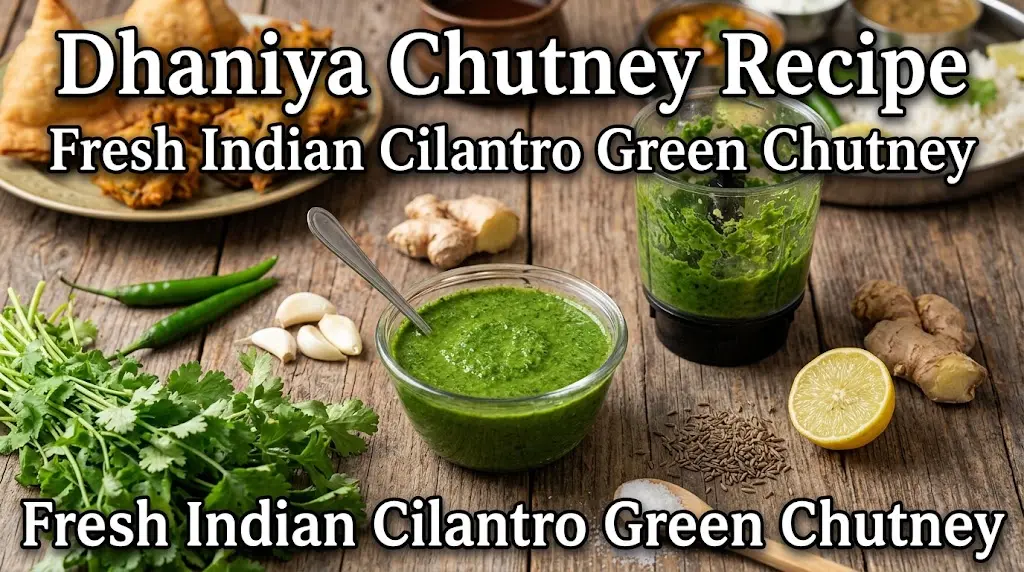
This bright, fresh dhaniya chutney is made with cilantro, green chili, lemon, ginger, cumin, and just enough cold water to create a thick, flavorful chutney. Keep it thick for samosas and pakoras, or thin individual portions for chaat, wraps, and grilled foods.
Quick Answer: How Do You Make Dhaniya Chutney?
The best dhaniya chutney starts with fresh cilantro, green chili, ginger, lemon juice, roasted cumin, salt, and very little cold water. Blend until smooth, taste, and adjust the acidity, salt, and heat before serving.
For a classic cilantro chutney, keep the mixture thick and add water gradually. Tender cilantro stems can be blended with the leaves, while tough stems should be removed.
Classic Dhaniya Chutney Recipe
An everyday cilantro-forward chutney for samosas, pakoras, sandwiches, wraps, chaat, and grilled foods.
Ingredients
- 2 packed cups fresh cilantro, leaves and tender stems
- 1 small serrano or Indian green chili, chopped
- 1-inch piece fresh ginger, peeled
- 1 small clove garlic, optional
- 1 tablespoon fresh lemon juice
- ½ teaspoon roasted ground cumin
- ½ teaspoon fine salt, plus more to taste
- ½ teaspoon sugar, optional
- 2 tablespoons roasted chana dal, optional
- 2–4 tablespoons cold water, added gradually
- 1–2 ice cubes, optional
How to Make It
- Wash the cilantro thoroughly in cold water, repeating until visible dirt is removed.
- Drain the herbs well. Excess water can make the chutney unnecessarily thin.
- Remove thick, damaged, muddy, or tough stems while keeping tender stems.
- Add cilantro, chili, ginger, garlic, lemon juice, cumin, salt, sugar, and chana dal to a blender.
- Add 2 tablespoons of cold water and blend.
- Stop once or twice to scrape down the sides.
- Add another tablespoon of water only if the blades struggle.
- Blend until smooth but still thick and spoonable.
- Taste before adding more water. Adjust salt, lemon, or chili first.
- Transfer to a clean covered container and refrigerate promptly.
It should be bright green, thick, spoonable, and fresh-tasting. It should cling lightly to a samosa instead of running across the plate. For chaat or drizzling, thin only the portion you need.
What Is Dhaniya Chutney?
Dhaniya chutney is a fresh South Asian condiment centered on cilantro, commonly called coriander leaves or dhaniya in South Asian cooking. In the United States, cilantro generally refers to the fresh leaves and stems of the coriander plant.
Recipes vary widely between households. Some versions use mostly cilantro, while others add mint, green chili, ginger, garlic, yogurt, coconut, peanuts, or roasted chana dal.
Classic Cilantro Base
Fresh cilantro provides the main herbal flavor, while lemon, chili, cumin, and salt create balance.
Flexible Chutney
Add mint, yogurt, coconut, peanuts, or chana dal when you want a different texture or flavor profile.
Dhaniya Chutney Ingredients & Best Substitutions
The flavor depends more on balance than on a long ingredient list. Cilantro provides the herbal base, lemon adds acidity, chili brings heat, and cumin contributes warmth.
| Ingredient | Purpose | Useful Substitution or Tip |
|---|---|---|
| Cilantro | Fresh herbal base | Keep tender stems; remove thick or damaged stems. |
| Green chili | Heat | Jalapeño for milder heat; serrano for more heat. |
| Lemon juice | Acidity and freshness | Lime juice works well. |
| Roasted cumin | Warm, nutty aroma | Ground cumin works, but freshly roasted cumin is more aromatic. |
| Chana dal | Body and thickness | Useful when you want a thicker chutney without dairy. |
| Peanuts | Richness and body | Can replace chana dal, but introduce a major allergen. |
| Garlic | Savory depth | Optional; omit for a cleaner cilantro flavor. |
How to Keep Dhaniya Chutney Bright Green
Fresh chutney can darken after blending or during storage. Heat, air exposure, older herbs, and excess liquid can all affect its appearance.
- Use fresh, vibrant cilantro and mint.
- Drain the herbs thoroughly after washing.
- Use cold rather than warm water.
- Add an ice cube if the blender becomes warm.
- Blend only until the desired texture is reached.
- Avoid unnecessary blending time.
- Add water gradually.
- Refrigerate the finished chutney promptly.
Dhaniya Chutney vs. Dhaniya Pudina Chutney
These names are related, but they do not describe exactly the same recipe. Dhaniya chutney can be primarily cilantro, while dhaniya pudina chutney combines cilantro with mint.
| Version | Main Flavor | Best Uses |
|---|---|---|
| Dhaniya chutney | Fresh cilantro | Sandwiches, samosas, everyday meals |
| Dhaniya pudina | Cilantro + mint | Samosas, pakoras, chaat |
| Mint-forward chutney | Cooling mint | Kebabs and grilled foods |
| Yogurt chutney | Creamy and tangy | Kebabs and wraps |
| Coconut chutney | Rich and nutty | Dosa, idli, South Indian meals |
How to Make Dhaniya Chutney Without Mint
You do not need mint to make a flavorful cilantro chutney. Use the main recipe as written and simply leave the mint out.
This creates a cleaner cilantro flavor that works especially well as a sandwich spread or samosa dip. If the flavor feels sharp, adjust the salt first, then use a small amount of sugar if needed.
How to Make Dhaniya Chutney With Mint
For a balanced dhaniya pudina chutney, begin with approximately 2 parts cilantro to 1 part mint. This keeps cilantro dominant while adding mint’s cooling aroma.
| Use | Recommended Approach |
|---|---|
| Samosas | 2:1 cilantro-to-mint ratio |
| Pakoras | Add slightly more mint for freshness |
| Sandwiches | Keep mint lower so cilantro remains prominent |
| Chaat | Use 2:1 and thin a small portion |
| Kebabs | A little extra mint works well with smoky flavors |
| Mild version | Reduce chili before changing the herb ratio |
Creamy Yogurt Dhaniya Chutney
Yogurt dhaniya chutney is ideal when you want a softer, creamy condiment for kebabs, wraps, or grilled foods.
Make the basic cilantro chutney first, then stir a small amount into thick, plain, unsweetened yogurt until the desired flavor and consistency are reached.
Dhaniya Chutney With Coconut, Peanuts or Chana Dal
🥥 Coconut Version
Add a small amount of unsweetened grated coconut for a richer variation. It pairs especially well with dosa, idli, and other South Indian foods.
🥜 Peanut Version
Add roasted unsalted peanuts for a thicker, nuttier chutney and a more substantial sandwich spread.
🌱 Chana Dal Version
Roasted chana dal thickens the chutney while keeping cilantro at the center of the flavor. It is also a useful alternative to peanuts.
How to Fix Dhaniya Chutney: A Troubleshooting Guide
| Problem | Best Fix | Avoid |
|---|---|---|
| Too spicy | Add cilantro; adjust lemon or add a little yogurt for a creamy version. | Adding lots of water. |
| Too sour | Add a small amount of sugar and more cilantro; check salt. | Adding even more lemon. |
| Too salty | Add more unsalted cilantro and increase the batch proportionally if necessary. | Trying to correct it with more salt or lemon. |
| Too watery | Add cilantro or a small amount of roasted chana dal. | Continuing to add salt or lemon. |
| Too bitter | Add cilantro, a little lemon, and a small amount of sugar if needed. | Adding more bitter herbs or mature mint stems. |
Best Ways to Serve Dhaniya Chutney
This fresh condiment works particularly well beside fried, grilled, roasted, and savory foods.
Classic Pairings
- Samosas with tamarind chutney
- Pakoras
- Aloo tikki
- Chaat
- Paneer tikka
- Seekh kebabs
Everyday Uses
- Dhokla
- Dosa
- Idli
- Sandwiches
- Wraps
- Grilled vegetables
Choose the Right Dhaniya Chutney Consistency
| Use | Ideal Texture | Adjustment |
|---|---|---|
| Samosa dip | Thick | Use minimal water. |
| Pakora dip | Thick-medium | Add water by teaspoons. |
| Sandwich spread | Very thick | Use chana dal if needed. |
| Chaat | Medium | Thin only the portion being used. |
| Wraps | Thick-medium | Keep enough body to spread. |
| Kebab sauce | Medium | Yogurt can create a creamy texture. |
| Drizzle | Thin | Add water gradually at serving time. |
How to Store Dhaniya Chutney
Fresh herb chutney is perishable. Refrigerate it promptly in a clean, covered container and aim to use a fresh batch within about 4–5 days for best quality.
- Use a clean container with a tight-fitting lid.
- Refrigerate soon after preparation.
- Use a clean spoon each time.
- Keep the container closed when not serving.
- Discard chutney showing signs of spoilage.
- Do not rely on lemon juice for room-temperature storage.
Can You Freeze Dhaniya Chutney?
Yes. Freezing is useful when you make more chutney than you can use within several days.
Freeze small portions in an ice cube tray, then transfer the frozen portions to a freezer-safe container or bag. This makes it easy to thaw only what you need.
Common Dhaniya Chutney Mistakes
Too Much Water
Start with 2 tablespoons and increase slowly. Your blender may need more, but the chutney does not automatically require it.
Wet Herbs
Drain cilantro thoroughly after washing so you retain control over the final consistency.
Overloaded Blender
Work in batches if necessary instead of adding excessive water simply to make the blades move.
Over-Blending
Long blending can warm the mixture. Stop once the chutney reaches the texture you want.
Too Much Mint
Mint is powerful. If you want dhaniya chutney, keep cilantro dominant.
Seasoning Too Early
Taste while the chutney is still thick. Water added later will dilute every flavor.
How to Make Dhaniya Chutney Less Spicy
The easiest way to control heat is to start with less chili. You can always add more after blending, but removing chili heat is much harder.
For a Mild Family-Friendly Batch
- Start with half a serrano or another mild green chili.
- Remove some seeds and membranes if desired.
- Blend the chutney.
- Taste before adding more chili.
- Add additional chili gradually until the desired heat is reached.
Is Dhaniya Chutney Vegan and Gluten-Free?
The basic recipe is naturally vegan and dairy-free. It is also naturally gluten-free when all ingredients and seasonings are gluten-free and cross-contact is avoided.
| Variation | Dietary Consideration |
|---|---|
| Basic cilantro chutney | Vegan, dairy-free, naturally gluten-free with suitable ingredients |
| Yogurt chutney | Not dairy-free or vegan unless plant-based yogurt is used |
| Peanut chutney | Contains peanuts, a major allergen |
| Chana dal version | Contains legumes |
| Packaged spice blends | Check labels when gluten exposure matters |
Frequently Asked Questions About Dhaniya Chutney
What does dhaniya mean in dhaniya chutney?
Dhaniya means coriander and commonly refers to the fresh green herb known as cilantro in the United States. Dhaniya chutney is therefore often called cilantro chutney or coriander chutney.
Is dhaniya chutney the same as green chutney?
Not always. Green chutney is a broad term for fresh green Indian chutneys, while dhaniya chutney specifically emphasizes cilantro. Recipes can also include mint, yogurt, coconut, peanuts, or other ingredients.
Can I make dhaniya chutney without garlic?
Yes. Garlic is optional in many versions. Leaving it out creates a cleaner cilantro flavor.
Why does my cilantro chutney turn dark?
Heat during blending, air exposure, older herbs, and excess water can affect the color. Keep ingredients cool, avoid unnecessary blending, and refrigerate the chutney promptly.
Can I use cilantro stems?
Yes. Tender cilantro stems are flavorful and can be blended with the leaves. Remove thick, woody, damaged, or muddy stems.
Can I use jalapeño instead of Indian green chili?
Yes. Jalapeño is a useful option when you want a milder chili. Serrano is a better choice when you want more heat.
How long does homemade dhaniya chutney last?
Keep it covered and refrigerated and aim to use it within about 4–5 days for best quality. Freeze extra chutney if you will not use it during that period.
Final Tips for the Best Dhaniya Chutney
The best batch does not require dozens of ingredients. It depends on fresh cilantro, controlled water, balanced acidity, and enough seasoning.
Start thick, taste before thinning, and adjust one element at a time. Once the basic cilantro version is right, you can easily turn it into dhaniya pudina chutney, yogurt chutney, coconut chutney, or peanut chutney.
For the most versatile batch, keep it thick enough for samosas and sandwiches, then thin individual portions when you need a sauce for chaat or grilled foods.
Conclusion
This dhaniya chutney recipe gives you a fresh cilantro base that works across everyday meals, Indian snacks, sandwiches, wraps, chaat, and grilled foods. The key is simple: use fresh herbs, add water slowly, balance the chili and lemon, and avoid over-blending.
Once you learn that basic balance, you can customize the chutney with mint, yogurt, coconut, peanuts, roasted chana dal, or extra chili. Make a small batch for tonight’s samosas, or freeze portions so a bright homemade condiment is ready whenever you need it.
Read More :