
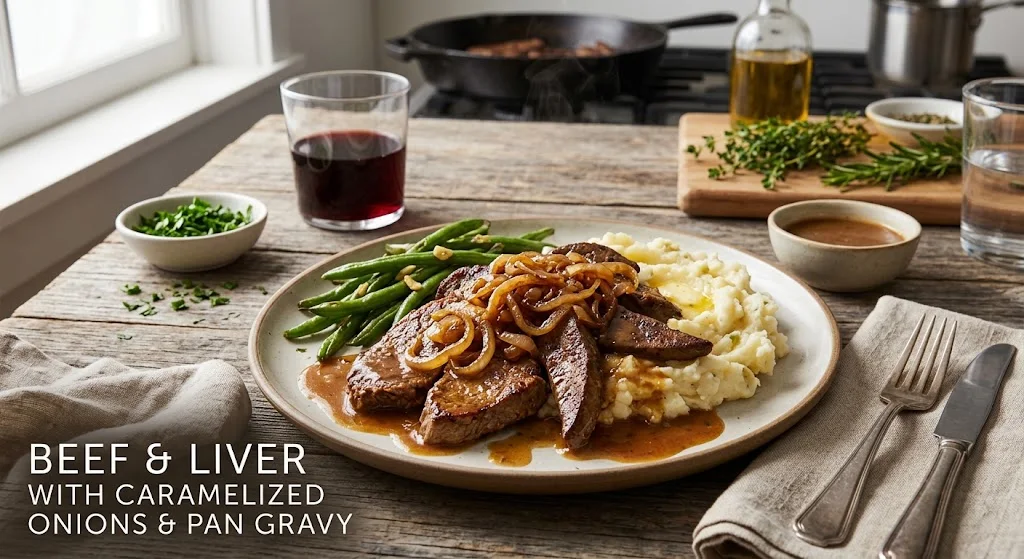
This beef and liver recipe combines tender browned beef, quickly seared beef liver, sweet caramelized onions, and a savory pan gravy into a hearty skillet dinner for four.
The key is to cook the beef and liver separately. Beef needs more time to become tender, while liver cooks quickly and can become tough when left over high heat. Serve this rich, old-fashioned skillet meal with mashed potatoes, rice, egg noodles, or crusty bread.
For the best beef and liver recipe, brown the beef first, cook the onions until soft and golden, build the pan gravy, then sear the liver separately and add it near the end. This keeps the liver from overcooking while allowing the beef and gravy to develop deeper flavor.
For food safety, cook beef liver to 160°F (71°C) as measured with a food thermometer.
Why This Beef and Liver Recipe Works
Beef and liver cook differently, and recognizing that difference is the secret to a better dish. Beef needs enough cooking time to brown and become tender, while liver can turn firm and grainy if it remains over high heat for too long.
This method gives each ingredient the attention it needs: the beef is browned first, the onions develop sweetness, the gravy captures the browned bits, and the liver is cooked quickly before everything is brought together.
- Rich flavor: Beef, liver, onions, and broth create a deep savory base.
- Balanced taste: Sweet onions soften the stronger flavor of liver.
- Beginner-friendly: The method uses a large skillet and straightforward steps.
- Flexible: Serve with potatoes, rice, noodles, or bread.
- Family-style: The recipe makes a hearty dinner for four.
- Budget-conscious: Liver adds substantial flavor without requiring an expensive steak.
- Make-ahead friendly: The onion gravy can be prepared before the liver is cooked.
- Easy to customize: Mushrooms, peppers, mustard, herbs, or paprika all work well.
Beef and Liver Recipe at a Glance
| Recipe Detail | What to Expect |
|---|---|
| Yield | 4 servings |
| Prep time | About 20 minutes |
| Cook time | About 30 minutes |
| Total time | About 50 minutes |
| Method | Stovetop skillet |
| Difficulty | Beginner to intermediate |
| Main ingredients | Beef, beef liver, onions, and broth |
| Best sides | Mashed potatoes, rice, noodles, or bread |
| Food-safety target | Beef liver: 160°F (71°C) |
| Best skillet | Large heavy-bottomed skillet |
Beef & Liver With Caramelized Onions
For the Beef
- 1 pound beef stew meat, cut into bite-size pieces
- 1 tablespoon neutral cooking oil
- ½ teaspoon kosher salt
- ¼ teaspoon black pepper
For the Liver
- 1 pound beef liver, trimmed and sliced about ¼-inch thick
- ½ cup milk, optional for soaking
- ¼ cup all-purpose flour
- ½ teaspoon paprika
- ¼ teaspoon black pepper
- ¼ teaspoon kosher salt
- 1 tablespoon cooking oil
For the Onion Gravy
- 2 large yellow onions, thinly sliced
- 2 cloves garlic, finely minced
- 1 tablespoon butter
- 1 tablespoon all-purpose flour
- 1½ cups low-sodium beef broth
- 1 teaspoon Worcestershire sauce
- ½ teaspoon Dijon mustard
- ½ teaspoon dried thyme
- ¼ teaspoon black pepper
- Salt, as needed
- 1 tablespoon chopped fresh parsley
Beef liver should reach 160°F (71°C) internally when checked with a food thermometer. Do not use a pink center or color alone as the safety test.
Ingredients for Beef and Liver
The ingredient list is intentionally simple. The onions and gravy do much of the flavor work, so you don’t need a long spice list.
Beef
- 1 pound beef stew meat, cut into bite-size pieces
- 1 tablespoon neutral cooking oil
- ½ teaspoon kosher salt
- ¼ teaspoon black pepper
Beef Liver
- 1 pound beef liver, trimmed and sliced about ¼-inch thick
- ½ cup milk, optional for soaking
- ¼ cup all-purpose flour
- ½ teaspoon paprika
- ¼ teaspoon black pepper
- ¼ teaspoon kosher salt
- 1 tablespoon cooking oil
Onion Pan Gravy
- 2 large yellow onions, thinly sliced
- 2 cloves garlic, finely minced
- 1 tablespoon butter
- 1 tablespoon all-purpose flour
- 1½ cups low-sodium beef broth
- 1 teaspoon Worcestershire sauce
- ½ teaspoon Dijon mustard
- ½ teaspoon dried thyme
- ¼ teaspoon black pepper
- Salt, as needed
- 1 tablespoon chopped fresh parsley
Ingredient Notes
Beef: Stew meat, chuck, sirloin tips, or another suitable beef cut can work. Keep the pieces similar in size so they brown evenly.
Beef liver: Choose liver that smells clean and fresh. Trim away tough membrane or connective tissue before slicing.
Milk: A milk soak is optional, not a food-safety requirement. Some cooks use it to mellow liver’s strong flavor.
Flour: Flour helps brown the liver and slightly thickens the gravy. For gluten-free cooking, use a suitable gluten-free flour blend or thickener.
Worcestershire sauce: It adds savory depth and acidity. Check the label if gluten-free ingredients are important to you.
How to Prepare Beef Liver Before Cooking
Good liver starts with proper preparation. The goal is to create thin, dry, evenly sized pieces that can brown quickly.
A milk soak is optional if you prefer a milder flavor. It is not required, and the liver should still be treated as raw meat throughout preparation.
Preparation Steps
- Trim away visible membrane and tough connective tissue.
- Slice the liver into ¼-inch pieces.
- If desired, place the slices in milk and refrigerate for 30–60 minutes.
- Drain thoroughly after soaking.
- Pat the liver very dry with paper towels.
- Season shortly before cooking.
- Keep raw liver separate from cooked food and clean utensils after handling it.
How to Make Beef and Liver
The central technique is simple: don’t cook the beef and liver for the same amount of time.
1. Brown the Beef
- Heat a large skillet over medium-high heat.
- Add the oil.
- Pat the beef dry and season with salt and pepper.
- Add the beef in a single layer.
- Brown the pieces on several sides.
- Transfer the beef to a clean plate.
The beef does not need to be completely tender yet. You are building browned flavor first; the gravy will finish the cooking.
2. Cook the Onions
- Reduce the heat to medium.
- Add the butter.
- Add the sliced onions.
- Cook for about 8–12 minutes, stirring occasionally.
- Continue until soft and lightly browned.
- Add the garlic during the final minute.
If the skillet looks dry, add a small splash of oil rather than letting the onions scorch.
3. Build the Pan Gravy
- Sprinkle 1 tablespoon flour over the onions.
- Stir for about 30 seconds.
- Slowly pour in the beef broth.
- Add Worcestershire sauce, Dijon mustard, thyme, and pepper.
- Scrape the browned bits from the bottom of the skillet.
- Return the beef to the gravy.
- Reduce the heat and simmer gently until the beef reaches your preferred tenderness.
4. Cook the Liver Separately
- Mix flour, paprika, salt, and pepper in a shallow dish.
- Lightly coat the dry liver pieces.
- Heat a second skillet, or temporarily transfer the beef and gravy to a bowl.
- Add the oil over medium-high heat.
- Cook the liver in batches without overcrowding.
- Turn the pieces as they brown.
- Check the thickest piece with a food thermometer.
- Cook until the liver reaches 160°F (71°C).
- Transfer the cooked liver to a clean plate.
USDA guidance recommends 160°F (71°C) for beef liver and other red-meat organ meats. Use a food thermometer rather than relying on the liver’s color or whether the center looks pink.
5. Bring Everything Together
- Add the cooked liver to the beef and onion gravy.
- Spoon some gravy over the liver.
- Warm everything together briefly.
- Avoid prolonged simmering once the liver is cooked.
- Taste and adjust salt if needed.
- Finish with fresh parsley.
Serve immediately for the best liver texture.
How to Keep Beef Liver Tender
Liver has a reputation for becoming tough, but the biggest issue is usually overcooking. The safest approach is to verify 160°F with a thermometer and then remove the liver from prolonged heat.
- Slice evenly: Thin, uniform pieces cook predictably.
- Dry the surface: Wet liver steams instead of browning.
- Use a hot pan: Proper heat helps create color quickly.
- Don’t crowd the skillet: Cook in batches if needed.
- Avoid endless simmering: Long cooking can make liver firm and grainy.
- Cook beef separately: The two ingredients have different cooking needs.
- Use a thermometer: Color alone is not a reliable safety test.
- Serve promptly: Freshly cooked liver generally has the best texture.
What Does Beef Liver Taste Like?
Beef liver has a strong, savory, mineral-rich flavor that is more intense than most ordinary beef cuts. Sweetness, acidity, fat, and aromatic herbs can make the flavor easier to balance.
| Flavor Pairing | What It Adds |
|---|---|
| Caramelized onions | Sweetness and balance |
| Garlic | Deeper savory flavor |
| Mustard | Sharpness and acidity |
| Worcestershire sauce | Umami and brightness |
| Paprika | Warm, mild spice |
| Black pepper | Simple heat |
| Thyme | Herbal depth |
| Mushrooms | Additional savory richness |
| Tomatoes | Acidity and sweetness |
| Lemon | A bright finishing note |
Best Beef and Liver Variations
Beef and Liver With Mushrooms
Add sliced cremini or white mushrooms after the onions soften. Cook until browned, then continue with the gravy.
Best for: A rich, classic comfort-food dinner.
Spicy Beef and Liver Curry
Add curry powder, cumin, ginger, garlic, and a little chili powder to the onion base. Use tomatoes or broth to create a loose sauce.
Best for: Rice bowls and bold spice.
Beef and Liver Stir-Fry
Cut both meats into thin pieces and prepare the vegetables before heating the pan. Cook beef and liver separately in batches, then combine with a quick sauce.
Best for: A faster weeknight meal.
Beef and Liver With Bacon
Cook bacon until crisp and use some rendered fat to flavor the onions. Crumble the bacon over the finished dish.
Best for: A richer, old-fashioned dinner.
Beef and Liver Tomato Stew
Use beef broth, tomatoes, onions, paprika, garlic, and cumin for a saucy version. Add the liver later rather than treating it exactly like the beef.
Best for: Spoon-over-rice meals.
Beef and Liver With Peppers
Add sliced bell peppers with the onions and use paprika and black pepper for a simple savory profile.
Best for: A colorful skillet dinner.
Beef and Liver With Mustard Gravy
Stir Dijon mustard into the finished beef gravy and add thyme and black pepper.
Best for: Mashed potatoes and egg noodles.
Beef and Liver Suya-Inspired Skewers
For a West African-inspired direction, use paprika, ginger, garlic, and chili. If adapting the concept for liver, cook the liver separately and verify its internal temperature rather than relying on brief cooking times designed for thin beef.
Best for: Bold, smoky-spiced flavor.
Which Beef and Liver Version Should You Choose?
| If You Want… | Choose… |
|---|---|
| A classic dinner | Beef and liver with onions |
| A rich sauce | Mustard or mushroom gravy |
| A spicy meal | Curry |
| A faster meal | Stir-fry |
| A smoky flavor | Bacon version |
| A tomato-based dish | Cumin-tomato stew |
| More vegetables | Pepper and onion skillet |
| A global flavor | Suya-inspired preparation |
| A milder introduction to liver | Onion-heavy skillet version |
Best Side Dishes for Beef and Liver
Choose sides that either absorb the gravy or provide freshness and contrast.
Starchy Sides
- Mashed potatoes
- Steamed white rice
- Brown rice
- Egg noodles
- Crusty bread
- Roasted potatoes
Vegetable Sides
- Green beans
- Roasted carrots
- Steamed broccoli
- Simple cucumber salad
- Roasted Brussels sprouts
Fresh Finishes
Try fresh parsley, sliced green onion, a little lemon juice, pickled onions, or fresh cilantro for spicy versions.
Substitutions for This Recipe
| Ingredient | Possible Substitute |
|---|---|
| Beef | Chuck, stew meat, sirloin tips, or another suitable beef cut. |
| Beef liver | Calf liver can provide a generally milder flavor. |
| Milk | Buttermilk for a tangier optional soak, or skip the soak. |
| All-purpose flour | A suitable gluten-free flour blend or thickener. |
| Butter | Olive oil or another suitable cooking oil for a dairy-free version. |
| Worcestershire sauce | Check the label for dietary requirements before substituting. |
| Dijon mustard | Yellow mustard for a milder flavor. |
Common Beef and Liver Cooking Mistakes
Cooking the Liver Too Long
This is the most common texture problem. Verify 160°F, then avoid unnecessary additional cooking.
Putting Everything in the Pan at Once
Beef and liver have different cooking needs. Cooking them simultaneously can leave the beef under-tender while the liver spends too long over heat.
Skipping the Drying Step
Excess moisture prevents good browning. Pat the liver dry after any soak.
Overcrowding the Pan
Crowded meat releases moisture and lowers the pan temperature. Cook in batches when necessary.
Using Too Much Flour
A heavy coating can become gummy in the gravy. Use a light dusting.
Making the Gravy Too Thick
The gravy should coat the meat without becoming gluey. Add a splash of broth if necessary.
Treating a Milk Soak as Mandatory
A milk soak is optional. It may mellow the flavor but is not required.
Judging Safety by Color
Color is not a dependable safety test. Use a food thermometer for the liver.
Because liver is an organ meat, safe handling is especially important. Beef liver should reach 160°F (71°C) internally when measured with a food thermometer.
- Keep raw liver refrigerated until preparation.
- Wash your hands after handling raw liver.
- Use separate plates for raw and cooked meat.
- Don’t reuse raw-meat marinades unless properly cooked.
- Clean cutting boards, knives, and counters after preparation.
- Check the thickest part of the liver with a food thermometer.
- Refrigerate leftovers promptly.
- Reheat leftovers thoroughly before serving.
Do not use “slightly pink” as the safety test. The internal temperature is the important measurement.
Storage and Reheating
Beef liver is best freshly cooked, but leftovers can be stored safely when handled properly. Transfer them to a shallow covered container and refrigerate promptly.
- Refrigerate leftovers in a covered container.
- Use within 3–4 days for best food safety and quality.
- Reheat gently rather than aggressively boiling the liver.
- Add a splash of broth if the gravy has thickened.
- Heat until thoroughly hot before serving.
Freezing is possible if needed, although liver texture may become firmer after freezing and thawing.
Nutrition Notes About Beef Liver
Beef liver is nutritionally dense, but that does not mean more is always better.
According to the National Institutes of Health Office of Dietary Supplements, a 3-ounce serving of pan-fried beef liver contains a very large amount of vitamin A, including about 6,582 mcg RAE, as well as roughly 5 mg of iron.
Because liver contains substantial amounts of preformed vitamin A, it is sensible to treat it as a concentrated food rather than an everyday large portion. People who are pregnant or have specific dietary concerns should follow guidance from their healthcare professional.
Frequently Asked Questions About Beef and Liver
Is beef liver safe to eat slightly pink?
No. Don’t use a pink center as the safety standard for beef liver. Use a food thermometer and cook the liver to 160°F (71°C).
Do you have to soak beef liver in milk?
No. Soaking is optional. Some cooks use milk to mellow the flavor, but you can skip the soak. If you soak liver, keep it refrigerated and pat it thoroughly dry before cooking.
Why is my beef liver tough?
The most common reason is overcooking. Thin slices cook quickly, so keep the pan hot and verify the internal temperature rather than leaving the liver in the skillet longer than necessary.
Can I cook beef and liver in the same pan?
Yes. The important point is to cook them in stages because beef and liver have different cooking characteristics and timing.
What is the best way to make beef liver taste less strong?
Use thinly sliced liver, plenty of onions, and a flavorful sauce. An optional refrigerated milk soak can also mellow the flavor.
What should I serve with beef and liver?
Mashed potatoes, rice, egg noodles, crusty bread, and roasted vegetables are excellent choices. Pick a starch that absorbs the onion gravy and add a fresh vegetable for contrast.
Is calf liver milder than beef liver?
Generally, yes. Calf liver is often considered milder and more delicate than liver from mature cattle, making it a useful option for someone trying liver for the first time.
Final Tips for the Best Beef and Liver Recipe
The biggest improvement you can make is to treat the beef and liver as two different ingredients rather than one meat.
- Brown the beef first.
- Give the onions enough time to develop sweetness.
- Build the gravy around the browned bits.
- Prepare the liver separately.
- Cook the liver to 160°F (71°C).
- Bring the liver into the sauce only at the end.
- Serve promptly for the best texture.
For a first attempt, keep the flavors familiar with onions, garlic, thyme, Worcestershire sauce, and mashed potatoes. Once you like the basic combination, experiment with mushroom, curry, tomato, bacon, or spicy variations.
Conclusion
A great beef and liver recipe doesn’t need complicated ingredients. The real difference comes from proper preparation, separate cooking stages, a flavorful onion gravy, and accurate temperature control.
Start with the skillet version if you’re new to liver. Once you’ve mastered the technique, the same approach can lead to mushroom gravy, curry, tomato stew, stir-fry, or bacon variations that fit your favorite flavors.
47 thoughts on “Beef and Liver Recipe With Caramelized Onions and Pan Gravy”