
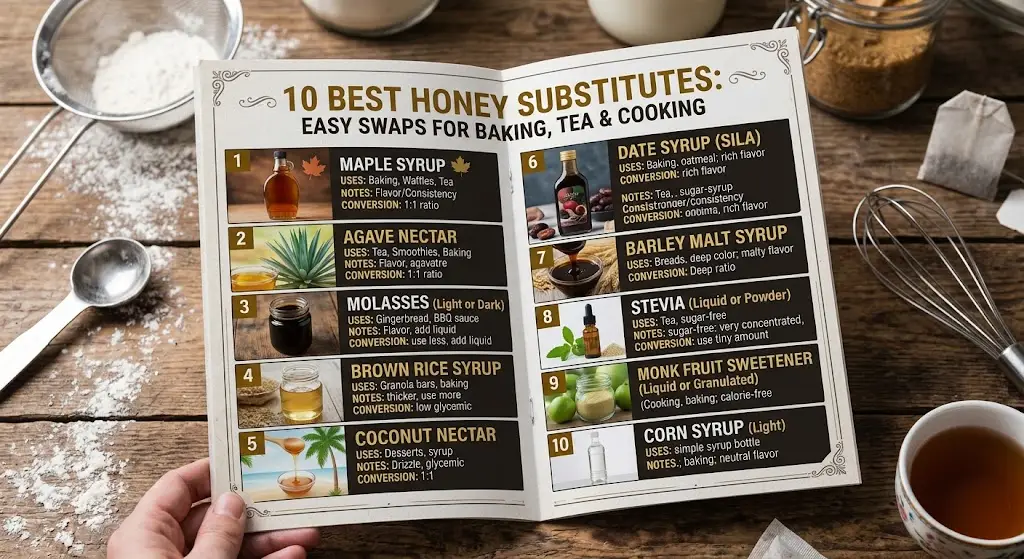
Looking for the best substitute for honey? Whether you’ve run out, follow a vegan lifestyle, want a different flavor, or need a lower-sugar option, there are several reliable honey alternatives to choose from. The key is understanding how honey contributes sweetness, moisture, thickness, browning, and flavor to your recipe.
Quick Answer
The best substitute for honey is maple syrup because it has a similar liquid texture and works well in baking, tea, marinades, dressings, and pancakes. In most recipes, use maple syrup 1:1 for honey. Agave nectar is another excellent vegan option, while brown sugar can work well for baking when combined with additional liquid. For low-sugar recipes, a suitable monk fruit syrup can provide sweetness with little or no added sugar.
Why You Might Need a Honey Substitute
There are many reasons why someone looks for a substitute for honey. Sometimes it is simply an out-of-honey emergency while baking cookies, making tea, or preparing a sauce. Instead of stopping your recipe, you can use one of the best substitutes for honey that matches the recipe’s needs.
For others, the reason is lifestyle. If you follow a vegan lifestyle, you’ll need a plant-based vegan honey substitute such as maple syrup or agave nectar. Some people may also need to avoid honey because of an allergy or personal dietary preference.
Health and nutrition goals can also influence the choice. People managing blood sugar may look for a low-glycemic honey substitute, while others simply want a deeper caramel flavor, a neutral sweetener, or a pantry-friendly replacement.
What Makes Honey Unique in Recipes?
Before choosing the best substitute for honey, it helps to understand what honey contributes to a recipe. Honey is a liquid sweetener that adds sweetness, moisture, thickness, and a distinctive flavor.
Honey also has hygroscopic properties, meaning it can attract and retain moisture. This is one reason honey-sweetened baked goods can remain soft. Its sugars also contribute to browning and caramelization when exposed to heat.
Honey affects more than sweetness. It can influence binding, texture, moisture, color, and flavor. Understanding these properties makes it easier to select the right honey replacement without changing the recipe more than necessary.
Liquid vs. Dry Sweeteners: What You Must Know
Not all honey substitutes behave in the same way. The biggest difference is between liquid sweeteners and dry sweeteners.
Liquid options such as maple syrup and agave nectar add moisture just as honey does. Dry sweeteners such as brown sugar and white sugar do not provide the same amount of liquid, so baked recipes may require additional water or another liquid.
This is particularly important in baking because sweeteners influence structure, softness, spread, browning, and moisture. A good honey substitute for baking should therefore match both sweetness and physical form whenever possible.
The 10 Best Substitutes for Honey
These are some of the most useful honey alternatives, ranked according to their versatility, texture, sweetness, and usefulness in everyday cooking and baking.
1. Maple Syrup
Maple syrup is one of the best honey alternatives because it is also a liquid sweetener with a similar consistency. It is especially useful when you want a simple 1:1 honey substitute.
2. Agave Nectar
Agave is a popular vegan honey substitute because its mild flavor works particularly well in beverages and recipes where you don’t want a strong alternative flavor.
3. Brown Sugar
Brown sugar works well as a honey substitute for baking, especially in cookies and sauces. Because it is dry rather than liquid, additional moisture is important.
4. White Sugar
White sugar is a convenient emergency replacement when you don’t have another liquid sweetener available. Remember that it does not provide honey’s moisture, so recipe adjustments may be needed.
5. Molasses
6. Corn Syrup
7. Date Syrup
Date syrup is a useful plant-based honey replacement when you want deeper fruit and caramel notes.
8. Coconut Nectar
9. Golden Syrup
10. Monk Fruit Syrup
Monk fruit syrup can be useful when you want a low-sugar honey substitute. Because products differ significantly, always check the manufacturer’s recommended substitution ratio.
🍯 Quick Honey Swap Card
Use this mini guide when you need a fast replacement without comparing every option.
Best Honey Substitute by Situation
The best substitute for honey depends on what you’re making. A replacement that works beautifully in tea may not behave the same way in a cookie or BBQ glaze.
Best Substitute for Honey in Baking
For cakes, maple syrup or agave nectar can maintain a soft, moist texture. For cookies, brown sugar plus a little water can work well. Maple syrup and date syrup are also useful for quick breads, while maple syrup or corn syrup can help bind granola.
Best Honey Substitute for Tea & Coffee
Agave nectar is an excellent choice for drinks because it dissolves easily and has a relatively mild flavor. Maple syrup also works if you enjoy its distinctive taste.
Best Substitute for Honey in Marinades & BBQ Sauce
Maple syrup or molasses can provide rich caramel notes and work well in glazes and savory sauces. Molasses has a much stronger flavor, so use it when that bold character suits the recipe.
Best Substitute for Honey in Salad Dressings
Choose a lighter sweetener such as agave nectar or coconut nectar when you want sweetness without overpowering vinegar, citrus, herbs, or vegetables.
Emergency Honey Substitute
If you’ve completely run out, a simple mixture of 1 cup sugar + ¼ cup water can provide a basic sweet liquid for many recipes. Warm gently until the sugar dissolves, then allow it to cool before using where appropriate.
Best Honey Substitutes for Special Diets
Vegan
Because honey is produced by bees, it is not generally considered vegan. Good plant-based alternatives include maple syrup, agave nectar, coconut nectar, and date syrup.
Keto
For keto recipes, look for a sugar-free syrup made with a suitable low-carb sweetener. Monk fruit syrup can be an option, but product formulas vary, so check the nutrition label carefully.
Diabetic-Friendly
If you’re managing blood sugar, a low- or no-sugar sweetener may be preferable to regular honey. Monk fruit-based syrups can be useful, but the complete product formula and serving size matter.
Paleo
For recipes following a paleo-style approach, maple syrup or date syrup may be suitable depending on the specific dietary rules you follow.
Low-Calorie / Weight Loss
If your goal is to reduce calories from added sweeteners, sugar-free syrup products may help reduce calorie intake. Always consider the complete ingredient list and portion size.
Honey Substitute Conversion Chart
Save this practical honey substitute ratio chart for quick reference when baking, cooking, or making drinks.
| Honey Amount | Substitute | Ratio | Adjust Liquids? |
|---|---|---|---|
| 1 tablespoon | Maple syrup | 1 tbsp | No |
| 1 tablespoon | Agave nectar | ¾–1 tbsp | Slightly reduce other liquids |
| 1 tablespoon | Sugar | 1 tbsp + about 1 tsp water | Yes |
| ¼ cup | Maple syrup | ¼ cup | No |
| ¼ cup | Brown sugar | ¼ cup + about 1 tbsp water | Yes |
| ½ cup | Maple syrup | ½ cup | No |
| ½ cup | White sugar | ½ cup + about 2 tbsp water | Yes |
| 1 cup | Maple syrup | 1 cup | No |
| 1 cup | Agave nectar | ¾–1 cup | Slightly |
| 1 cup | Sugar | 1 cup + ¼ cup water | Yes |
Sweeteners marketed as keto, sugar-free, or diabetic-friendly can contain different ingredients and carbohydrates depending on the brand. Always check the nutrition label and serving size. If you have a diagnosed allergy or a medical condition requiring strict dietary control, choose products that fit your individual requirements.
How to Adjust Recipes When Replacing Honey
Reduce Other Liquids
Liquid sweeteners such as maple syrup and agave add moisture. Depending on the recipe, you may need to slightly reduce milk, water, or another liquid. Conversely, dry sugar needs additional liquid to compensate for the moisture honey would have supplied.
Watch Oven Temperature and Browning
Honey contributes to browning. Different sweeteners can brown at different rates, so keep an eye on baked goods and adjust the oven temperature only when the specific recipe requires it.
Adjust Acidity When Necessary
Honey has a mild acidic character. If a substitution makes a recipe taste noticeably flat, a small amount of lemon juice may help balance the overall flavor, depending on the dish.
Control Texture
If the finished recipe is too dry, it may need additional moisture. If it is overly sticky, the next batch may need slightly less liquid sweetener. Small adjustments are often enough to restore the intended texture.
Flavor Pairing Guide: Choosing the Right Honey Substitute
Honey vs. Other Sweeteners: Side-by-Side Comparison
| Sweetener | Sweetness | Approx. GI* | Approx. Calories / Tbsp* | Best Use | Flavor |
|---|---|---|---|---|---|
| Honey | High | ~58 | ~64 | Baking, tea, marinades | Floral, rich |
| Maple Syrup | Medium-high | ~54 | ~52 | Pancakes, baking | Warm, caramel |
| Agave Nectar | Very high | ~15–30 | ~60 | Drinks, dressings | Mild, neutral |
| Brown Sugar | Medium | ~65 | ~52 | Cookies, sauces | Caramel-like |
| Monk Fruit Syrup | Very high | Varies by product | Varies by product | Low-sugar recipes | Light, mild |
*Nutrition and glycemic values are approximate and can vary by product, formulation, serving size, and testing method. Monk fruit syrups in particular can contain different ingredients.
The Science of Sweetness
Honey often tastes sweeter than regular sugar because its sugar composition differs from sucrose. Honey contains glucose and fructose, while table sugar consists primarily of sucrose, which is made from glucose and fructose.
Fructose has a high perceived sweetness, which helps explain why some liquid sweeteners can taste sweeter than expected. Agave can also taste particularly sweet because of its fructose content.
Sugar-free sweeteners such as monk fruit work differently. They use sweet-tasting compounds that activate sweetness receptors without supplying the same amount of sugar as traditional sweeteners.
Common Mistakes When Replacing Honey
Using Dry Sugar Without Liquid Adjustment
Honey is a liquid sweetener. Replacing it with dry sugar without compensating for moisture can make baked goods dry or dense.
Over-Sweetening
Some alternatives, particularly agave and certain monk fruit products, can be sweeter than honey. Always follow the product’s recommended substitution ratio.
Ignoring Browning Differences
Different sweeteners react differently to heat. Watch baked goods closely, especially when using syrups or darker sweeteners.
Choosing a Strong Flavor for a Delicate Recipe
Molasses can be excellent in gingerbread or BBQ sauce but may overwhelm delicate cakes, teas, or dressings. Match the flavor intensity of the substitute to the dish.
Can You Make a Homemade Honey Substitute?
Sugar + Water Quick Syrup
Combine 1 cup sugar + ¼ cup water and warm gently until the sugar dissolves. This creates a basic sweet syrup that can work as an emergency honey substitute for baking or cooking.
Date Syrup DIY
Blend soaked dates with warm water until smooth. This creates a naturally sweet, plant-based syrup with a rich fruit flavor.
Simple Vegan Honey-Style Syrup
Some homemade vegan versions combine fruit juice, sugar, and lemon juice and simmer them until thickened. The resulting syrup can be used for tea and certain light baking applications.
Quick Decision Guide: Choose Your Honey Substitute in 60 Seconds
| If You Need… | Choose | Why It Works |
|---|---|---|
| Neutral flavor | Agave nectar | Mild flavor that blends easily into drinks and light recipes. |
| Deep caramel flavor | Maple syrup | Warm flavor that works especially well in baking and marinades. |
| Sugar-free option | Monk fruit syrup | Some products contain little or no sugar; check the label. |
| Thick glaze or binding | Corn syrup | Its consistency makes it useful for candies and glazes. |
| Easy everyday replacement | Maple syrup | Simple 1:1 substitution in many recipes. |
FAQs About Honey Substitutes
What is the best substitute for honey in baking?
Maple syrup is usually one of the easiest choices because it has a similar liquid consistency and can often replace honey at a 1:1 ratio. Agave nectar can also work well.
Can I use maple syrup instead of honey?
Yes. Maple syrup can usually replace honey 1:1 in many recipes. It is slightly less sweet and contributes its own warm maple flavor.
What is a vegan substitute for honey?
Good vegan options include maple syrup, agave nectar, coconut nectar, and date syrup. These plant-based sweeteners work especially well in drinks, baking, dressings, and sauces.
How do I replace 1 cup of honey?
For a simple substitution, use 1 cup maple syrup. Depending on the recipe, you can also use about ¾–1 cup agave nectar. For dry sugar, additional liquid is needed to replace honey’s moisture.
Is agave sweeter than honey?
Agave nectar is often sweeter than honey because of its higher proportion of fructose. For that reason, you may not need as much agave as honey in some recipes.
What is the healthiest honey substitute?
There is no single healthiest option for everyone. For reducing added sugar, a suitable sugar-free sweetener may be useful. For a minimally processed alternative, some people prefer maple syrup or date syrup.
Can people with diabetes use honey alternatives?
Some sugar-free sweeteners, including certain monk fruit products, may contain little or no sugar. However, products vary, so check the nutrition label and consider your individual dietary requirements.
Conclusion: What Is the Best Substitute for Honey?
Choosing the best substitute for honey depends on the recipe, desired flavor, texture, and dietary requirements.
- Best Overall: Maple syrup — versatile, flavorful, and usually an easy 1:1 swap.
- Best for Baking: Maple syrup — maintains a liquid texture and adds moisture.
- Best Vegan Option: Agave nectar — mild, smooth, and plant-based.
- Best Sugar-Free Choice: A suitable monk fruit syrup — check the product label and ratio.
- Best Pantry Emergency: Sugar mixed with water when no liquid sweetener is available.
The most important rule is to match the replacement to the job honey was doing. If your recipe needs moisture, choose another liquid sweetener. If it needs sweetness and structure, dry sugar may work with additional liquid. If flavor matters, select an alternative that complements the other ingredients.
For most everyday recipes, maple syrup is the easiest place to start. But whether you need a vegan honey substitute, a low-sugar option, or an emergency replacement, understanding sweetness, moisture, and texture will help you get much better results.
108 thoughts on “10 Best Honey Substitutes: Easy Swaps for Baking, Tea & Cooking”